Are Unlimited Car Wash Memberships Worth It?
Unlimited car wash memberships can pay off when you wash about 3 or more times a month and the plan costs less than your pay-per-wash total. If not, single visits usually cost less. Miss that math and you can overpay for weeks, especially when rain, winter salt, or long gaps cut how often you wash. This guide shows the break-even rule, the hidden fees, and which drivers should choose each option.
Verdict: when it pays off
Use a simple rule: compare your monthly wash count with the monthly fee, then buy only when the total cost of individual washes is higher. Unlimited car wash memberships are recurring monthly billing plans, often tied to one vehicle, so the value comes from actual use, not the word “unlimited.”
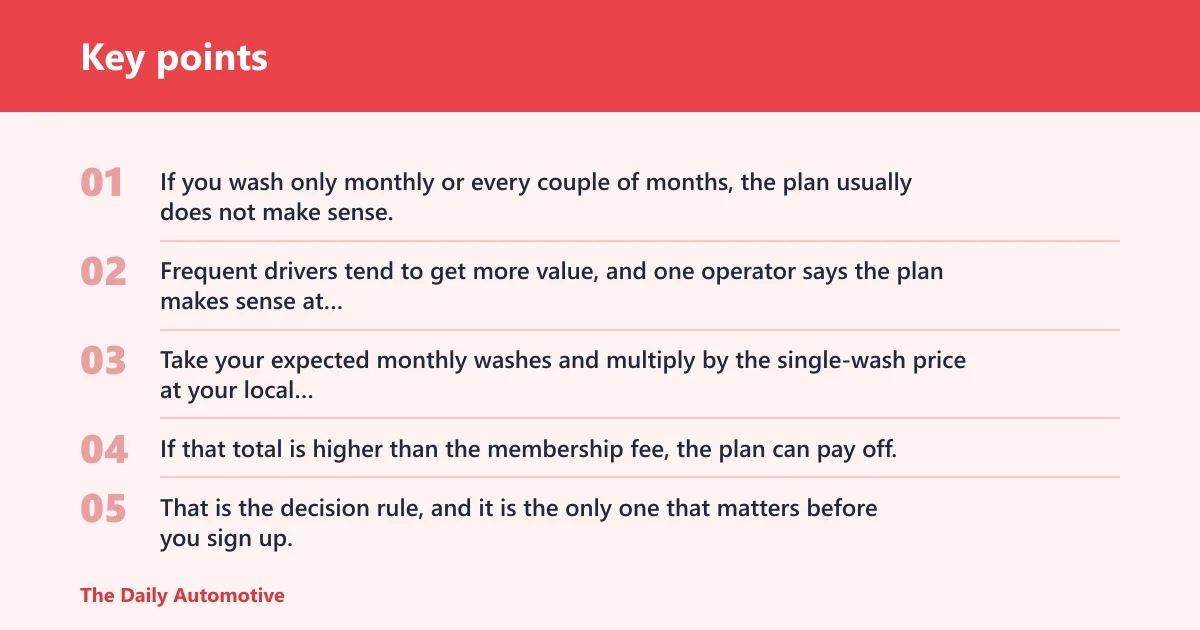
If you wash only monthly or every couple of months, the plan usually does not make sense. Frequent drivers tend to get more value, and one operator says the plan makes sense at two or three washes a month, while another says members can start saving after just two washes a month.
The simple rule for deciding fast
Take your expected monthly washes and multiply by the single-wash price at your local wash. If that total is higher than the membership fee, the plan can pay off. If it is lower, pay per wash. That is the decision rule, and it is the only one that matters before you sign up.
What happens if you wash less often
Low-use months are where memberships lose value. A rainy stretch, a week of travel, or a garage-kept car can cut your wash count fast. In those months, the recurring fee still bills, but the savings disappear.
Why frequent drivers usually win
Commuters, parents with dirty kids and pets, and rideshare drivers tend to benefit more because they stack washes quickly. Drivers facing dust, rain, salt, or winter roads also tend to use the plan more often, which improves the math.
Pros and cons
Memberships can fit some drivers well, but they are not free value. The upside is predictable pricing and faster repeat visits. The downside is that low-use months, service limits, and vehicle-specific rules can erase the savings.
Pros
- Predictable monthly billing instead of paying per visit.
- Better value for frequent drivers who wash often.
- Fast repeat access, especially where license plate recognition replaces stickers.
- Possible household pricing or extra-vehicle discounts at some operators.
Cons
- Low-use months can waste money.
- Basic plans often do not include full detailing or interior cleaning.
- Plans can be tied to one vehicle, which limits sharing.
- Terms vary by location, tier, and included extras.
Limits on service, tiers, and vehicle sharing
Membership tier matters. Basic to premium packages can change what is included, and higher tiers may add tire shine, protectants, underbody flushes, or wheel cleaning. That means the right plan depends on wash frequency and on which services you actually use.
For example, a sedan that gets dusty after a commute and is washed about three times a month can illustrate the comparison. A $22 plan can beat a $12 pay-per-wash total at that usage level, but only if the plan covers the wash type you want and the same vehicle stays enrolled.
Who it’s for
This suits drivers who wash often, want a simple monthly bill, or deal with road film from commuting and weather. It does not suit drivers who wash rarely, switch vehicles often, or want interior cleaning and detailing bundled in by default.
Commuters and high-mileage drivers
High-mileage drivers fit best because they reach the break-even point quickly. If your car sees heavy road grime, the plan is more likely to beat pay-per-wash pricing month after month.
Families and multi-car households
Households can get value when each enrolled vehicle is washed often, especially if the operator offers an additional vehicle discount. The catch is that many programs still price by vehicle, so you should not assume one membership covers every car.
Drivers in dusty, rainy, salty, or winter conditions
Weather and road treatment matter. Salt, slush, and grime can raise wash frequency in winter, while dusty roads or frequent rain can push you toward more visits. Those are the months when memberships often make the most sense.
Unlimited car wash membership break-even table

This table uses sample pricing to show the break-even point. The membership prices come from one operator’s published tiers: Express at $22 per month, Super at $30 per month, and Ultimate at $40 per month. The assumed single-wash price in the examples is about $12.
| Scenario | Monthly washes | Assumed single-wash price | Sample membership price | Monthly savings or loss | Verdict |
|---|---|---|---|---|---|
| Occasional washer | 1 | $12 | $22 | -$10 | No |
| Average driver | 3 | $12 | $22 | +$14 | Yes |
| Frequent commuter | 6 | $12 | $40 | +$32 | Yes |
The break-even point changes if the single wash price is higher or lower, or if you choose a more expensive tier. If your monthly wash count drops, the plan stops being worth it fast. If your local pay-per-wash price is low, you need even more visits to justify the fee.
A common first-timer mistake is signing up during a snowy week, then washing only once the roads clear. The bill still arrives next month. That is why the useful question is not “Can I wash as much as I want?” but “Will I actually wash enough to beat the fee?”
Note on when the plan stops being worth it
The plan usually stops being worth it when your monthly wash count falls below the point where pay-per-wash total beats the fee. Seasonal driving patterns matter. A membership that pays in January may not pay in April if your car stays cleaner and you wash less often.
What does a membership usually include?
A membership usually includes unlimited eligible washes during the billing period for one enrolled vehicle, but terms vary by location and plan. Basic plans often cover exterior washing only. Premium tiers may add protective or finishing services, while full detailing is usually separate.
Basic versus premium tiers
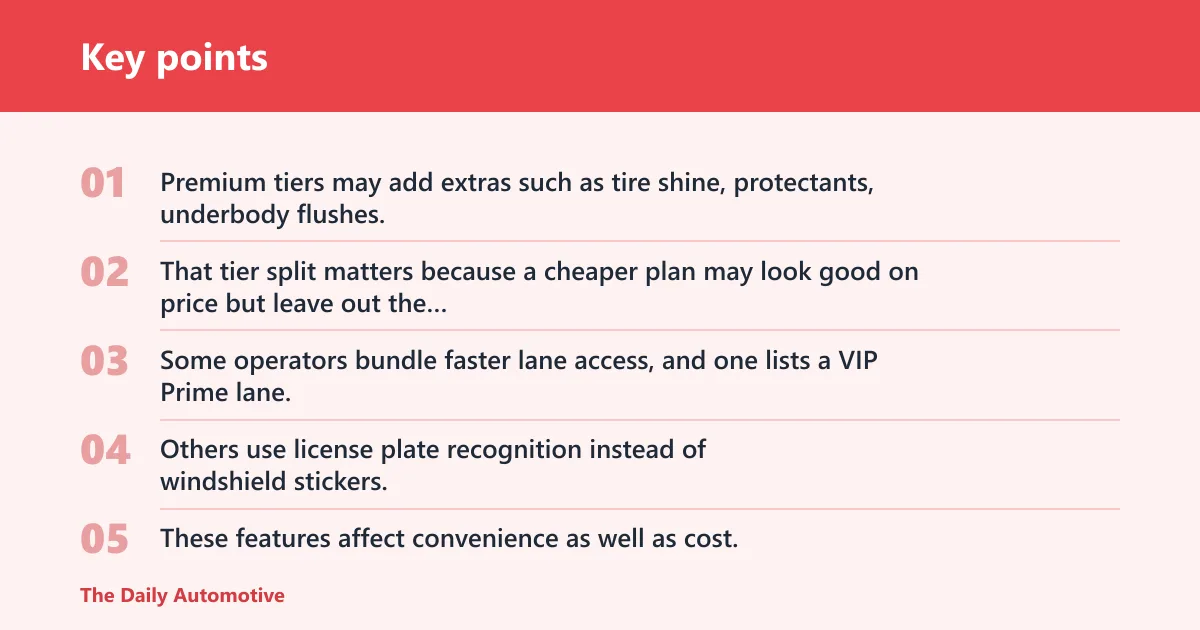
Basic tiers are for the wash itself. Premium tiers may add extras such as tire shine, protectants, underbody flushes, or wheel cleaning. That tier split matters because a cheaper plan may look good on price but leave out the service you wanted.
Common add-ons by package
Some operators bundle faster lane access, and one lists a VIP Prime lane. Others use license plate recognition instead of windshield stickers, which can make entry faster and remove the need for a tag on the glass. These features affect convenience as well as cost.
What is usually not included?
Do not assume a membership includes full detailing, interior vacuuming, shampooing, or deep cleaning. Those are often separate services. If you want interior work, compare the add-on price against paying for it à la carte.
How many washes make it worth it?
The answer depends on the fee and the single-wash price. As a rough rule, one operator says two or three washes a month can make sense, and another says savings can start after two washes a month. If you wash less than that, single visits often cost less.
Using your monthly wash count
Start with the number of washes you actually do in a typical month, not the number you expect during a bad-weather week. Then compare that total against the monthly fee. That keeps the decision tied to your real habits.
Matching single-wash price to the fee
If your local wash is $12 and your plan is $22, you need at least two washes to get close and three washes to move ahead. If your single wash price is higher, the break-even point comes sooner. If it is lower, the plan needs more use.
How seasonality changes the answer
Winter salt, spring pollen, and muddy conditions can push you over the line for a few months. Then summer storage, vacations, or cleaner roads can pull you back under it. That is why a plan can be a smart buy in one season and a poor buy in another.
What should you check before signing up?
Before you enroll, check cancellation timing, billing cutoff rules, vehicle identification, and whether extra cars get a discount. These details vary by operator, and they affect whether the plan works the way you expect.
Cancellation timing and billing rules
One operator says the membership can be cancelled anytime with no contract. Even then, cancellation may take processing time, and some plans stay active until the next billing date. Refund rules also vary, so read the fine print before you join.
License plate recognition or windshield tag
Some operators use license plate recognition, while others still use a windshield tag or sticker tied to one vehicle. That choice matters if you switch cars, share a car between drivers, or want quick entry without a visible tag on the glass.
Extra-vehicle pricing and household limits
Ask whether the plan allows an additional vehicle discount and how many cars can be linked. Some programs offer household pricing, but the rules differ by tier and location. Do not assume a family membership covers the second car automatically.
- Check your average monthly wash count.
- Compare that count against the local single-wash price.
- Read the tier details to see what is included.
- Confirm whether the plan is tied to one vehicle.
- Review cancellation timing, refund rules, and billing dates.
- Ask about extra-vehicle discounts if you have more than one car.
Frequently asked questions
Are car wash memberships worth it?
Yes, if you wash often enough that the monthly fee is lower than your total pay-per-wash cost. They tend to be worth more for commuters, families, and drivers in messy weather. If you wash only occasionally, single visits usually cost less.
How many washes per month make an unlimited membership worth it?
A common break-even point is about 2 to 3 washes a month, but the exact number depends on the monthly fee and your local single-wash price. If your wash total stays below that level, the membership may not save money.
What does an unlimited car wash membership usually include?
It usually includes unlimited eligible washes during the billing period for one enrolled vehicle. Basic plans often cover exterior washing only, while higher tiers may add tire shine, protectants, underbody flushes, or wheel cleaning. Full detailing is usually separate.
Do unlimited car wash memberships have contracts?
Some do not. One operator says cancellation is anytime with no contract, but terms vary by business and plan. Even without a long contract, billing cutoffs, refund rules, and cancellation processing times can still affect when the membership ends.
Can I cancel a car wash membership anytime?
Often yes, but not always with instant effect. Cancellation may require processing time, and the plan may stay active until the next billing date. Check the operator’s rules on refunds and end-of-period billing before you sign up.
Do unlimited memberships work for one car or multiple vehicles?
Most plans are tied to one vehicle. Some operators use license plate recognition, while others use a windshield tag or sticker tied to that car. A few programs offer additional vehicle discounts, but the rules vary by location and tier.
Are car wash memberships worth it: they are worth?
They are worth it when your monthly wash count is high enough to beat the fee. If you wash only once a month, the math usually favors pay-per-wash. If you wash two or three times or more, the plan starts to make stronger financial sense.
Products related to this article
Sponsored / affiliate links. As an Amazon Associate I earn from qualifying purchases. I may earn additional commission from eligible campaigns.