Who Makes Infiniti Cars? Nissan: Plants, Models & Owner (2026)
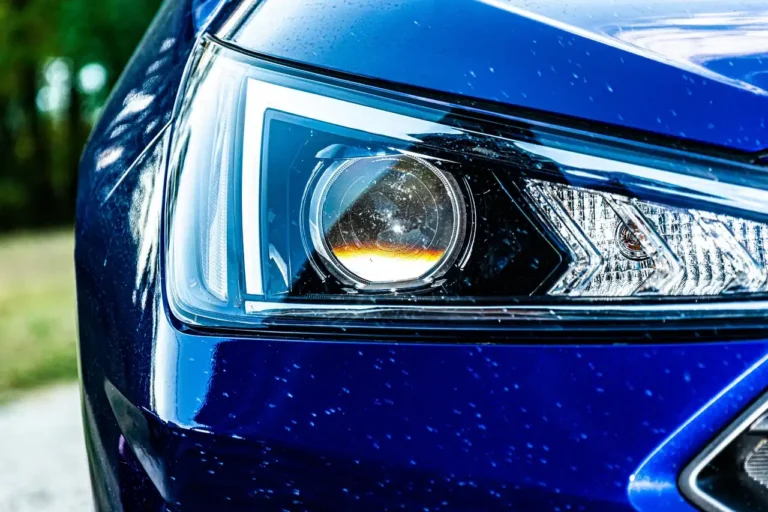
Nissan makes Infiniti. The brand is Nissan Motor Co.’s luxury division, not a separate car company, and every Infiniti sold in the United States is designed, built and sold under Nissan’s ownership. What changed recently is the detail: the lineup is now three SUVs, the QX60 and QX65 come from Tennessee, the QX80 is reported to come from Japan, and Nissan dropped its plan to build Infiniti electric vehicles in Mississippi. This guide separates what Infiniti’s own pages and Nissan’s reports say from what is only press-reported, with an as-of date of October 12, 2026 on every fact.
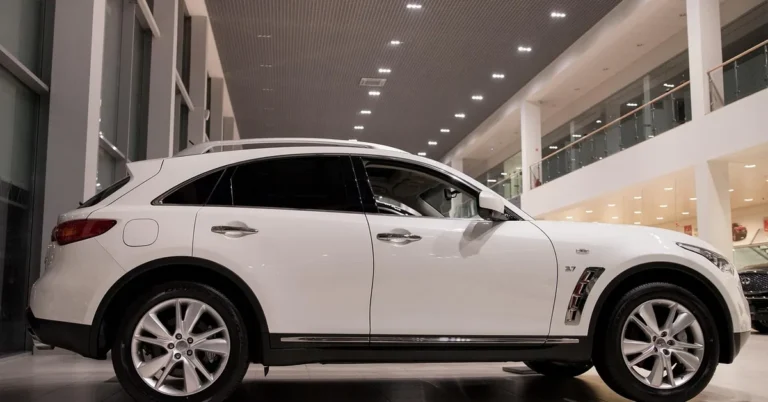
Nissan Motor Co. owns and makes Infiniti, its luxury division since the brand launched in 1989. It is not made by Toyota (that is Lexus) or Honda (that is Acura). As of October 2026 the U.S. lineup is the QX60, QX65 and QX80, with the QX60 and QX65 assembled at Nissan’s Smyrna, Tennessee plant.
Infiniti’s Parent Company: Nissan Motor Co.

|
Best Japanese Car Brands Read Pick Cars of Japan (book) Infiniti is one of several Japanese automakers’ luxury or sporty brands. A general book on Japanese cars puts Nissan and its rivals in one frame, so the Infiniti story reads as part of a bigger picture.
|
As an Amazon Associate we earn from qualifying purchases. Price and availability change; check the listing.
Per Infiniti’s own brand timeline, a small group inside Nissan began work on a performance luxury brand in 1985, the INFINITI name and logo were chosen in 1987, and the brand launched in 1989 with 51 U.S. dealers. The launch cars were the Q45 sedan and the M30 coupe. Nissan itself was established on December 26, 1933 and is headquartered in Yokohama, Japan, with 120,079 consolidated employees as of March 31, 2026, per Nissan’s corporate profile.
Infiniti does not run a separate manufacturing network that we could find on its pages. Nissan’s Decherd, Tennessee powertrain plant makes powertrains for Infiniti products assembled in Smyrna, per a February 2025 Manufacturing Dive report, which shows how closely the two brands are tied together.
Infiniti Ownership Timeline: What Changed Recently
Most pages about Infiniti repeat the 1989 launch story and stop there. The more useful list is what moved in the last few years, because several widely repeated facts are now out of date.
| Date | Event | Source |
|---|---|---|
| 1985 to 1987 | Nissan team forms to build a luxury brand; the INFINITI name and logo are chosen | Infiniti brand history page, read Oct 12, 2026 |
| 1989 | Infiniti launches in the U.S. with 51 dealers, the Q45 sedan and M30 coupe | Infiniti brand history page |
| 2022 and 2024 | Redesigned QX60 (2022 model) and redesigned QX80 (2024 model) arrive | Infiniti brand history page |
| Jan 2025 | QX50 and QX55 reported to end, leaving the QX60 and QX80 | TFLcar and Autoguide reports (press, snippets only) |
| Mar 2025 | Renault and Nissan amend their alliance so each may cut its cross-shareholding to a 10% minimum, down from 15% | Renault and Nissan filings as reported by electrive, Mar 31, 2025 |
| May 5, 2026 | Nissan drops plans to build EVs in Canton, Mississippi, including an Infiniti crossover and sedan | electrive, May 5, 2026 |
| 2026 | First-ever QX65, a five-seat sportback crossover, introduced as a 2027 model; reported built in Smyrna | Infiniti brand history page; press reports of Smyrna assembly |
The alliance row matters for the ownership question. Nissan is a separate listed company in Japan and Renault holds a large stake in it, but that stake does not make Infiniti a Renault brand. Reported Renault percentages differ depending on whether shares held in a French trust are counted, so check Nissan’s latest securities report for the exact figure before quoting one.
Where Are Infiniti Cars Made?
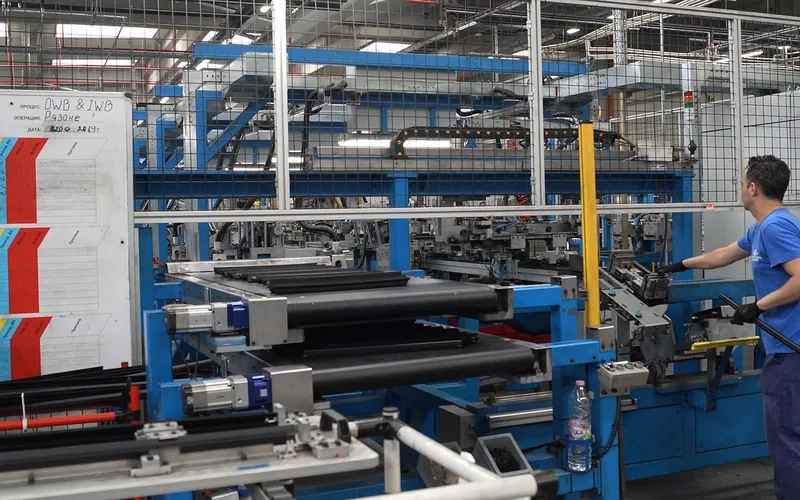
As of October 2026, two of the three U.S. models are built in Tennessee. Nissan’s Smyrna plant builds the QX60, per a February 2025 Manufacturing Dive report and a WKRN report on 2026 QX60 production, alongside the Nissan Murano, Pathfinder and Rogue. Press reports say the new QX65 is built there too. The QX80 is reported to be assembled at Nissan Shatai Kyushu in Yukuhashi, Japan; Infiniti’s own QX80 performance page does not state the plant, so we treat that as press-reported.
| Model | Assembly plant | Confidence |
|---|---|---|
| QX60 | Smyrna, Tennessee | Reported by Manufacturing Dive (Feb 2025) and WKRN |
| QX65 | Smyrna, Tennessee | Reported in press coverage of the launch |
| QX80 | Nissan Shatai Kyushu, Yukuhashi, Japan | Press-reported; not stated on Infiniti performance page |
| QX50 and QX55 | COMPAS plant, Aguascalientes, Mexico (ended) | Reported; production ended in early 2025 |
Plant myths we corrected
| Common claim | What the sources say |
|---|---|
| Infiniti is built in Canton, Mississippi | No. Canton builds the Frontier and Altima per a Feb 2025 report. Infiniti EVs were planned for Canton but were cancelled on May 5, 2026. |
| Infiniti has only two models | No longer true. The QX65 joins the QX60 and QX80, making three. |
| The QX80 gets a V8 | Infiniti lists only a 3.5L twin-turbo V6 for the current QX80. |
| Infiniti will build EVs in the U.S. soon | Not in Mississippi. Nissan said it will serve the U.S. EV market with imports such as the new Leaf. |
Infiniti’s 2026 Lineup: Three SUVs
The U.S. lineup is now all SUVs and crossovers. The midsize three-row QX60 and the full-size QX80 carry over, and the QX65 adds a sloped-roof five-seat option, which Infiniti’s brand page calls a sportback crossover. As of this check, the lineup has no sedan or coupe. Press reports put the QX65 on sale from $53,990 MSRP before a destination charge, but confirm the current price on infinitiusa.com before you rely on it.
Infiniti’s QX80 page lists a 3.5-liter twin-turbocharged V6 with up to 450 horsepower and up to 516 lb-ft of torque, and up to 8,500 pounds of towing when properly equipped. Towing capacity depends on how the vehicle is equipped, so follow the owner’s manual for the exact vehicle. Specs for the QX60 and QX65 vary by trim and model year, so use the maker’s page for the model you are shopping.

Is Infiniti Japanese? Brand vs. Plant
Infiniti is a Japanese brand because its parent, Nissan, is a Japanese company headquartered in Yokohama. That is not the same as where a given car is built. A QX60 assembled in Tennessee is still an Infiniti from Nissan, which is why the questions “who makes it” and “where is it made” have different answers. If the plant matters to you, look up the exact vehicle rather than the brand.
Two quick ways to check a specific car: the window sticker lists the final assembly point, and the NHTSA VIN decoder reports the plant for a VIN you enter. Both come from the vehicle’s own data, so they beat any brand-level generalization, including the table above.
Infiniti vs. Lexus vs. Acura: Who Owns What
Infiniti is often confused with the other two Japanese luxury brands. Each sits under a different parent, the same pattern covered in our guide to which parent owns which car brand and in the Genesis ownership breakdown for the Korean version of the model.
| Brand | Parent company | Note |
|---|---|---|
| Infiniti | Nissan Motor Co. | Launched 1989 (Infiniti timeline) |
| Lexus | Toyota Motor Corporation | Launched 1989 (from memory, unverified) |
| Acura | Honda Motor Co. | Launched 1986 (from memory, unverified) |
Electric Cars and Engines: What Is Actually Planned
Infiniti has shown electric concepts, but none of them is a vehicle you can order. Nissan’s Canton, Mississippi plan to build an Infiniti electric crossover and sedan was cancelled in May 2026. For the full story on the brand’s electric plans, see whether Infiniti makes an electric car. For the V6 family that Infiniti’s brand page says debuted in 1995, see which cars use VQ engines.
Warranty terms for a new Infiniti are set by Nissan; our Infiniti warranty explainer covers the coverage periods.
Frequently Asked Questions
Who makes Infiniti cars?
Nissan Motor Co. makes Infiniti. It is Nissan’s luxury division, launched in 1989, and Nissan designs, builds and sells the cars through Infiniti retailers.
Is Infiniti made by Toyota?
No. Toyota’s luxury brand is Lexus. Infiniti belongs to Nissan, and Acura belongs to Honda.
Is Infiniti Japanese?
Yes as a brand: its parent, Nissan, is headquartered in Yokohama, Japan. The cars themselves are built in more than one country, so the brand and the plant are different questions.
Where are Infiniti cars made?
As of October 2026, the QX60 is built at Nissan’s Smyrna, Tennessee plant and the QX65 is reported to be built there too. The QX80 is reported to come from Nissan Shatai Kyushu in Japan. Check a specific vehicle’s window sticker or VIN for its plant.
Does Infiniti still make sedans?
Not in the U.S. as of this check. The current lineup is the QX60, QX65 and QX80, all SUVs or crossovers.
Is Infiniti just a Nissan?
Infiniti is Nissan’s luxury division and shares Nissan’s plants and parts network, but it has its own models, branding and retailers. It is owned and run by Nissan.
How many models does Infiniti sell in 2026?
Three: the QX60, QX65 and QX80. The QX50 and QX55 were reported to end in early 2025, and the QX65 arrived as a 2027 model.
Conclusion
Nissan makes Infiniti, and for 2026 that means a three-SUV lineup built mostly in Tennessee and Japan, with U.S. electric plans shelved. The brand is Japanese, the parent is Nissan, and the plant depends on the model, so use the VIN for any specific car.
Products related to this article
Sponsored / affiliate links. As an Amazon Associate I earn from qualifying purchases. I may earn additional commission from eligible campaigns.