Best Selling 5 Car Rack for Stand Up Paddle Board
The best overall pick for most SUP owners is a crossbar-mounted carrier with locking security. It gives you board control, highway stability, and easier repeat loading, as long as your vehicle already has the right roof setup.
Quick comparison
| Product | Badge | Best for | Price | ||
|---|---|---|---|---|---|
 |
BOTE Quick Strap Soft Roof RackBOTE | Our pick | Soft roof rack · carrier · two boards | $95.00
Price as of 3 Nov 2026
|
View |
 |
Malone Auto Racks Universal Car Roof Rack, 65-InchMalone | Also great | $170.95
Price as of 3 Nov 2026
|
View | |
 |
Thule 810XT Stand Up Paddleboard Taxi CarrierThule | Also great | Stand-up paddleboard carrier · locking · telescoping | $399.95
Price as of 3 Nov 2026
|
View |
 |
Morohope Outdoor Kayak Storage Rack Freestanding Sup RackMorohope | Also great | $139.99
Price as of 3 Nov 2026
|
View | |
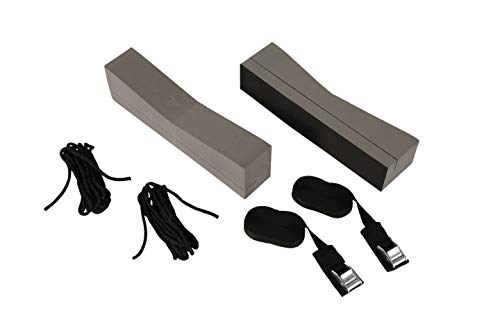 |
Attwood Universal Rack-Free Car-Top Kayak Carrier Kitattwood | Our pick | $24.95
Price as of 22 Nov 2026
|
View |
This comparison starts with fit, then looks at failure mode. A bare-roof car needs a different setup than a wagon with factory rails and crossbars, and the right choice changes again if you carry one board once a month or two boards every week.
Use the table to match the rack type to your vehicle. Then confirm board width, roof load limit, and tie-down layout in the owner’s manual before you buy.
How we chose
This guide uses manufacturer specs, listing details, and published buyer feedback only. The filters were vehicle fit, board count, security, ease of install, and value.
For products with supplied specs, the article stays within those details and avoids guessing at load ratings or exact roof compatibility that the listing does not state.
Rack match matrix
| Rack type | Best vehicle setup | Trip length | Board count | Risk level | Fit | Security | Ease | Value | Common failure warnings |
|---|---|---|---|---|---|---|---|---|---|
| Soft roof racks | Bare roofs, rental cars, vehicles without permanent rails | Short to medium trips | 1 to 3 boards, sometimes more with the right product listing | Lower cost, but higher setup sensitivity | High for universal fit | Moderate | High | High for occasional use | Door-seal wear, strap creep, foam compression, wind noise if the load is not centered |
| Crossbar-mounted carriers | Vehicles with factory rails and crossbars or aftermarket bars | Frequent highway use and long trips | Usually 1 to 2 boards, depending on carrier | Higher speed exposure, but lower movement when locked correctly | Medium to high if the bars fit the carrier | High | Medium | Strong over many trips | Wrong crossbar spacing, too much board overhang, board width beyond carrier limits, ignored roof load rating |
| Universal strap systems | Bare roofs, hatchbacks, occasional borrowed cars | Short trips and light-duty hauling | 1 board, or 2 smaller boards with a proper listing | Lowest equipment cost, but most dependent on correct tie-downs | Very high | Low to medium | Very high | Best for infrequent use | Pad compression, buckle placement on painted metal, loose bow and stern tie-downs, highway noise from sloppy strap routing |
Thule SUP Taxi XT: best for premium single-board transport
The Thule SUP Taxi XT is the strongest fit for a driver who already has roof bars and wants a premium carrier for one board, or a wider SUP that needs a little more room in the rack. Its telescoping design fits board widths up to 34 inches, and the spring-loaded locking cam with push-button or locking security is aimed at faster loading with less guesswork.
That combination makes sense for frequent roof-rack owners who want a cleaner, more secure load than loose pads and straps. The main drawback is price: it is a specialized carrier, so it is harder to justify if you only transport a board a few times per season.
Thule Board Shuttle: best for two-board carry
The Thule Board Shuttle is the better fit when you need to carry two boards on a Thule rack system and want materials chosen for corrosion resistance. That makes it especially relevant for saltwater exposure and regular coastal use, where hardware that resists corrosion matters more than the lowest sticker price.
The drawback is narrow use case. It is built around Thule rack systems, so it is not the right answer if your car has bare roofs or if you need a universal install for different vehicles.
FCS Premium Double Soft: best for flexible bare-roof use
The FCS Premium Double Soft is a soft-rack setup that fits most vehicles and carries 1-4 paddle boards. That range gives it unusually broad utility for families or mixed board loads, and the heavy-duty webbing and simple installation are the key appeal points.
The tradeoff is that soft racks depend more on correct strap tension and pad placement than a locked carrier does. If you drive at highway speed, the load must be centered, tightened in sequence, and checked again after the first few miles.
Curve Soft Rack Lockdown: best for bare roofs and shorter loads
The Curve Soft Rack Lockdown is built around a patented lockdown system and works with vehicles with bare roofs. It holds 1-3 boards, and the neoprene lining plus foam padding are aimed at reducing paint contact while keeping the load from shifting on the roof.
Its main strength is universal fit for occasional use. Its main weakness is the same one shared by most soft racks: if the straps are not snug and the buckle positions are sloppy, noise and movement can creep in on longer drives.
SportRack Adjustable Carrier: best for lightweight two-board hauling
The SportRack Adjustable Carrier uses adjustable foam blocks, a non-skid underside, and a lightweight 7 lbs design to support two boards. That makes it attractive when you want a rack that is easy to move between vehicles or store when not in use.
Its drawback is that lightweight foam solutions usually ask more of the driver. You still need careful strap routing, and you should confirm board width, fin clearance, and the vehicle’s roof limit before loading.
What is the best car rack for a stand up paddle board?
The best car rack for a stand up paddle board depends on roof hardware, trip length, and how often you haul the board. For most repeat users with crossbars, a locked carrier is the safest and cleanest fit. For bare roofs, soft racks or universal pad systems are the practical answer, especially for occasional trips.

There is no single best option for every car. A board that fits one carrier may overhang badly on another, and a roof with low rail spacing can limit what you can mount even before board width becomes the problem.
Soft roof racks: best for bare-roof vehicles
Soft roof racks make sense when the car has no rails or the driver needs a temporary setup. The strongest examples here are the FCS Premium Double Soft, the Curve Soft Rack Lockdown, and the SportRack Adjustable Carrier, because each one is aimed at universal or near-universal use rather than a dedicated bar system.
For short and medium trips, they are often the cheapest workable answer. Their weak point is setup quality: if the straps creep, the foam compresses unevenly, or the load sits off-center, the board can rattle and the roof can take unnecessary wear.
What stops a board from sliding or fluttering?
Padding, strap routing, cam buckles or locking cams, and front or rear tie-downs stop most of the movement. The board should sit on even foam, straps should cross and cinch at the load points, and the nose and tail should be restrained if the carrier calls for it. Loose straps are the usual reason boards flap in crosswind.
Board bag use can help with scuffing, but it does not replace proper tension. A bag without firm tie-downs can still move, and a heavily padded setup can hide slack until the straps settle on the road.
Can you transport a SUP on a car without roof rails?
Yes. Bare-roof vehicles can carry a SUP with soft roof racks or universal pad systems, provided the product is designed for that use and the load stays within the vehicle’s roof limit. The key is correct strap path through the doors or around the body, plus enough padding to protect the paint and roof edges.
That said, bare-roof transport is more sensitive to error than a locked crossbar carrier. Door-seal wear, misaligned buckles, and slack straps are the common failure points.
How wide of a paddle board will a roof rack fit?
Fit depends on the carrier. The Thule SUP Taxi XT fits board widths up to 34 inches, while the other racks in this guide rely more on strap hold and pad contact than a width-specific cradle. If your board is wide, check the listing and leave room for fins, rails, and any bag or deck pad thickness.
Width is only part of the check. Thickness affects strap tension, and fin clearance can matter as much as deck width if the board sits low on a bar or pad system.
Say your board is 32 inches wide and carried in a padded bag. A carrier that looks roomy on paper can still feel tight once the bag, fins, and strap bulk are added, so the practical fit may be narrower than the board’s headline width.
Universal pad systems: best for occasional use
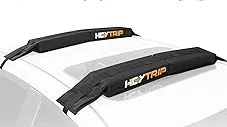
Universal pad systems are the easiest answer for renters, borrowed cars, and occasional hauls. The WONITAGO Soft Roof Rack Pads use 600D polyester, come in 28/34 inch sizes, and include more than 15 feet of straps. The HEYTRIP Universal Soft Roof Rack Pads include two 15 ft straps, bow and stern ropes, EVA foam padding, and a cam lock setup.
These are the compact, quick-install choices. Their drawback is the same one that follows all universal strap systems: you need to watch pad compression, buckle placement, and highway noise, especially if the straps are not dressed cleanly along the roofline.
Do soft roof rack pads work on highway trips?
They can, but only within the vehicle and product limits. Highway use raises the stakes for strap tension, bow and stern tie-downs, and the condition of the foam. If the straps stretch, the load shifts, or the pads slide on a slick roof, the setup becomes noisy and less secure.
For longer highway drives, a locked crossbar carrier is usually the better choice. Soft pads are better treated as practical transport gear, not as a permanent substitute for a dedicated rack system.
Which SUP rack is easiest to install and remove?
Universal pad systems are usually the easiest to install and remove because they do not depend on permanent roof hardware. The HEYTRIP and WONITAGO pad sets are both built for quick setup, while the SportRack Adjustable Carrier is also relatively simple because of its lightweight foam-block format.
Ease is not the same as security. A quick setup still needs careful tightening, and the easiest rack to mount can be the one most likely to loosen if you skip a final check.
Which one should you buy?
Choose by vehicle first. Roof rails and crossbars point you toward hard carriers like the Thule SUP Taxi XT or Thule Board Shuttle. Bare roofs point you toward soft racks or universal pad systems, including the FCS Premium Double Soft, Curve Soft Rack Lockdown, SportRack Adjustable Carrier, WONITAGO pads, or HEYTRIP pads.
Choose by trip pattern next. Frequent highway use favors locked carriers. Occasional local trips can justify soft racks, especially if you want lower cost and fast storage. If you haul more than one board often, prioritize the stated board count of the listing and keep the roof load limit in view.
Choose by board size last. A wide SUP may fit a telescoping or adjustable carrier better, while a narrow board on a short commute can be fine on a universal pad system. Check fin clearance, board bag bulk, and the manual’s roof limit before you buy.
A common first-timer mistake is buying for the board and forgetting the roof. A small hatchback with no rails may accept a universal pad system, but that same car can still be a poor fit if the roof load limit is too low for the board, bag, and rack combined.
- Check the owner’s manual for roof load limits and allowed mounting points.
- Measure board width, thickness, and fin clearance.
- Match the rack type to the vehicle: bare roof, rails, or crossbars.
- Read the listing for board count and width limits.
- Place the board centered on the pads or cradles.
- Tighten the main straps evenly.
- Secure bow and stern tie-downs if the system uses them.
- Recheck tension after the first stop.
Frequently asked questions
How many paddle boards can a car rack carry?
Capacity varies by product. The FCS Premium Double Soft carries 1-4 paddle boards, the Curve Soft Rack Lockdown holds 1-3 boards, the Thule Board Shuttle holds 2 boards, and the Thule SUP Taxi XT is a premium single-board carrier. Always confirm the listing and the vehicle’s roof limit together.
Products related to this article
Sponsored / affiliate links. As an Amazon Associate I earn from qualifying purchases. I may earn additional commission from eligible campaigns.