What Does Cono Carajo Mean: Essential Guide
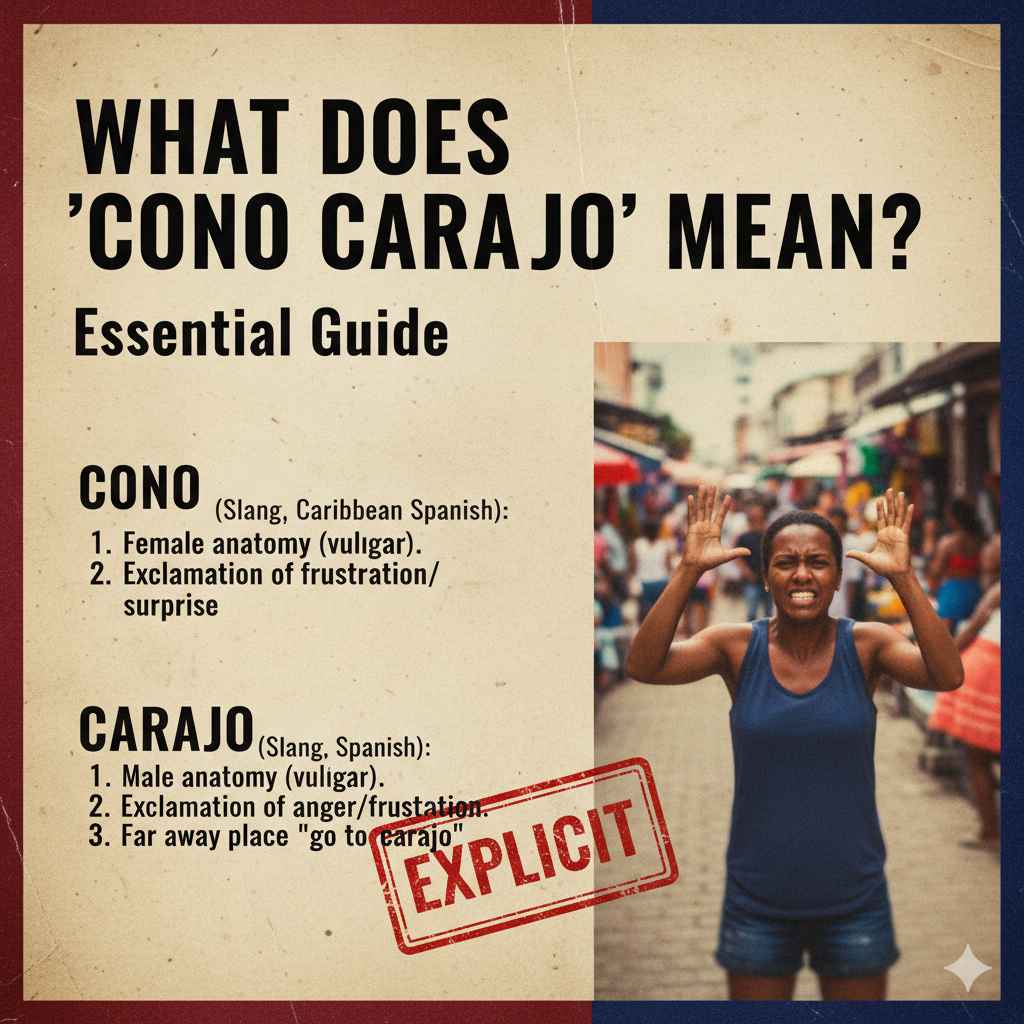
“Cono carajo” is a vulgar Spanish exclamation, often used to express frustration, anger, or surprise, similar to “damn it” or “what the hell” in English. It’s informal and considered offensive in many contexts.
Have you ever heard someone exclaim “cono carajo” and wondered what it means? Maybe you heard it in a movie, a song, or even from a friend, and it sounded… intense. It’s a phrase that can catch you off guard because it’s used with a lot of emotion. While it might sound confusing, understanding its meaning is easier than you think. This guide will break down “cono carajo” for you, explaining its origins, how it’s used, and important things to consider if you ever hear or consider using it. We’ll make sure you get a clear picture without any confusing jargon.
Understanding “Cono Carajo”: The Literal and Figurative
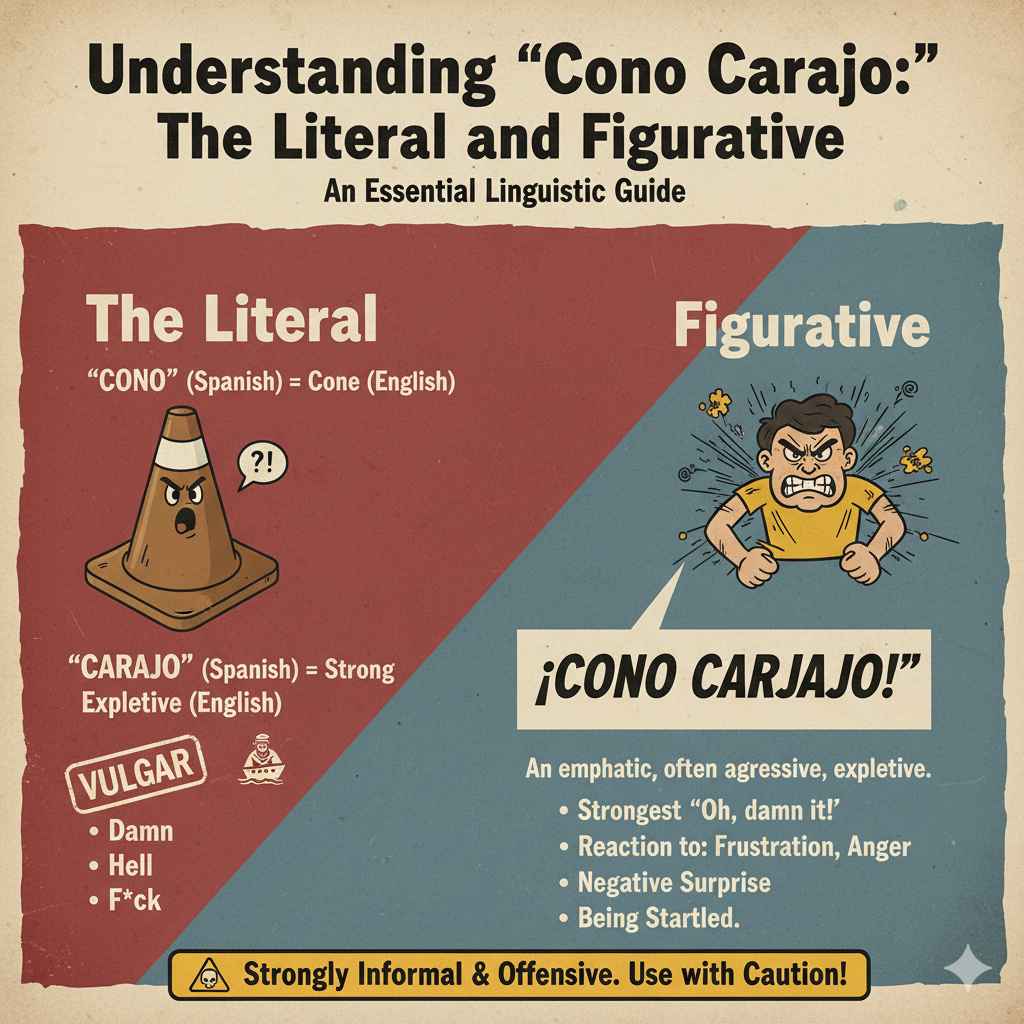
Let’s start by dissecting the phrase. “Cono” literally translates to “cone” in English. “Carajo” is a Spanish word that is considered a vulgar term, often used as an interjection to express strong emotion, similar to “damn” or “hell” in English, but generally carrying a stronger, more offensive weight.
When put together, “cono carajo” doesn’t have a literal meaning like “a cone of rage.” Instead, it functions as an emphatic, often aggressive, expletive. It’s the kind of phrase someone might yell when they stub their toe, drop something valuable, or are incredibly angry about a situation. Think of it as a really strong, informal “Oh, damn it!” or “What the !”
Origins and Cultural Context
The exact origins of “carajo” are a bit murky, as with many old vulgarisms. Some linguistic theories suggest it might derive from the word for “mast” or “penis,” common sources for profanity across many languages. Regardless of its precise genesis, “carajo” has become a staple in informal Spanish, particularly in certain regions and among specific groups.
“Cono” in this phrase acts as an intensifier or a way to add a slightly different flavor to the expletive. It’s not about the object itself, but about adding a bit more “oomph” to the expression of frustration. It’s important to note that the use and reception of this phrase can vary greatly depending on the Spanish-speaking country or even region. What is considered mildly offensive in one place might be seen as highly vulgar and unacceptable in another.
When Is “Cono Carajo” Used?
This phrase is almost exclusively used in moments of intense emotion. You’ll hear it when someone is:
Frustrated: After a series of bad luck or a difficult task that goes wrong.
Angry: When something unfair or infuriating happens.
Surprised (negatively): Reacting to an unexpected negative event.
Startled: Though shouting, “¡Ay, carajo!” or similar is more common for surprise, “cono carajo” can sometimes be used in a harsh surprise.
It’s not a phrase you’d use in polite conversation, a formal setting, or when speaking to someone you don’t know well, especially if you want to make a good impression.
Breaking Down the Components Separately
Understanding the individual words can shed more light on the overall impact of the phrase.
What “Carajo” Means on Its Own
“Carajo” is a powerful vulgarism in Spanish. It’s a versatile word used as an interjection to express annoyance, anger, surprise, or disbelief. Depending on the tone and context, it can range from a mild curse to a serious insult.
As an interjection: “¡Carajo!” (Damn it!)
To dismiss someone: “¡Vete al carajo!” (Go to hell! / Fuck off!)
To express disbelief or astonishment: “¿Pero qué carajo es esto?” (What the hell is this?)
Its strength lies in its ability to convey a raw, unfiltered emotional response. You’ll find it in literature, film, and everyday speech where strong emotions are being expressed, often when characters are under duress or in informal, heated exchanges.
The Role of “Cono”
In the phrase “cono carajo,” “cono” (cone) appears to be used primarily for emphasis. Think of it like adding an extra layer to the intensity. It doesn’t have a specific literal meaning within the expletive, but it contributes to the overall harshness and vehemence of the expression. Some linguists suggest it might be a regionalism found in certain parts of Spain or Latin America, where specific intensifiers are attached to common swear words.
It’s similar to how in English, we might add an extra word to amplify a curse, like saying “goddamn it” instead of just “damn it,” though the semantic addition isn’t always direct. Here, “cono” just makes it sound more intense.
Using “Cono Carajo” (And When You Definitely Shouldn’t)
If you’re learning Spanish or interacting with Spanish speakers, you’ll likely encounter this phrase. Knowing what it means is one thing; knowing whether and how to use it is another.
Acceptable Scenarios (with Caution)
As a listener: Understanding the phrase helps you grasp the emotion of the speaker. If someone yells “¡Cono carajo!” when their car breaks down, you understand their immense frustration.
In very informal, private settings: If you are in a private conversation with close friends who use similar language and you are equally frustrated, you might choose to use it. However, this is still risky.
Scenarios to Strictly Avoid
Formal situations: Never use this in a job interview, a business meeting, a classroom, or any professional environment.
When speaking to elders or authority figures: This is highly disrespectful.
When speaking to strangers: It comes across as aggressive and rude.
In public spaces if you want to be polite: It can cause offense and draw negative attention.
If you are not a native speaker: Using strong vulgarities in a language you don’t fully master can easily lead to misunderstandings or unintended offense. It’s generally best to stick to less offensive expressions.
The key takeaway is that this is a strong, vulgar expression. Unless you are absolutely certain of your audience and the context, it’s best to avoid using it altogether.
Alternatives to “Cono Carajo”
If you want to express frustration or annoyance in Spanish without resorting to vulgarity, there are many other options! Here’s a look at some milder alternatives:
Mild Exclamations for Frustration:
¡Ay! (Oh!) – A very common and mild exclamation of surprise or frustration.
¡Uy! (Oops! / Oh my!) – Similar to ¡Ay!, often used when something small goes wrong.
¡Vaya! (Wow! / Well!) – Can be used for surprise or mild disappointment. “¡Vaya, qué lío!” (Wow, what a mess!)
¡Caramba! – A polite exclamation that conveys annoyance or surprise, much milder than “carajo.”
¡Diantres! – Another polite substitute for “carajo,” conveying annoyance.
¡Maldición! (Damn/Curse it!) – Stronger than “caramba” but generally less offensive than “carajo.”
¡Rayos! (Rays! / Darn it!) – A lighthearted exclamation for annoyance.
Phrases to Express Annoyance:
¡Qué fastidio! (How annoying!)
¡Qué lata! (What a drag! / What a bore!)
¡Qué rollo! (What a drag! / What a pain!) – Common in Spain.
Esto es terrible. (This is terrible.)
No puede ser. (It can’t be.)
Choosing the right alternative depends on the situation and how strong you want your expression of frustration to be. Generally, sticking to the milder options is always safer.
“Cono Carajo” in Different Spanish-Speaking Regions
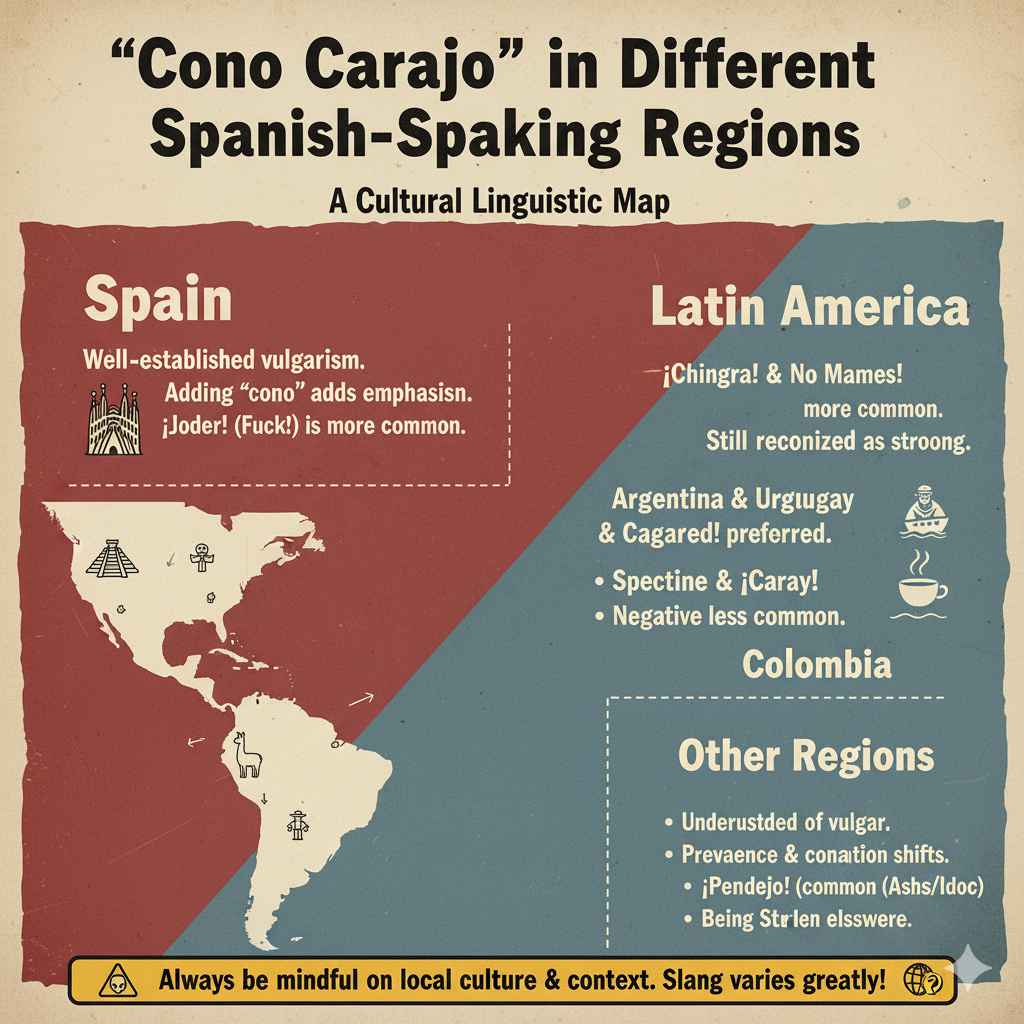
The impact and commonality of a phrase like “cono carajo” can vary significantly across the Spanish-speaking world. While the core meaning of strong, vulgar expression remains, its usage, frequency, and perceived offensiveness can differ.
Spain
In Spain, “carajo” is a well-established vulgarism. Adding “cono” can make it even more emphatic. Its use might be more common in informal, colloquial speech among certain demographics, but it’s still considered a strong curse word. Exclamations like “¡Joder!” (fuck!) are arguably more common as general expressions of frustration.
Latin America
Mexico
In Mexico, “chingar” and its derivatives are extremely common and versatile vulgarities. While “carajo” is understood and used, it might not be as prevalent for casual frustration as other Mexican slang. Phrases like “¡Chinga!” or “¡No mames!” (Don’t fool me! / No way! – used for disbelief or surprise) are often heard. “Cono carajo” would still be recognized as a strong Spanish expletive.
Argentina & Uruguay
These countries, with significant Italian immigration, have their own rich vocabulary of slang and expletives. While “carajo” is understood, Argentinian and Uruguayan Spanish often features terms like “¡Puta madre!” (motherfucker!) or “¡Cagada!” (a shitty situation/mistake) for similar expressions of frustration. The specific “cono carajo” might be less common than these other alternatives.
Colombia
Colombian Spanish also has its own unique slang. “Carajo” is understood, but Colombians might use expressions such as “¡Mierda!” (shit!) or “¡Caray!” (a milder version of carajo) to express annoyance. The phrase “cono carajo” is not a particularly common Colombian idiom.
Other Regions
Across Central America and other parts of South America, the usage of “carajo” and its intensified forms like “cono carajo” will vary. It’s generally understood as a vulgar term, but its specific prevalence and connotation can shift. For instance, in some areas, “pendejo” (asshole/idiot) is a very common insult.
It’s always best to be aware that slang and vulgarities are deeply tied to local culture. What might raise an eyebrow in one country could be practically commonplace (though still vulgar) in another.
FAQ: Your Quick Reference Guide to “Cono Carajo”
Frequently Asked Questions
What is the literal translation of “cono carajo”?
Literally, “cono” means “cone” and “carajo” is a vulgar Spanish word. The phrase “cono carajo” does not have a straightforward literal meaning; it functions as an expletive.
Is “cono carajo” a very offensive term?
Yes, “cono carajo” is considered a vulgar and offensive term in Spanish. It is used to express strong emotions like anger, frustration, or surprise, and is similar to strong English expletives like “damn it” or “what the hell,” but often perceived as harsher.
Can I use “cono carajo” in polite conversation?
No, absolutely not. “Cono carajo” is informal and vulgar. It should never be used in polite conversation, formal settings, or when speaking to people you don’t know well, especially elders or authority figures.
Where does the word “carajo” come from?
The exact origin of “carajo” is uncertain, but linguistic theories suggest it might be related to old words for “mast” or “penis,” common origins for profanity across languages. It has evolved into a widely used Spanish vulgarism.
Are there milder alternatives to “cono carajo”?
Yes, many milder alternatives exist. You can use phrases like “¡Híjole!” (in Mexico), “¡Caramba!”, “¡Diantres!”, “¡Maldición!”, or “¡Qué fastidio!” to express frustration without using strong vulgarity.
Is “cono carajo” used in all Spanish-speaking countries?
While “carajo” is understood in most Spanish-speaking countries, the specific phrase “cono carajo” might be more common in certain regions than others. Slang and vulgarities are highly regional, and other expletives might be more prevalent in different countries.
What does it mean if a Spanish speaker uses “cono carajo” towards me?
If someone uses “cono carajo” towards you, it generally indicates they are very angry, frustrated, or upset with you or the situation involving you. It’s a sign of significant disrespect and strong negative emotion.
When Your Car Gives You Trouble: Relating to Frustration
As someone who spends a lot of time helping folks with their vehicles, I can tell you that cars have a unique way of testing our patience. Those moments when a light flashes on the dashboard, your car makes a strange noise, or it simply won’t start can definitely bring out strong emotions – maybe even a phrase like “cono carajo”!
Think about it: You’re in a hurry, running late for an important appointment, and suddenly your car sputters and dies. Your mind races, your frustration builds, and out it comes. While we can’t always control our initial reactions, understanding what to do next is key.
Common Car Frustrations and Solutions:
Here are a few typical car problems that might lead someone to utter a frustrated exclamation, and beginner-friendly ways to address them:
1. The “Check Engine” Light Comes On
This is probably the most common cause of driver anxiety. It can mean anything from a loose gas cap to a serious engine issue.
What it feels like: “¡Cono carajo! What is it now?”
Beginner Steps:
1. Check the gas cap: Make sure it’s tightened properly (click it several times). Sometimes this is all it takes!
2. Observe your car’s behavior: Is it driving normally? Any strange noises or performance issues?
3. Get it scanned: The most effective way to know what’s wrong is to have the onboard diagnostic (OBD-II) system scanned. Many auto parts stores offer this service for free. You can also purchase an inexpensive OBD-II scanner to do it yourself at home.
4. Consult a mechanic: If the light stays on or you notice performance issues, it’s time to visit a trusted mechanic.
For more on understanding your check engine light, you can refer to resources like the National Highway Traffic Safety Administration (NHTSA), which provides valuable information on vehicle safety and maintenance.
2. Strange Noises from Your Car
Grinding, squealing, clunking – these sounds are never good signs and can definitely cause alarm.
What it feels like: “¡Cono carajo! What is that noise?”
Beginner Steps:
1. Note the sound: When does it happen? (e.g., when braking, turning, accelerating, at certain speeds). What does it sound like? (e.g., squeal, grind, clunk, hum).
2. Check tires: Look for anything unusual like a puncture or bulging sidewall.
3. Listen closely: Try to pinpoint where the sound is coming from (front, back, left, right).
4. Consult a professional: Noises are often best diagnosed by a mechanic who can safely inspect your vehicle.
3. Battery Issues (Car Won’t Start)
A dead battery is a classic frustration. The clicking sound when you turn the key is a universally understood sign of trouble.
What it feels like: “¡Cono carajo! Not today!”
Beginner Steps:
1. Check the battery terminals: Are they clean and tight? Corrosion (a powdery blue/green substance) can prevent a good connection. You can often clean them gently with a wire brush and a mixture of baking soda and water.
2. Try a jump start: If you have jumper cables and another car, this can get you going. Always follow proper safety procedures when jump-starting a car. For detailed instructions, consult resources like those from AAA, a reputable automotive club.
3. Test the battery: A mechanic or auto parts store can test your battery’s health to see if it needs replacement.
4. Flat Tire or Puncture
A sudden drop in tire pressure is inconvenient and can be dangerous if it happens at high speed.
What it feels like: “¡Cono carajo! A flat tire!”
Beginner Steps:
1. Pull over safely: Get your car off the road to a secure location.
2. Locate your spare tire and tools: These are usually in the trunk.
3. Follow the steps to change it: If you are comfortable and have a safe place to do so, you can change it yourself. There are many great videos online.
4. Call for roadside assistance: If you’re unsure or in an unsafe location, this is the best option.
Learning about these common issues and how to approach them can build your confidence. Remember, most basic maintenance and troubleshooting steps are designed to be manageable for everyday drivers.
Conclusion
So, what does “cono carajo” mean? It’s a robust, informal Spanish exclamation that translates to a strong expression of frustration or anger, akin to “damn it” or “what the hell.