What Is Body Roll On A Car: Essential Guide
Body roll on a car is the sideways leaning motion your vehicle makes when turning sharply. It is caused by physics, specifically centrifugal force acting on the car’s center of gravity. While normal to some degree, excessive body roll reduces stability and handling. This guide explains what causes it and simple ways to manage it.
Ever notice your car leaning over like a sailboat when you take a fast corner? That leaning motion is what we call “body roll.” It’s a very common experience, especially in taller vehicles like SUVs or older sedans. Many drivers worry this leaning means something is broken, but often, it’s just physics doing its thing. Understanding body roll is the first step to feeling safer and more in control behind the wheel. Don’t worry; we will break down exactly what it is, why it happens, and what you can do about it in plain English. Let’s make your car feel steady again!
As your trusted automotive guide, I want to assure you that feeling your car sway a little when turning is completely normal. However, too much sway can feel alarming and reduce your confidence in handling. This guide will teach you everything about body roll—from the physics behind the lean to practical solutions—all without confusing jargon.
Understanding the Basics: What Exactly is Body Roll?
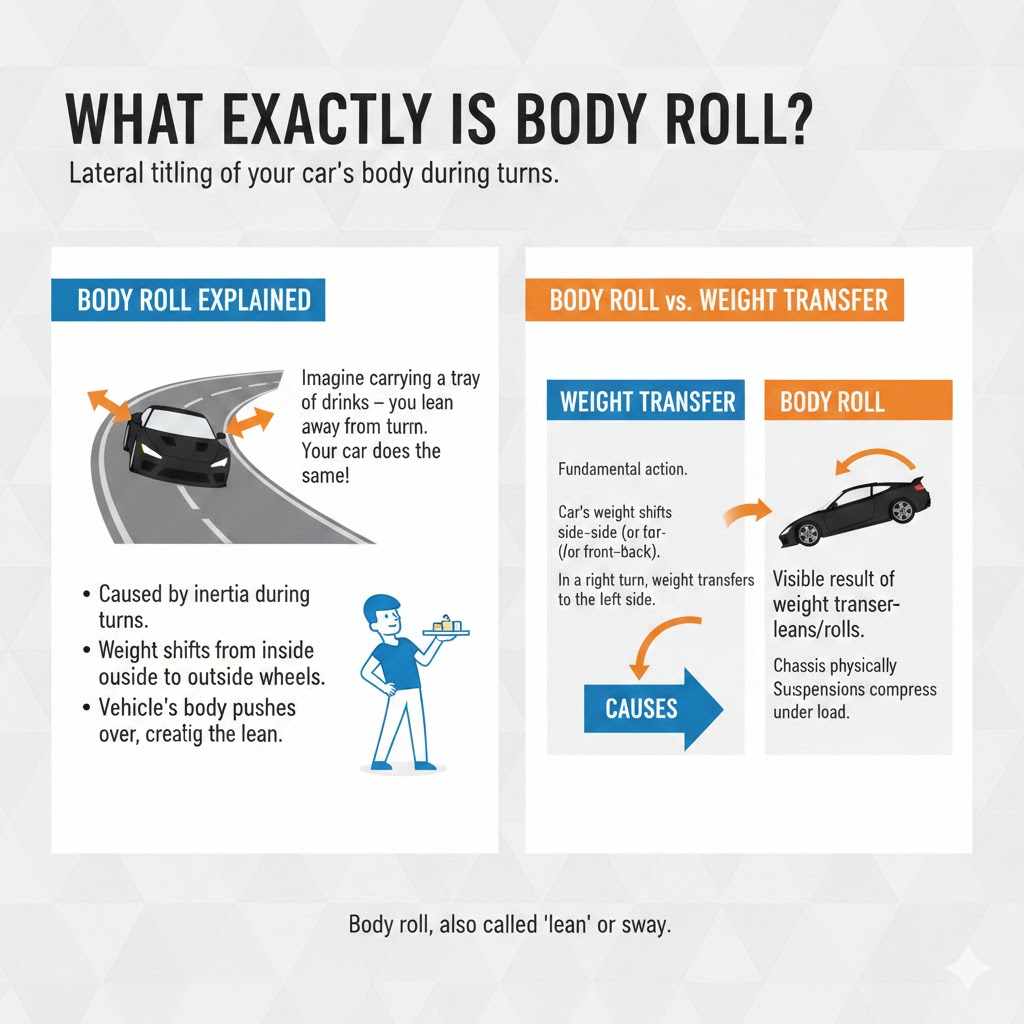
Body roll, sometimes called “lean” or “sway,” is the lateral tilting of your car’s body relative to the road surface during a turn or when making a sudden change in direction.
Imagine you are carrying a large tray of drinks while walking around a tight corner. You naturally lean away from the turn to keep the drinks level. Your car does the same thing! When a car turns, inertia tries to keep the car going straight, causing the weight to shift from the inside wheels to the outside wheels. This weight transfer is what pushes the vehicle’s body over, creating that noticeable lean.
Body Roll vs. Weight Transfer
These terms are related, but they are not exactly the same thing. It’s important to know the difference:
- Weight Transfer: This is the fundamental action where the car’s weight shifts from one side (or axle) to the other due to acceleration, braking, or turning. In a right turn, weight transfers to the left side of the car.
- Body Roll: This is the visible result of that weight transfer. The chassis (the main frame of the car) physically leans or rolls as the suspension components compress under the shifting load.
The Science Behind the Lean: Why Cars Roll
Body roll is governed by the laws of physics. If you understand the main culprits, you can better understand why some vehicles roll more than others.
The Role of Centrifugal Force
When you turn, the force that seems to push your car outward is technically called centripetal force (the force pulling you toward the center of the turn). However, from your perspective inside the car, it feels like an outward push—that’s the feeling of inertia resisting the change in direction. This resistance causes the weight to shift outward.
Center of Gravity (CG)
This is arguably the biggest factor. The Center of Gravity (CG) is the theoretical point where all the vehicle’s weight is evenly distributed. Think of it as the balance point.
- High CG: Vehicles like tall vans or trucks have a high center of gravity. When turning, the shifting weight has a longer distance to travel sideways before it balances, resulting in more leverage and therefore, more body roll.
- Low CG: Sports cars sit very low to the ground. Their center of gravity is closer to the ground, meaning the weight shift results in less dramatic leaning and better stability.
Suspension Stiffness
The suspension is what connects your wheels to your car’s body and absorbs bumps. It controls how much the body is allowed to lean:
- Soft Suspension (Comfort-focused): Cars built primarily for a smooth, quiet ride (like many luxury sedans) use softer springs and shock absorbers. These soak up bumps well but allow the body to lean more significantly during hard turns.
- Stiff Suspension (Performance-focused): Race cars or performance vehicles use very stiff components. They limit body roll heavily, keeping the tires flatter on the road, but this often results in a harsher ride quality.
Identifying Excessive Body Roll: When Is It a Problem?
A little lean is fine; it’s normal. Excessive body roll, however, is a sign that your handling might be compromised, and it can make driving feel unsafe, especially at highway speeds.
Signs You Might Have Too Much Body Roll
Pay attention to how your car feels. If you notice these signs consistently, it’s time to investigate:
- Delayed Steering Response: You turn the wheel, but the car seems to take a moment to actually start leaning into the turn. It feels “sloppy.”
- Visual Confirmation: When cornering, you can physically see the top of your car leaning significantly more than you expect for that speed.
- Tire Wear Issues: Excessive roll can put too much pressure on the outside edges of your tires, leading to uneven wear over time.
- “Squat” and “Dive”: Body roll is part of the dynamic movement package. If you also notice severe “squat” (rear end dipping during acceleration) or “dive” (front end dipping during braking), your suspension is generally too soft.
For more detailed information on how vehicle dynamics affect safety, you can review resources from reputable institutions focused on vehicle dynamics, such as those supported by transportation safety research bodies.
Troubleshooting: Common Causes of Increased Body Roll
If your normally stable car has suddenly started leaning excessively, something has likely worn out or failed. Here are the most common culprits:
1. Worn or Failing Shock Absorbers (Dampers)
The shocks or struts are responsible for controlling the speed at which the springs compress and rebound. They dampen the movement. If they wear out:
- They lose their ability to control the spring movement.
- The car will continue to bounce or lean long after the turn is complete, making the body roll feel exaggerated and prolonged.
- This is perhaps the most common mechanical cause of sudden excessive roll.
2. Weak or Broken Springs
The coil springs support the weight of the car. If a spring weakens (loses its tension) or breaks:
- That corner of the car sits lower, effectively raising the center of gravity on that side.
- The suspension on that side is now much softer, allowing the body to lean more easily toward the opposite, stiffer side.
3. Issues with Anti-Roll Bars (Sway Bars)
The anti-roll bar is a specialized piece of equipment designed specifically to fight body roll. It links the suspension on the left and right sides of the car. If it fails, the effect is immediate and dramatic.
- Broken End Links: These small links connect the bar to the control arms. If they snap or loosen, the bar can’t effectively transfer force across the axle, eliminating its ability to fight roll.
- Bent or Broken Bar: The bar itself can fail under extreme stress, rendering it useless.
4. Tire Pressure Problems
This is the easiest fix and something you should check first! If the tires on one side are significantly underinflated:
- The sidewalls flex excessively during a turn.
- This flexibility allows the car’s body to lean further before the tire grips properly, mimicking the feeling of bad suspension components.
How to Manage and Reduce Body Roll
If you drive a vehicle known for lean (like a minivan) or if you simply want better cornering performance, there are several ways to stiffen up the suspension and minimize body roll.
Level 1: Easy Checks and Maintenance
Start here. These steps require minimal tools and cost very little.
- Check Tire Pressure: Refer to the sticker inside your driver’s side door jamb (not the pressure listed on the tire sidewall) and inflate all four tires to the manufacturer’s recommended PSI.
- Inspect Bushings: Look at the rubber bushings where the suspension components connect. If they are cracked, torn, or missing, the suspension joints have too much play, allowing the body to move freely before the suspension resists.
- Visual Suspension Check: Look for obvious signs of leaks from the shocks/struts (a greasy residue) or broken springs.
Level 2: Suspension Upgrades for Better Handling
If maintenance doesn’t solve the issue, or if you want a performance upgrade, replacing or adding components is the way to go.
A. Upgrading Shocks and Struts
Replacing old, worn-out shocks with high-quality aftermarket units designed for slightly firmer damping will significantly control the rate of roll and rebound. Look for performance-oriented brands known for good damping control.
B. Installing Stiffer Coil Springs
Replacing factory springs with “lowering springs” or “performance springs” often results in a stiffer spring rate. This means the spring takes more force to compress, directly reducing the amount the body can lean before the suspension resists.
C. Heavy-Duty Anti-Roll Bars (Sway Bars)
This is often the most effective upgrade specifically targeting body roll. A thicker, stiffer sway bar provides much greater resistance to lateral body movement:
- The bar links the left and right sides. When the left side tries to compress (during a right turn), the bar twists, forcing the right side to push down slightly, keeping the chassis flatter.
- Many aftermarket companies sell adjustable sway bars, allowing you to tune exactly how stiff you want the roll resistance to be.
Level 3: Advanced Solutions (Coilovers)
For the most serious reduction in roll and the best adjustable handling, many enthusiasts turn to coilover systems. Coilovers combine the spring, shock, and adjustment mechanisms into one unit.
- Adjustable Damping: You can literally turn a knob to make the shock softer for daily driving or much stiffer for track days.
- Adjustable Height: This lowers the overall ride height, which mechanically lowers the car’s center of gravity, further reducing the leverage that causes roll.
Comparing Comfort vs. Performance Trade-offs
It is crucial to understand that reducing body roll almost always comes with a trade-off in ride comfort. Before modifying your suspension, consider what you use your car for most often.
Use this table to help decide which direction is right for you:
| Modification Type | Impact on Body Roll | Impact on Ride Comfort | Best For |
|---|---|---|---|
| Factory Suspension (Worn) | High Roll | Soft/Bouncy | Budget repair only |
| New High-Quality Shocks | Moderate Reduction | Slightly Firmer | Daily driver seeking better control |
| Stiffer Sway Bars | Significant Reduction | Minimal Change at Low Speed | Best bang-for-buck handling upgrade |
| Performance Springs | High Reduction | Noticeably Firmer | Enthusiast driving, spirited cornering |
| Full Coilover System | Maximum Reduction | Highly Adjustable (Can be very harsh) | Track days and aggressive street driving |
Body Roll in Different Vehicle Types
Not all vehicles are designed the same way. Knowing the general tendency of your vehicle type can help set realistic expectations for handling.
SUVs and Trucks (High Center of Gravity)
These vehicles naturally experience the most body roll because their design prioritizes ground clearance and height. Manufacturers combat this aggressively with larger anti-roll bars from the factory. If an older SUV rolls a lot, it likely means those large factory bars or struts are failing.
Sedans and Coupes (Lower Center of Gravity)
Standard cars generally handle turns much flatter than SUVs. Body roll, if excessive, usually points directly to worn-out dampers or old springs rather than fundamental design issues.
Sports Cars (Very Low Center of Gravity)
These cars are engineered to minimize roll. They often use very stiff setups. If a sports car exhibits significant roll, it almost always signals a broken or severely damaged suspension component, not normal operation.
Safety First: Tools and Precautions When Inspecting Suspension
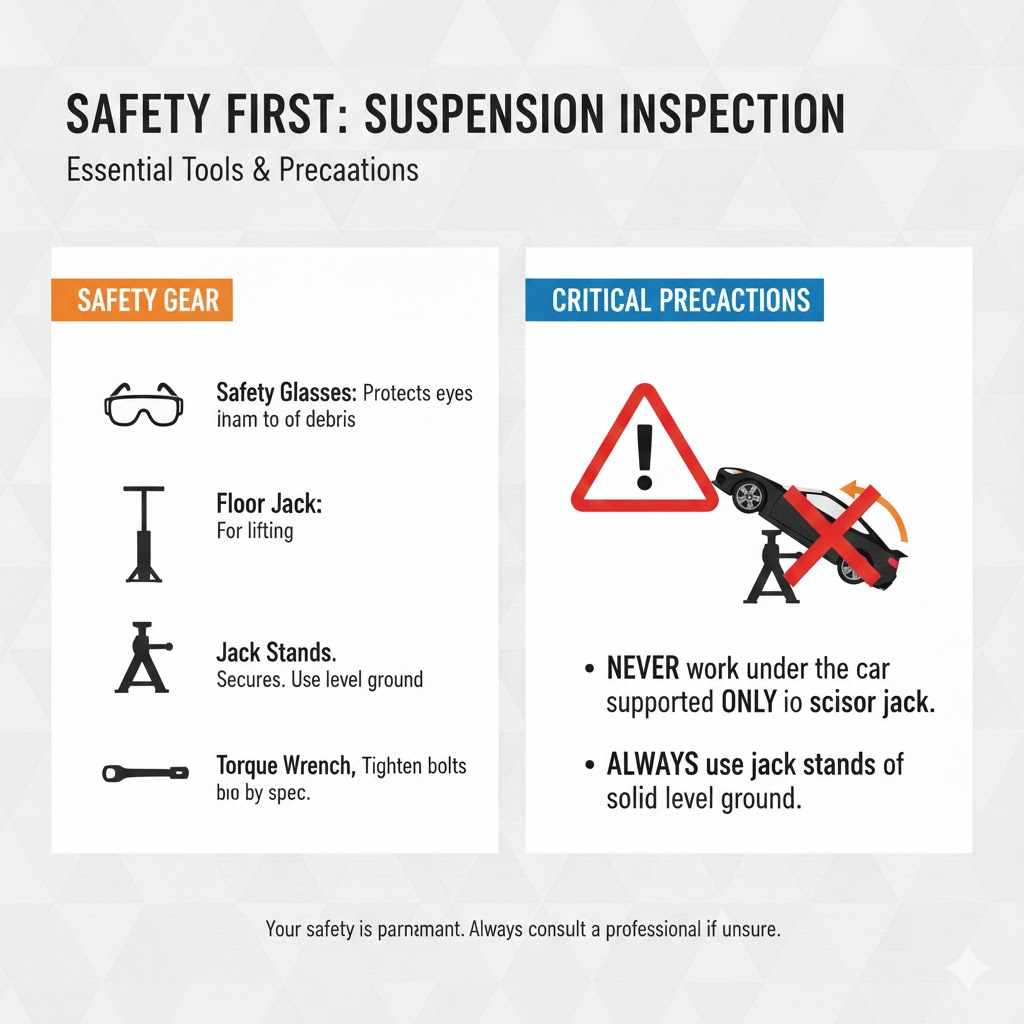
If you decide to visually inspect your suspension components or attempt to replace anything, safety is your absolute top priority. Never work under a car supported only by a standard scissor jack.
Essential Safety Gear and Tools:
- Jack Stands: You need at least two heavy-duty jack stands rated for more than your car’s weight. Place them on solid, level ground on designated frame points.
- Floor Jack: Use a sturdy hydraulic floor jack to lift the vehicle initially.
- Safety Glasses: Protect your eyes from dust, rust, and debris.
- Torque Wrench: Suspension bolts must be tightened to the manufacturer’s exact specification. Using the wrong torque can lead to components loosening while driving.
Remember, suspension components are under extreme tension. Springs can hold stored energy even when the car is jacked up. If you are not comfortable working with pressurized springs or heavy components, it is always best practice to have a certified mechanic perform the replacement.
Frequently Asked Questions (FAQ) About Car Lean
Q1: Is body roll the same as sliding sideways (oversteer or understeer)?
No. Body roll is the leaning of the body while the tires maintain grip. Oversteer (rear sliding out) and understeer (front pushing wide) happen when the tires lose grip with the road surface due to too much speed or poor traction.
Q2: Can I fix body roll without spending a lot of money?
Yes. The cheapest and easiest fix is ensuring your tire pressure is exactly correct. After that, a full inspection to catch worn shocks or bushings early is much cheaper than replacing major components later.
Q3: Does lowering my car completely stop body roll?
No. Lowering a car lowers the center of gravity, which helps reduce the leverage that causes roll, but it doesn’t change the suspension stiffness itself. You still need stiff springs and good dampers to stop the physical leaning motion.
Q4: How long do shocks and struts typically last?
In normal driving conditions, shock absorbers and struts usually last between 50,000 and 100,000 miles. However, driving on very rough roads or towing heavy loads can drastically shorten this lifespan.
Q5: If my car only rolls when I brake hard, what is happening?
That is called brake dive, not body roll. It means your front shock absorbers or struts are too soft and cannot control the rapid forward weight transfer when you hit the brakes.
Q6: Are stiffer anti-roll bars safe for everyday driving?
Generally, yes. Stiffer sway bars primarily affect lateral (side-to-side) movement. While they will make bumps feel slightly harsher when you hit them with only one wheel (like crossing a speed bump on one side), they dramatically improve handling stability during turns, making them a very safe and effective upgrade for most drivers.
Conclusion: Taking Control of Your Car’s Lean
Understanding what is body roll on a car means recognizing the interplay between physics, your vehicle’s design, and the condition of its suspension. It’s not a mystery; it’s mechanics at work! If you feel that unsettling lean, you now know the common culprits: worn shocks, soft springs, or underinflated tires.
Start simple: check your pressures. If the issue is internal, focus on the dampers (shocks/struts) as they control the motion of the lean. For those seeking enhanced road feel and precision, upgrading components like anti-roll bars offers a fantastic balance between keeping your ride reasonably comfortable and drastically improving your cornering stability. By being proactive and understanding these key components, you can ensure your car handles predictably, keeping you confident and safe on every turn you take.