What Is BMW Efficient Dynamics? Tech, Dashboard Display & EVs
BMW EfficientDynamics is the automaker’s engineering strategy — not a single part — for cutting fuel consumption and CO2 emissions without dulling performance. Since BMW introduced it in 2007, the strategy has combined Auto Start-Stop, brake energy regeneration, and lightweight construction to help cut the brand’s fleet-wide emissions by more than 40%. This guide explains how each technology works, what the dashboard display means, and whether EfficientDynamics still applies to BMW’s electric models.
What Is BMW Efficient Dynamics?
BMW Efficient Dynamics is an engineering strategy that BMW applies across its lineup to reduce fuel consumption and emissions while maintaining or improving performance. It isn’t one gadget or feature — it’s an umbrella term for a group of technologies working together: drivetrain efficiency, weight reduction, aerodynamics, and intelligent energy management. It has been standard on every new BMW since its 2007 launch, and BMW officially brands it as one word — “EfficientDynamics” — though most drivers search and refer to it as two words.
The goal is straightforward: use less fuel and produce fewer emissions per mile without making the car feel slower or less responsive. BMW achieves this by targeting several parts of the car at once rather than relying on a single fix, which is why the strategy touches everything from the engine and brakes to the body panels and steering system.
For more on how BMW’s technology and ownership details work across the current lineup, see our full BMW coverage hub.
The Core Technologies Inside BMW Efficient Dynamics
Six technologies do most of the work inside Efficient Dynamics. Each one targets a different source of wasted fuel or energy, and BMW layers them together rather than relying on any single feature.
| Technology | What It Does |
|---|---|
| Auto Start-Stop | Shuts the engine off automatically at a full stop (like a red light) and restarts it instantly once the driver releases the brake, cutting fuel wasted at idle. |
| Brake Energy Regeneration | Captures kinetic energy released during braking and uses it to recharge the battery, so the alternator draws less power from the engine while driving. |
| Electric Power Steering (EPS) | Draws power only when the driver is actually turning the wheel, unlike a traditional hydraulic pump that runs constantly. |
| Lightweight Construction | Uses materials such as carbon fiber-reinforced plastic (CFRP) and high-strength steel to cut vehicle mass so the engine works less for the same performance. |
| Active Aerodynamics | Air flaps in the front grille close automatically at highway speed to reduce drag, and body panels are shaped to cut wind resistance. |
| ECO PRO Mode | A driver-selectable mode that adjusts throttle response and climate control and adds a coasting function that disengages the drivetrain when you lift off the accelerator; BMW says it can improve efficiency by up to 20%. |
Auto Start-Stop gets the most attention because it’s the most noticeable in daily driving, and it’s fair to ask whether start-stop technology genuinely reduces fuel consumption — independent testing generally confirms it does in stop-and-go city driving, with less benefit on the highway. If it ever needs to be turned off for a specific drive, BMW makes that possible through a dashboard button rather than permanently disabling Auto Start-Stop through the vehicle settings.
Brake energy regeneration works alongside other braking-related features on newer BMWs, including Auto H (Automatic Hold), which keeps the car stationary at a stop without the driver holding the brake pedal — a small addition that further reduces unnecessary engine load in traffic.
What Does the Efficient Dynamics Display on Your BMW Dashboard Mean?
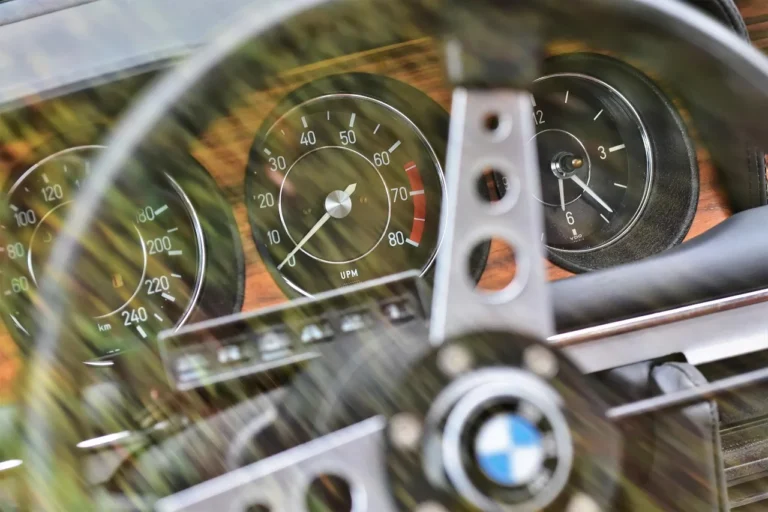
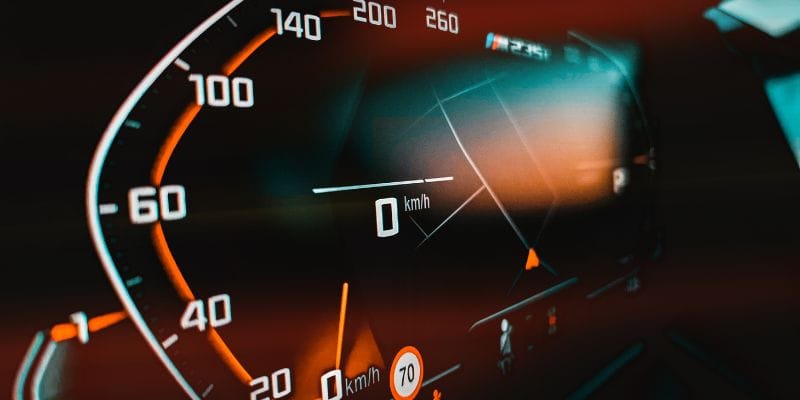
Most BMW models with Efficient Dynamics show a dedicated gauge or digital display — often shaded blue — that tracks how efficiently you’re driving in real time. It typically lights up or shifts color when the car is coasting with the drivetrain disengaged, when Auto Start-Stop has shut off the engine, or when ECO PRO mode is active. Seeing this display change during normal driving is expected behavior, not a fault.
What to Do If an Efficient Dynamics or Related Warning Light Comes On
A separate amber warning light or a Check Control message is a different matter from the normal blue efficiency display, and it’s worth a quick look before assuming the worst.
- Check the iDrive or Check Control screen: Open the Check Control message to see whether a specific system — such as “Start/Stop function currently not possible” — is named alongside the warning.
- Note what changed recently: A recently disconnected or replaced battery, very cold weather, or a low state of charge commonly triggers a temporary Start-Stop or brake regeneration shutdown rather than a real fault, similar to what owners of specific BMW X3 models report after a cold snap.
- Book a diagnostic scan if it persists: If the light or message stays on for more than a day of normal driving, have a BMW dealer or independent specialist read the exact fault code from the car’s DME or battery management module.
From Concept to Reality: The BMW Vision EfficientDynamics and the i8
BMW previewed where the strategy could lead with the BMW Vision EfficientDynamics concept car, unveiled at the 2009 Frankfurt Motor Show. It paired a three-cylinder turbodiesel engine with two electric motors in a plug-in hybrid layout, wrapped in a lightweight, aerodynamic body with gull-wing doors. BMW wasn’t initially planning to build it — but the concept’s design and hybrid powertrain went into production largely unchanged as the BMW i8, sold from 2014 to 2020 with more than 20,000 units built. It remains the clearest real-world example of Efficient Dynamics engineering shaping an entire car from the ground up, rather than being bolted on afterward.
How BMW Efficient Dynamics Compares to Mercedes, Audi & Volkswagen’s Efficiency Programs
BMW wasn’t alone in building an efficiency brand around this era of engineering — most German automakers launched a similar umbrella program around the same time, though each one leans on a different primary lever.
| Brand | Efficiency Program | Primary Engineering Focus |
|---|---|---|
| BMW | EfficientDynamics | Auto Start-Stop, brake energy regeneration, electric power steering |
| Mercedes-Benz | BlueEFFICIENCY | Aerodynamics, reduced rolling resistance, engine tuning |
| Audi | Audi ultra | Lightweight construction and overall weight reduction |
| Volkswagen | BlueMotion | Aerodynamic tuning and longer transmission gear ratios |
In practice, the real-world differences between these programs are often smaller than the marketing suggests — a BMW 318d and a comparable Mercedes-Benz BlueEFFICIENCY model, for example, have posted similar combined fuel economy figures in independent testing, even though BMW’s approach leans harder on drivetrain and braking tech while Mercedes and Volkswagen lean harder on aerodynamics.
Does BMW Efficient Dynamics Still Matter in the Electric Era?
Yes. BMW still applies the Efficient Dynamics label to its electric and plug-in hybrid models, though the specific technologies shift with the powertrain. On the BMW iX and the upcoming iX3, Efficient Dynamics engineering now focuses on battery efficiency, motor management, and aerodynamics aimed at maximizing electric range rather than cutting fuel use — BMW has specifically described the iX’s efficiency gains as an extension of the same EfficientDynamics package of measures used on its combustion models.
On plug-in hybrid models, the same energy-management systems that once balanced a combustion engine with brake regeneration now intelligently switch between electric-only and combustion driving based on route, traffic, and battery charge. BMW’s ConnectedDrive system layers on top of this, using real-time traffic and road data to fine-tune how the car manages power, whether the underlying vehicle is a gas-only 3 Series or a fully electric iX. For a closer look at how BMW’s newer electric models stack up against rivals, see our breakdown of what benefits BMW EVs have over Tesla.
📊 BMW cut its new-vehicle fleet’s average fuel consumption and CO2 emissions by more than 40% between 2007 and 2020 under the Efficient Dynamics strategy — Source: BMW Group, “The Efficient Dynamics success story,” 2020
“It centered on consistently reducing fuel consumption — and thereby CO2 emissions — on the one hand, while steadily increasing driving pleasure on the other.”
Frequently Asked Questions
What is BMW Efficient Dynamics?
BMW Efficient Dynamics is BMW’s engineering strategy, introduced in 2007, for reducing fuel consumption and CO2 emissions without sacrificing performance. It combines Auto Start-Stop, brake energy regeneration, electric power steering, lightweight construction, and active aerodynamics. It’s standard equipment across BMW’s current lineup, from combustion models to plug-in hybrids and fully electric cars.
How does BMW Efficient Dynamics work?
It works by combining several technologies rather than relying on one single fix. Auto Start-Stop cuts the engine at idle, brake energy regeneration recharges the battery during braking, and lightweight materials reduce the mass the engine has to move. Active aerodynamics and ECO PRO mode’s coasting function further cut drag and fuel use during regular driving.
What are the benefits of BMW Efficient Dynamics?
The main benefits are lower fuel costs, reduced CO2 emissions, and no meaningful loss of performance. BMW says the strategy helped cut its fleet-wide fuel consumption and CO2 emissions by more than 40% between 2007 and 2020, while performance-focused models like the M Series still deliver the power output BMW is known for.
Does Efficient Dynamics affect the performance of the vehicle?
No — Efficient Dynamics is designed to preserve or improve performance, not reduce it. Features like brake energy regeneration and electric power steering reduce the load on the engine so more of its power goes toward driving rather than running accessories, while lightweight construction improves the power-to-weight ratio.
What does the Efficient Dynamics light on my BMW dashboard mean?
The blue Efficient Dynamics display or gauge shows how efficiently you’re driving in real time and lights up when the car is coasting or in an efficiency-focused mode — this is normal. A separate amber warning light or Check Control message usually points to an issue with Auto Start-Stop, the battery, or a related sensor, and is worth checking with a diagnostic scan if it persists.
Is BMW Efficient Dynamics the same as ECO PRO mode?
No. ECO PRO mode is one selectable driving mode within the broader Efficient Dynamics strategy — it adjusts throttle response and climate control and enables coasting to squeeze out extra efficiency on demand. Efficient Dynamics itself stays active in the background through features like Auto Start-Stop and brake energy regeneration, regardless of which drive mode is selected.
Does BMW still use Efficient Dynamics on its electric cars?
Yes. BMW continues to apply Efficient Dynamics engineering — now focused on battery efficiency, aerodynamics, and energy management — to electric models like the iX and the upcoming iX3. BMW describes the iX’s efficiency gains as an extension of the same Efficient Dynamics package of measures used on its combustion models, aimed at range rather than fuel savings.
Conclusion
BMW Efficient Dynamics isn’t a single feature you can point to — it’s a strategy that touches the engine, brakes, steering, body, and battery of every current BMW. Since its 2007 introduction it has helped cut BMW’s fleet-wide emissions by more than 40%, and the same engineering philosophy now carries over to plug-in hybrids and fully electric models like the iX. Understanding the individual pieces — Auto Start-Stop, brake energy regeneration, ECO PRO mode, and the dashboard display that tracks them — makes it easier to tell normal efficiency behavior from an actual warning worth a service visit.
Products related to this article
Sponsored / affiliate links. As an Amazon Associate I earn from qualifying purchases. I may earn additional commission from eligible campaigns.