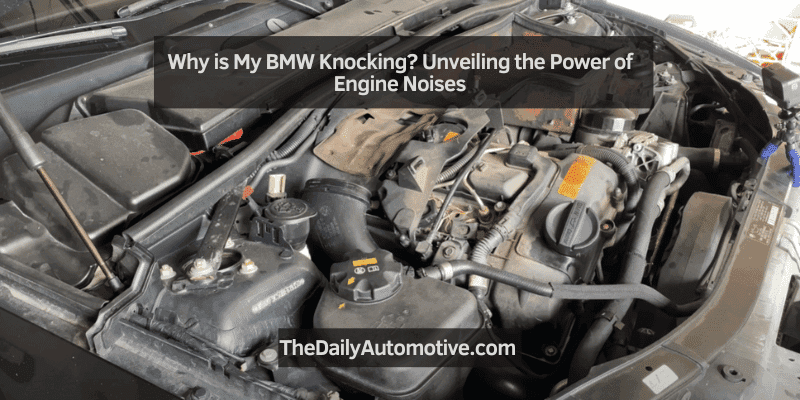
Why Is My BMW Knocking? Causes, Safety Risks & Fixes
A knocking BMW usually means one of three things: normal-but-audible direct-injector ticking (harmless), a stretched timing chain — common on N20, N63, and S63 engines — or rod knock from worn bearings that can wreck an engine fast. Confusing these is costly: a timing chain job runs $2,500–$5,500, while ignoring rod knock can mean a full engine replacement. This guide explains how to tell them apart and when to stop driving immediately.
Quick Answer
A soft, rapid tick from a BMW’s direct injectors is normal. A metallic rattle that lasts 1–3 seconds on cold start usually points to timing chain wear (common on N20, N63, and S63 engines). A deep, heavy knock that gets louder under load is likely rod knock — stop driving and have the car towed, since continuing can destroy the engine.
Is It Safe to Drive With a Knocking BMW?
It depends entirely on which noise you’re hearing. A light, rhythmic tick from around the valve cover is a valvetrain issue that needs attention soon but usually won’t strand you today. A deep, heavy knock from the bottom of the engine that gets louder as you accelerate is a different situation — that’s rod knock, and it can lead to catastrophic engine failure while you’re driving, including loss of power steering and braking assist if the engine seizes, or an oil fire if a broken rod punches a hole in the block.
| Noise Type | Sound & Location | When It Happens | Urgency |
|---|---|---|---|
| Lifter tick | Light, rapid tapping near the valve cover | Cold start, usually fades within a minute | Low — inspect soon, safe to drive short-term |
| Timing chain rattle | Brief metallic clatter from the front of the engine | Cold start only, worse below 40°F | Medium-High — schedule inspection now |
| Rod knock | Deep, heavy knock from the block or oil pan | Constant, worsens with RPM or load | Critical — stop driving, have it towed |
If you’re not sure which category your BMW falls into, treat it as the more serious option until a mechanic tells you otherwise. A short tow now is far cheaper than a destroyed engine.
What’s Actually Making That Noise? Common BMW Engine Sounds
If you’re wondering why your BMW is knocking, the sound itself is a clue. Modern BMW engines are louder than most people expect even when nothing is wrong, so it helps to know what’s normal before assuming the worst.
Common Engine Noises in BMW Cars
- Direct-injector ticking: Many N55, B46, and B58 engines produce a soft, rapid ticking from the fuel injectors under the hood — this is normal direct-injection behavior, not a fault, and it’s usually loudest from directly above the engine.
- Clicking or tapping sound: Often lifter tick — hydraulic lifters that haven’t built oil pressure yet, especially right after a cold start or an oil change. It usually fades within a minute of driving.
- Cold-start rattle: A metallic clatter lasting one to three seconds on startup, then quieting down, is the classic symptom of timing chain guide wear on N20, N63, and S63 engines.
- Deep, heavy knock: A knock that comes from low in the engine and grows louder under acceleration or load is the sound of worn rod bearings — rod knock — and is the most serious noise on this list.
Is It Normal for a BMW to Tick at Idle?
Yes, to a point. Direct-injection BMW engines are known for a light ticking sound at idle that many owners mistake for a problem — it’s the sound of the fuel injectors cycling at high pressure. What’s not normal is a tick that gets louder with RPM, doesn’t fade after the engine warms up, or is accompanied by a check-engine light or a drop in performance. Any of those point to a real issue rather than normal injector noise.
Primary Causes of Engine Knocking in BMWs
BMW engine knocking can come from fuel and ignition problems, engine overheating, or wear in BMW-specific components like the timing chain and high-pressure fuel pump. Below are the causes worth checking first, roughly in order of how often they show up.
Fuel-Related Issues:
- Low-quality or low-octane fuel: Fuel with insufficient octane detonates prematurely instead of igniting cleanly, causing the pinging or knocking sound engineers call detonation. Always use the octane BMW specifies in your owner’s manual — most turbocharged BMW engines require 91 octane (premium) minimum.
- Carbon deposits: BMW’s direct-injection engines spray fuel directly into the cylinder rather than over the intake valves, so there’s no fuel wash to keep the valves clean. Carbon buildup on the valves and injectors over time disrupts airflow and combustion, and can contribute to knock.
- Lean or rich fuel-air mixture: A lean mixture (too much air) runs hotter and knocks more easily; a rich mixture (too much fuel) burns incompletely. A failing mass airflow sensor or vacuum leak is a common cause of either.
Ignition System Problems:
- Worn spark plugs: Spark plugs that are past their service interval fire inconsistently, which can produce a pinging or light knocking sound under acceleration. Most BMW N and B-series engines call for iridium plugs replaced every 60,000–100,000 miles — check your owner’s manual for your specific engine.
- Incorrect ignition timing: If the spark fires before the piston reaches the optimal point, the fuel-air mixture ignites too early and produces a knocking sound. On modern BMWs this is almost always electronic (DME software or a sensor fault) rather than a mechanical adjustment issue.
- Faulty ignition coils: A failing coil causes uneven combustion in that cylinder, which can sound like a knock and will usually also trigger a misfire code.
Engine Overheating:
- Cooling system problems: A failing water pump, coolant leak, or stuck thermostat lets engine temperatures climb, which can trigger pre-ignition (the fuel-air mixture igniting before it should) and produce a knocking sound.
- Insufficient lubrication: Low or degraded oil increases friction between moving parts, raising internal temperatures and accelerating the wear that eventually causes rod knock.
BMW-Specific: Timing Chains, HPFP, and Rod Bearings
Some knocking causes are far more common on BMWs than on the average car, because they trace back to design choices in specific engine families. Knowing your engine code (stamped on the block, or listed in your owner’s manual) narrows the diagnosis considerably.
- Timing chain guide wear (N20, N26, N63, S63, N74): These engines are known for timing chain guides that wear prematurely, sometimes by 70,000–100,000 miles, producing the classic 1–3 second cold-start rattle. BMW addressed early N63 engines with a no-charge “Customer Care Package” and later faced class-action settlements over N20/N26 timing chain failures in certain model years. Left unaddressed, worn guides can let the chain skip timing or shed metal debris into the oil, which then wears rod and turbo bearings.
- High-pressure fuel pump (HPFP) ticking: A failing HPFP can produce a ticking or clicking noise synchronized with engine speed, along with misfires, hard starts, or a loss of power. Because the HPFP is chain-driven off the same timing chain, HPFP ticking and timing chain rattle can sound similar and are easy to mix up without a proper inspection.
- Rod bearing wear: Once metal debris from a worn timing chain or extended oil-change intervals starts circulating, it accelerates wear on the rod bearings that connect the pistons to the crankshaft. This is the root cause of true rod knock, and it’s a documented issue on several BMW engine families, including some N63 examples with spun rod bearings.
📊 BMW’s N63, S63, and N74 V8/V12 engines can develop enough timing chain guide wear by roughly 70,000–100,000 miles to cause a cold-start rattle — a defect significant enough that BMW offered a no-charge “Customer Care Package” on early model years before facing class-action settlements over the issue. Source: Perry’s Quality Auto, BMW N20/N26 Timing Chain: Symptoms, Cost, and How We Repair It
What Are BMW Knock Sensor Codes P0325 and P0330?
P0325 and P0330 mean the engine computer isn’t getting a valid signal from knock sensor 1 or 2 — the sensors that listen for detonation and adjust ignition timing to protect the engine. These codes don’t always mean the engine is actually knocking; a bad wiring connector can trigger the same code for as little as a $40 repair. But if a real knock is present alongside the code, the ECU may already be pulling timing to protect the engine, which can feel like a loss of power.
- Confirm the code with a scan tool: Read the exact code (P0325, P0330, or a cylinder-specific variant) and freeze-frame data before assuming the worst.
- Inspect the sensor’s wiring and connector: Corrosion or a loose pin is a common, inexpensive cause of a false knock sensor code.
- Test the sensor itself: A multimeter or oscilloscope check confirms whether the sensor is actually producing a signal under vibration.
- Rule out an actual knock: If the sensor and wiring test fine, a real detonation event (bad fuel, carbon buildup, or a mechanical issue) is triggering the code — go back to the causes above.
📊 Knock sensor replacement typically costs $250–$550 on most vehicles, rising to $700–$1,100 on V6/V8 engines where the sensor sits under the intake manifold and takes 4–8 hours of labor instead of one. Source: Edmunds, P0325: Knock Sensor 1 Circuit Malfunction
Diagnosing and Fixing a Knocking BMW at Home
You don’t need a full shop to narrow down what’s causing a BMW to knock — a stethoscope, an OBD2 scanner, and a systematic process will get you most of the way there before you decide whether it’s a DIY fix or a shop visit.
- Note when the knock happens: Listen for whether it occurs at cold start, idle, acceleration, or under load — timing alone narrows down the likely cause fast.
- Locate the sound with a mechanic’s stethoscope: Touch the probe to the valve cover, the oil pan area, and the accessory belt separately to isolate which region is loudest, keeping clear of moving belts and pulleys.
- Check the oil level and condition: Pull the dipstick or check the digital gauge; low or sludgy oil starves the bearings and can cause — or mimic — a knock.
- Scan for trouble codes: Plug in a BMW-compatible OBD2 scanner and check for knock sensor codes (P0325/P0330) or cylinder-specific misfire codes.
- Rule out a cold-start-only rattle: If the noise is a 1–3 second clatter only on cold starts that then disappears, suspect timing chain wear and have it inspected before it worsens.
- Get a professional opinion before driving further: If the knock is deep, heavy, or gets louder under load, stop driving and have the car towed to a BMW specialist rather than risk further damage.
Best BMW Knock Diagnosis Pick
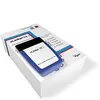
Vgate vLinker BM Plus Bluetooth OBD2 Scanner for BMW/Mini
A BMW-specific Bluetooth code reader that pairs with your phone to pull knock sensor and misfire codes before you pay a shop’s diagnostic fee.
- Best for: Reading BMW-specific codes like P0325/P0330 knock sensor faults at home
- Why we picked it: Built for BMW/Mini’s proprietary protocols and pairs with free apps for deeper live-data readouts than a generic reader
- Main drawback: Needs a compatible phone app — it has no built-in screen of its own
Compare more BMW knock-diagnosis tools
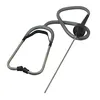 Option 1 Lisle 52500 Mechanic’s Stethoscope
|
 Option 2 BMW SAE 5W-30 Full Synthetic Motor Oil
|
 Option 3 NGK 97506 Laser Iridium Spark Plug (4 Pack)
|
As an Amazon Associate we earn from qualifying purchases.
Addressing Fuel-Related Issues
Fuel-related causes are among the easiest to rule out, and often the cheapest to fix, so they’re worth checking first if the knock is mild and not the deep, heavy kind described above.
Investigating Low Fuel Quality
Low-quality fuel can have detrimental effects on your BMW’s engine performance. Here’s what to check:
- Check the fuel source: Buy from reputable stations that follow standard quality controls.
- Contaminants in the fuel: Dirt or water in low-quality fuel disrupts combustion; a quality fuel injector cleaner can help offset this.
- Fuel filter: A clogged filter restricts fuel flow and can contribute to knocking. Replace it on the interval BMW recommends for your model.
Understanding the Effects of Incorrect Fuel Octane Rating
The octane rating of fuel determines its resistance to detonation. Using the wrong octane can cause knocking:
- BMW’s recommended octane: Check your owner’s manual — most turbocharged BMW engines require 91 octane (premium) minimum, and using a lower grade can cause knocking.
- Detonation and pre-ignition: Fuel with too low an octane rating ignites prematurely under compression, producing the pinging or knocking sound and, over time, engine damage.
- Higher-than-needed octane: Using fuel above what BMW specifies is usually unnecessary. Stick to the manufacturer’s guidance rather than paying for octane your engine doesn’t use.
Resolving Ignition System Problems
If fuel quality checks out, the ignition system is the next place to look — worn spark plugs and failing coils are common, inexpensive causes of a knocking or pinging sound.
Diagnosing Faulty Spark Plugs
- Check the condition of the spark plugs: Look for black, oily deposits or worn electrodes.
- Inspect the coil connections: Ensure each ignition coil is fully seated and its connector is secure.
- Pull the misfire counts: A scan tool can show per-cylinder misfire counts, which quickly points to a specific plug or coil.
Checking Ignition Timing
- Review live timing data: A scan tool that reads live ignition timing can flag timing that’s advancing too aggressively for the fuel and conditions.
- Inspect the timing chain: If timing is off on a chain-driven BMW engine, a stretched or loose chain is a common root cause — see the BMW-specific section above.
Replacing Ignition Coils
- Locate the coils: On most BMW engines, they sit on top of the engine, directly above each spark plug.
- Remove the old coil: Disconnect the electrical connector and unbolt the coil from its mounting point.
- Install the new coil: Seat it fully, reconnect the connector, and torque the mounting bolt to spec.
If you’re not comfortable performing these checks yourself, a certified BMW technician can run the same diagnostics with dealer-level scan tools in less time than a DIY attempt.
Preventing Engine Overheating
Overheating raises cylinder temperatures enough to trigger pre-ignition, which sounds like a knock. Keeping the cooling system healthy is one of the simplest ways to avoid it.
Importance of Coolant Levels
- Coolant absorbs and dissipates heat from the engine, keeping combustion temperatures stable.
- Low coolant levels reduce cooling performance and raise the risk of overheating.
- Checking and topping up coolant regularly helps catch a slow leak before it becomes a bigger issue.
Identifying Radiator and Water Pump Issues
- Leaking coolant: Look for coolant stains or puddles around the radiator and water pump area.
- Damaged fins or a failing water pump: Bent radiator fins reduce airflow, and a worn water pump bearing can cause both overheating and its own separate whining or grinding noise.
- Blockage: Debris or sediment inside the radiator core restricts coolant flow and can cause overheating even with a full reservoir.
Checking for Thermostat Problems
- Temperature gauge irregularities: A gauge that fluctuates or reads abnormally high can point to a faulty thermostat.
- Slow warm-up: An engine that takes unusually long to reach operating temperature may have a thermostat stuck open.
- Rapid overheating: A thermostat stuck closed can cause the engine to overheat quickly, especially in traffic.
Additional Factors to Consider When Diagnosing BMW Engine Noises
If fuel, ignition, and cooling all check out, a few remaining components are worth a look before assuming the worst — belts, exhaust leaks, and the air intake system can all produce noises that get mistaken for engine knock.
Belts and Pulleys Inspection
- Visually inspect belts and pulleys for cracks, glazing, or missing pieces.
- Check belt tension — some give is normal, but excessive slack or tightness strains the pulleys.
- Listen for squealing or grinding, which usually indicates a worn belt or pulley bearing rather than an engine-internal noise.
Checking for Exhaust Leaks
- Inspect the exhaust manifold and pipe joints for holes or loose connections.
- A hissing or popping sound, especially at cold start, often points to a cracked manifold or a loose downpipe joint rather than the engine itself.
Evaluating the Air Intake System
- A clogged air filter restricts airflow and can lean out the fuel mixture, which contributes to knock.
- Cracked intake hoses create unmetered air leaks that disrupt the air-fuel mixture.
- Carbon buildup on the throttle body can cause rough, irregular airflow.
This video from EricTheCarGuy walks through a practical approach to isolating engine noises, which is a useful next step if you’ve worked through the checks above and still can’t pin down the source:
Professional Maintenance and Repair Solutions
If a knock turns out to be timing chain wear, rod bearing damage, or anything involving the bottom end of the engine, this is squarely a job for a BMW specialist rather than a DIY repair — the tolerances and specialized tools involved make it easy to cause further damage without the right training.
Benefits of Regular Engine Inspections
- Early detection: Catching timing chain wear or a failing knock sensor early is far cheaper than waiting for rod knock.
- Enhanced performance: Components in good condition mean the engine runs the way BMW designed it to.
- Prolonged engine life: Fixing small issues early prevents them from cascading into bearing or chain failures.
- Better fuel efficiency: A properly tuned engine burns fuel more efficiently.
Importance of Professional Diagnosis and Repair
- Accurate assessment: Trained technicians with BMW-specific diagnostic software can distinguish timing chain rattle from HPFP ticking from rod knock far more reliably than sound alone.
- Genuine parts: A reputable shop uses OEM or OEM-equivalent parts for chain, bearing, and sensor replacements, which matters for long-term reliability.
- Warranty protection: If your BMW is still under warranty or covered by a Customer Care Package, an authorized shop keeps that coverage intact.
Selecting a Trustworthy BMW Service Center
- Reputation and experience: Look for a shop with a track record specifically on BMW’s chain-driven engines, not just general repair experience.
- Certifications: BMW-certified or ASE-certified technicians with import specialization are a good sign.
- Transparent pricing: A reliable shop explains diagnostic findings and costs before starting repairs, especially for a job as large as a timing chain replacement.
If you notice a knocking sound in your BMW, don’t wait to have it inspected — for the reasons covered above, the difference between “inspect this week” and “stop driving right now” comes down to which noise you’re hearing.
Frequently Asked Questions About BMW Engine Knocking
What causes a BMW engine to knock?
BMW engine knocking most often comes from one of three sources: normal-but-audible direct-injector ticking, a stretched timing chain (common on N20, N63, and S63 engines), or worn rod bearings causing true rod knock. Less common causes include low-octane fuel, worn spark plugs, carbon buildup, or low oil pressure. The sound’s location and how it changes with RPM usually reveal which one you have.
Is it safe to drive a BMW that is knocking?
Not if it’s a deep, heavy knock that gets louder under load — that’s likely rod knock, and continuing to drive can destroy the engine within minutes, sometimes causing a rod to punch through the block. A light, rhythmic tick from the valve cover area is less urgent but still needs prompt inspection. When in doubt, stop driving and have the car towed.
What does a BMW timing chain rattle sound like?
A BMW timing chain rattle sounds like a brief metallic clatter on a cold start, typically lasting one to three seconds before quieting down as oil pressure builds. It’s most common on N20, N26, N63, and S63 engines and tends to get worse over time. Ignoring it risks the chain skipping timing or breaking, which can cause serious engine damage.
How much does it cost to fix a knocking BMW engine?
Costs vary widely by cause. A knock sensor replacement runs about $250–$1,100 depending on engine access. A BMW timing chain job typically costs $2,500–$5,500 at an independent specialist, or more at a dealership. Rod knock from worn bearings usually means an engine rebuild or replacement, which can run $5,000–$10,000 or more.
What is the tapping sound from a BMW engine?
A tapping sound from a BMW engine is most often lifter tick — hydraulic lifters that haven’t built up oil pressure yet, especially right after a cold start or an oil change. It typically fades within a minute of driving. If it doesn’t fade, or gets louder with RPM, it can point to worn valve lifters or a loose timing chain that needs inspection.
Can low oil cause a BMW to knock?
Yes. Running a BMW low on oil starves the rod and main bearings of lubrication, letting metal-on-metal contact wear them down. That wear is one of the most common causes of rod knock. Checking your oil level regularly — especially on engines known for oil consumption — is one of the simplest ways to prevent a knock from developing.
Why is my car making a knocking noise?
A knocking noise in any car usually points to the engine — most often worn bearings, bad fuel, ignition timing issues, or overheating — though it can also come from the suspension or a loose heat shield. The exact cause depends on where the sound comes from and how it changes with engine speed and load, so pinpointing the source is the first diagnostic step. For BMW-specific causes like timing chain wear, see the sections above.
Conclusion
If your BMW is knocking, the first step is figuring out which of the three categories above you’re dealing with: harmless injector ticking, a timing chain that needs inspection, or true rod knock that means stop driving now. Regular maintenance — fresh oil on schedule, the right octane fuel, and prompt attention to cold-start rattles — prevents most of the expensive outcomes described in this guide.
When in doubt, a qualified BMW technician with the right diagnostic tools can tell the three apart in minutes — something sound alone often can’t do reliably. Related reading: BMW G30 knocking when warm and turning, do all vehicles have two knock sensors, and why does my car make a tapping noise for non-BMW causes.
Products related to this article
Sponsored / affiliate links. As an Amazon Associate I earn from qualifying purchases. I may earn additional commission from eligible campaigns.