What Should Be the Oil Temperature in a Car
Many car owners wonder, “What Should Be the Oil Temperature in a Car? Expert Guide.” It sounds like a simple question, but the answer can be tricky if you’re new to car care. You might see numbers on your dashboard and not know what they mean for your engine.
Don’t worry; this guide makes it easy. We’ll walk through everything step-by-step so you know exactly what’s happening with your car’s oil. Get ready to learn about keeping your engine happy and healthy.
Understanding Optimal Car Oil Temperature
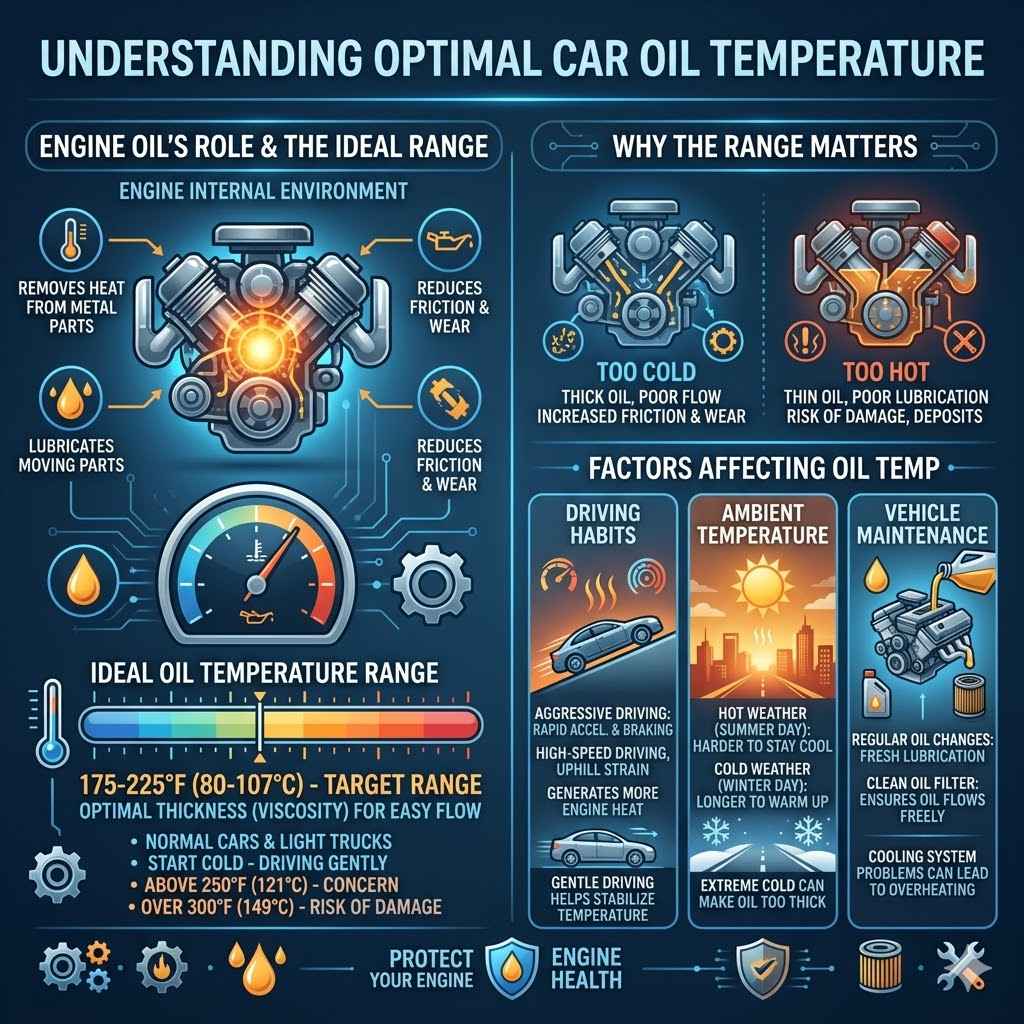
Knowing the right oil temperature for your car is important for engine health. It helps your engine run smoothly and prevents wear and tear. This section explores why oil temperature matters and what the ideal range looks like.
We will cover the basics of engine oil’s role in heat management. You will learn what your car’s temperature gauge is telling you.
The Engine’s Internal Environment
Your car’s engine creates a lot of heat when it runs. This heat comes from the burning of fuel. The engine oil’s main job is to keep things cool.
It flows through the engine, picking up heat from metal parts. Then, it carries that heat away to be cooled down.
Oil also lubricates moving parts. It reduces friction, which in turn reduces heat. If the oil gets too hot, it can lose its ability to lubricate and cool effectively.
This can lead to serious engine damage.
Ideal Oil Temperature Ranges
Most car engines perform best when their oil is between 175 and 225 degrees Fahrenheit (80 to 107 degrees Celsius). This is a common target range for most vehicles. Some high-performance cars might have slightly different recommendations from their manufacturers.
When your car is just starting, the oil will be cold. It needs time to warm up. Driving gently during this warm-up period is best.
Once the engine reaches its normal operating temperature, the oil should be in the ideal range.
Exceeding 250 degrees Fahrenheit (121 degrees Celsius) can be a cause for concern. Temperatures above 300 degrees Fahrenheit (149 degrees Celsius) are definitely too high and can cause damage. It’s good to know these numbers.
Why This Temperature Range is Key
At these temperatures, the oil has the right thickness, or viscosity. It can flow easily to all the engine parts that need lubrication. It also does a great job of absorbing and dissipating heat.
This keeps engine components from getting too hot.
When oil is too cold, it is thicker. It doesn’t flow as well. This can cause parts to not get enough lubrication.
This increases wear. When oil is too hot, it can become thinner. It can also break down.
This means it doesn’t lubricate as well. It can also lead to deposits forming inside the engine.
Factors Affecting Oil Temperature
Several things can influence how hot your car’s oil gets. These include how you drive, the weather, and the condition of your car. Understanding these factors can help you keep your oil at the right temperature.
Driving Habits
How you drive has a big impact. Aggressive driving, like rapid acceleration and hard braking, makes the engine work harder. This generates more heat.
Long periods of high-speed driving, especially uphill, can also increase oil temperature.
On the other hand, gentle driving helps keep the oil temperature down. Avoiding unnecessary strain on the engine is a good practice. This not only saves fuel but also helps protect your engine.
Consider a scenario where you are driving up a long mountain road. Your engine will be working harder. The oil temperature will likely rise.
If you are cruising on a flat highway at a moderate speed, the oil temperature will likely be more stable.
Ambient Temperature and Weather
The outside temperature plays a role. On a hot summer day, the engine will have a harder time staying cool. The air cooling the engine is already warm.
This can lead to higher oil temperatures.
Conversely, on a cold winter day, the engine might take longer to warm up. The oil might stay cooler for a while. However, extreme cold can also cause issues if the oil becomes too thick.
Vehicle Maintenance and Condition
A well-maintained car will manage oil temperature better. Things like old oil, a dirty oil filter, or a cooling system problem can affect how well the engine stays cool. If your car’s cooling system is not working right, the engine can overheat.
This will naturally raise the oil temperature.
Regular oil changes are essential. Fresh oil has better lubricating and cooling properties. A clean oil filter ensures oil can flow freely.
Checking your coolant levels is also important for overall engine temperature management.
Recognizing and Responding to Oil Temperature Issues
Your car’s dashboard usually has a gauge for engine temperature. Some cars also have a specific oil temperature gauge. Knowing how to read these and what to do if they show a problem is crucial.
This section helps you spot warning signs and take the right actions.
Interpreting Your Dashboard Gauges
Most cars have an engine temperature gauge that looks like a thermometer. The needle usually points to the middle when the engine is at its normal operating temperature. If the needle goes towards the hot (H) side, it signals a potential problem.
Some newer or performance-oriented cars might have a separate oil temperature gauge. This gauge will show the oil’s temperature directly, often in degrees Fahrenheit or Celsius. It might also have a normal operating range indicated.
Engine Temperature Gauge
This gauge is your primary indicator of overall engine heat. If it consistently stays in the cooler zone, your engine might not be reaching its optimal operating temperature. This can affect fuel efficiency and emissions.
If it moves towards the red zone, it means the engine is getting too hot.
A common mistake is confusing the engine temperature with oil temperature. While related, they are not exactly the same. However, if the engine is too hot, the oil will also be too hot.
Oil Temperature Gauge (if equipped)
This is a more precise tool for monitoring your oil. If your car has one, pay attention to the numbers. A steady reading within the optimal range is good.
A sudden spike or a reading that stays too low for too long warrants attention.
For example, if you are driving normally and the oil temperature gauge suddenly jumps to 280 degrees Fahrenheit, you should take action.
Signs of Overheating Oil
Overheated oil can cause several problems. You might notice a burning smell coming from your engine. This is often the smell of oil breaking down or burning off.
You might also see a warning light on your dashboard.
In severe cases, you might hear knocking or pinging sounds from the engine. This indicates that parts are not being lubricated properly. The engine might also lose power.
Warning Lights
Most cars have a low oil pressure light, which is a red oil can symbol. While this is not directly an oil temperature warning, low pressure can often be related to very hot oil. If this light comes on, stop the car as soon as it is safe and turn off the engine.
Some cars have a specific engine overheating light, often red. This light indicates the engine is at a dangerous temperature. You should pull over immediately.
Performance Issues
If your oil is too hot, it can affect how your engine performs. You might feel a noticeable loss of power. The car might hesitate or feel sluggish.
This is the engine’s way of telling you it’s under stress.
If you notice these symptoms, check your temperature gauges. See if the engine or oil temperature is abnormally high.
What to Do If Your Oil Gets Too Hot
If you notice your engine or oil temperature gauge climbing into the red zone, or if you see a warning light, it’s time to take action. The most important thing is to stop the engine safely.
Pull Over Safely
Find a safe place to pull over to the side of the road. Turn off the engine immediately. This will help prevent further damage.
Let the Engine Cool Down
Allow the engine to cool down for at least 30 minutes. Do not try to open the hood immediately, as it can be very hot. Do not open the radiator cap while the engine is hot, as pressurized steam can cause severe burns.
Check Your Oil Level and Condition
Once the engine has cooled considerably, check your oil level. Low oil can contribute to overheating. If the oil looks dark, thick, or smells burnt, it may be time for an oil change.
If you are comfortable doing so and the engine is cool enough, you can check the coolant level. Low coolant can also lead to overheating.
Seek Professional Help
If you’re unsure about the cause or how to fix it, it’s best to call for roadside assistance or take your car to a mechanic. Continuing to drive with an overheating engine can cause very expensive repairs.
Maintaining Optimal Oil Temperature
Keeping your car’s oil at the right temperature involves a combination of good driving habits and regular maintenance. This section provides practical tips and advice to help you ensure your engine stays cool and runs efficiently.
Regular Maintenance is Key
The foundation of maintaining any engine component, including oil temperature, is proper maintenance. Neglecting basic upkeep can lead to bigger problems down the road.
Oil Changes and Filter Replacement
This is the most fundamental maintenance task for oil health. Regular oil changes with the correct type of oil specified by your car manufacturer are crucial. Old oil loses its viscosity and ability to cool and lubricate effectively.
Over time, it can also break down and form sludge.
The oil filter removes contaminants from the oil. A clogged filter restricts oil flow, which can lead to higher temperatures. Always replace the oil filter whenever you change the oil.
A study by the U.S. Department of Energy found that regular oil changes can improve fuel economy by 1% to 2%. While not directly about temperature, it highlights the importance of fresh oil for overall engine efficiency and health.
Cooling System Checks
Your car’s cooling system works hand-in-hand with the oil to manage engine temperature. Ensure your coolant levels are always appropriate. Check for any leaks in hoses or the radiator.
A healthy cooling system prevents the engine from getting excessively hot, which in turn helps the oil.
A malfunctioning thermostat can also cause overheating. If the thermostat is stuck closed, coolant cannot circulate to the radiator, leading to a rapid rise in engine temperature.
Checking for Leaks and Wear
Inspect your engine regularly for any signs of oil leaks. Leaks mean you are losing oil, which can lower the oil level and reduce its cooling capacity. Also, listen for any unusual noises.
Excessive wear on engine components can generate more friction and heat.
Smart Driving Practices
Your driving style has a direct impact on engine temperature. Adopting some smart driving habits can significantly help in managing oil temperature.
Gentle Warm-Up
When you start your car, especially in cold weather, avoid revving the engine hard. Drive gently for the first few minutes. This allows the oil to circulate properly and reach its optimal temperature gradually.
This prevents premature wear.
Avoid Excessive Idling
While idling, the engine is running, generating some heat, but there’s not much airflow through the radiator. Prolonged idling, especially on hot days, can cause the engine and oil temperature to rise. If you’re going to be stopped for more than a minute or two, it’s often better to turn off the engine.
Managing High-Speed Driving
Driving at very high speeds for extended periods puts a lot of stress on the engine. This generates more heat. If possible, try to maintain moderate speeds.
When climbing steep hills, downshifting can help the engine run more efficiently and prevent it from overheating.
Consider a scenario of driving on a very hot day. You’re on the highway and decide to push your car to its limits for a few minutes. This will likely cause your oil temperature to climb higher than if you maintained a steady, moderate speed.
Choosing the Right Oil
Not all engine oils are created equal. Using the correct type and weight of oil for your car is essential for optimal performance and temperature management.
Understanding Oil Viscosity (Weight)
Oil viscosity refers to its thickness. It is measured by numbers like 5W-30 or 10W-40. The ‘W’ stands for ‘winter,’ and the first number indicates how the oil flows in cold temperatures.
The second number indicates how it flows at higher operating temperatures.
Using an oil with the wrong viscosity can cause problems. If it’s too thin, it won’t provide enough lubrication at high temperatures. If it’s too thick, it might not flow well when cold.
For example, in a hot climate, you might benefit from a slightly thicker oil (higher second number), but always follow your car’s manual recommendations. Using 10W-40 in a car that calls for 0W-20 in a very cold climate could cause issues.
Synthetic vs. Conventional Oil
Synthetic oils are engineered for better performance. They resist heat breakdown better than conventional oils. They also offer superior lubrication and can last longer.
While more expensive, they can contribute to better engine protection, especially under demanding conditions.
For many modern cars, synthetic oil is the recommended choice for optimal engine health and consistent oil temperature.
Troubleshooting Common Oil Temperature Concerns
Sometimes, even with good maintenance, you might encounter issues with your car’s oil temperature. This section addresses some common problems and how to approach them. It’s about understanding what might be going wrong and how to get it fixed.
Low Oil Temperature Issues
While overheating is more commonly discussed, an engine that consistently runs too cold can also have problems. This can happen in very cold climates or if the thermostat is stuck open.
Why It Matters
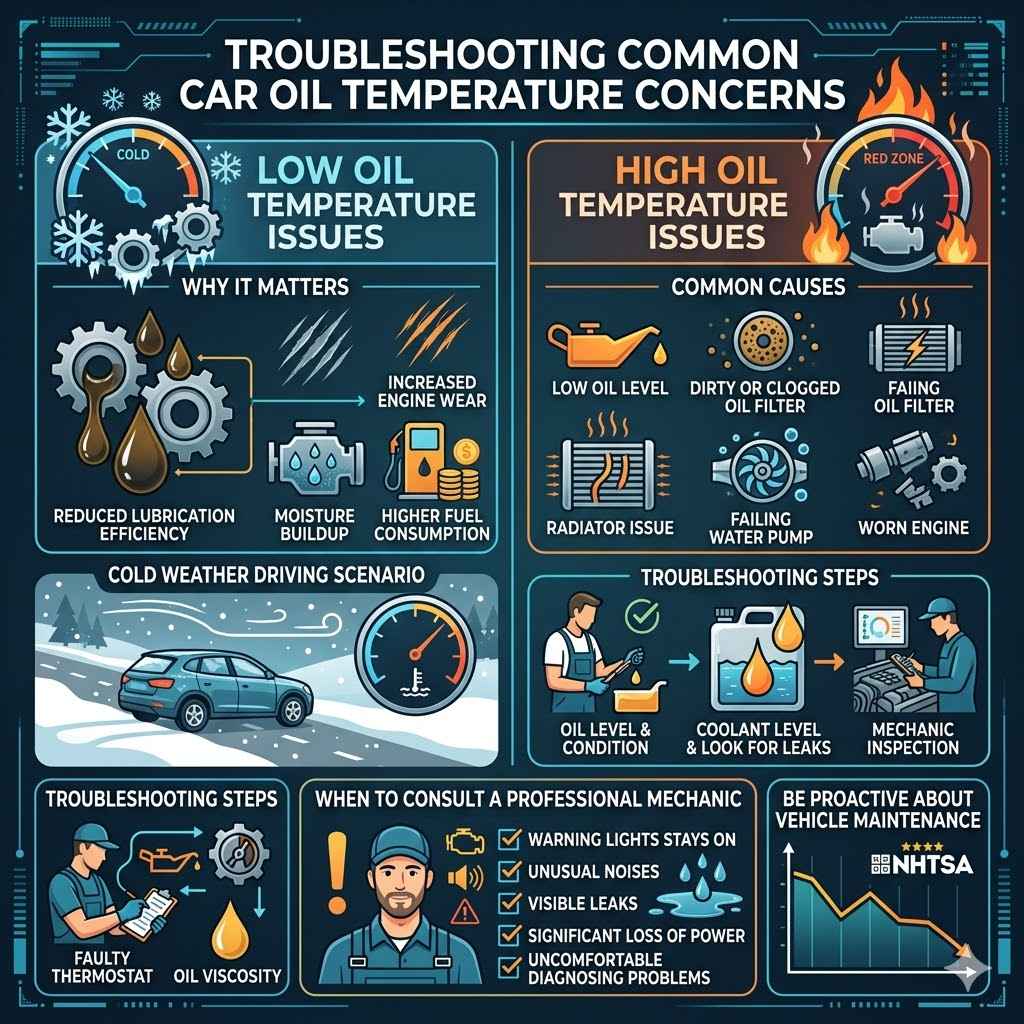
When an engine doesn’t reach its optimal operating temperature, the oil remains thicker. This can lead to reduced lubrication efficiency. Combustion might not be as complete, leading to increased wear and fuel consumption.
It can also lead to moisture buildup in the engine.
A faulty thermostat that stays open will allow coolant to circulate continuously, preventing the engine from warming up properly. This is why it’s important to monitor your temperature gauge.
Troubleshooting Steps
If your engine consistently runs too cool, the first thing to check is the thermostat. A mechanic can test it to see if it’s functioning correctly. Ensure you are using the correct weight of oil for the climate.
Sample Scenario: Cold Weather Driving
Imagine you live in a place with very cold winters. You start your car, and the temperature gauge takes an unusually long time to move from the cold mark. Even after a 30-minute drive, the needle is still lower than normal.
This could indicate a thermostat issue or that the oil is too viscous for the conditions.
High Oil Temperature Issues
Overheating is a more frequent concern. It can stem from various sources, from simple maintenance oversights to more complex mechanical failures.
Common Causes
Beyond driving habits and ambient temperature, common culprits for high oil temperatures include low oil levels, a dirty or clogged oil filter, a failing water pump, a radiator that isn’t cooling effectively, or a worn engine.
A clogged radiator, for instance, reduces the system’s ability to dissipate heat. Air pockets in the cooling system can also create hot spots.
Troubleshooting Steps
First, check your oil level and condition. If it’s low, add the correct type of oil. If the oil looks dirty or burnt, it’s time for a change and possibly a flush.
Check your coolant level and look for leaks.
If the problem persists, have a mechanic inspect the cooling system components (radiator, hoses, water pump, thermostat) and the oil filter. They can also check the oil pressure and flow.
Example Case Study: Overheated Engine
A car owner noticed their engine temperature gauge was constantly in the red. They had recently been driving in stop-and-go traffic on a very hot day. Upon inspection, a mechanic found that the cooling fan was not engaging.
This meant that even at lower speeds, the radiator wasn’t getting enough airflow to cool the engine. The repair involved replacing the cooling fan motor. After the repair, the engine temperature returned to normal.
When to Consult a Professional
While some oil temperature issues can be managed with simple checks, others require expert knowledge. If you are uncomfortable diagnosing car problems, or if the issue seems serious, always seek professional help.
Warning lights that stay on, unusual noises, significant loss of power, or visible leaks are all signs that you should consult a qualified mechanic. They have the tools and expertise to accurately diagnose and fix the problem.
A statistic from the National Highway Traffic Safety Administration (NHTSA) indicates that vehicle maintenance issues are a contributing factor in many road accidents. Being proactive about your car’s health can prevent dangerous situations.
Frequently Asked Questions
Question: What is the normal oil temperature for my car
Answer: For most cars, the normal oil temperature range is between 175 and 225 degrees Fahrenheit (80 to 107 degrees Celsius). Always check your car’s owner’s manual for specific recommendations.
Question: Can I drive my car if the oil temperature is high
Answer: It is not recommended to drive your car if the oil temperature is significantly high, especially if it is in the red zone on your gauge. Pull over safely and let the engine cool down. Continuing to drive could cause serious engine damage.
Question: What happens if my car’s oil is too cold
Answer: If your car’s oil is too cold, it is thicker and does not lubricate as effectively. This can lead to increased engine wear and reduced fuel efficiency. It might also mean the engine is not reaching its optimal operating temperature.
Question: How often should I check my car’s oil
Answer: It’s a good practice to check your car’s oil level at least once a month, and before any long road trips. Also, check it if you notice any warning lights or unusual engine behavior.
Question: Does the type of oil I use affect temperature
Answer: Yes, the type and viscosity of the oil you use can affect its temperature. Synthetic oils generally perform better at extreme temperatures than conventional oils. Always use the oil type and weight recommended in your car’s owner’s manual.
Summary
Understanding What Should Be the Oil Temperature in a Car? Expert Guide is key for engine longevity. Keeping oil between 175-225°F protects your engine.
Gentle driving, regular maintenance, and using the right oil are your best tools. If you see high temperatures, pull over safely and check things out. Knowing your car’s signals keeps it running smoothly.