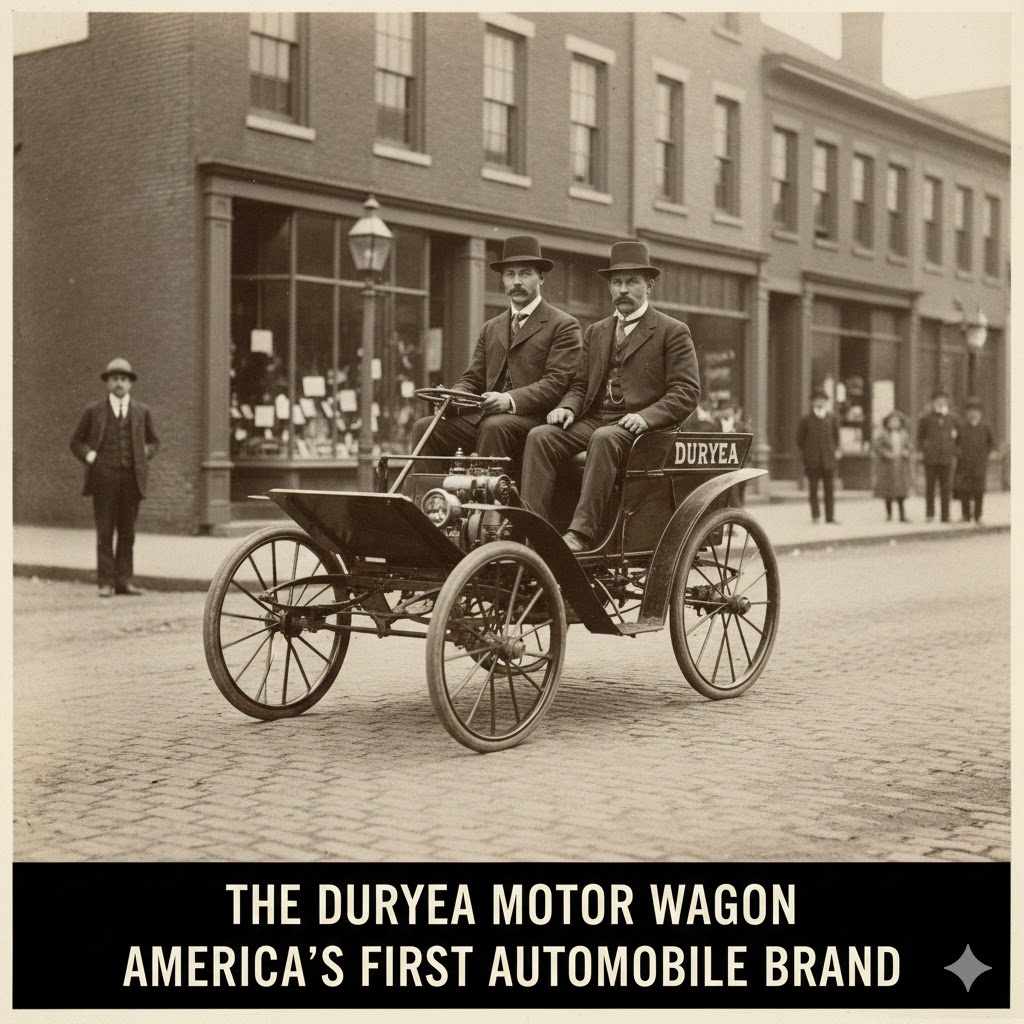
What Was the First Automobile Brand in the U.S.?
Many people wonder about the very beginning of cars in America. They often ask, What Was the First Automobile Brand in the U.S.?. This question can seem tricky at first because history is full of early inventors and their unique creations.
But don’t worry, finding the answer is simpler than you might think. We will break it down step-by-step to make it clear and easy to grasp. Get ready to discover the pioneer of American cars.
The Dawn of American Automotive History
The birth of the automobile in the United States was a time of incredible innovation and excitement. Many minds were at work, tinkering with engines and designs, all aiming to create a horseless carriage that could move people from place to place. This period is key to understanding how cars became such a big part of our lives today.
It was a race to see who could bring a practical, self-propelled vehicle to the masses first. This section will explore the early efforts and the context surrounding the very first car brands.
Early Inventors and Their Machines
Before any brand names existed, inventors were building their own versions of self-propelled vehicles. These were often one-of-a-kind machines, more like experimental projects than products ready for sale. Think of them as the very first steps in a long journey.
These early pioneers used different types of engines, from steam to electric, trying to find the best way to make something move without horses. Their work laid the groundwork for everything that followed.
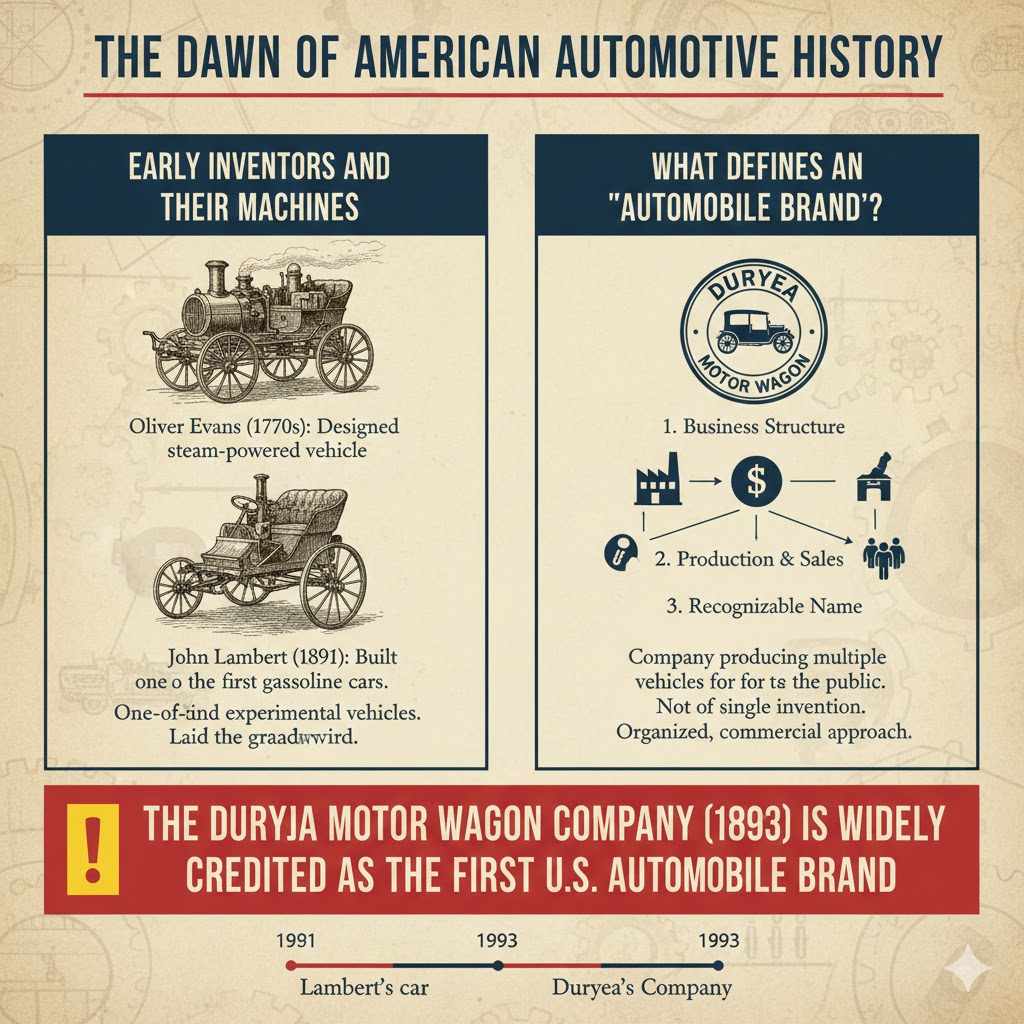
One significant figure was Oliver Evans, an American inventor who, in the late 18th century, designed a steam-powered vehicle called the “Amphibious Ducker.” While not a production automobile, it showed early American interest in self-propelled transport. Later, in the 1870s and 1880s, inventors like George Brayton and John Lambert were experimenting with internal combustion engines. Lambert, in particular, is often credited with building one of the first successful gasoline-powered automobiles in the United States in 1891.
However, these were still largely individual efforts, not yet part of a recognized brand.
What Defines an “Automobile Brand”
To understand What Was the First Automobile Brand in the U.S.?, we need to know what makes something a “brand.” A brand isn’t just a single car; it’s a name that represents a company producing multiple vehicles, often with some consistency in design or quality. It means a business organized to make and sell cars to the public. This is different from an inventor creating a single, unique machine in their workshop.
A brand implies a more organized and commercial approach to car manufacturing.
A brand signifies a sustained effort to produce vehicles for sale. This involves a business structure, manufacturing processes, and a recognizable name that consumers associate with the products. When we talk about the first automobile brand, we’re looking for the first company that systematically built and sold automobiles under a specific name.
This is a crucial distinction because many early experimental vehicles existed before the concept of an automobile brand truly took hold.
The Contenders for the First American Automobile Brand
When discussing What Was the First Automobile Brand in the U.S.?, a few names often come up. These were the companies that first organized themselves to manufacture and sell cars to the American public. It wasn’t a single, clear-cut moment, but rather a period of intense development and competition.
Each of these early companies played a vital role in shaping the automotive industry.
Duryea Motor Wagon Company
The Duryea Motor Wagon Company, founded by brothers Charles and Frank Duryea, is frequently cited as a strong contender for the first American automobile brand. They built their first gasoline-powered automobile in 1893. This vehicle was a functional carriage that could be driven.
They then went on to establish their company to produce more of these cars.
The Duryea brothers were pioneers in combining engineering knowledge with a business vision. Their goal was not just to build a car, but to build and sell cars. This entrepreneurial spirit set them apart in the early days.
They made several of their “motor wagons,” making them the first to establish a manufacturing company for automobiles in the United States. This focused approach to production and sales is a key characteristic of a brand.
- Founded by: Charles and Frank Duryea.
- First Successful Car Built: 1893.
- Key Contribution: Established the first American company to manufacture and sell gasoline-powered automobiles.
The Duryea Motor Wagon Company produced vehicles that were sold to the public. This commercial aspect is what truly defines them as a brand. They were not just inventors showing off a novelty; they were entrepreneurs trying to create a new industry.
Their efforts paved the way for other companies to follow, making them a very important part of automotive history.
Winton Motor Carriage Company
Another significant early player was the Winton Motor Carriage Company, founded by Alexander Winton. Winton built his first gasoline-powered automobile in 1897 and quickly began production. He was known for his ambition and his belief in the future of the automobile.
Winton was a shrewd businessman who understood the importance of promotion. He famously drove one of his cars from Cleveland to New York City in 1897, a feat that generated considerable publicity and demonstrated the potential of his automobiles. This kind of public demonstration was crucial for convincing people that cars were a viable form of transportation.
The Winton company was one of the first to produce cars in any significant numbers. They built and sold cars, establishing a clear brand identity. Winton’s focus on marketing and sales helped to popularize the automobile among the wealthy and adventurous at the time.
His company’s efforts were instrumental in establishing the automotive industry in America.
- Founded by: Alexander Winton.
- First Successful Car Built: 1897.
- Key Contribution: Was one of the first American companies to produce automobiles in quantity and actively market them to the public.
Winton’s approach was very business-oriented from the start. He saw a market and aimed to capture it with his innovative vehicles. His company’s success and visibility made him a major figure in the early automotive landscape.
He directly competed with other emerging brands, pushing the industry forward.
Pope Manufacturing Company
The Pope Manufacturing Company, under the leadership of Colonel Albert Pope, also played a crucial role in early American automotive history. Pope was already a successful bicycle manufacturer and saw the potential for automobiles. He began producing electric-powered automobiles in the late 1890s under various brand names that were part of his larger company.
Pope’s company was one of the first to organize a widespread distribution network for its vehicles. They had multiple factories and aimed for mass production, even though the numbers were small by today’s standards. Their electric cars were popular for a time, especially in urban areas where charging was more accessible.
While Pope’s company produced different types of vehicles, including electric and later gasoline-powered ones, its organized approach to manufacturing and sales makes it a significant contender. They demonstrated that a large corporation could transition into the new automotive industry. Their efforts helped to establish the idea of brand recognition and mass production for vehicles.
- Founded by: Colonel Albert Pope.
- Early Automotive Involvement: Late 1890s.
- Key Contribution: Applied bicycle manufacturing expertise to automobiles, aiming for mass production and distribution, notably with electric vehicles.
The Pope Manufacturing Company’s business model was sophisticated for its time. They understood the power of branding and widespread availability. Even though their electric cars eventually lost out to gasoline engines, their early efforts were vital for the growth of the automotive industry.
They showed how established manufacturing could be adapted for cars.
Determining the “First” Automobile Brand
Pinpointing What Was the First Automobile Brand in the U.S.? isn’t always straightforward. History often has overlapping events and differing interpretations. When we look at “first,” we usually mean the first to establish a company and actively produce and sell vehicles under a brand name.
This is a key point that separates early inventors from actual car companies.
Criteria for Being the “First Brand”
To declare a “first,” we need clear criteria. This typically includes:
- Commercial Intent: The entity must have intended to make money by selling vehicles.
- Production and Sales: Actual vehicles needed to be built and sold to customers.
- Organized Company Structure: It should be a company, not just an individual inventor’s workshop.
- Recognizable Name: The vehicles should be associated with a specific brand name for sale.
These factors help distinguish between a unique experimental car and the start of a commercial automotive venture. It’s about establishing a business that produces cars, not just building a single car.
The Case for Duryea
The Duryea brothers’ claim to being the first American automobile brand rests on their establishment of the Duryea Motor Wagon Company in 1896. This was a formal business organization dedicated to producing and selling their motor wagons. They built several identical vehicles, which is a sign of manufacturing, not just one-off invention.
Their first functional gasoline car was built in 1893. By 1896, they had a company. This timeline places them as very early leaders in establishing a commercial automotive enterprise.
They actively marketed their vehicles and sold them to customers, fulfilling the criteria for a brand.
Here’s a look at their timeline and achievements:
- 1893: Built their first gasoline-powered automobile.
- 1895: Won a historic race organized by the Chicago Times-Herald, boosting their visibility.
- 1896: Founded the Duryea Motor Wagon Company, marking the official start of the first American automobile brand.
The Duryea Motor Wagon Company is widely recognized for being the first American firm to produce automobiles for sale. This makes their claim to the title of the first automobile brand in the U.S. very strong.
Comparing Duryea, Winton, and Pope
While all three companies were pioneers, the timing and nature of their operations offer a clearer picture.
| Company | First Car Built | Company Founded for Auto Sales | Key Focus |
|---|---|---|---|
| Duryea Motor Wagon Company | 1893 | 1896 | Gasoline-powered cars, first dedicated auto manufacturer. |
| Winton Motor Carriage Company | 1897 | 1897 | Gasoline-powered cars, strong marketing and sales. |
| Pope Manufacturing Company | Late 1890s (electric) | Active in late 1890s | Electric cars, early mass production and distribution. |
The Duryea brothers’ organization in 1896 predates Winton’s company founding in 1897. Pope’s activities were also in full swing around this time, but the Duryea Motor Wagon Company holds the distinction of being the first specifically organized entity focused on manufacturing and selling gasoline automobiles.
This comparison highlights that while others were active, Duryea’s structured company for selling gasoline cars came first. This distinction is important when discussing What Was the First Automobile Brand in the U.S.?. It signifies the transition from individual invention to organized industry.
The Legacy of Early Automotive Brands
The companies that emerged in the early days of automobiles, like Duryea, Winton, and Pope, left an indelible mark on history. They were not just selling cars; they were building the foundation for a massive industry that would change the world. Their innovations, business models, and even their failures provided valuable lessons for those who followed.
Impact on Industry Development
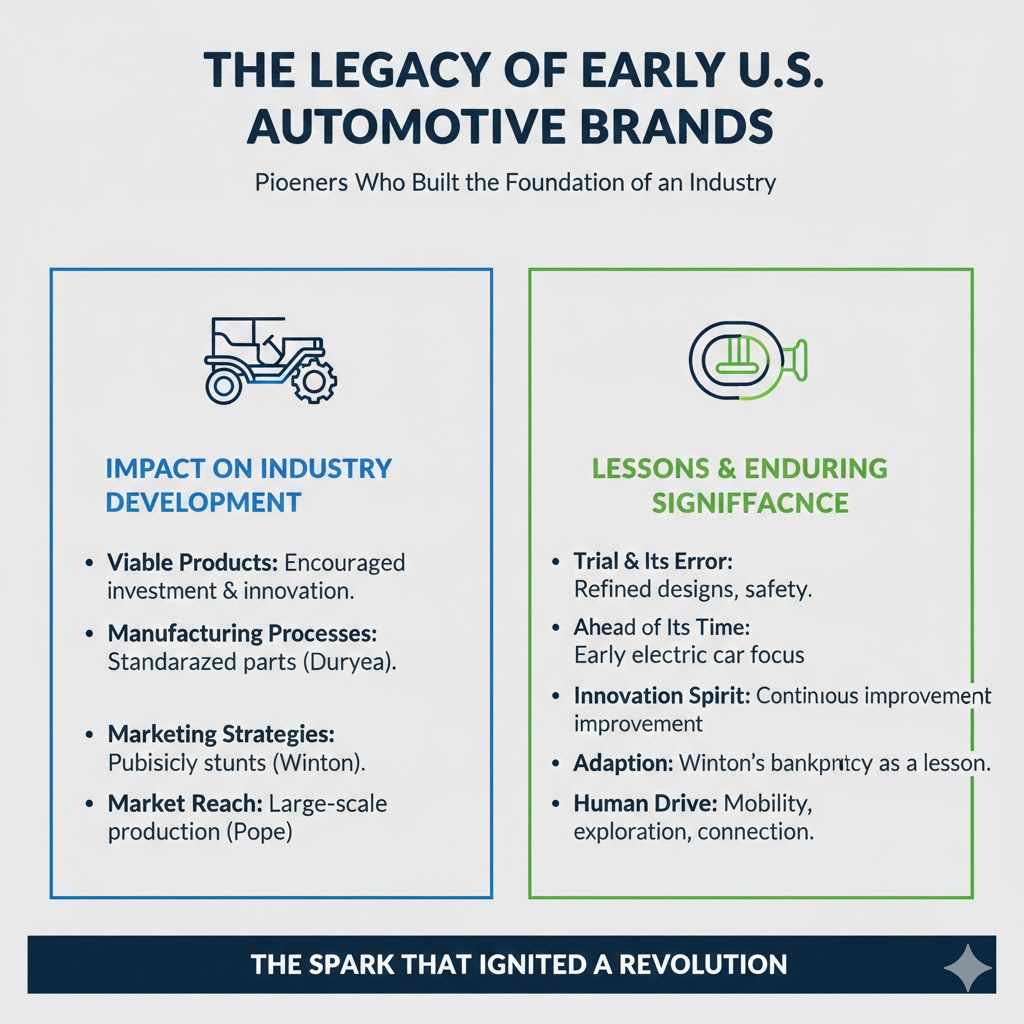
The establishment of these early brands showed that automobiles were more than just curiosities; they were viable products. This encouraged investment and further innovation. Companies learned about manufacturing processes, marketing strategies, and the challenges of building and maintaining vehicles.
For example, the Duryea Motor Wagon Company’s focus on producing identical vehicles meant they had to develop standardized parts and assembly techniques. This was a crucial step towards mass production. Alexander Winton’s bold publicity stunts demonstrated the power of advertising in creating demand for a new product category.
The Pope Manufacturing Company’s large-scale production and distribution efforts, even with electric cars, showed the potential for reach and market penetration. These early efforts, though small by today’s standards, laid the groundwork for the assembly lines and global corporations that would later dominate the automotive landscape.
Lessons Learned and Innovations
The early automotive pioneers faced numerous challenges, from unreliable engines to poor road conditions. They learned through trial and error, constantly refining their designs and manufacturing methods. Many early concepts that didn’t work out then eventually resurfaced in different forms.
Consider the early focus on electric cars. While they were quiet and easy to operate, limitations in battery technology and range led to their decline. However, the resurgence of interest in electric vehicles today shows that the initial ideas had merit.
It was simply ahead of its time.
The lessons learned from these first brands were invaluable. They helped shape safety standards, engine development, and the overall structure of the automotive industry. The spirit of innovation and the drive to create practical, affordable transportation continue to be inspired by these early pioneers.
One real-life example is the Winton company’s eventual bankruptcy. Despite Winton’s early success, the intense competition and rapid pace of innovation in the automotive industry eventually led to its downfall. This serves as a reminder that even successful early companies must continually adapt to survive.
The automotive industry has always been a place of rapid change.
The Enduring Significance of Early Brands
Understanding What Was the First Automobile Brand in the U.S.? gives us a window into the very beginning of a transformative technology. It’s about recognizing the courage, ingenuity, and entrepreneurial spirit of those who dared to create something entirely new.
The legacy of these early brands is evident all around us. Every car on the road today owes a debt to the Duryea brothers, Alexander Winton, Colonel Pope, and countless other innovators. They were the ones who dared to ask “what if” and then built the answer.
Their stories are not just about machines; they are about the human drive to move forward, to explore, and to connect. The first automobile brands were the sparks that ignited a revolution, turning dreams of personal mobility into a daily reality for millions.
Frequently Asked Questions
Question: Who invented the first car in the U.S.?
Answer: While many inventors experimented with self-propelled vehicles, Charles and Frank Duryea are often credited with building the first practical gasoline-powered automobile in the U.S. in 1893.
Question: Was the Duryea Motor Wagon Company the first to sell cars?
Answer: Yes, the Duryea Motor Wagon Company, founded in 1896, is widely recognized as the first American company to manufacture and sell automobiles to the public.
Question: Were there other early car manufacturers besides Duryea?
Answer: Yes, companies like the Winton Motor Carriage Company and the Pope Manufacturing Company were also very early pioneers in automobile production and sales in the United States.
Question: Did Duryea cars use gasoline engines?
Answer: Yes, the Duryea brothers focused on gasoline-powered automobiles, distinguishing them from early electric or steam vehicles and positioning them as contenders for the first gasoline-powered auto brand.
Question: Why is it sometimes hard to say who was definitively “first”?
Answer: It can be challenging because many inventors were working on similar ideas around the same time, and the definition of a “brand” versus an experimental vehicle can be debated. However, focusing on organized company production and sales clarifies the history.
Wrap Up
Discovering What Was the First Automobile Brand in the U.S.? leads us to the Duryea Motor Wagon Company. They established a business to build and sell gasoline cars, setting the stage for American automotive history. Their organized approach marked the true beginning of cars as a commercial product.