Does Car Insurance Cover Dents? Comprehensive vs Collision
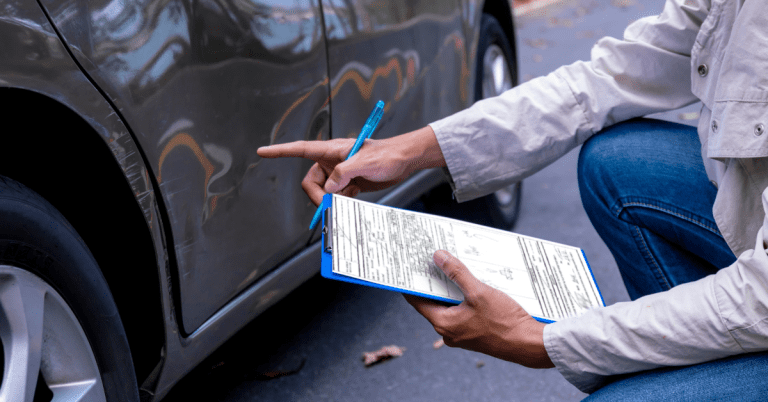
Comprehensive coverage pays for dents caused by hail, vandalism, falling objects, or animal strikes; collision coverage pays for dents from crashes, including hitting a pole or another vehicle. Liability-only policies never cover damage to your own car. Either way, you owe your deductible first — typically $250 to $1,000 — so a $75-$250 door ding usually costs less to pay for directly than to file a claim.
What Causes Dents in Cars?
BEST FOR DIY DENT REMOVAL
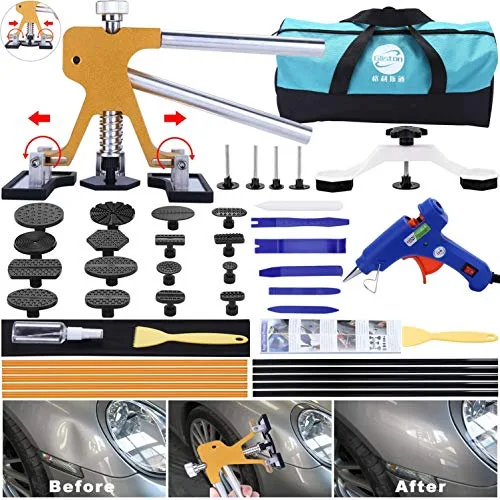 |
GLISTON 45-Piece Paintless Dent Repair Kit – $36.99 For a small ding priced near or under your deductible, a DIY dent-puller kit like this often costs less than filing one claim.
|
Dents come from a wide range of everyday incidents, and the cause matters because it determines which type of coverage — if any — actually applies:
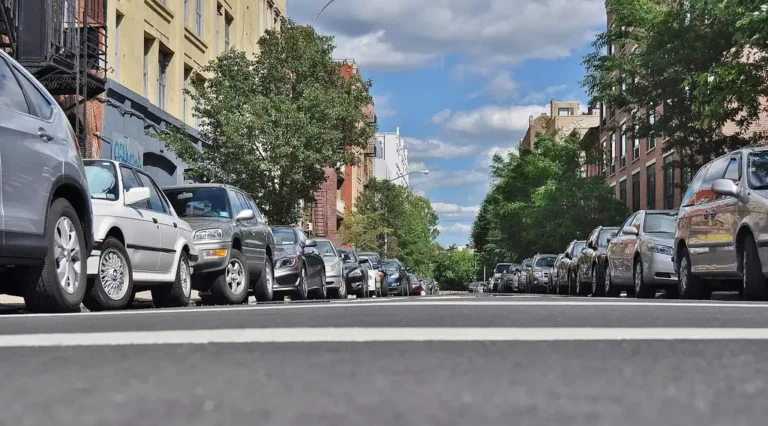
- Parking lot contact: A neighboring car door swinging open in a tight spot is one of the most common sources of dents.
- Hailstorms: Hail can leave dozens of small dimples across the hood, roof, and trunk in a single storm.
- Minor collisions: Backing into a pole, fence, mailbox, or another vehicle at low speed.
- Falling objects: Tree branches, debris, or storm damage can dent the hood or roof.
- Shopping carts: An unattended cart rolling into a parked car is a frequent parking-lot cause.
Whether an incident counts as a collision or a non-collision event under your policy determines whether it belongs under collision or comprehensive coverage — and that distinction matters more than most drivers realize.
Types of Car Insurance Coverage That May Apply
Not every policy covers dents. Whether one does depends entirely on which of these coverages you carry:
- Liability insurance: Pays for damage you cause to someone else’s property or injuries to another person. It never pays to repair your own car.
- Collision coverage: Pays to repair your car after it hits, or is hit by, another vehicle or object such as a pole or guardrail, regardless of who was at fault. Subject to your deductible.
- Comprehensive coverage: Pays for damage to your car from causes other than a collision with another vehicle or object — hail, fire, theft, vandalism, falling objects, and animal strikes. Also subject to a deductible.
- Uninsured/underinsured motorist property damage (UMPD): Available in some states, this pays for damage an identified uninsured or underinsured driver causes to your car. It is separate from collision coverage.
- Personal injury protection (PIP) / MedPay: Covers medical costs, not vehicle damage of any kind.
Most dent claims are paid under either collision or comprehensive coverage. If your policy only carries liability, dents to your own car are never covered no matter how they happened.
Does Insurance Cover Dents?
Whether a specific dent is covered comes down to your coverage, the cause, and how the loss gets classified.
Dents From Collisions
If the dent came from an accident — hitting a pole, a fence, or another car — collision coverage applies, minus your deductible. If another driver caused it and you can identify them, their liability insurance should pay instead, sparing you the deductible entirely. If the at-fault driver is unknown or uninsured, such as in a hit-and-run in a parking lot, your own collision coverage (or uninsured motorist property damage where it’s available) is usually the practical path, since these cases are rarely solved.
Dents From Non-Collision Events
Comprehensive coverage handles dents from hail, fire, theft, and genuine vandalism — deliberate damage like keying or kicking a panel. It’s a common misconception that any dent caused by another vehicle counts as comprehensive; it does not. If another car’s door accidentally swings into yours in a parking lot, that’s contact damage, not vandalism, and it typically falls under collision coverage (yours or the other driver’s), not comprehensive. Comprehensive is the right coverage for genuinely non-collision losses: hail dimples across the hood and roof, a tree branch strike, or confirmed malicious damage.
Dents From Unknown Causes
Finding an unexplained dent, on a trunk lid you never touched, for instance, puts you in a gray area. If there’s no reasonable explanation involving your own driving, comprehensive coverage may pay it as an unattributed loss, but insurers typically want photos, a written description, and sometimes a police report before approving it, especially if vandalism is suspected.
Small Dents and Dings
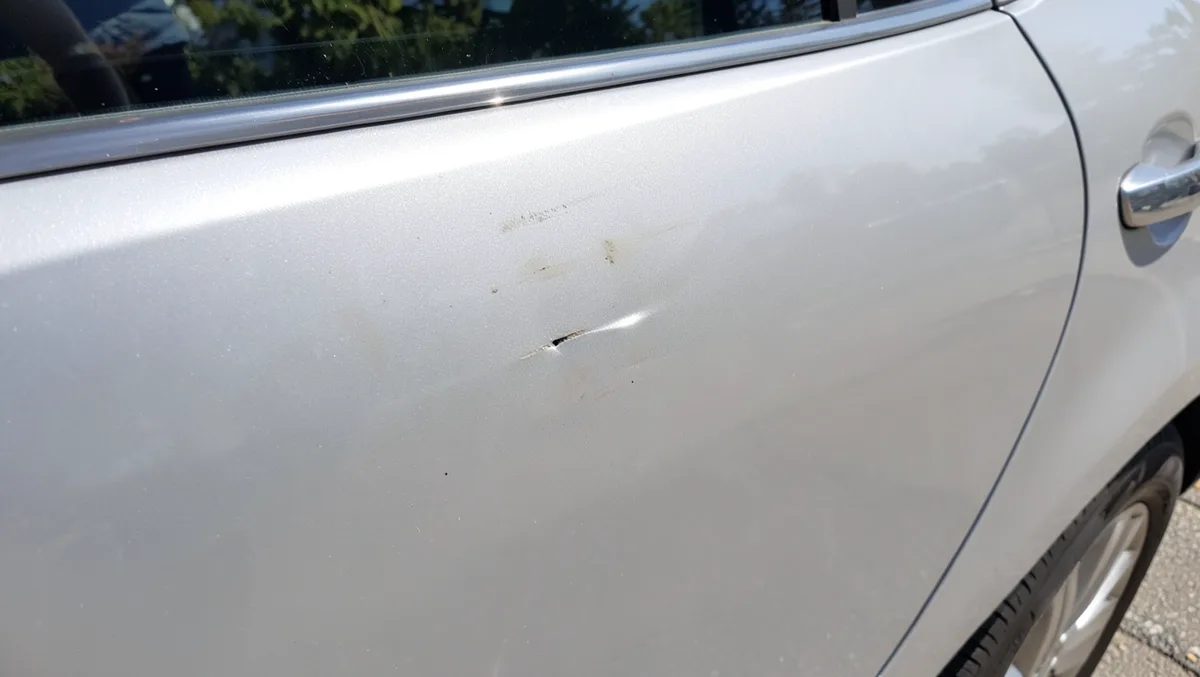
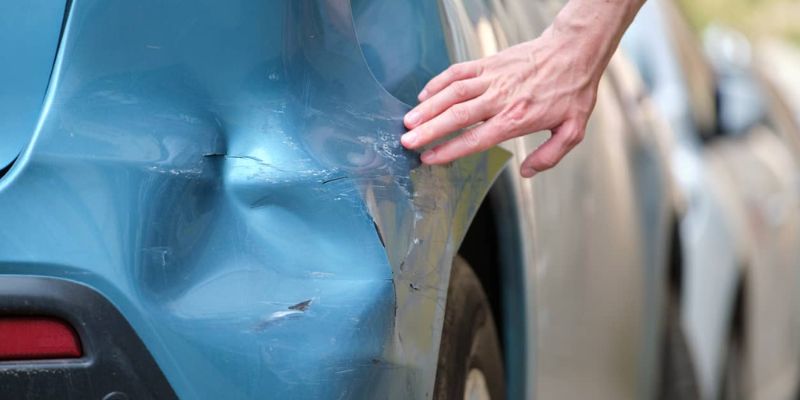
Minor dings, like door dents or shopping-cart marks, are technically covered under whichever policy applies. In practice, with deductibles typically running $250 to $1,000, a $75-$250 ding rarely clears that threshold, so most owners end up paying for these out of pocket rather than filing.
Factors That Affect Coverage
Even with the right coverage type, several details determine whether a specific claim actually gets paid:
- Policy exclusions: Some policies exclude specific causes, like wear-and-tear damage, no matter which coverage you carry.
- Deductible amount: You pay this out of pocket before the insurer contributes anything. Comprehensive and collision deductibles are usually set separately and commonly range from $250 to $1,000.
- Cause-of-damage match: A claim has to be filed under the coverage that actually applies. A hit-and-run dent, for example, is a collision-type loss, not a comprehensive one.
- State rules: A handful of states regulate how insurers handle certain comprehensive claims, though general dent coverage rules are largely consistent nationwide.
- Claim history: Filing frequent claims, even small ones, can affect your rate at renewal over time.
When in doubt, call your insurer before assuming a repair is or isn’t covered.
Should You File an Insurance Claim for a Dent?
Filing isn’t automatically the right move. Weigh these before deciding:
- Repair cost vs. deductible: If the estimate is close to or below your deductible, paying out of pocket usually costs less overall.
- Premium impact: A claim can raise your rate at renewal, particularly for at-fault collision claims or a pattern of frequent claims.
- Claim limits: Some insurers flag policies that file multiple claims within a short period, which can affect renewal terms.
- Resale value: A larger dent left unfixed can lower what a car is worth at trade-in or private sale.
- Time and hassle: Claims involve an inspection and paperwork; for a single small ding, paying a shop directly is often faster.
As a rule of thumb: claim the big, expensive repairs, and pay cash for anything near or under your deductible.
How to File an Insurance Claim for a Dent
If you decide to file, the process is largely the same across insurers:
- Contact your insurer: Report the damage by phone or through the claims app.
- Provide details: Explain what caused the dent, and when and where it happened.
- Submit photo evidence: Clear photos from multiple angles in good light speed up the review.
- Get an inspection: The insurer may send an adjuster or direct you to an approved shop for an estimate.
- Receive an estimate: The adjuster or shop calculates the repair cost.
- Approve repairs: Choose a shop, or use one from the insurer’s network, and schedule the work.
- Pay your deductible: You’re responsible for this portion; the insurer typically pays the shop directly for the rest.
Most straightforward dent claims are resolved within a week to ten days.
How Much Do Dent Repairs Cost?
Repair cost is often the deciding factor in whether a claim makes sense in the first place:
| Dent Type | Typical Cost | Notes |
|---|---|---|
| Small ding | $75-$250 | Paintless dent repair (PDR) is standard for shallow dings with intact paint. |
| Medium dent | $150-$450 | PDR if the paint is undamaged; traditional repair if it’s cracked or chipped. |
| Large dent | $450-$1,500+ | Usually needs filler, sanding, and repainting. |
| Hail damage (whole vehicle) | $1,000-$8,000+ | Cost scales with dent count — moderate hail often runs $1,000-$2,500, severe storms $2,500-$8,000+. Comprehensive coverage typically applies. |
Get a quote before deciding whether to file. Many shops estimate for free, and that number is what you compare against your deductible.
Paintless Dent Repair (PDR) vs. Traditional Repair
- Paintless dent repair (PDR): Technicians use specialized tools to massage the metal back into shape from behind the panel, without sanding or repainting. It only works on shallow dents where the paint hasn’t cracked, and it’s typically faster and cheaper than traditional bodywork.
- Traditional repair: For deeper dents or damaged paint, a shop sands the area, applies filler, and repaints it to match. It costs more and takes longer, often a day or two, but it’s the only option once the paint is broken.
Ask any shop whether PDR is an option before assuming a full repaint is necessary — it’s the right method for a large share of everyday dents. For a walkthrough of one common DIY approach, see how to get a dent out of a car hood.
Does Filing a Dent Claim Affect Your Premiums?
- Claim type: Comprehensive claims (hail, vandalism, theft) generally have less impact on your rate at renewal than at-fault collision claims.
- Claim frequency: A single claim rarely triggers a large increase; a pattern of repeated claims is what insurers weigh most heavily.
- Insurer policies: Some carriers offer accident forgiveness or waive a surcharge on a first claim — check your policy or ask your agent directly.
- State regulations: Rules on how insurers can use claim history to set rates vary by state.
For a dent priced near your deductible, paying out of pocket is often the cheaper option once any premium effect is factored in.
How to Prevent Dents in Your Car
- Park smart: End spots and spaces away from cart corrals reduce door-ding risk.
- Use a car cover: A cover adds a layer of protection against hail and falling debris.
- Avoid tight spaces: Skip narrow spots where a neighboring door can’t fully open without hitting your car.
- Watch the weather: Move the car into a garage or covered structure ahead of a hailstorm when possible.
- Drive cautiously: Slow down in driveways, tight alleys, and parking structures.
When Insurance Will Not Cover a Dent
- Liability-only policies: These never pay for damage to your own car, regardless of cause.
- Wear and tear: Gradual damage, like corrosion-related dents, isn’t an insurable event under either coverage type.
- Unreported vandalism: Some policies require a police report for vandalism claims before they’ll pay.
- Cost below your deductible: The insurer isn’t obligated to pay anything if the estimate comes in under your deductible.
- At-fault damage without collision coverage: If you caused the dent and dropped collision coverage, common on older, paid-off cars, you’re responsible for the repair yourself.
Review your declarations page or call your insurer if you’re unsure which coverages you’re actually carrying.
Choosing a Repair Shop
- Reputation: Check recent reviews rather than just an overall star rating.
- Certifications: ASE or I-CAR Gold Class certified technicians indicate trained staff.
- Insurer-preferred shops: Many insurers maintain a direct-repair network that can streamline the claims process.
- Multiple quotes: Get estimates from two or three shops before committing, especially for larger repairs.
- Warranty: A shop that stands behind its work should offer a written warranty on the repair.
Alternatives to Filing an Insurance Claim
- Pay out of pocket: For anything under or near your deductible, paying cash is usually the cheaper route once you avoid any premium impact.
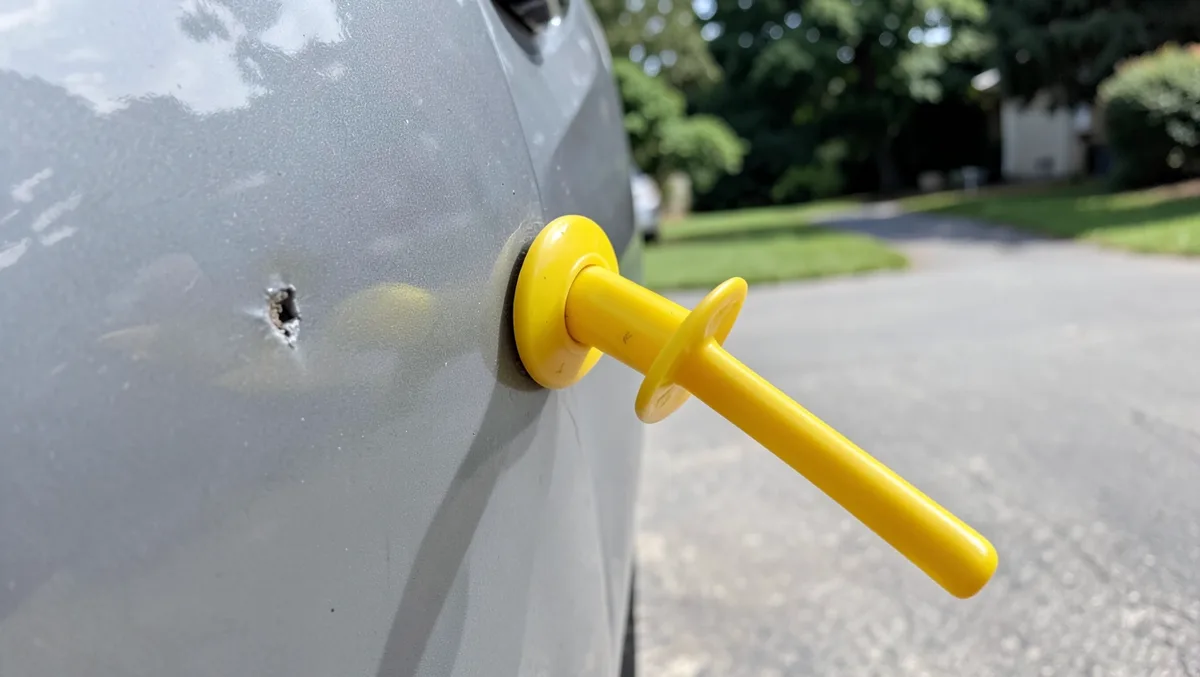
- DIY dent-repair kits: Suction-cup and glue-tab pullers can pop out shallow dings without professional tools, though they only work reliably on dents with intact paint and no sharp creases. See how to remove a dent from your car door at home for a step-by-step method.
- Independent PDR shops: Mobile or discount specialists that focus solely on paintless dent repair often charge less than a full-service body shop for straightforward dents.
- Trade-in: On an older vehicle, it can make more financial sense to trade it in with the dent than to pay for a repair that won’t be recovered in resale value.
Why Fixing Dents Matters
- Resale value: Visible body damage is one of the first things a buyer or appraiser notices, and it typically reduces trade-in and private-sale offers.
- Rust prevention: A dent with cracked or chipped paint exposes bare metal, and that spot can start rusting within weeks in humid or salted-road climates.
- Appearance: Even a small ding is easy to spot and can make an otherwise well-kept car look neglected.
- Safety: Cosmetic dents on doors or fenders are not a structural concern on their own, but any dent near a pillar, door hinge, or frame rail should be inspected — that’s a sign of more serious collision damage, not routine wear.
Bottom Line
Comprehensive coverage handles dents from hail, vandalism, and falling objects; collision coverage handles dents from crashes, including hit-and-runs you can’t trace back to another driver. Liability-only policies never cover your own car. Before filing anything, get a repair estimate and compare it to your deductible — for dents priced anywhere near that number, paying out of pocket is usually the better deal once you factor in the chance of a rate increase.
FAQs
Does car insurance cover dents from hail?
Yes. Hail damage is a classic comprehensive-coverage claim, and it’s paid out minus your deductible.
Will filing a dent claim raise my insurance rates?
It might. Comprehensive claims, like hail or vandalism, typically have less impact on your rate than at-fault collision claims, and a pattern of multiple claims raises the risk of an increase further.
Can I fix a dent myself and still file a claim?
No. Get the estimate and inspection done first. Repairing the dent before your insurer assesses the damage can jeopardize the claim.
What if someone else dents my car?
If you can identify them, their liability coverage should pay for the repair. If you can’t, such as a hit-and-run, or they’re uninsured, your own collision coverage (or uninsured motorist property damage where it’s available) applies instead.
Are small dents worth claiming on insurance?
Usually not. If the repair cost is close to or below your deductible, paying out of pocket is typically cheaper once you factor in any effect on your premium.
How long does it take to repair a dent?
Paintless dent repair usually takes one to two hours. A dent that needs filler and repainting can take one to three days.
Does insurance cover dents if I only have liability?
No. Liability only pays for damage you cause to other people’s property. You need collision or comprehensive coverage for damage to your own car.
Products related to this article
Sponsored / affiliate links. As an Amazon Associate I earn from qualifying purchases. I may earn additional commission from eligible campaigns.