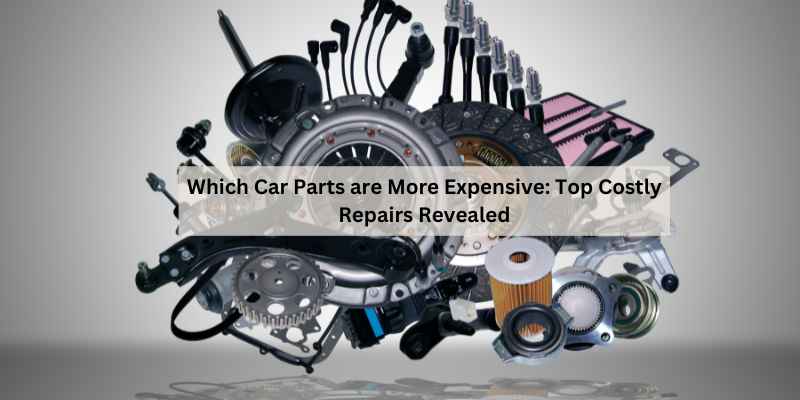
Which Car Parts Are Most Expensive? 10 Real Repair Costs
The engine is the most expensive car part to replace on a conventional vehicle, at roughly $4,000 to $8,000 installed — but on an EV, the battery pack overtakes it at $7,000 to $25,000. Getting this wrong is costly: a single overlooked coolant leak can turn a $200 hose into a $3,000 head gasket bill. This guide covers real replacement cost ranges for the ten priciest parts, what drives those prices, and which brands cost the most to repair.
Quick Answer
On a gas or diesel car, the engine is the single most expensive part to replace ($4,000–$8,000, or $15,000–$25,000 on luxury and performance models), followed by the transmission ($3,000–$7,000). On a hybrid or electric car, the battery pack is the biggest bill of all — $7,000 to $25,000 installed.
The 10 Most Expensive Car Parts to Replace (Real Cost Ranges)
The table below ranks the parts that produce the biggest repair bills, using published estimator data rather than guesswork. Every range is an installed figure — parts plus labour — for a mainstream vehicle unless noted. Luxury and performance models routinely land at the top of each range or well past it. For everyday consumables and smaller components, see our wider breakdown of how much car parts cost across the whole vehicle.
| Part | Typical installed cost | Why it costs that much |
|---|---|---|
| EV battery pack | $7,000 – $25,000 | Largest single component in the car; labour alone adds $500–$2,500 |
| Engine (replacement) | $4,000 – $8,000 ($15,000–$25,000 luxury/performance) |
Hundreds of machined parts plus 10–20 hours of removal and refitting |
| Hybrid battery pack | $4,000 – $10,000 | Smaller than a full EV pack, but still a sealed high-voltage assembly |
| Transmission (replacement) | $3,000 – $7,000 ($10,000–$14,000 luxury) |
Sealed, precision-built unit; most shops replace rather than rebuild |
| Head gasket | $2,543 – $3,337 | The gasket is cheap — stripping the engine down to reach it is not |
| Turbocharger | $2,490 – $3,068 (up to $6,000 twin-turbo) |
Parts run $1,771–$2,014; the rest is exhaust-side labour |
| Catalytic converter | $2,283 – $2,473 (range $933–$4,414) |
Contains platinum, palladium and rhodium — parts are ~90% of the bill |
| Engine control unit (ECU) | $500 – $2,500+ | Must be programmed and coded to the specific vehicle after fitting |
| AC compressor | $1,038 – $1,383 | System must be evacuated, recharged and leak-tested afterwards |
| Alternator | $802 – $1,073 | Parts $611–$793; access on transverse engines drives the labour |
Why These Parts Cost So Much
Three things push a part into four-figure territory: the raw materials inside it, the number of hours needed to reach it, and whether it has to be electronically programmed once fitted. A catalytic converter is expensive because of what is in it — precious metals make up roughly 90% of the invoice. A head gasket is expensive for the opposite reason: the part is inexpensive and the labour is brutal. Modern electronics add a third cost that did not exist twenty years ago, which is why car parts have become so expensive even at the small end of the scale.
Calibration Is the Hidden Line Item
Replacing a windshield, bumper or mirror on a car with driver-assistance features is no longer a purely mechanical job. The cameras and radar units behind those panels have to be recalibrated afterwards, typically $300 to $500 per system, and a single vehicle may need several. That step is often invisible in a quoted parts price and only appears on the final bill.
📊 Advanced driver assistance systems can add up to 37.6% to the total repair cost after a crash, with minor front radar or distance-sensor damage alone adding up to $1,540. — Source: AAA Automotive Engineering, December 2023
“Vehicles equipped with more sophisticated safety systems are much more common now.”
The practical takeaway is that the cheapest way to deal with these parts is to never need them. A code reader that flags a misfire or a lean condition early costs less than one hour of shop labour, and catching a failing sensor before it destroys a catalytic converter is the difference between a $60 part and a $2,400 exhaust job.
Best Repair-Prevention Pick
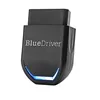
BlueDriver Bluetooth OBD2 Scanner (ABS, SRS & TPMS)
Reads manufacturer-level codes beyond the generic set, so you see a failing sensor or misfire before it takes an expensive part down with it.
- Best for: Catching engine, ABS and airbag faults early on a car you plan to keep
- Why we picked it: Enhanced ABS/SRS/TPMS coverage with no subscription, which generic readers can’t see
- Main drawback: Costs several times more than a basic code reader and needs a phone to run
Compare more repair-prevention options
 Option 1 ANCEL AD310 Classic OBD2 Code Reader
|
 Option 2 FOMIUZY Universal Catalytic Converter Shield
|
 Option 3 ANCEL BA101 Battery & Alternator Tester
|
As an Amazon Associate we earn from qualifying purchases.
Engine Replacement: The Single Biggest Conventional Bill
A full engine replacement on a mainstream car runs about $4,000 to $8,000 installed, and total bills above $10,000 are normal once labour and ancillary parts are included. On luxury and performance vehicles the same job lands between $15,000 and $25,000. Our dedicated breakdown of gas engine replacement costs covers new, used and remanufactured options in more detail.
What Actually Drives the Price
Most of an engine bill is time. Removing an engine, transferring accessories, and refitting it takes 10 to 20 hours on a typical car, and that is before machining or a new engine head. A remanufactured long block usually undercuts a new crate engine by a wide margin, while a low-mileage used engine is cheaper still and correspondingly riskier.
When To Repair Vs Replace
A single failed component — a head gasket, a timing chain, one cylinder — is usually worth repairing. Replacement makes more sense when the block or crankshaft is damaged, when the quoted repair approaches the car’s market value, or when the vehicle has other major deferred work stacked behind it. Get the estimate in writing and compare it against what the car is worth in running condition.
Transmission Replacement Costs
Replacing an automatic transmission generally costs $3,000 to $7,000 depending on whether the unit is new or rebuilt, rising to $10,000 to $14,000 on luxury sedans and SUVs. Because modern automatics are sealed, precision-assembled units, most shops fit a replacement rather than rebuild in-house.
Factors Influencing Transmission Repair Costs
- Extent of damage: a failed solenoid or torque converter is a fraction of a full unit replacement
- Transmission type: manual clutch jobs are generally cheaper than automatic, CVT or dual-clutch work
- New, rebuilt or remanufactured: the single biggest lever on the final figure
- Vehicle make and model: parts availability and access time vary enormously
- Labour rate: dealer rates typically run well above independent shops
Hybrid and EV Battery Packs
A full EV battery pack is the most expensive single component fitted to any mass-market car, at roughly $7,000 to $25,000 installed, with labour alone accounting for $500 to $2,500. Hybrid packs are smaller and typically fall between $4,000 and $10,000. If you are weighing a hybrid purchase, our guide on whether hybrid cars are more expensive to maintain puts these figures in context against routine servicing.
Two things soften that number. Pack prices continue to fall — lithium-ion pack pricing averaged around $108 per kWh in 2025 — and outright failures remain uncommon. EV data firm Recurrent reports that only about 2.5% of the EVs in its research community have ever needed a battery replacement, most of them under warranty. Third-party remanufactured packs now undercut dealer pricing significantly on older models.
Catalytic Converters and Turbochargers
These two are the most commonly underestimated big-ticket parts, and neither appears on most “expensive repair” lists until an owner is handed the invoice.
Catalytic Converters: $2,283 to $2,473 on Average
The average catalytic converter replacement runs $2,283 to $2,473, of which $2,055 to $2,139 is the part itself and only $228 to $334 is labour. Across a wider vehicle sample the range stretches from $933 to $4,414. The reason is the platinum, palladium and rhodium in the catalyst substrate — the same metals that make converters a theft target, which is why an anti-theft shield is one of the cheapest pieces of insurance on this list.
Turbochargers: $2,490 to $3,068 on Average
A turbocharger assembly replacement averages $2,490 to $3,068, split roughly $1,771 to $2,014 in parts and $718 to $1,054 in labour. A twin-turbo system on a V6 or V8 performance engine can reach $6,000. Turbo failures are frequently caused by oil starvation or contaminated oil, which makes the service interval the cheapest preventive measure available.
Electronics, Sensors and Driver-Assistance Systems
The fastest-growing category of expensive parts is not mechanical at all. An engine control unit costs $500 to $2,500 or more to replace, and over $3,000 at a dealer on some luxury models — although a specialist rebuild of the same unit often runs $150 to $600. Because the module must be coded to the vehicle after fitting, a “cheap” part bought online frequently arrives unusable.
Driver-assistance hardware carries similar sting. According to AAA’s testing, the sensors behind everyday panels cost $500 to $1,300 for front radar, $600 to $800 for a front camera, $900 to $1,200 for a windshield camera, $740 to $1,600 for a mirror-mounted camera, and $300 to $1,000 for parking ultrasonic sensors — each requiring recalibration on top.
Suspension, Brakes and Air Conditioning
These systems sit in the mid-tier: individually cheaper than an engine or transmission, but capable of compounding fast when ignored.
Air Conditioning
An AC compressor replacement averages $1,038 to $1,383. Refrigerant leaks, compressor seizure and electrical faults are the usual causes, and the system has to be evacuated, recharged and leak-tested afterwards — which is why a “simple” recharge quote rarely stays simple once a leak is found.
Suspension and Brake Lines
Shocks, struts, bushings and control arms vary too widely by vehicle to quote a single meaningful range, and air suspension on luxury models sits far above conventional setups. The pattern to watch is compounding: worn suspension causes uneven tyre wear and alignment problems, which then load the steering and, left long enough, the subframe. Corroded brake lines follow the same logic — a leaking line is a safety failure first and a cost problem second, so it is not a repair to defer on price.
OEM vs Aftermarket vs Remanufactured
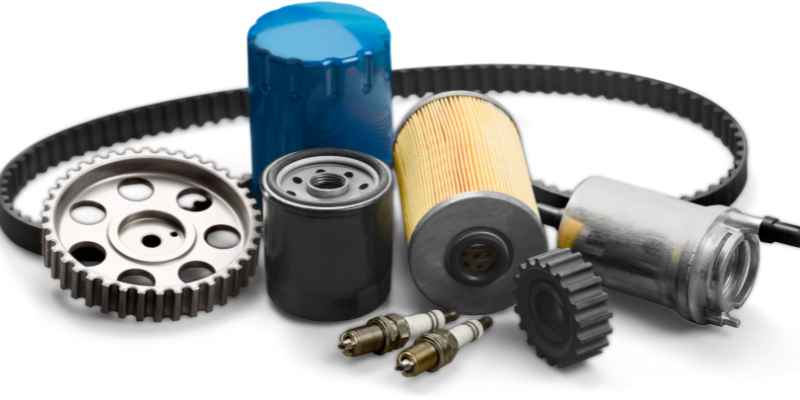
On the big-ticket items above, the sourcing decision moves the total more than any negotiation over labour rate. Remanufactured is the option most owners overlook, and on engines, transmissions and ECUs it is often the sensible middle ground.
| Option | Relative price | Best for |
|---|---|---|
| OEM (dealer) | Highest | Safety-critical parts, in-warranty repairs, exact-fit certainty |
| Aftermarket | Lower | Common wear items where reputable brands are widely available |
| Remanufactured | Mid-range | Engines, transmissions, alternators, ECUs — rebuilt to spec with a warranty |
| Used / salvage | Lowest | Older vehicles and body parts, where the risk is worth the saving |
OEM parts are built to the manufacturer’s exact specification and usually carry their own warranty, which matters most on airbags, brakes and steering. Aftermarket quality varies widely between brands, so the saving is only real if the manufacturer is reputable. For practical sourcing tactics, see our guide on how to get car parts for cheap without gambling on quality.
Small Parts With Surprisingly Big Price Tags
Physical size is a poor guide to cost. Several of the priciest items on a modern invoice fit in one hand, because their price comes from electronics, precious metals or programming rather than mass:
- Windshield camera module: $900 to $1,200 before the $300 to $500 recalibration
- Mirror-mounted camera: $740 to $1,600, replaced whenever the mirror housing is damaged
- Front radar sensor: $500 to $1,300, and vulnerable in even a low-speed front impact
- Engine control unit: $500 to $2,500 or more, and unusable until coded to the vehicle
- Parking ultrasonic sensors: $300 to $1,000, despite being smaller than a coin
The common thread is that none of these can simply be bolted on. Programming, calibration and matching to the vehicle’s existing modules turn a small component into a shop visit.
Which Car Brands Cost the Most to Repair?
Ultra-luxury marques such as Rolls-Royce, Bentley and Bugatti carry the highest absolute part prices, but almost no one shops those cross-shopping a repair bill. The more useful comparison is ten-year maintenance and repair spend across mainstream and premium brands, and the published data does not always match the assumptions people carry.
Consumer Reports’ 2025 cost-of-ownership analysis puts Tesla ($5,050), Lincoln ($5,200) and Buick ($5,300) at the low end over the first ten years, and Land Rover ($17,450), Porsche ($16,000) and Mercedes-Benz ($13,100) at the high end. CarEdge’s separate ten-year data ranks Toyota lowest at $5,996, followed by Mitsubishi, Honda, Mazda and Nissan, with Porsche, BMW, Land Rover and Jaguar at the expensive end.
Two things follow from that. European luxury brands cluster at the top on both datasets, so the pattern is real rather than a quirk of one study. And Nissan, often described as the cheapest brand for parts, is genuinely affordable but not the outright cheapest — Toyota, Honda and Mazda all sit ahead of it on ten-year cost. If you are shopping used, a pre-purchase inspection is the cheapest way to find out which of these bills you would be inheriting.
How to Avoid the Biggest Repair Bills
Almost every figure in this article describes a failure that started as something smaller and cheaper. The practical defences are unglamorous but effective:
- Keep the oil clean and on schedule. Oil starvation and contamination are leading causes of both turbo and engine failure.
- Never drive on a hot temperature gauge. One overheating episode is how a coolant leak becomes a head gasket bill.
- Investigate a check-engine light early. A failing oxygen sensor left alone can destroy a catalytic converter worth ten times as much.
- Fix suspension and alignment issues promptly before they consume tyres and load other components.
- Read your warranty before you authorise work. Powertrain and hybrid-component coverage often runs far longer than the bumper-to-bumper term, and hybrid or EV battery packs in particular are frequently still covered when owners assume they are not.
Our wider list of practical car maintenance habits covers the routine checks in more detail. If a quote has already landed and it is beyond your budget, there are structured options — see what to do when a car repair is too expensive before agreeing to anything.
Frequently Asked Questions
Which Car Brand Parts Are Most Expensive?
Ultra-luxury brands such as Rolls-Royce, Bentley and Bugatti carry the highest individual part prices because of limited production volumes. Among brands most drivers actually own, Consumer Reports’ 2025 data puts Land Rover ($17,450), Porsche ($16,000) and Mercedes-Benz ($13,100) highest for ten-year maintenance and repair costs.
Which Part Of The Car Costs The Most?
On a petrol or diesel car it is the engine, at roughly $4,000 to $8,000 installed and $15,000 to $25,000 on luxury and performance models. On a hybrid or electric car the battery pack costs more than the engine would, at $7,000 to $25,000 installed for a full EV pack.
What Is The Most Expensive To Fix On A Car?
The engine and transmission produce the largest repair bills on conventional vehicles, at $4,000 to $8,000 and $3,000 to $7,000 respectively. Behind them sit head gaskets ($2,543–$3,337), turbochargers ($2,490–$3,068) and catalytic converters ($2,283–$2,473), all of which regularly exceed a car’s remaining value on older vehicles.
Which Car Brand Has The Cheapest Parts?
Toyota is the cheapest mainstream brand to maintain over ten years in CarEdge’s data at $5,996, ahead of Mitsubishi, Honda, Mazda and Nissan. Consumer Reports’ 2025 analysis instead ranks Tesla, Lincoln and Buick lowest. Nissan parts are affordable and widely stocked, but it is not the outright cheapest brand on either dataset.
How Much Does It Cost to Replace a Catalytic Converter?
The average catalytic converter replacement costs $2,283 to $2,473, with the part accounting for $2,055 to $2,139 and labour only $228 to $334. Across a wider vehicle sample the range runs from $933 to $4,414. The cost comes from the platinum, palladium and rhodium inside the converter, not from the labour involved.
Is It Worth Repairing an Engine or Buying Another Car?
Repair usually wins when one component has failed and the quote sits well below the car’s running-condition value. Replacement or selling makes more sense when the block or crankshaft is damaged, when the estimate approaches what the car is worth, or when other major work is already due. Always compare the written estimate against the vehicle’s current market value.
Why Are Sensors and Cameras So Expensive to Replace?
Because the part price is only half the job. A windshield camera costs $900 to $1,200 and a front radar sensor $500 to $1,300, then each needs recalibration at roughly $300 to $500 per system. AAA found that driver-assistance systems can add up to 37.6% to the total repair cost after a crash for exactly this reason.
The Bottom Line
The engine is the most expensive part on a conventional car and the battery pack on an electric one, with the transmission close behind on both. Below that top tier, head gaskets, turbochargers and catalytic converters all clear $2,000 routinely, and driver-assistance sensors have quietly pushed small electronic parts into the same territory. Almost all of these bills start as a cheaper problem that was left alone, which makes early diagnosis and an honest look at your warranty terms the two highest-value moves available to any owner.
Products related to this article
Sponsored / affiliate links. As an Amazon Associate I earn from qualifying purchases. I may earn additional commission from eligible campaigns.