Why Are Car Parts So Expensive? 6 Real Cost Drivers
Car parts often get expensive for several common reasons: materials, vehicle-specific fitment, labor, calibration, supply constraints, and compliance; if a quote is high, one or more of those factors usually drives it. Miss one of them and you can overpay for the part, the repair, or both. This guide shows how to read a quote and identify the cost driver behind the price.
What repair quotes actually cover
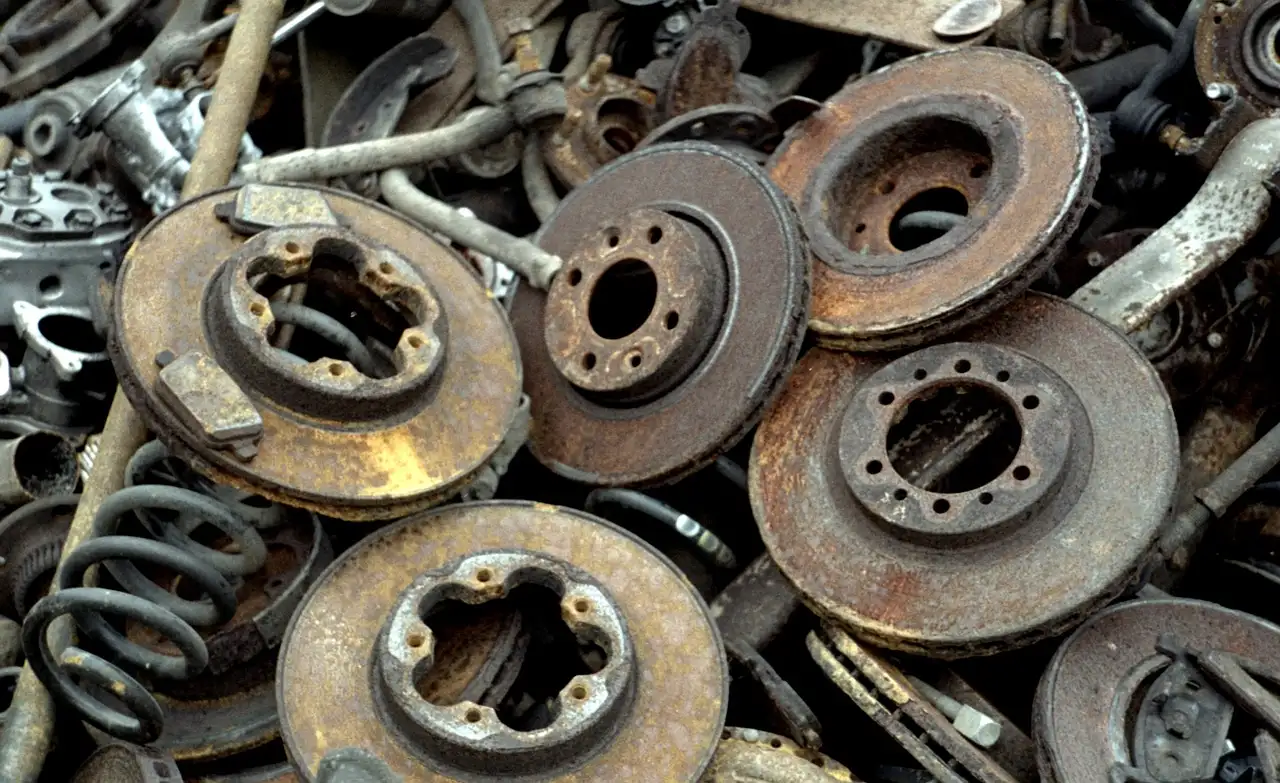
A high parts quote rarely comes from the sticker price alone. The number usually reflects what the part is made from, how closely it fits your exact vehicle, how much removal and reassembly it needs, whether the system needs coding or calibration, and whether the part must satisfy emissions or safety rules.
That is why two quotes for the same repair can look very different. One shop may price only the component. Another may include seals, fluids, mounting hardware, programming, and several labor hours. The parts line can look high while the real cost sits in the attached work.
How much do car parts cost on average?
There is no single average that tells you much about a real quote. Routine parts can be modest, while major repairs quickly climb into the thousands. A better way to judge cost is to ask whether the price comes from the part itself, the installation, or the add-ons that only show up once the quote is written.
For example, an alternator replacement is estimated at $610–$1,425, while a fuel injector replacement is estimated at $634–$1,325. That spread shows why “parts cost” is only part of the story: the vehicle, the access path, and the required setup all matter.
What the estimate is really paying
Read a repair quote line by line. If the part price is high, ask whether the part is specialty hardware, a vehicle-specific module, or a component made from expensive materials. If the labor is high, ask whether the technician must remove surrounding systems first. If the quote includes calibration or coding, that is not padding; it is often required.
Materials drive the base price
Some parts cost more because the material content is expensive before any labor starts. Catalytic converters contain precious metals like platinum and rhodium, and hybrid batteries use expensive materials in their cells. Precision parts such as injectors and sensors also cost more because tighter tolerances raise manufacturing cost.
Which car parts are expensive because of materials?
Catalytic converters and hybrid batteries are the clearest examples. A catalytic converter replacement is estimated at $1,500–$2,750, and the price is tied in part to the precious metals inside it. Hybrid battery replacement is listed at $6,000+, and the chemistry and pack design help explain that level.
Fuel injectors are another case. The part itself may not look dramatic, but the precision needed to meter fuel accurately increases the price of the component. That is why fuel injector replacement is estimated at $634–$1,325 even before you account for labor.
Why one quote can be far higher than another
A quote for the same repair can jump when the shop uses an OEM part rather than an aftermarket one, or when remanufactured parts are not available. OEM parts usually cost more because they are built to the original specification. Aftermarket parts can lower the price, but fit and durability can vary. Remanufactured parts often sit in the middle, especially for units that can be rebuilt.
Fitment and vehicle-specific design
Many expensive repairs are costly because the part is built for one exact vehicle family, trim, or powertrain. A hybrid battery is not interchangeable across models in the way a generic belt might be. A transmission or airbag module can also be tied to software, sensor logic, and mounting points that make substitution difficult.
Suppose a crossover needs a replacement fuel injector set. The quoted part may be higher than expected because the injectors are matched to the engine family and fuel system pressure. The same vehicle with a different engine may use a different part number entirely.
Labor can cost more than the part

Many expensive repairs are expensive because the vehicle has to come apart to reach the failure point. The part may be a single item, but the job includes removal, teardown, replacement, reassembly, fluid service, and inspection. That is why labor and parts together make repairs expensive.
Why do labor and parts together make repairs expensive?
Engine replacement is estimated at $7,000–$10,000, and the cost is driven by part cost and labor. Transmission replacement is estimated at $4,000–$5,000, and the installation is complex. Suspension overhaul is estimated at $2,500–$3,500, often because shocks, struts, control arms, and bushings must all be reached in tight spaces.
In each case, the part alone does not explain the bill. The access time, the number of related components, and the need to reassemble everything correctly add hours that the quote must cover.
What are the most expensive car parts?
The most expensive repairs in this group are engine replacement, hybrid battery replacement, and transmission replacement. Engine replacement is estimated at $7,000–$10,000. Hybrid battery replacement is listed at $6,000+. Transmission replacement is estimated at $4,000–$5,000. Those jobs often combine major parts cost with long labor time.
Airbag replacement is estimated at $2,500–$4,000, suspension overhaul at $2,500–$3,500, catalytic converter replacement at $1,500–$2,750, head gasket replacement at $1,030–$2,149, and fuel injector replacement at $634–$1,325. The lower number does not always mean the easier repair.
Why labor and parts together make repairs expensive?
A part with a modest unit price can still create a large final bill when the technician must remove many surrounding parts first. Head gasket replacement is the cleanest example. The gasket itself is small, but the repair is labor intensive because access can require significant teardown. That is why the total lands at $1,030–$2,149.
Airbag work can also carry high labor because the dashboard, seats, trim panels, or steering wheel may need to come apart. Airbag replacement is estimated at $2,500–$4,000, and the interior teardown is part of the cost, not an extra surprise.
Calibration and coding add hidden cost
Modern repair quotes often include work that never shows up in the part name. Safety modules, hybrid systems, and engine electronics may need calibration, coding, or relearning after the hardware goes in. Those procedures take time and diagnostic equipment, so they appear as separate labor or programming lines.
Calibration and coding add hidden cost: airbag replacement involves safety components
Airbag replacement involves safety components and sensors, so the system may need post-install checks or module work. Hybrid battery replacement is listed at $6,000+ and requires vehicle-specific calibration. That matters because a battery swap is not always a simple physical replacement; the vehicle may need electronic setup afterward.
Hidden add-ons can also include seals, gaskets, fasteners, fluids, and scan-tool time. A quote that omits those items may look cheap at first and expensive later.
Which repairs become total-loss decisions?
Any repair can become a total-loss question if the final bill gets close to the vehicle’s actual cash value. Engine replacement, hybrid battery replacement, and transmission replacement are the usual pressure points because the repair can run into the thousands before taxes and supplemental parts. Older cars and low-value trims reach that threshold sooner.
A common first-timer mistake is comparing the quote only to the part price instead of the car’s value. If a vehicle is worth about $5,000 and the repair is about $4,000 to $5,000, the math can be close to a total-loss decision point even if the car still runs afterward.
Parts price decoder
Use this table to read a quote by cause, not by headline number. It helps you separate the part itself from the forces that make the final bill climb.
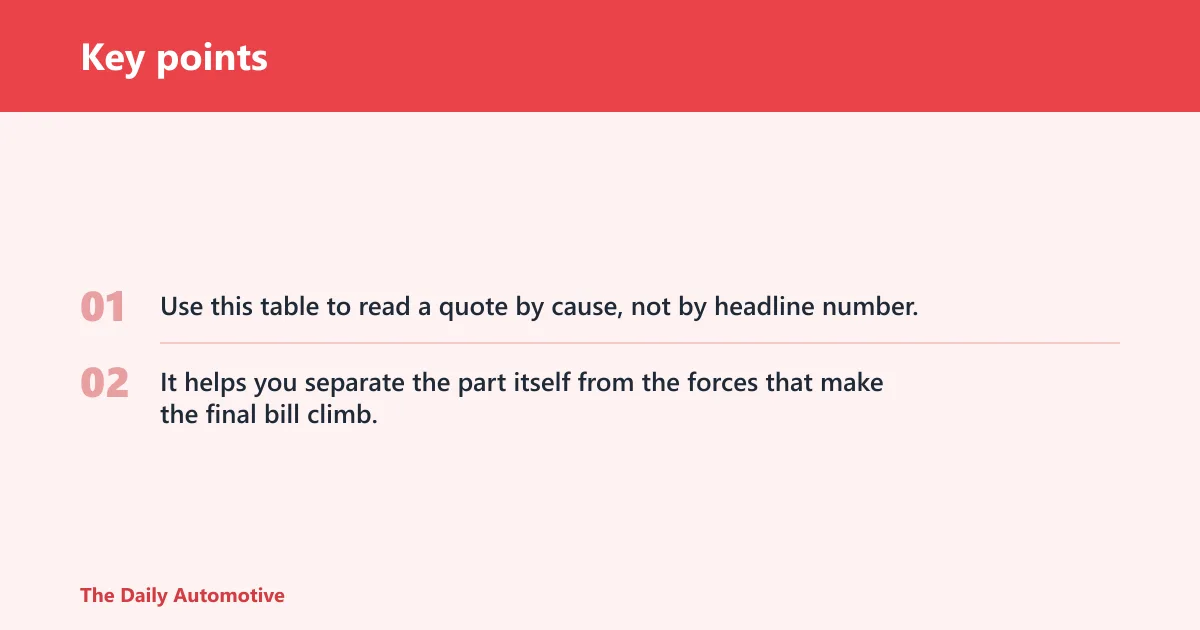
| Cost driver | How it shows up on an estimate | Typical parts affected | Red flags | Questions to ask the shop | Does OEM, aftermarket, or reman change the price? |
|---|---|---|---|---|---|
| Materials | High part price before labor | Catalytic converter, hybrid battery, fuel injector | No explanation for a big part jump | What material content or chemistry is driving this price? | Yes. Material content often shifts OEM and reman pricing more than aftermarket |
| Fitment | Special part number for VIN or trim | Transmission, airbag module, injector set | Generic part promised for a vehicle-specific system | Is this matched to my exact engine, trim, or option package? | Yes. OEM is usually highest; aftermarket may fit some applications; reman depends on availability |
| Labor | Several hours for removal and reassembly | Engine, transmission, suspension, head gasket | Labor line looks short for a major teardown | What has to come off before the part can be reached? | Sometimes. The part price may change little, but total cost shifts with labor time |
| Calibration | Programming, relearn, scan-tool time | Hybrid battery, airbag system, sensors | No line for post-install setup on an electronic repair | Will the vehicle need coding, calibration, or a final scan? | Sometimes. OEM parts may need fewer workarounds; aftermarket can need more setup |
| Supply | Backorder, rush freight, limited stock | Converters, batteries, late-model modules | Part price changes without a clear reason | Is this part on hand, reman available, or subject to delay? | Yes. Reman or aftermarket can reduce wait time and price when available |
| Compliance | Emissions or safety-related replacement requirement | Catalytic converter, airbag, related sensors | Missing mention of emissions or safety inspection needs | Does this part have to meet emissions or safety rules? | Yes. Compliance often pushes owners toward OEM or approved reman parts |
Common expensive parts and hidden add-ons
| Part | Likely hidden add-ons |
|---|---|
| Engine replacement | Sensors, belts, fluids, mounts, labor hours |
| Hybrid battery | Calibration, battery management setup, labor hours |
| Transmission replacement | Fluid, seals, software setup, labor hours |
| Airbag replacement | Interior teardown, sensors, module checks, coding |
| Suspension overhaul | Shocks, struts, control arms, bushings, alignment |
| Catalytic converter replacement | Oxygen sensors, gaskets, fasteners, emissions checks |
| Head gasket replacement | Machine work, seals, fluids, labor hours |
| Fuel injector replacement | Seals, rail hardware, scan work, labor hours |
How can I tell whether a part quote is inflated?
A quote is worth questioning when the part price, labor, and add-ons are not separated clearly. Ask for the part number, whether it is OEM, aftermarket, or remanufactured, and whether the estimate includes calibration, seals, fluids, and shop supplies. A vague quote is harder to verify than a detailed one.
- Ask for an itemized estimate with part numbers.
- Check whether the quote includes labor, coding, calibration, and teardown.
- Compare OEM, aftermarket, and remanufactured options where the vehicle allows them.
- Ask which lines are required versus optional.
- Ask whether the repair needs emissions or safety compliance parts.
Picture a sedan with a catalytic converter quote that seems high. If the estimate includes the converter, two oxygen sensors, gaskets, and emissions-related labor, the price may be reasonable. If the quote only lists “converter” with no detail, ask for the breakdown before judging it.
Frequently asked questions
Why are car parts so expensive?
Car parts get expensive because the cost is often built from more than the component itself. Materials, fitment, labor, calibration, supply, and compliance can all raise the final price. The same repair can cost much less or much more depending on whether OEM, aftermarket, or remanufactured parts are used.
What are the main cost drivers in auto parts pricing?
The main cost drivers are materials, vehicle-specific fitment, labor, calibration, supply constraints, and compliance. Catalytic converters are costly because of precious metals, hybrid batteries because of their materials, and many repairs because installation takes time, requires teardown, or needs post-install electronic setup.
Products related to this article
Sponsored / affiliate links. As an Amazon Associate I earn from qualifying purchases. I may earn additional commission from eligible campaigns.