Why Do Luxury Cars Need Premium Gas? The Real Cost of Skipping It
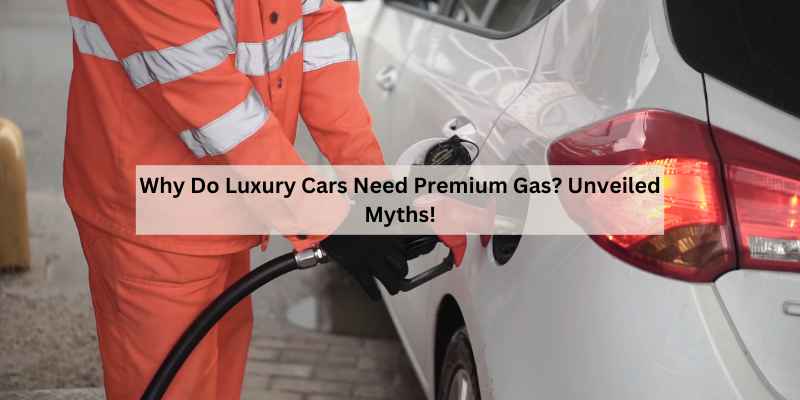
You pull up to the pump in your new German sedan, and the fuel filler door stares back at you with a stark warning: “Premium fuel only.” Your wallet flinches. Regular is 60 cents cheaper per gallon, and the engine seems to run fine on it. So why does the manufacturer insist on the expensive stuff?
The short answer is physics. Luxury cars use high-compression engines, turbochargers, or both. Those designs squeeze more power from every drop of fuel, but they also create conditions where low-octane gas can ignite at the wrong time. That wrong-time ignition, called detonation or engine knock, can destroy internal parts over time. This article explains exactly how that works, what it costs you in real dollars, and what to do if you’ve already filled up with regular.

HappyFuel
HappyFuel Premium Fuel Stabilizer, Gasoline Antioxidant, Fuel…
- Vehicle Storage - HappyFuel added to your gasoline will stabilize your fuel and slow down the oxidation process. Your vehicle will…
- Use the Best - We’ve researched the best possible additives and created HappyFuel to bring you the highest quality and best perfor…
- Backed by Science– We thoroughly tested against ASTM D525 and developed the highest performing fuel stabilizer on the market.
You’ll also learn the difference between “required” and “recommended” fuel, why altitude changes the equation, and why the old myth about premium gas cleaning your engine doesn’t hold up anymore.
The Real Reason: It’s Physics, Not Snobbery
Luxury cars don’t demand premium gas because the badge on the hood is fancy. They demand it because the engine inside is built to run at the edge of what gasoline can physically handle.
Inside every cylinder, the piston compresses the air-fuel mixture before the spark plug fires. The compression ratio tells you how much that mixture gets squeezed. A typical economy car runs a compression ratio around 10:1. Many luxury performance engines run 11:1, 12:1, or even higher. Some turbocharged engines run effective compression ratios well above that when boost builds.
Higher compression means more power. It also means more heat and pressure inside the cylinder. Under those conditions, gasoline can ignite spontaneously before the spark plug even fires. That premature explosion creates a shock wave that slams against the piston and cylinder walls. You hear it as a knocking or pinging sound. Left unchecked, it cracks pistons, bends connecting rods, and ruins bearings.
Premium gas resists that spontaneous ignition. The higher octane rating means the fuel can withstand more compression before it lights off on its own. That’s the entire game.
Octane 101: What the Numbers on the Pump Actually Mean
Octane rating measures a fuel’s resistance to knocking. It does not measure energy content. A gallon of 87-octane regular contains essentially the same chemical energy as a gallon of 93-octane premium. The difference is how that fuel behaves under pressure.
The number comes from a standardized test. The fuel’s knock resistance is compared to a mixture of two hydrocarbons: iso-octane and heptane. Iso-octane resists knocking well, so it gets a rating of 100. Heptane knocks easily, so it gets a rating of zero. A fuel rated 91 behaves like a mixture of 91% iso-octane and 9% heptane in the test engine.
You’ll see three grades at most U.S. pumps:
- 87 octane (regular)
- 89 octane (mid-grade)
- 91-93 octane (premium)
The pump octane you see is the average of two different test methods, called the anti-knock index. That’s why you’ll see a small sticker on the pump saying “(R+M)/2.” The important part is that higher numbers mean more knock resistance, nothing else.
So when a luxury car’s owner’s manual says “91 octane or higher,” it’s telling you the minimum knock resistance the engine needs to run safely at full power.
High Compression and Turbochargers: Why Luxury Engines Are Different
Walk through a luxury car lineup and you’ll find a common pattern: small-displacement engines with forced induction. A 2.0-liter turbocharged four-cylinder in a BMW 330i makes more horsepower than a naturally aspirated 3.5-liter V6 from a decade ago. That’s impressive, but it comes at a cost.
Turbochargers force more air into the cylinders. More air means more oxygen, which means more fuel can burn, which means more power. But compressing air with a turbo also heats it up. Hot intake air plus high cylinder pressure creates exactly the conditions where low-octane fuel knocks.
Naturally aspirated luxury engines face the same issue through sheer compression ratio. A Porsche 911 GT3 runs a 13.3:1 compression ratio. That’s racing territory. It needs 93 octane, period.
Some luxury cars use mild-hybrid systems or cylinder deactivation to improve fuel economy, but the core engine design still prioritizes power density over efficiency. Every one of those design choices pushes the octane requirement higher. The manufacturer isn’t being precious. The engine’s mechanical limits demand it.
What Happens When You Use Regular Gas? (The Knock Sensor’s Role)
Modern engines have a safety net called the knock sensor. It’s a small piezoelectric microphone bolted to the engine block. It listens for the specific vibration frequency of detonation. When it hears knock, it sends a signal to the Engine Control Unit (ECU).
The ECU responds by retarding ignition timing. That means the spark plug fires later in the compression stroke, after the piston has already started moving down. This reduces peak cylinder pressure and temperature, which stops the knocking. It also reduces power and fuel economy.
Here’s the catch: the ECU can only pull timing so far. If you consistently run 87 octane in an engine designed for 91, the ECU keeps the timing retarded the whole time. You lose horsepower and torque, and you burn more fuel because the combustion is less efficient. The engine runs hotter and rougher. Over thousands of miles, that added heat stress accelerates wear on pistons, rings, and bearings.
In extreme cases, like towing up a mountain pass in summer, the ECU’s timing correction range gets exhausted. Then you get audible knock. That’s metal-on-metal violence inside the cylinders. It can crack a piston crown in minutes, not miles.
So no, the car won’t explode the moment you leave the station with regular. But you’re trading a few dollars of savings now for a slowly degrading engine and a much larger repair bill later.
Required vs. Recommended: How to Check Your Specific Car
Not every luxury car demands premium. Some merely recommend it. The distinction matters.
“Required” means the engine’s calibration was designed around a minimum octane rating. Running lower octane can cause knock, reduced power, and potential damage under load. You’ll typically see “Premium fuel required” printed on the fuel filler door or in the owner’s manual.
“Recommended” means the engine will run safely on regular, but the manufacturer tuned it to deliver peak power and efficiency on premium. You’ll usually find this in the owner’s manual, not on the filler door. The car will run fine on 87, but you’ll lose a few horsepower and maybe a mile or two per gallon.
Here’s how to check your specific car:
- Look at the inside of the fuel filler door. That’s the most accessible place manufacturers print the requirement.
- Check the owner’s manual under “Fuel Requirements” or “Capacities and Specifications.”
- Look for a sticker under the hood near the engine cover or on the radiator support.
- If you can’t find it, call the dealership with your VIN. They can tell you definitively.
When in doubt, use premium. The cost difference is a few hundred dollars a year. The cost of a new engine is five figures. That’s not a hard choice.
The True Cost of Skipping Premium: A Financial Breakdown
Let’s put real numbers on this. Assume you drive 12,000 miles per year and average 25 miles per gallon. That’s 480 gallons of fuel annually.
If premium costs 60 cents more per gallon than regular, you’re spending an extra $288 per year. At 80 cents more, it’s $384. That’s the entire premium you pay for the privilege of driving a luxury car.
Now consider what happens if you skip premium and the engine knocks under load. A cracked piston requires replacing the whole engine block in many modern designs. That’s a $8,000 to $15,000 job at a dealership. Even a single damaged cylinder head can run $3,000 to $5,000 with labor.
Here’s a comparison table to make the math clear:
| Scenario | Annual Fuel Cost (Regular) | Annual Fuel Cost (Premium) | Extra Cost Per Year | Potential Repair Cost If Damage Occurs |
|---|---|---|---|---|
| 12,000 mi/yr, 25 mpg, 60c spread | $1,670 | $1,958 | $288 | $8,000 – $15,000 |
| 15,000 mi/yr, 22 mpg, 80c spread | $2,386 | $2,932 | $546 | $8,000 – $15,000 |
| 10,000 mi/yr, 30 mpg, 50c spread | $1,167 | $1,333 | $166 | $8,000 – $15,000 |
The fuel savings from using regular top out around $500 per year in the worst case. The repair bill starts at $8,000. You’d have to drive the car for 16 years on regular to save enough to pay for one engine replacement. That’s the cost of ignorance.
There’s also a warranty angle. If you use regular fuel in a car that requires premium and the engine fails, the manufacturer can deny your warranty claim. They’ll test the fuel and find the octane was too low. You’ll pay the full repair bill out of pocket.
The “Cleaning Additives” Myth: Modern Gas vs. Engine Deposits
You’ve probably heard someone say premium gas cleans your engine better. That was true in the 1990s. It’s not true anymore.
In 1996, the EPA mandated a minimum level of detergent additives in all gasoline grades sold in the U.S. That baseline cleaned up the worst offenders. Then the Top Tier program raised the bar further. Most major brands now sell Top Tier detergent gasoline in all grades, including regular.
That means modern regular gas contains the same detergents as premium from the same brand. The detergents keep fuel injectors clean and prevent carbon buildup on intake valves. Using premium doesn’t give you a cleaner engine than using regular from a Top Tier station.
What causes carbon buildup is driving style and engine design, not fuel grade. Short trips that never let the engine reach operating temperature, excessive idling, and direct injection engines all contribute to deposits. If you want to protect your engine’s fuel system, buy gas from a Top Tier station and take the car on a good highway run occasionally.
For long-term storage, that’s a different problem. Gasoline oxidizes over time, forming gums and varnish that clog injectors and stick to valves. A fuel stabilizer like HappyFuel Premium Fuel Stabilizer slows that oxidation process. It’s worth adding to the tank before you park a car for the winter or store a classic car for months. The science is straightforward: antioxidants in the stabilizer interrupt the chain reaction that turns fresh fuel into sludge.
Emergency Guide: I Accidentally Filled Up with Regular Gas
It happens. You’re distracted, you grab the wrong nozzle, and suddenly your premium-only car has a full tank of 87. Don’t panic. Here’s what to do:
- Don’t drain the tank. A single tank of regular won’t destroy your engine immediately. The knock sensor will compensate by retarding timing, and you’ll lose some power.
- Drive gently. Avoid hard acceleration, heavy loads, and steep hills until the tank is mostly empty. Those conditions create the highest cylinder pressures where knock is most likely.
- Fill up with premium as soon as possible. You don’t need to wait until the tank is bone dry. Adding premium to the remaining regular raises the overall octane in the tank.
- If you hear knocking, stop driving. Audible knock means the ECU has exhausted its timing correction range. Continuing to drive risks immediate mechanical damage. Call a tow truck.
- Consider a fuel additive. An octane booster can raise the effective octane of the fuel in your tank. It’s not a perfect solution, but it helps if you’re far from a station.
One mistake won’t ruin a car. A habit of using regular in a premium-required engine will. If you fill up with the wrong grade once, correct it and move on.
Frequently Asked Questions
Does premium gas increase horsepower in any car?
Only in cars that require or recommend it. In an engine designed for premium, the ECU advances ignition timing to maximize power. If you run regular, the ECU pulls timing back to prevent knock, and you lose power. Fill it with premium, and the ECU restores full timing and full horsepower. In an economy car designed for regular, premium does nothing. The ECU has no additional timing advance to give. You’re just spending extra money.
Can I mix regular and premium gas?
Yes. Mixing grades is safe. The octane rating of the mixture is roughly the average of the two fuels. If you have half a tank of 87 and fill the rest with 93, you’ll end up with about 90 octane. That’s acceptable for most cars that require 91. The engine’s knock sensor will handle the small difference. Just don’t make a habit of it.
Does altitude change my octane needs?
Yes, and this one surprises people. At higher altitudes, air is less dense, so cylinder pressure is lower. Lower pressure means less chance of knock. That’s why you’ll see 85 octane regular at gas stations in Denver and other mountain cities. A car that requires 91 octane at sea level can often run safely on 89 or even 87 at 5,000 feet or higher. But here’s the catch: if you drive down from the mountains to lower elevation, the octane requirement returns. The ECU won’t know you’ve descended until you’re already in a knock-prone situation. When in doubt, stick with premium.
Will using regular gas void my warranty?
It can. The Magnuson-Moss Warranty Act says a manufacturer can’t deny a claim just because you used aftermarket parts or didn’t use a specific brand. But using fuel that doesn’t meet the minimum octane requirement is different. If the engine fails and the manufacturer proves the fuel caused it, they can deny the claim. The fuel filler door and owner’s manual both state the requirement. That’s documented evidence.
Is mid-grade gas ever the right choice?
Rarely. Mid-grade (89 octane) is a compromise that doesn’t serve most cars well. If your car requires 91, mid-grade is still below the minimum. If your car recommends 91, mid-grade gives you a partial benefit but costs almost as much as premium. The only time mid-grade makes sense is if your car’s manual specifically calls for it, which is uncommon. Most drivers should pick regular or premium and stick with it.
The Bottom Line: Protect Your Investment
Luxury cars are expensive to buy and expensive to repair. The fuel requirement is part of that package. Here’s what you should remember:
- Premium gas resists engine knock, which is destructive detonation inside the cylinders. That’s why high-compression and turbocharged engines need it.
- Check the fuel filler door and owner’s manual to know if your car requires or merely recommends premium. “Required” is non-negotiable.
- The extra cost of premium is roughly $200 to $500 per year depending on your driving habits. The cost of an engine replacement is $8,000 or more.
- Using regular in a premium-required car makes the ECU retard timing, costing you horsepower, torque, and fuel economy even if you don’t hear knocking.
- Modern regular gas has the same detergents as premium. Premium doesn’t clean your engine better. Buy Top Tier fuel for injector cleanliness.
- One accidental tank of regular won’t ruin your engine. Drive gently, refill with premium, and don’t make it a habit.
- For cars that sit for long periods, add a fuel stabilizer like HappyFuel to prevent oxidation and gum formation. A $10 can is cheaper than cleaning a fuel system.
Treat the fuel requirement as a specification, not a suggestion. Your engine’s longevity depends on it. If you’re shopping for a used luxury car, check the fuel requirement before you buy. Some models from brands like Lexus are designed to run on regular, while others from BMW and Mercedes are not. Knowing the difference before you sign saves you from a nasty surprise at the pump. And if you’re comparing a luxury car to a hybrid for daily commuting, factor the fuel cost into your decision. The best hybrid cars can cut your annual fuel bill in half, but they won’t give you the same driving experience. That’s the trade-off you’re paying for.
Products related to this article
Sponsored / affiliate links. As an Amazon Associate I earn from qualifying purchases. I may earn additional commission from eligible campaigns.