Best Car Sun Visors for Glare Protection (2026): We Compared
Use the JOYTUTUS Sun Visor Extender for low-angle side glare, the factory visor for overhead sun, and a windshield shade for parked-vehicle heat; if glare comes from more than one angle, start with the extender. Get the choice wrong, and you keep squinting, miss signals, or return to a hotter cabin. This guide separates the three jobs and shows when each one makes sense.
Bio: This article covers fit, mounting stability, storage, glare coverage, and daily usability in real vehicles, with attention to how each accessory behaves for tall drivers, glasses wearers, and vehicles with small factory visors.

Quick comparison
This comparison separates front glare, side glare, and parked-vehicle heat, so you do not buy a shade when you need a visor extender. It also shows where fit matters most, especially for tall drivers, glasses wearers, and vehicles with small factory visors.
How we chose
The picks below use manufacturer specs, listing details, and published buyer feedback. Fit, glare coverage, mounting stability, and storage convenience carry the most weight.
Factory sun visor: best for direct front glare
The factory sun visor is the first line of defense for direct sunlight from above. It flips down from the headliner, often includes an illuminated mirror or storage pocket, and may add an extension panel, but it usually has limited side coverage and vehicle-specific fitment.
That vehicle-specific shape matters. OEM-fit visors should line up with the headliner, mirror cutout, and mounting points for your exact car, while universal replacements need careful confirmation before purchase. If your visor is too small, tall drivers can still get sunlight under the edge.
EcoNour Accordion Car Windshield Sun Shade is not a replacement visor, but it belongs here because some shoppers confuse front-glare control with parked-sun control. It is a foldable windshield shade, not a cabin-mounted visor, so it helps after you park rather than while you drive.
What it does and where it falls short on side glare
The factory visor blocks direct overhead sun and can cut some forward glare. It does not solve the low-angle sun that comes in from the A-pillar, side glass, or the gap beside a short visor. That is where a clip-on extender or a side-window shade becomes the better fix.
Fitment note: OEM fit versus universal, and why vehicle-specific shape matters
Premium Car Parts says its visors are available in OEM-fit and universal versions, and its listings may include illuminated mirrors, storage pockets, or extension panels. It also advertises up to a 1-year warranty. That kind of spec matters because visor shape, attachment points, and mirror cutouts vary by vehicle.
A common first-timer mistake is replacing a worn visor with a “universal” part that blocks the mirror, misses the mounting point, or sags over bumps. If your vehicle is a coupe, sedan, SUV, or truck, check the listing against the exact body style and compare the mounting hardware before you buy.
Clip-on visor extender: best for side glare
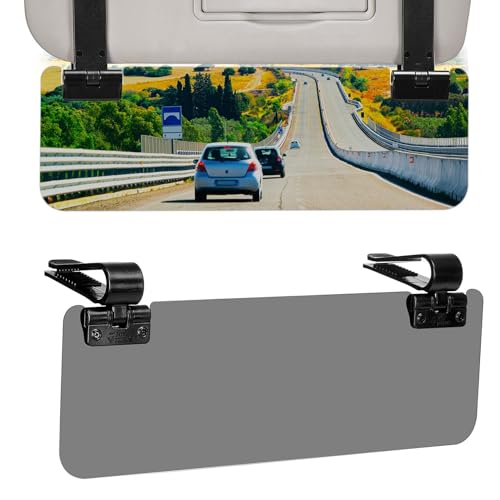
The JOYTUTUS visor extender is the strongest match for drivers who get hit by low-angle sun from the left or right side. Its polarized lens helps reduce reflected glare, and the double-clip setup is meant to stay put while still letting you remove it quickly when the sun moves.
Polarization and UV protection are different checks. Polarization reduces reflected glare from bright pavement, hoods, or glass. UV protection is a separate spec, and ZEISS notes that effective UV protection should reach up to 400 nm when eye safety is the concern.
Its adjustable, clip-on design matters for daily use, especially if you want to flip it up when the glare passes. The main drawback is simple: any extender adds another panel in the driver’s line of sight, so it needs careful placement to avoid blocking traffic lights, signs, or the edge of the mirror.
Why polarized lens options help with reflected glare
Polarized visor extenders are useful when the problem is reflected light rather than straight-down sun. They can help with low-angle sun and bright road reflections, which is why they make more sense than a plain tinted panel for many commuting routes.
They are not a night-driving fix. A tinted or polarized visor panel can reduce visibility after dark, so it should stay flipped up or out of the way when headlights and streetlights are the main concern.
What to check: UV protection, anti-slip clip, lens size, and whether it flips up when not needed
Look for UV protection stated separately from glare reduction. The JOYTUTUS listing calls out UV400, and that is the kind of separate eye-safety language worth checking rather than assuming glare control automatically includes UV blocking.
Also check the anti-slip clip or mounting hardware. A secure clip helps the extender stay stable over bumps and makes removal easier at the end of the day. If you wear glasses, a visor extender can work better than sunglasses when the glare is low and direct, but it should not crowd the lenses or the top of the windshield.
What kind of visor blocks glare best?
For direct overhead glare, the factory visor is still the right first tool. For side glare and reflected road glare, a clip-on extender with a polarized lens is usually the better match. For parked heat, a windshield shade wins because it covers the glass instead of only the driver’s eyeline.
Windshield sun shade: best for parked heat

The EcoNour accordion shade is for drivers who want the cabin cooler after parking. It uses reflective aluminum foil, folds accordion-style for storage, and comes in a 58" x 28" size that suits many cars, trucks, and SUVs.
The key job here is heat control, not driving glare. A windshield shade blocks sunlight through the glass while the vehicle sits, which can help with cabin temperature and protect the dash, but it does not solve glare while you are moving.
One drawback is fit. Windshield shades work best when the width and height match your windshield closely enough to cover most of the opening. If the shade is too small, light leaks around the edges; if it is too large, it can be awkward to place or store.
One-piece versus two-piece formats
One-piece shades are quick to place and remove. Popular Mechanics lists a one-piece shade with seven sizes available, which is useful if you want a close windshield match without cutting or folding separate panels. Source: https://www.popularmechanics.com/
Two-piece shades offer more placement flexibility. One listed option is a two-piece set with three sizes available, which can help on larger windshields or unusual dashboards where a single piece does not sit flat.
Fit details: windshield width and height, foldable or pop-open storage, and included pouch
Measure windshield width and height before buying. The Automotive Guides page lists shades at 64 x 32 inches and 63 x 33.8 inches, and those numbers show why exact sizing matters on trucks, SUVs, and some taller sedans. Source: https://www.automotiveguides.com/
Storage convenience matters too. Foldable or pop-open designs save space, and some shades include a pouch or bag so you can keep them out of the way between uses. A compact bag is a real daily-use advantage when the shade lives in the door pocket or trunk.
The same page says one shade can block 99% of heat with a patented overlapping design, and another claims 99% heat blocking as well. Those are heat-control claims, not glare claims, so keep them separate when comparing products. Source: https://www.automotiveguides.com/
Side-window magnetic shade: best for stubborn side glare

The Chillsunshade magnetic side-window shade is aimed at the driver who gets hammered by side sun and wants coverage beyond the factory visor. Its contoured shape targets harsh side glare, and the built-in magnets are meant to hold it against steel-frame windows.
This type of shade is not the same as a visor extender. It covers the side window itself, so it can help when the sun slips under or beside the factory visor. The main drawback is fit dependence: magnetic mounting only works on steel frames, and the shade has to match the window shape well enough to stay in place.
Its breathable double-layer fabric adds UV and heat defense, but that does not make it a night-driving accessory. Keep it for daytime glare and heat, then remove or fold it away when visibility matters more than sun blocking.
Why mounting hardware matters as much as the shade itself
Anti-slip clips and magnetic mounting hardware are part of the buying decision, not an afterthought. A shade that slides, gaps, or drops over bumps is worse than no shade at all because it distracts the driver and can block the mirror or window switch.
Check removal, too. Daily-use accessories should come off without tugging hard enough to bend a clip or scratch trim.
Glare fix
Use this matrix before you buy. The right answer changes for tall drivers, glasses wearers, and vehicles with small factory visors because those drivers lose more coverage to the headliner, mirror housing, or A-pillar.
Say your sedan has a short factory visor and the sun hits your left eye at 7:30 a.m. A clip-on extender is the better starting point because the problem is moving glare, not parked heat. If the same car sits all day in an open lot, add a windshield shade for the return trip home.
Should you get a visor extender or a windshield shade?
Choose the extender if the problem shows up while you are driving. Choose the shade if the problem shows up when the vehicle is parked and the cabin turns into an oven. They solve different problems, and buying both is only worth it if you need glare relief on the road and heat control at the curb.
If you already like your factory visor, keep it and add only the clip-on extender. That is often the least disruptive upgrade for drivers who want better side coverage without replacing the visor assembly or changing how the mirror works.
When to keep the factory visor and add only a clip-on extender
Keep the factory visor if it already handles overhead sun and the mounting is solid. Add an extender when the remaining problem is low-angle side glare, especially on routes with long east-west stretches or frequent lane changes into bright road reflections.
Choose the shade instead if your biggest complaint is stepping into a hot cabin. That is a parking problem, not a driving-glare problem.
Start by naming the problem. Overhead sun points to the factory visor. Side glare points to a clip-on extender or side-window shade. Parked heat points to a windshield shade. That order keeps you from buying the wrong accessory for the wrong angle.
Then check fit. OEM-fit vs universal matters for replacement visors, while windshield width and height matter for shades. If you drive a coupe, sedan, SUV, or truck, confirm the body style on the listing and compare the mounting points before you click buy.
- Identify where the glare enters: front, side, or parked heat.
- Check whether you need glare reduction, UV protection, or both.
- Measure the windshield or visor area if fit is not OEM-specific.
- Look for secure mounting hardware, an anti-slip clip, or magnets where applicable.
- Choose storage that matches your routine: a foldable shade, a pouch, or a flip-up extender.
Suppose a truck owner wants less midday glare and also wants the cabin cooler at the grocery store. That is a two-product problem: a visor extender for driving and a windshield shade for parking. A single accessory will not do both jobs well.
Do visors protect from sun? Yes, but only in the way they are designed to. The factory visor mainly blocks direct overhead sunlight, while extenders and shades handle side glare or parked heat. UV protection is separate from glare protection and should be checked separately when eye safety matters.
Frequently asked questions
Do visors protect from sun?
Yes, but not equally for every angle. The factory visor is best at blocking direct overhead sun, while a clip-on extender improves coverage for low side glare and a windshield shade helps with parked heat. Check the fit and the intended use before you buy.
Do car sun visors extend?
Some do. Many factory visors include an extension panel, and aftermarket clip-on extenders add extra coverage when the built-in visor is too short. The important part is whether the added panel stays clear of the driver’s view and locks in place securely.
Do polarized visor extenders actually help with glare?
They can help with reflected glare from bright pavement, hoods, or glass, which is why they are useful in low-angle sun. Polarization is not the same as UV protection, so look for UV language separately if that matters for eye safety.
Should I get a clip-on visor extender or a windshield shade?
If the glare happens while you are driving, choose the extender. If the problem is heat while parked, choose the windshield shade. If you need both benefits, buy both, because each product solves a different problem.
Are sun visors worth it?
Yes, if the product matches the problem. A factory visor is worth keeping for overhead sun, a visor extender is worth adding for side glare, and a windshield shade is worth it if you want a cooler cabin. The wrong type, though, can block more than it helps.
What are the best sunglasses to block sun glare?
Polarized sunglasses are the better choice for road glare because they reduce reflected light without tying the fix to one vehicle. They still do not replace a properly fitting visor or windshield shade, and they should be selected carefully if you already wear prescription lenses.
Products related to this article
Sponsored / affiliate links. As an Amazon Associate I earn from qualifying purchases. I may earn additional commission from eligible campaigns.