Will Jeep Rims Fit a Chevy 1500? Bolt Pattern Compared
No. Most Jeep rims use a 5×4.5 or 5×5 bolt pattern, while a Chevy 1500 uses a 6×5.5 pattern, so they will not bolt on directly. Skip that mismatch and you risk wobble, stud damage, brake interference, or a wheel that will not seat correctly. This guide breaks down Chevy 1500 generations, Jeep wheel patterns, and when adapters are the only workable path.
Will Jeep rims fit a Chevy 1500?
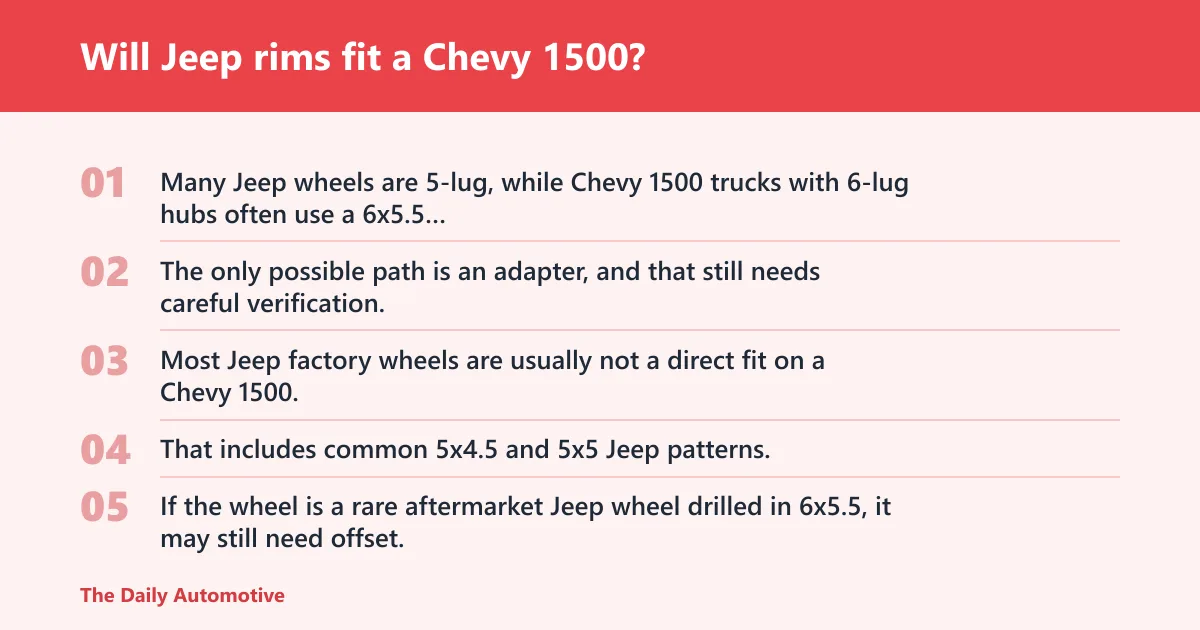


Usually no, not directly. Many Jeep wheels are 5-lug, while Chevy 1500 trucks with 6-lug hubs often use a 6×5.5 pattern, so the bolt pattern usually rules it out before you check offset or center bore. The only possible path is an adapter, and that still needs careful verification.
Quick answer by wheel type
Most Jeep factory wheels are usually not a direct fit on a Chevy 1500. That includes common 5×4.5 and 5×5 Jeep patterns. If the wheel is a rare aftermarket Jeep wheel drilled in 6×5.5, it may still need offset, backspacing, hub diameter, and load checks before you call it compatible.
When a direct fit is a no-go
If the Jeep wheel has five lug holes and the Chevy has six studs, the wheel is out. Bolt pattern must match in hole count and spacing. A wheel that almost fits is still wrong. The fix is not force, and it is not a “close enough” lug pattern.
When adapters are the only path
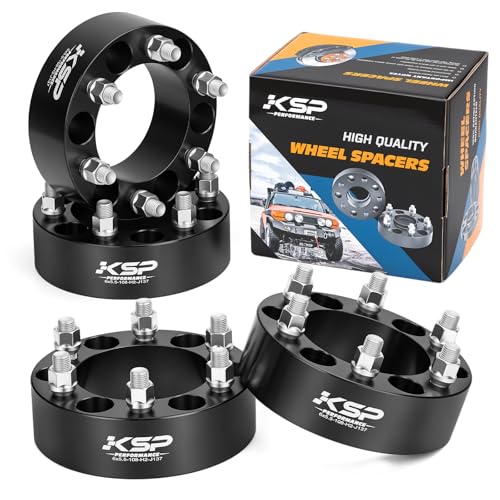
Wheel adapters can bridge different bolt patterns, but they are a workaround, not a clean solution. They add thickness, change the wheel’s position, and can affect stud load. Tire shops often do not recommend adapters for towing or hauling, which matters on a Chevy 1500 used as a work truck.
📊 The Jeep site lists the 2026 Wrangler starting at $36,035. Source: Jeep® SUVs, Crossovers & Trucks.
What bolt pattern does a Chevy 1500 use?
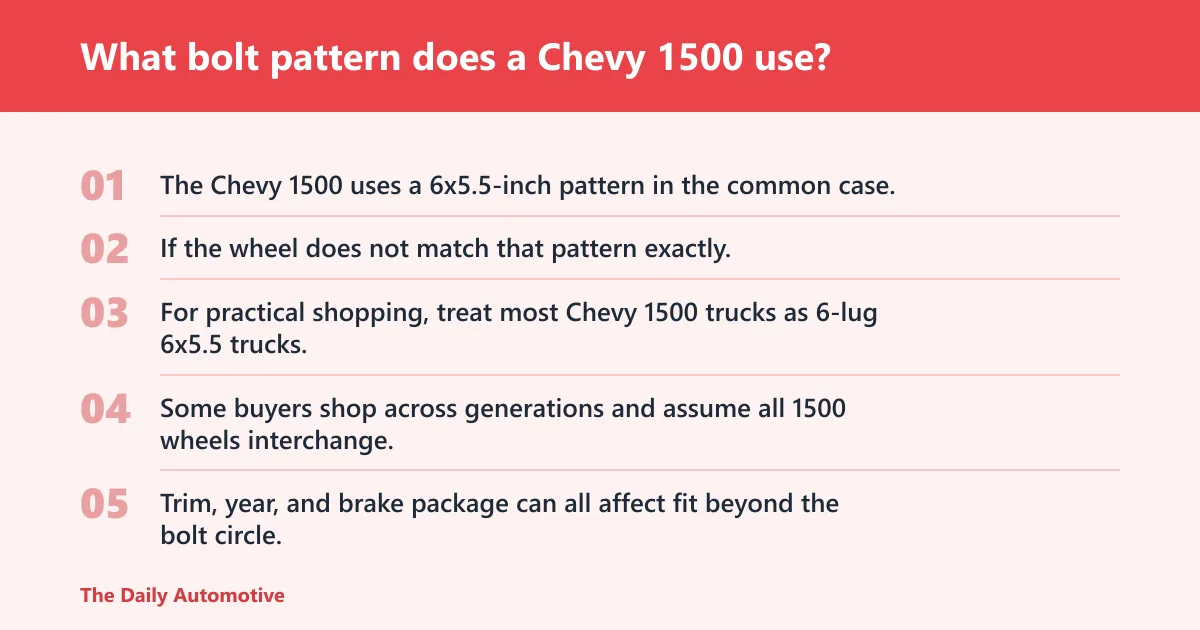
The Chevy 1500 uses a 6×5.5-inch pattern in the common case, so the truck needs six matching lug holes at the correct spacing. That is the first fitment gate. If the wheel does not match that pattern exactly, you move into adapter territory or pass on the wheel.
Common Chevy 1500 patterns by generation
For practical shopping, treat most Chevy 1500 trucks as 6-lug 6×5.5 trucks. Some buyers shop across generations and assume all 1500 wheels interchange, but the safest rule is to verify the exact truck before buying. Trim, year, and brake package can all affect fit beyond the bolt circle.
| Chevy 1500 generation | Chevy 1500 bolt pattern | Common Jeep bolt patterns | Adapter requirement | Risk level | Exact measurements to verify before purchase |
|---|---|---|---|---|---|
| Older 1500 trucks with 6-lug hubs | 6×5.5 | 5×4.5, 5×5 | Yes, if using Jeep wheels with a different pattern | High | Bolt pattern, center bore, offset, backspacing, lug-seat type, brake clearance, load rating |
| GMT400 and GMT800-era 1500s | 6×5.5 | 5×4.5, 5×5 | Yes, usually only through an adapter | High | Bolt pattern, hub diameter, stud length, adapter thickness, tire size, suspension clearance |
| Later 1500s that still use 6-lug 6×5.5 fitment | 6×5.5 | 5×4.5, 5×5 | Yes, only if the adapter is suitable | High | Bolt pattern, center bore, offset, backspacing, TPMS compatibility, corrosion, torque spec |
Why the hub and stud spacing must match exactly
A wheel can sit on the studs and still be wrong. If the holes and spacing do not match, the lug nuts do not clamp the wheel evenly, and the load transfers badly into the studs. That is a safety issue on a truck that may already be carrying cargo or pulling weight.
Exceptions buyers should verify before shopping
Some aftermarket wheels are drilled for multiple patterns, and some owners convert hubs or run adapters. Do not assume a badge tells you everything. Verify the exact truck, the actual wheel bolt circle, and whether the wheel’s center bore and lug-seat style match the hardware you plan to use.

What bolt patterns do Jeeps use?
Most Jeeps use a 5×4.5 or 5×5-inch bolt pattern. That five-lug layout is the main reason Jeep wheels usually do not line up with Chevy 1500 hubs. Even before you check center bore or offset, the lug count alone often rules the swap out.
Common Jeep 5×4.5 and 5×5 patterns
Those two patterns cover a large share of Jeep wheel shopping. They are common on Jeep factory wheels and many aftermarket designs. But common does not mean compatible with a Chevy 1500. The Chevy’s six-lug layout is the bigger divider than brand name or wheel style.
Why most Jeep wheels do not line up with Chevy 1500 hubs
Five holes cannot replace six. That is the simple answer. If the bolt count is wrong, the wheel will not center and clamp correctly. A wheel adapter may bridge the pattern difference, but it introduces thickness and fitment variables that still need to be checked carefully.
Why lug count matters before anything else
Start with lug count, then bolt circle, then hub diameter, offset, and backspacing. That order saves time and cuts false hope. A Jeep wheel that looks close in photos can still be wrong in person if the lug pattern or center bore misses by a small amount.
Chevy 1500 and Jeep wheel fitment by generation
Use this as a decision tree. If the Chevy 1500 is 6×5.5 and the Jeep wheel is 5×4.5 or 5×5, the answer is direct no. If you add adapters, the fit becomes conditional and needs more measurements. If the wheel is aftermarket and drilled differently, check every dimension before money changes hands.
Generation-by-generation yes, no, or adapter-only matrix
- Chevy 1500 with 6×5.5 hubs + Jeep 5×4.5 wheels: no direct fit, adapter-only possibility.
- Chevy 1500 with 6×5.5 hubs + Jeep 5×5 wheels: no direct fit, adapter-only possibility.
- Chevy 1500 with 6×5.5 hubs + rare Jeep aftermarket 6×5.5 wheels: conditional fit, but verify offset, backspacing, and bore.
- Any Chevy 1500 used for towing or hauling: avoid adapters unless a professional confirms the setup and the load ratings work out.
Exact measurements to verify before buying used wheels
- Confirm bolt pattern by number of holes and spacing.
- Check center bore or hub diameter so the wheel centers correctly.
- Verify offset and backspacing together, not one without the other.
- Measure brake caliper and suspension clearance.
- Match lug-seat type to the lug nuts you will use.
- Confirm TPMS compatibility if the wheel will carry sensors.
- Inspect corrosion, bent lips, cracks, and previous repair marks.
- Check tire size, tire load rating, and overall load capacity.
Brake clearance and center bore checks
A wheel can clear the bolt pattern and still hit the brake caliper. The center bore matters too, because the wheel must center properly on the hub or through a proper hub-centric setup. If the bore is wrong, you can end up with vibration, poor balance, and stability problems.
Can wheel adapters make Jeep rims fit a Chevy 1500?
Yes, adapters can bridge different bolt patterns, but they do not erase the fitment problem. They add thickness, can change stud engagement, and may increase stress on studs and suspension. That makes them a conditional solution, not an automatic green light for every Jeep wheel.
What adapters do and do not solve
An adapter changes the bolt pattern interface so a five-lug wheel can mount to a six-lug hub, or vice versa. It does not fix poor offset, wrong backspacing, bad center bore, or low load capacity. It also does not make an incompatible wheel safe for every job.
Thickness, hub-centric design, and stud length checks
Adapter thickness matters because it pushes the wheel outward and alters geometry. A hub-centric adapter centers on the hub and supports the wheel better than a loose universal spacer-style setup. You also need enough stud length after the adapter is installed, or lug engagement becomes weak.
Why towing and hauling are poor use cases
Tire shops often do not recommend adapters for towing or hauling. That advice is sensible. A loaded truck increases stress on the entire wheel-end setup, and adapters add another interface that can loosen or amplify failure if the hardware is not perfect.
Do offset and backspacing matter when swapping rims?
Yes. Offset changes where the wheel sits in the wheel well, and backspacing controls how much room the inner barrel leaves for suspension and brakes. A wheel can have the right bolt pattern and still rub, stick out too far, or contact the caliper.
How offset changes wheel position in the wheel well
Offset is the wheel’s mounting position relative to its centerline. Get it wrong and the tire may sit too far inboard or outboard. That affects stance, steering feel, and rubbing risk on fenders, control arms, and liner edges.
How backspacing affects suspension and brake clearance
Backspacing tells you how much of the wheel sits toward the inside of the truck. Too much backspacing can crowd the brake caliper or suspension parts. Too little can push the tire outward and create clearance problems at the fender or while turning.
Common rubbing and stance problems after a swap
Picture a Jeep wheel on a Chevy 1500 through an adapter: the bolt pattern works, but the tire now sits farther out. On compression, the outer shoulder can rub the fender liner. A different offset can create the opposite problem and contact the upper control arm instead.
What should you measure before buying used rims?
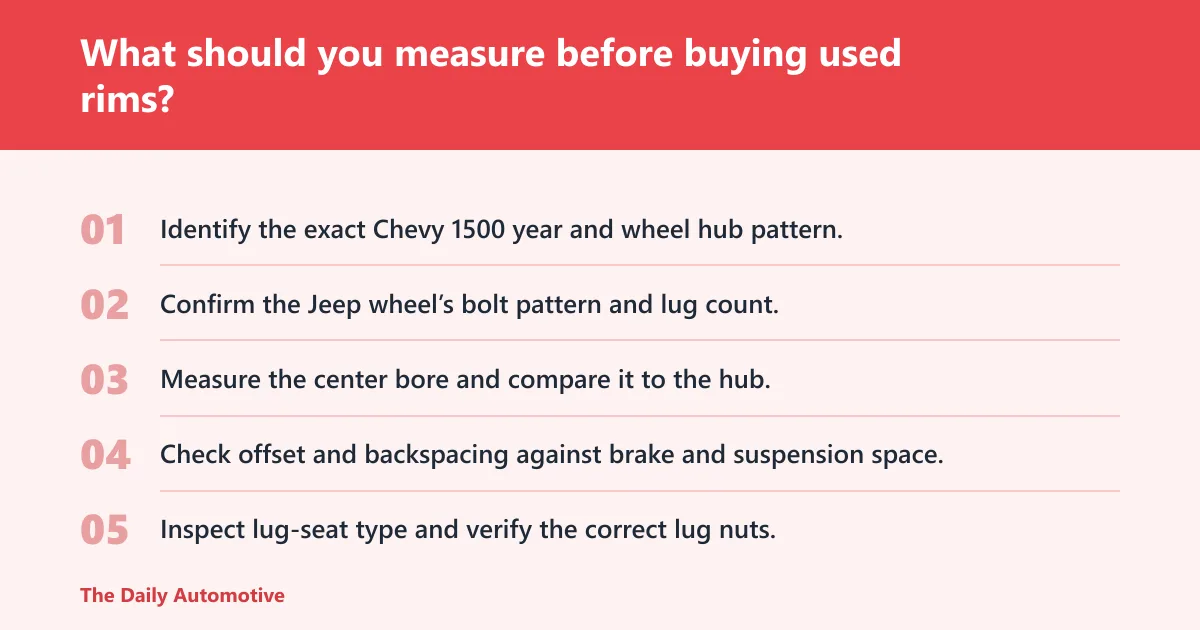
Measure more than the bolt circle. Used wheels often look fine from a distance and still fail on center bore, lug-seat type, or brake clearance. You also need to confirm load capacity and tire rating, because a wheel that fits can still be too weak for a truck.
Hub diameter and center bore
The hub diameter and center bore must match or be properly centered. If the bore is too tight, the wheel will not seat. If it is too large without the correct centering method, you can get vibration and a wheel that feels loose even when the lugs are torqued.
Load capacity and tire load rating
A truck wheel has to support the truck. That matters even more if the vehicle tows or hauls. The wheel’s load rating and the tire’s load rating are separate checks. Passing one does not make up for failing the other.
Lug-seat type, TPMS, corrosion, and torque wrench setup
Used wheels need the correct lug-seat style, such as conical or mag-style hardware depending on the wheel design. Check whether TPMS sensors will fit or transfer. Look for rust around lug holes, cracks near spokes, and damage from over-tightening. After installation, use a torque wrench and recheck the torque after a short drive.
Step-by-step used-wheel workflow
- Identify the exact Chevy 1500 year and wheel hub pattern.
- Confirm the Jeep wheel’s bolt pattern and lug count.
- Measure the center bore and compare it to the hub.
- Check offset and backspacing against brake and suspension space.
- Inspect lug-seat type and verify the correct lug nuts.
- Confirm tire size and load rating for the truck’s use case.
- Check TPMS compatibility and sensor mounting.
- Inspect for corrosion, bends, cracks, and prior repairs.
- Install with a torque wrench and recheck torque after initial use.
Will Jeep wheels rub on a Chevy truck?
They can, even if an adapter gets the bolt pattern to work. Offset, backspacing, wheel width, and tire size all change where the tread sits. A Jeep wheel that fits the hub may still contact the brake caliper, upper control arm, or fender at full steering lock.
How rubbing happens after a swap
Rubbing usually starts when the wheel sits too far inward or outward for the Chevy’s suspension geometry. Larger tires make the problem worse. If the wheel is already marginal on backspacing, adding an adapter can move the tire into a zone where it contacts bodywork under load.
Is it safe to run mismatched rims and tires?
Usually no. Mismatched rims and tires can hurt handling, increase stress on suspension components, and create brake clearance problems. Even if the wheel mounts, the setup can still be unsafe if the load rating is wrong, the offset is off, or the tire does not match the truck’s job.
Why handling and braking can suffer
Incorrect wheel geometry changes scrub radius and load transfer. That can alter steering response and braking feel. On a truck, the penalty gets bigger when cargo or a trailer adds weight. The mismatch may not fail immediately, but it can reduce control.
When a professional check is the right answer
If specs are unclear, if adapters are part of the plan, or if the truck tows or hauls, professional verification is the safest final step. A tire and wheel shop can check fitment, hardware, and load requirements before you commit to a set of wheels.
Frequently asked questions
Will Jeep rims fit a Chevy 1500?
Usually not directly. Most Jeep wheels use 5×4.5 or 5×5 bolt patterns, while a Chevy 1500 uses 6×5.5. That means the lug count and spacing do not line up. An adapter can sometimes bridge the gap, but it still leaves offset, bore, and load checks.
What bolt pattern does a Chevy 1500 use?
The common Chevy 1500 pattern is 6×5.5. That six-lug layout must match the wheel exactly, not approximately. If the wheel is drilled for five lugs, it will not bolt on directly. That is true before you even get to center bore, offset, or backspacing.
What bolt patterns do Jeeps use?
Most Jeeps use 5×4.5 or 5×5. Those five-lug patterns are common on factory and aftermarket Jeep wheels. Because the Chevy 1500 uses six lugs, most Jeep wheels do not line up with Chevy hubs without an adapter, and even then the setup remains conditional.
Can you use wheel adapters to fit Jeep rims on a Chevy 1500?
Yes, but they are a compromise. Adapters can bridge different bolt patterns, yet they add thickness, can increase stress on studs and suspension, and are often not recommended for towing or hauling. You still need to confirm stud length, hub centering, offset, and brake clearance.
Do offset and backspacing matter when swapping rims?
Yes. Offset controls where the wheel sits in the wheel well, and backspacing controls inner clearance to suspension and brakes. Wrong numbers can cause rubbing, steering issues, or caliper contact. A wheel that matches the bolt pattern can still be a poor fit if these measurements are off.
What should I measure before buying used rims?
Check bolt pattern, center bore, offset, backspacing, lug-seat type, brake clearance, TPMS compatibility, corrosion, and tire load rating. Also confirm adapter thickness and stud length if adapters are part of the plan. A used wheel that looks clean can still fail on any one of those checks.
Products related to this article
Sponsored / affiliate links. As an Amazon Associate I earn from qualifying purchases. I may earn additional commission from eligible campaigns.