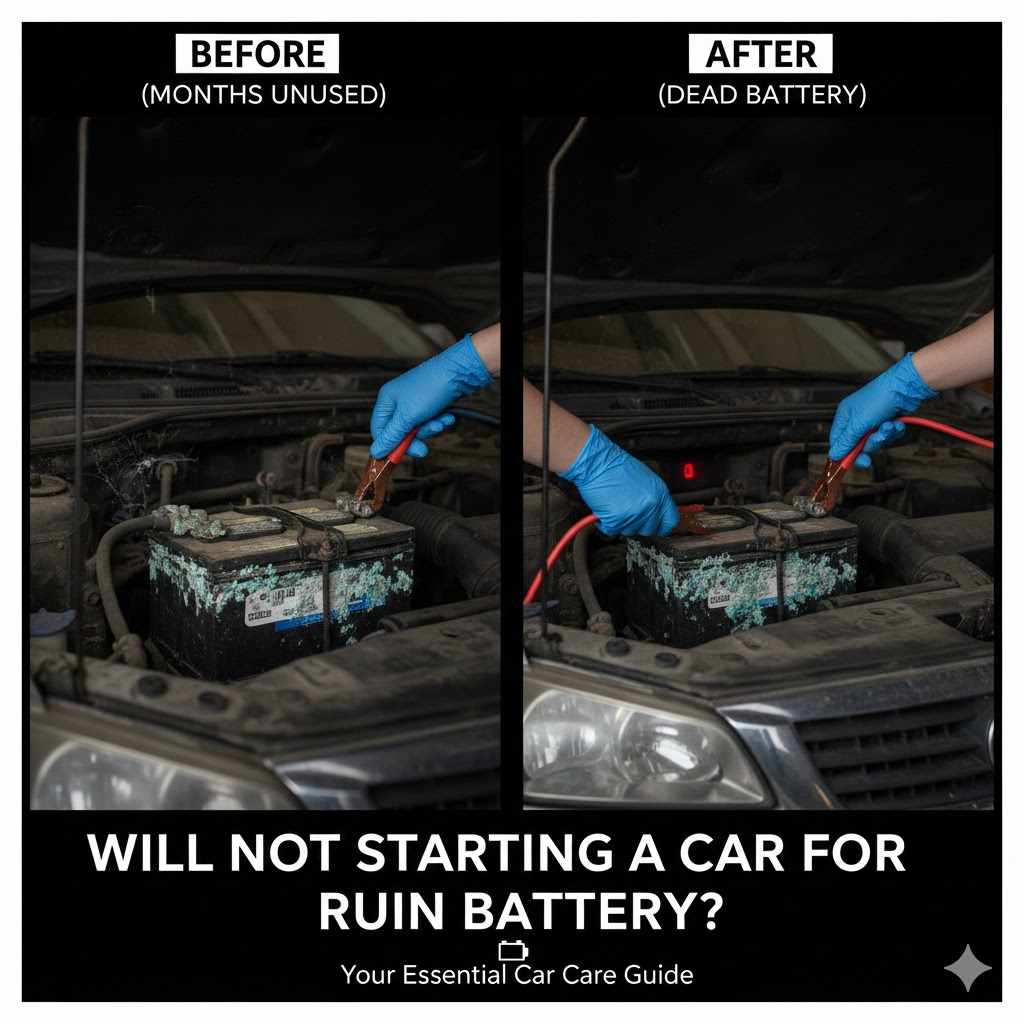
Will Not Starting a Car for Months Ruin Battery?
It’s a common worry for car owners, especially those who don’t drive their vehicles often. Many people wonder, Will Not Starting a Car for Months Ruin the Battery? This question can seem tricky, and beginners might feel unsure about what to do. Don’t worry!
This guide breaks down exactly what happens and how to keep your car’s battery healthy. We’ll walk you through simple steps to prevent common battery problems. Get ready to learn easy ways to protect your car’s power source.
Understanding Car Batteries and Sitting
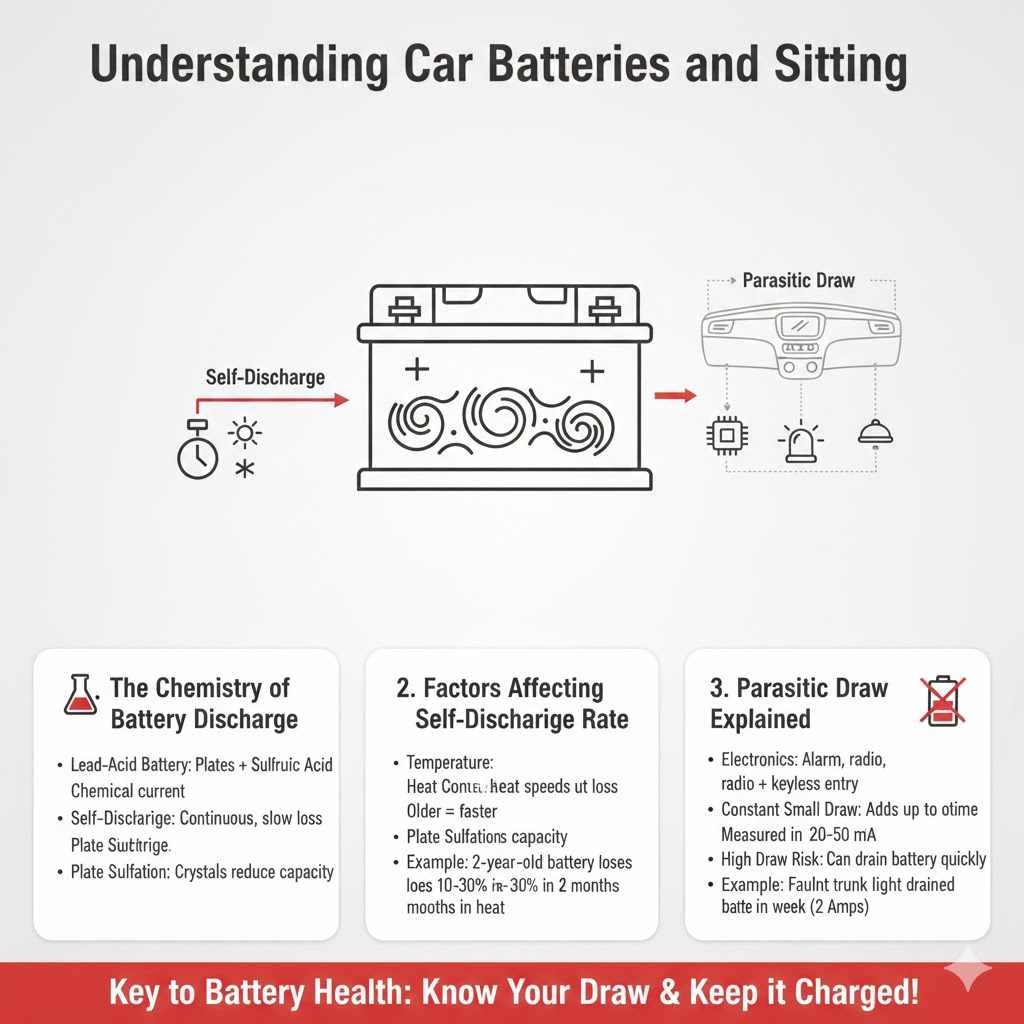
Car batteries are essential for starting your vehicle. They store electrical energy that powers the starter motor and all the car’s electronics when the engine isn’t running. When a car sits for a long time without being driven, the battery slowly loses its charge.
This happens because of a natural self-discharge process and also because many modern cars have systems that draw a small amount of power even when turned off. This constant, low-level drain is often called “parasitic draw.” If the battery drains too much, it can struggle to hold a charge and may eventually become permanently damaged. This section will explore the science behind why car batteries discharge when a vehicle is not in use and the specific mechanisms that lead to battery degradation.
The Chemistry of Battery Discharge
A car battery, typically a lead-acid type, works through a chemical reaction involving lead plates and sulfuric acid. This reaction produces the electrical current needed to start the car. However, even when the car is off, this chemical process doesn’t completely stop.
A small, continuous reaction, known as self-discharge, occurs naturally. This slow leakage of charge is a fundamental property of lead-acid batteries. Over weeks and months, this self-discharge can significantly deplete the battery’s energy reserves.
Sulfuric acid is the electrolyte in the battery. It’s a liquid that conducts electricity between the positive and negative plates. During normal operation, this electrolyte is crucial for the chemical reactions.
When the battery is idle, slow chemical reactions can still occur at the plates, converting some of the stored electrical energy back into chemical energy, which is then lost or dissipated. This process is like a slow leak from a faucet; even a tiny drip can empty a bucket over time.
Factors Affecting Self-Discharge Rate
- Temperature: Higher temperatures speed up chemical reactions, including self-discharge. A car parked in a hot garage will lose charge faster than one in a cool environment. Extreme cold can also affect battery performance, but heat generally accelerates discharge more significantly.
- Battery Age and Condition: Older batteries or those already in poor condition tend to have higher self-discharge rates. As the internal components degrade, their ability to hold a charge diminishes.
- Plate Sulfation: If a battery is left in a discharged state for too long, lead sulfate crystals can form on the plates. These crystals are hard to reverse and reduce the battery’s capacity and its ability to accept a charge.
For example, a battery that is two years old might have a self-discharge rate of about 1% per day at room temperature. However, if that same battery is exposed to temperatures of 80°F (27°C) or higher, the self-discharge rate can easily double or triple. This means that over a period of two months (60 days), a battery could lose 10-30% of its charge simply due to temperature.
Parasitic Draw Explained
Beyond natural self-discharge, modern cars have many electronic systems that consume power even when the ignition is off. This is called parasitic draw. Think of your car’s computer, alarm system, radio memory, keyless entry receivers, and even small lights like those in the glove box or trunk.
These systems need a constant small trickle of power to remain functional. While this draw is minimal on a day-to-day basis, it adds up significantly over longer periods of inactivity.
Parasitic draw is measured in milliamps (mA) or amps (A). A healthy car battery might experience a parasitic draw of anywhere from 20 to 50 mA. However, some systems, or a fault in an electronic component, can cause this draw to be much higher.
If the parasitic draw is, for instance, 100 mA (0.1 A), a fully charged 50 Ampere-hour (Ah) battery could be drained in roughly 500 hours, which is about 20 days. This illustrates how even small, constant draws can quickly deplete a battery if the car isn’t driven.
Common Sources of Excessive Parasitic Draw
- Faulty Relays or Switches: A relay that fails to disengage properly can keep a circuit powered. Similarly, a stuck switch might continuously power a device.
- Aftermarket Accessories: Improperly installed alarms, stereos, or other add-on devices can often create an unintended continuous power draw.
- Control Modules (ECUs): Sometimes, a car’s electronic control modules can malfunction and fail to go into their low-power sleep mode, leading to a constant drain.
- Door Lock Actuators: Issues with door locks can sometimes cause continuous power draw if the system doesn’t properly shut down.
A car owner reported that their vehicle’s battery died after only a week of sitting. After a mechanic checked, they discovered that a faulty trunk light switch was stuck in the ‘on’ position, keeping the light on constantly. This small, overlooked issue resulted in a parasitic draw of over 2 amps, which is exceptionally high and would drain even a large battery very quickly.
The fix was a simple replacement of the inexpensive switch.
The Impact of Extended Sitting on Car Batteries
When a car battery is left discharged for extended periods, it undergoes processes that can permanently weaken or damage it. The most significant issue is sulfation. This happens when the sulfuric acid in the battery electrolyte reacts with the lead plates to form lead sulfate crystals.
If the battery is recharged promptly, these crystals are typically converted back into lead and sulfuric acid, allowing the battery to regain its charge capacity. However, if the battery remains in a discharged state for weeks or months, these lead sulfate crystals can harden and grow, becoming much more difficult, if not impossible, to remove.
Hardened lead sulfate crystals insulate the lead plates, reducing the surface area available for chemical reactions. This directly decreases the battery’s ability to store and deliver electrical energy, meaning its overall capacity is reduced. In essence, the battery can no longer hold as much charge as it used to.
If this sulfation becomes severe enough, the battery will struggle to start the car and may need to be replaced. This section delves into the specific ways extended inactivity harms a car battery.
Battery Sulfation Explained
Sulfation is a natural part of a lead-acid battery’s life, but it becomes problematic when the battery is left discharged. When a battery discharges, lead sulfate (PbSO4) is formed on the lead plates. This is a reversible process under normal usage.
However, when the battery remains in this discharged state, especially at higher temperatures, the fine lead sulfate crystals can clump together and grow into larger, harder crystals. This hardened form is often referred to as “hard sulfation.”
Hard sulfation is detrimental because these larger crystals are much less conductive and less reactive. They act like a coating or a barrier on the plates, preventing the electrolyte from effectively interacting with the active material of the plates. This reduces the battery’s ability to accept a charge during recharging and its ability to deliver power when needed.
The more sulfation, the less usable capacity the battery has.
Signs of Sulfation
- Reduced Capacity: The battery won’t hold a charge as long as it used to, even after being fully recharged.
- Slow Cranking Speed: The engine may crank over slower than normal, indicating the battery lacks sufficient power.
- Difficulty Recharging: The battery may take an unusually long time to charge, or a charger might indicate it’s full when it’s not.
- Visible White Residue: In severe cases, a white, powdery residue can be seen on the battery plates if the battery is opened (which is not recommended for most users).
A common symptom of sulfation is that a car battery may appear to charge to full voltage, but when a load is applied (like trying to start the engine), the voltage drops rapidly. This is because the sulfated plates cannot sustain the flow of current. Imagine trying to drink through a straw that’s partially blocked; you get some liquid, but not as much as you expect, and it’s a struggle.
Consider a scenario where a car owner stores their vehicle for three months in a moderately warm climate. The battery naturally self-discharges, and the lead sulfate crystals begin to form. If the car is then attempted to be started, the battery might have just enough juice to crank slowly, but not enough to start the engine.
Repeated attempts without a recharge can worsen the sulfation.
Permanent Battery Damage
Beyond sulfation, extended periods of inactivity can lead to other forms of permanent damage. Deep discharges, where the battery’s voltage drops very low, can stress the internal components. If a battery is repeatedly discharged to a very low voltage and then left in that state, the chemical reactions can become irreversible.
This can lead to a permanent loss of capacity.
The electrolyte within the battery can also stratify over time, especially if the battery is not periodically mixed through driving or charging. This means the acid can settle to the bottom, leaving the top less concentrated. This uneven distribution further hinders the chemical reactions and can lead to localized damage on the plates.
Over time, these effects combine, permanently reducing the battery’s lifespan and performance.
Consequences of Deep Discharge
- Irreversible Chemical Changes: Prolonged low voltage can cause chemical compounds within the battery to form in ways that cannot be reversed by normal recharging.
- Plate Damage: The internal structure of the lead plates can degrade, leading to a loss of their active material.
- Reduced Lifespan: Even if the battery can still be partially revived, its overall lifespan will be significantly shortened.
Battery manufacturers often state that a lead-acid battery should never be discharged below 10.5 volts. If a car sits for months and the battery voltage drops to, say, 8 volts or less, this constitutes a deep discharge. Repeated deep discharges without proper reconditioning can permanently reduce the battery’s capacity by 30-50% or more.
It’s akin to over-stretching a rubber band many times; eventually, it loses its elasticity and won’t snap back properly.
A case study involved a classic car that was stored for over six months in a barn. The owner assumed the battery would be fine. When they tried to start it, the battery was completely dead, reading only 3 volts.
Even after attempts to charge it with a specialized charger, the battery could not hold enough power to even power the interior lights. It was declared dead and required replacement, costing the owner several hundred dollars for a new, high-quality battery.
Will Not Starting a Car for Months Ruin the Battery? Prevention and Solutions
The good news is that the answer to “Will Not Starting a Car for Months Ruin the Battery?” is often “not necessarily, if you take the right precautions.” There are several effective strategies to keep your car’s battery in good health, even if your vehicle sits idle for extended periods. The primary goal is to manage the battery’s charge level and prevent deep discharges and excessive sulfation. Simple, proactive steps can make a big difference.
This section provides practical advice and solutions that anyone can implement to protect their car battery. We’ll cover simple maintenance tasks and the use of helpful devices. By understanding these methods, you can confidently store your car for longer periods without worrying about waking up to a dead battery.
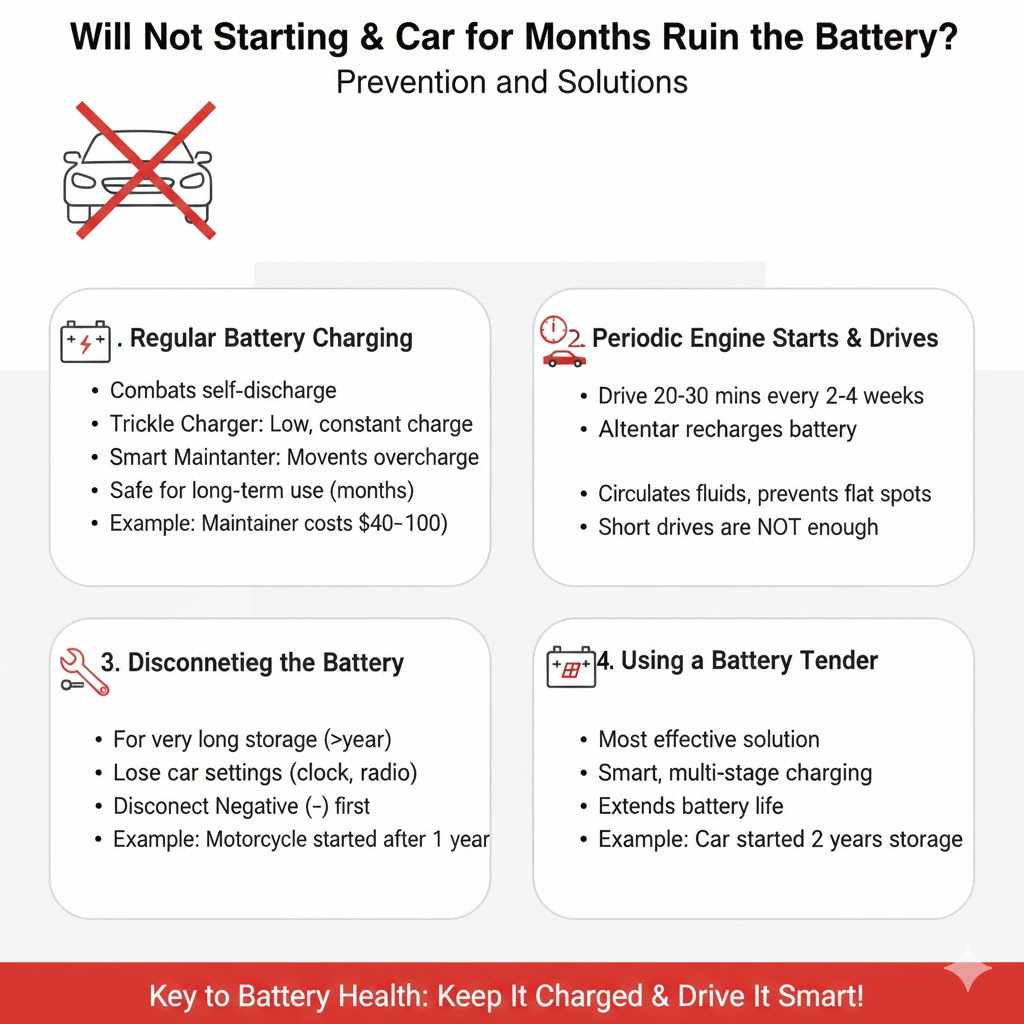
Regular Battery Charging
The most direct way to combat self-discharge and parasitic draw is to ensure the battery stays adequately charged. If you can’t drive the car regularly, you can still maintain its charge. This involves using a battery charger designed for automotive use.
For cars that sit for more than a few weeks, using a trickle charger or a smart battery maintainer is highly recommended.
A trickle charger provides a very low, constant charge to the battery, just enough to offset the natural discharge. A smart battery maintainer, often called a “float charger,” is more advanced. It monitors the battery’s voltage and only provides a charge when needed, preventing overcharging.
These devices are safe to leave connected for months at a time.
Types of Chargers and Maintainers
- Trickle Chargers: These are simple, inexpensive chargers that deliver a low, continuous current. They are good for keeping a battery topped up but can overcharge if left connected indefinitely without supervision.
- Smart Battery Maintainers (Float Chargers): These are the preferred option for long-term storage. They use microprocessors to detect the battery’s charge level and adjust the charging current accordingly. They won’t overcharge and are designed to be plugged in constantly.
- Solar Battery Chargers: For cars stored outdoors, a small solar panel can trickle charge the battery during daylight hours. The effectiveness depends on sunlight exposure.
A battery maintainer like a CTEK MXS 5.0 or a Noco Genius charger can be left plugged into the car’s 12V accessory socket (if it has power when the ignition is off) or directly to the battery terminals. These devices typically cost between $40 and $100 and can save you the cost and hassle of a new battery, which can be $100-$200 or more.
If you can’t use a charger, aim to drive the car at least once a month for about 20-30 minutes. This drive should be long enough for the alternator to fully recharge the battery. A short drive around the block might not be enough to offset the battery drain.
Periodic Engine Starts and Drives
Even without a charger, a simple solution is to start the car and drive it periodically. If you can manage to start your car and drive it for at least 20-30 minutes every 2-4 weeks, you can help keep the battery healthy. This allows the alternator to replenish the charge that was lost through self-discharge and parasitic draw.
A 20-30 minute drive is generally sufficient to allow the alternator to not only recharge the battery but also to circulate fluids and lubricants throughout the engine. This helps prevent other issues related to long-term storage, such as flat spots on tires or moisture buildup in the engine oil.
Importance of a Sufficient Drive Time
- Alternator Recharge Cycle: The alternator is designed to recharge the battery while the engine is running. A short start-up uses more power than it replenishes.
- Engine and System Lubrication: Driving circulates oil, coolant, and transmission fluid, preventing them from degrading or settling.
- Preventing Other Storage Issues: Regular movement helps prevent tire flat-spotting and keeps seals from drying out.
Consider a car that is driven for only 5 minutes every few weeks. This short run time will likely drain more power from the battery than the alternator can put back. The battery will end up in a net discharged state, which is detrimental over time.
A longer drive, however, allows the alternator to work efficiently.
One owner who stored their car for six months during the pandemic found their battery dead. They realized their mistake was only starting the car for a minute or two each time. They then started a routine of driving for 30 minutes once a month, and the battery eventually recovered its ability to start the car consistently.
Disconnecting the Battery
If you plan to store your car for a very long time (several months to a year or more) and cannot use a battery charger, disconnecting the battery is an option. This physically breaks the electrical circuit, preventing any parasitic draw from draining the battery. However, this also means you will lose all your car’s settings, such as radio presets, clock, and engine control module (ECM) memory.
When you reconnect the battery, you will need to re-enter these settings. Additionally, some modern cars have security systems that might be affected by disconnecting the battery, so it’s wise to consult your car’s owner’s manual or a mechanic.
Methods of Disconnection
- Removing the Negative Terminal Clamp: This is the safest method. Always disconnect the negative (black) cable first, followed by the positive (red) cable. When reconnecting, attach the positive cable first, then the negative.
- Battery Disconnect Switch: For vehicles with a removable battery, a battery disconnect switch can be installed. This allows you to easily turn off power to the entire car without removing terminals.
- Battery Tender Buddy or Similar Devices: These devices plug into the cigarette lighter socket and maintain memory settings while allowing the battery to be disconnected for charging elsewhere.
If you decide to disconnect the battery, remember that some cars might require a special procedure to reset the computer after reconnection, which could involve driving for a certain period or performing a specific sequence. This is often related to idle learning for the engine control module.
A user storing a vintage motorcycle for over a year decided to disconnect the battery. When they reconnected it after storage, the motorcycle started perfectly. They noted that the only inconvenience was having to reset the clock and radio station presets on their modern aftermarket stereo.
Using a Battery Tender
A battery tender, also known as a battery maintainer or trickle charger, is perhaps the most effective solution for preventing battery issues during long periods of inactivity. These devices are designed to keep a battery fully charged without overcharging it. They are safe to leave connected for extended periods, even for many months.
Modern battery tenders are “smart” chargers. They use a multi-stage charging process that includes analyzing the battery’s condition, charging it to full, and then switching to a “float” or “maintenance” mode. In float mode, the charger periodically tops off the battery with small amounts of current only when needed to maintain its full charge.
This prevents sulfation and keeps the battery in optimal condition.
Benefits of Battery Tenders
- Prevents Sulfation: By keeping the battery fully charged, it prevents the formation of hard lead sulfate crystals.
- Maintains Full Charge: It offsets the natural self-discharge and any parasitic draw, ensuring the battery is always ready.
- Extends Battery Life: Regularly maintaining a battery in a fully charged state significantly prolongs its lifespan.
- User-Friendly: Most tenders are plug-and-play and can be safely left connected indefinitely.
A study by a car enthusiast magazine found that cars equipped with a battery tender for over a year showed no signs of battery degradation or capacity loss compared to new batteries. In contrast, cars that were not maintained experienced a noticeable drop in battery performance after six months of sitting idle.
For instance, a person moving abroad for two years stored their secondary car with a battery tender attached. Upon returning, the car started immediately, and the battery tested as if it were new. The tender had done its job perfectly, avoiding the cost and inconvenience of a battery replacement.
Frequently Asked Questions
Question: How long can a car battery last without being started?
Answer: A car battery can typically last anywhere from a few weeks to a couple of months without being started, depending on its age, condition, and the car’s parasitic draw. Some might last longer, while others might die within just a week or two.
Question: Will my car start if the battery is low but not dead?
Answer: It might still start, but it will crank slower than usual. If the battery is too low, it won’t have enough power to turn the engine over, and you’ll hear a rapid clicking sound or nothing at all.
Question: Can jump-starting fix a battery that’s been sitting too long?
Answer: Jump-starting can temporarily get your car running, but if the battery has suffered permanent damage from sitting too long, it may not hold a charge afterward and will need replacement.
Question: What is the best way to store a car for winter?
Answer: For winter storage, it’s best to use a battery tender to keep the battery charged. Also, consider filling the fuel tank to prevent moisture buildup and placing the car on jack stands to prevent tire flat-spotting.
Question: How often should I start my car if I’m not driving it much?
Answer: To keep the battery healthy, try to start your car and drive it for at least 20-30 minutes at least once a month. This allows the alternator to recharge the battery properly.
Conclusion
So, will not starting a car for months ruin the battery? It can, but it’s preventable. Extended periods of inactivity lead to battery self-discharge and parasitic draw, causing sulfation and potential permanent damage.
Simple solutions like using a battery tender, driving the car regularly, or even disconnecting the battery can protect your car’s power source. By taking these proactive steps, you ensure your battery remains healthy and ready whenever you need it.