1971 Monte Carlo Lowrider: The Buyer’s and Builder’s Guide
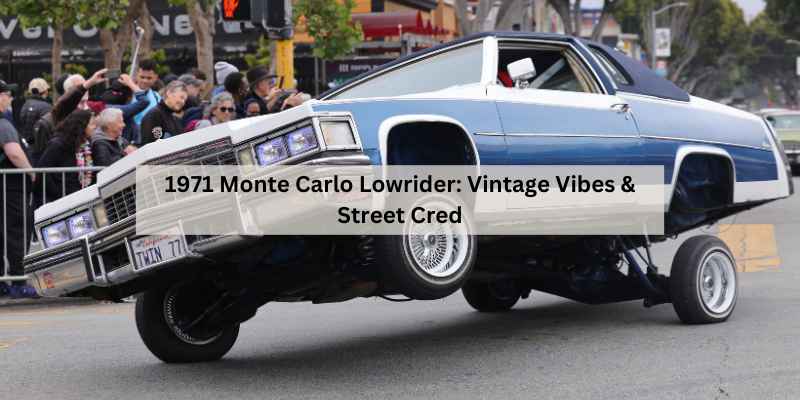
You see it parked at a show, or maybe rolling slow down the boulevard: a 1971 Monte Carlo sitting just a few inches off the pavement, candy paint glowing under the lights, wire wheels tucked tight into the fenders. It looks effortless. The reality is anything but. Building or buying a 1971 Monte Carlo lowrider involves a specific set of decisions—chassis work, hydraulic hardware, legal constraints—that you don’t face with a stock restoration.
This guide cuts through the nostalgia and tells you what it actually takes. You’ll learn where these cars rust, what a proper hydraulic setup costs, why a period-correct 1970s build like the famous Plum Crazy car is worth more than a modern restomod, and how to handle insurance and state law. You’ll walk away with a concrete inspection checklist and a realistic budget, not just a dream.

Revell
Revell 14562 1991 Chevy S-10 Lowrider Special…
- Revell Model Kit #14562, Skill Level 4, Contains 171-Parts, Recommended for ages 12 and up
- Highly detailed 1:25-scale plastic model of the classic 1991 Chevy S-10 can be built one of three ways—lowrider, turbocharged all-…
- Classic small-diameter lowrider wheels with tampo-printed whitewall tires. Includes a 1:64-scale diecast 1991 S-10 lowrider from t…
If you’re planning a build from a kit or just want to study the engineering before you start, the 1971 Monte Carlo lowrider community often starts with scale models to visualize stance and suspension travel. A detailed plastic kit like the Revell 14562 1991 Chevy S-10 Lowrider Special Edition lets you experiment with three different build styles—lowrider, street pickup, or custom mini truck—without committing to cutting metal on a real car. It’s a useful planning tool, and the included 1:64-scale diecast with adjustable suspension is fun to keep on your workbench.
The 1971 Monte Carlo: The Perfect Lowrider Canvas
The 1971 model year gave the Monte Carlo its second-generation body, and it’s the one most lowrider enthusiasts point to. The long hood, short deck, and pronounced fender lines create a wide, low silhouette that takes custom paint and chrome exceptionally well. The wheelbase stretches 116 inches, which gives hydraulics room to work and creates that smooth, gliding hop that shorter cars can’t replicate.
Under the sheet metal, the Monte Carlo rides on a full perimeter frame with A-arm front suspension and coil springs in the rear. That layout matters. The frame rails are relatively straight and boxed in the front, giving you solid mounting points for hydraulic pumps and batteries. The rear frame kicks up over the axle, which limits suspension travel unless you notch it—more on that in a moment.
One thing to know: the 1971 is not the 1970. The ’71 has single headlights instead of the dual setup, and the grille is wider. Parts interchange between the two years is good, but body panels and trim pieces are specific. If you’re sourcing a car, confirm the year on the title matches the VIN on the firewall, because it’s not uncommon to find a ’70 front end swapped onto a ’71 body.
Why the 1970s ‘Plum Crazy’ Era Matters
There’s a reason the Plum Crazy 1971 Monte Carlo lowrider is referenced in every serious conversation about the hobby. That car, built in the 1970s, represents a specific moment when lowriding moved from a regional California thing to a national cultural movement. The paint, the wire wheels, the interior—everything was done by hand, often in a home garage, with tools that look primitive by today’s standards.
That history drives value. A period-correct 1970s custom—one that retains its original hydraulics, interior, and paint scheme—commands a premium at collector car auctions because it’s a piece of history. It’s not just a modified car; it’s a documented artifact of the 1970s custom scene. A modern restomod, no matter how clean the work, doesn’t carry that provenance. If you’re buying as an investment, the original owner’s story and build documentation matter more than the quality of the chrome.
If you’re buying a car that’s already built, ask for the build history. Photos from the 1970s, old registration cards, or a mention in Lowrider Magazine all add significant value. A car with no history is just a used custom; a car with a story is a collectible.
Key Differences: Original 1970s Lowrider vs. Modern Build
The two approaches to a 1971 Monte Carlo lowrider are fundamentally different in cost, reliability, and resale value.
| Aspect | Original 1970s Build | Modern Build |
|---|---|---|
| Hydraulics | Single or dual pump, 6-12 volt, slow rise | Multi-pump, 24-volt or higher, fast hop |
| Suspension | Stock arms, simple lowering blocks, minimal notching | Custom A-arms, extensive frame notching, air bag assist |
| Paint | Original candy or metal flake, often hand-rubbed | Modern urethane with clear coat, show-quality finish |
| Reliability | Marginal; parts are old and hard to find | High; new components designed for daily use |
| Value | Premium if documented and unrestored | Lower resale; value is in the build quality, not history |
| Drivability | Stiff, harsh, and loud | Smoother, with adjustable ride height |
My honest opinion: unless you’re a collector chasing provenance, a modern build is the smarter daily driver. But if you want a car that turns heads at a custom car show and holds its value, the period-correct route wins. Decide which one you are before you spend a dollar.
The Hydraulics: What You Need to Know Before You Buy
Hydraulics are the heart of any lowrider, and the setup you choose dictates everything from cost to legality. The standard entry-level build uses two 12-volt pumps, one for the front and one for the rear, running on two batteries. That gives you a slow, controlled rise and drop—enough to bounce at a show, not enough to hop. A serious hopping setup uses four or more pumps, 24-volt wiring, and a bank of deep-cycle batteries in the trunk.
Here’s the trade-off: more pumps mean more weight, more heat, and more strain on the charging system. A four-pump setup can draw over 300 amps at full load. You’ll need a high-output alternator, upgraded wiring, and a battery isolator. Budget for that. Also, the suspension travel is physically limited by the frame and A-arm mounts. To get the car to lay frame, you must notch the rear frame over the axle and sometimes modify the front crossmember. That’s a structural cut, not a bolt-on.
Drivability takes a hit. A car with stiff hydraulic cylinders and no air bags rides like a skateboard. You’ll feel every pebble. If you plan to drive the car more than trailer it, look for a build that includes air bag assist for normal driving and reserves the hydraulics for show time. That’s the best of both worlds, but it adds complexity and cost.
Buyer’s Guide: Inspecting a 1971 Monte Carlo for a Lowrider Project
Finding a solid donor car is the hardest part. Here’s what to check before you hand over cash.
- Frame rust: The rear frame rails, especially where they curve over the axle, are notorious for rot. A rusted frame is a dealbreaker—repairing it costs more than the car. Poke at them with a screwdriver; if it goes through, walk away.
- A-arm mounts: The front lower A-arm mounting brackets take a beating from hydraulics. Look for cracks, welds, or signs of previous reinforcement. A clean factory mount is better than a sloppy repair.
- Floor pans and trunk pans: Water leaks around the windshield and rear window cause rot here. Check the spare tire well and the area under the back seat. Surface rust is fine; holes are not.
- Rocker panels and quarter panels: These are the first to go. Replacement panels are available, but fitting them is labor-intensive. Factor in bodywork costs if the car has any visible rust.
- Engine and drivetrain: The base engine was a 350 V8, with the SS trim offering a 402 big block. For a lowrider, the 350 is fine—it’s light and parts are cheap. The TH350 transmission is durable. Just verify it shifts through all gears and doesn’t smoke.
- Title and VIN: Make sure the VIN on the dash matches the title. A mismatch is a headache you don’t want.
Pro tip: bring a magnet and a flashlight. Bondo hides a lot of sins, and a magnet will stick differently over filler. Check the door gaps and panel alignment—if they’re uneven, the car was likely hit or has rust underneath.
Cost Breakdown: What a Quality Build Really Costs
Prices vary wildly by region and shop, but here’s a realistic ballpark for a turnkey 1971 Monte Carlo lowrider in 2026.
| Item | Entry Level | Show Quality |
|---|---|---|
| Donor car (running, minimal rust) | $5,000 – $8,000 | $8,000 – $15,000 |
| Hydraulic system (pumps, batteries, cylinders) | $2,000 – $4,000 | $6,000 – $12,000 |
| Frame notching and suspension work | $1,500 – $3,000 | $5,000 – $10,000 |
| Paint and bodywork | $3,000 – $6,000 | $10,000 – $25,000 |
| Interior (custom upholstery) | $1,500 – $3,000 | $5,000 – $10,000 |
| Chrome and trim | $500 – $1,500 | $3,000 – $8,000 |
| Labor (if not DIY) | $5,000 – $10,000 | $20,000 – $40,000 |
Those numbers add up fast. A decent garage-built car will run you $15,000 to $25,000. A professional show winner can easily exceed $60,000. The good news: a clean, well-built lowrider holds its value better than a stock restoration, provided the work is documented.
Insurance, Registration, and Legal Considerations
Insuring a modified classic isn’t like insuring a daily driver. Standard policies often exclude modifications, so your hydraulic system and custom paint won’t be covered if you wreck. You need a specialty insurer that writes agreed-value policies for classic cars. You’ll set the value upfront, and that’s what you get paid if the car is totaled. Expect to pay a few hundred dollars a year for a car driven sparingly.
Legality is the bigger headache. State laws on hydraulic height vary. Some states, like California, have strict laws against a car that drags or hops on public roads. Frame notching is often illegal because it compromises crash safety. In practice, most owners trailer their cars to shows and drive them only on private property or designated event routes. Check your state’s vehicle code before you build, because a $10,000 hydraulic setup is worthless if you can’t legally use it on the street.
Registration is straightforward if the car is titled as a 1971 model. You’ll likely need a safety inspection, which can be tricky if the car is too low to see the headlights properly. Some owners install temporary air bags to raise the car for inspection. That’s a gray area, so know your local rules.
Where to Buy and Sell: Auctions, Clubs, and Online Marketplaces
The best cars rarely hit public auction sites. They change hands through word of mouth in the lowrider community. Start by joining a local car club—even if you don’t have a car yet, go to meetings and shows. The network is the market. Owners who are selling often give club members first refusal.
Online, the classic car auction sites have a dedicated lowrider section, but prices are inflated by bidding wars. Look for cars with detailed build threads on forums. A car with a documented build thread—photos of the frame notch, the wiring, the paint—is worth more than one with a vague description. For parts, the Monte Carlo-specific forums and Facebook groups are better than generic parts sites. You’ll find original trim and interior pieces there that aren’t reproduced.
When selling, provenance is everything. Compile a binder with every receipt, every photo, and the names of the builders. That documentation is what separates a $30,000 car from a $15,000 one.
Final Verdict: Is a 1971 Monte Carlo Lowrider Right for You?
Let’s be direct. This is not a practical car. It’s loud, stiff, thirsty, and legally complicated. It demands constant maintenance and a tolerance for attention. If you want a reliable classic to drive every weekend, buy a stock Monte Carlo and lower it with springs. If you want a rolling sculpture that dominates the show circuit, the lowrider path is worth it.
- Inspect the frame, A-arm mounts, and floor pans before buying any donor car. Rust is the dealbreaker.
- Decide between a period-correct 1970s build (investment) and a modern restomod (drivability) before you spend money.
- Budget a minimum of $15,000 for a decent build; double that for show quality with professional labor.
- Plan for a 24-volt hydraulic system with at least two pumps and a high-output alternator to avoid electrical fires.
- Check your state’s frame notching and ride height laws before you start cutting. Trailering may be your only legal option.
- Insure with an agreed-value classic car policy that explicitly covers modifications.
- Buy and sell through the lowrider community and demand documented build history for any car over $15,000.
The 1971 Monte Carlo is a fantastic canvas. Just go in with your eyes open, and you’ll end up with a car that’s as rewarding to own as it is to show.
Looking to keep your ride in top shape between shows? Check out this car servicing guide for maintenance tips that apply to any classic.
Products related to this article
Sponsored / affiliate links. As an Amazon Associate I earn from qualifying purchases. I may earn additional commission from eligible campaigns.
 Car Dent Repairing Tool Sheet Metal Puller Auto Body Dent Repair Kit Automobile Dent Removal Tool Lifter Paintless Glue Puller Manual Expander for Car Dent Repairing
 PartsTo Adjustable Kids Travel Car Seat Headrest Pillow with Lean Support Cushion Sleeping Travel Neck Safeguard Cushion Suitable for Kids Children Teenagers and Adults