
Tire Shine Spray Review: Best Picks and Buying Guide
The best tire shine spray matches your commute. Water-based formulas keep sling down and cure faster; solvent-based sprays can deliver more gloss, but they carry more mess risk. Pick the wrong one and you can stain paint, load the tread with grime, or watch the finish disappear after one wet drive. This review compares tire shine sprays by gloss, cure time, durability, wet-weather behavior, and sling risk so you can buy the safest option.
Verdict


Turtle Wax Wet’n Black is a strong pick for drivers who want a wet look, UV help, and a simple spray-on routine without spending much. Its silicone polymer blend and UV inhibitors fit daily use, but the finish still depends on proper prep and a thin coat; most tire-shine problems start with too much product.
Pros and cons
- Pros: wet-look finish, UV inhibitors, and a formula aimed at drying, fading, and cracking protection.
- Pros: can also be used on bumpers, weather stripping, and hard trim.
- Cons: wet-look silicone formulas can sling if applied too heavily or driven too soon.
- Cons: gloss is limited by sidewall condition; oxidized rubber needs cleaning first.
Who it’s for
This suits drivers who want a darker, glossier tire with straightforward application and some UV help. It is less suitable for people who want a satin finish, maximum dry-touch control, or a product for heavily cracked sidewalls that should probably be replaced instead of dressed.
📊 Adam’s Polishes Tire Shine SiO2 is presented as the runner-up. Source: 5 Best Tire Shine Sprays 2026: Wet-Look, No-Sling Picks.
Specs at a glance
| Spec | Turtle Wax Wet’n Black |
|---|---|
| Finish type | Wet look |
| Application type | Spray |
| Formula type | Silicone polymers |
| UV protection | UV inhibitors |
| Best use case | Glossy daily-driver refresh with simple application |
| Common tradeoff | Higher sling risk than more controlled satin dressings if overapplied |
Who is tire shine spray for?
Tire shine spray is for drivers who want tires to look darker, cleaner, and newer without replacing anything. It is most useful when you want a finished sidewall for a car show, a weekly wash routine, or a daily driver that sees enough sun to justify a little UV help.
It is less useful when the tire is already cracked, badly checked, or shedding rubber. In those cases, dressing hides the problem only briefly. Inspect the tire, clean it, and replace it if the sidewall is failing.
Daily drivers
Daily drivers need the lowest sling risk and the quickest cure time, because the car may roll into traffic, rain, or gravel soon after application. A satin or medium-shine water-based dressing is often the safer fit than the wettest silicone spray.
Show cars and weekend cars
Show cars can handle more gloss and a slower cure because they spend more time parked. Wet-look spray, layered carefully, gives the deepest visual pop. The tradeoff is that the finish is more sensitive to dust, runoff, and careless over-application.
Wet-weather and muddy-road drivers
Drivers who face rain, standing water, or muddy roads should favor low-sling formulas that cure quickly and do not stay oily on the surface. A dressing that can resist washout is more useful than a high-gloss formula that looks great for two days and then streaks down the fender.
What works
The main job of tire shine is cosmetic. It darkens rubber, cuts the chalky look from oxidation, and can make a tired tire read as cleaner and newer. Better products also add some UV help, though that protection has limits and does not stop aging on its own.
Gloss control by product type
Wet-look dressings give the highest shine and are the fastest path to a freshly detailed appearance. Satin finishes look cleaner and more subdued, which often suits commuters better. A wet finish is not automatically better; it only makes sense if you want that look and can accept the cleanup and sling risk that come with it.
How silicone-based dressings behave
Silicone-based dressing usually gives the glossiest result, but it can also be the messiest if you spray too much. It tends to sit on top of the rubber rather than blend into the surface, so a thin coat matters. Applied correctly, it gives strong visual pop. Applied heavily, it can migrate onto the body or pavement.
Where water-based polymer dressings fit
Water-based polymer dressing generally gives lower sling risk, more controlled sheen, and a cleaner feel after curing. That makes it a better match for commuters and wet climates. The tradeoff is that it can take longer to settle and may not look as glossy as a heavier silicone formula right away.
What SiO2 tire dressings change
SiO2 tire dressing uses bonding and crosslinking ideas to help the finish settle faster and build in layers. That makes it useful when you want more control over the final sheen, not just a blast of shine. Layerable formulas are appealing because you can stop at satin or add more depth for a show-car look.
Say your sedan leaves home at 7 a.m. and often drives through sprinkler overspray and a wet parking garage. A low-sling, quick-cure dressing is the safer choice, because the tire has little time to set up before road spray hits it.
What does not
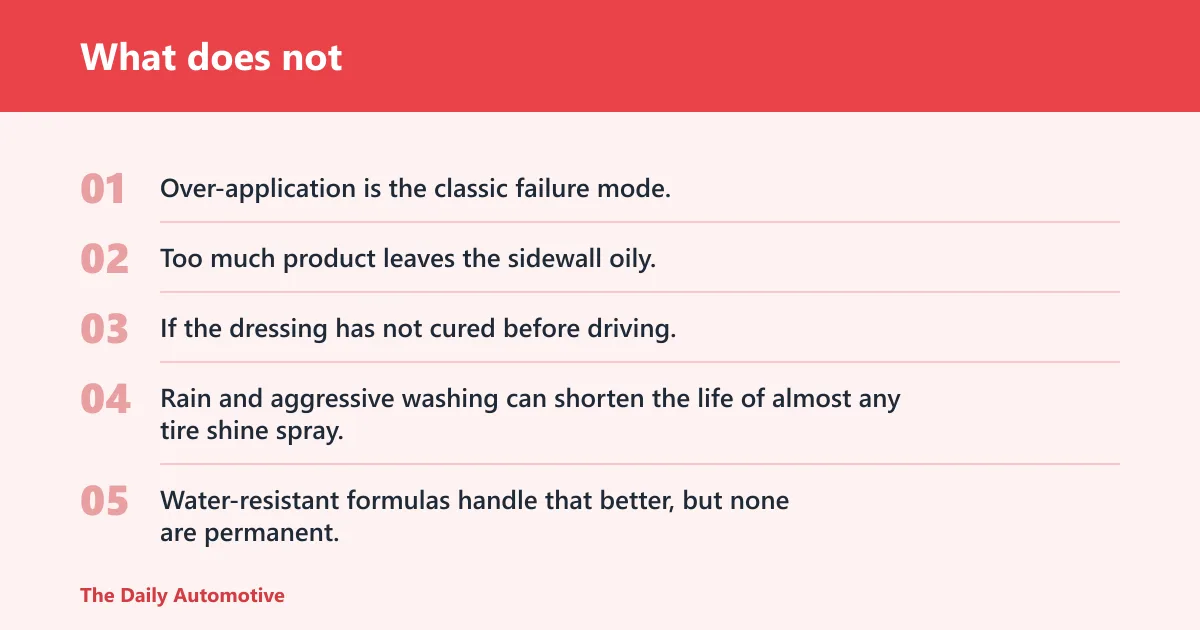
Over-application is the classic failure mode. Too much product leaves the sidewall oily, which raises sling risk and can attract road dust. If the dressing has not cured before driving, the rotating tire throws excess product onto the quarter panel, rocker, or wheel face.
Washout after rain or heavy washing
Rain and aggressive washing can shorten the life of almost any tire shine spray. Water-resistant formulas handle that better, but none are permanent. A product that lasts longer on the shelf than on the car is the wrong choice for a wet commute.
Misuse on oxidized or cracked sidewalls
Cleaning comes first. A sidewall covered in oxidation, browning, or old dressing residue gives the new product a poor bonding surface. And if the tire is cracked, dressing is not a fix; it only makes the damage shinier. Heavily worn sidewalls are often a no-buy for dressing altogether.
Limits of UV protection
UV inhibitors can slow browning and help protect against drying, but they cannot reverse age or rebuild rubber. Think of them as support, not repair. If the tire is already hard, checked, or brittle, the product can improve appearance but not safety.
Application methods: spray, foam, and gel
Sprays are fast and easy to spread evenly, but they are also the easiest to overuse. Foam applicators give the most control on curved sidewalls and help keep product off the tread and wheel face. Gels are the easiest to place precisely, though they usually take more effort and are less convenient for quick maintenance.
Decision matrix: choose by use case
| Use case | Finish | Sling risk | Cure time | Reapply interval | Best fit |
|---|---|---|---|---|---|
| Daily driver | Satin to medium gloss | Low | Quick | Every wash or when it fades | Commuters who want clean tires without mess |
| Show car | Wet-look gloss | Medium to high | Moderate | Before display days | Drivers who want maximum visual pop |
| Wet climate | Satin or controlled gloss | Low | Fast | After rain or wash cycles | Cars that face rain, spray, and puddles |
| Older tires | Light satin only, if at all | Low if used sparingly | Quick | Short interval, or skip | Tires that need prep or replacement more than dressing |
Picture a hatchback with browned sidewalls and a dusty commute on gravel roads. A thick wet-look spray may look good for an hour and then collect dirt fast. A thin satin coat, or no dressing at all until the tires are cleaned properly, is the smarter call.
How do you apply tire shine correctly?
The safest application is simple: clean the sidewall, apply a thin coat, remove excess, and let it cure before driving. That order matters because tire shine bonds and looks better on a clean surface, and most sling complaints come from skipping the wipe-down or using too much product.
- Wash the tire sidewall with tire cleaner or a strong soap solution and remove browning, grime, and old dressing.
- Dry the rubber fully so the dressing is not diluted.
- Use a foam applicator pad for controlled placement, or a light spray on the pad rather than directly on the wheel when possible.
- Spread a thin, even coat across the sidewall.
- Wipe excess from raised lettering and the wheel face with a microfiber towel.
- Wait for the finish to set before driving, especially if the formula is glossy or solvent-heavy.
Tools that help
A foam applicator pad gives better curve control on the sidewall than a direct spray alone. A microfiber towel helps catch excess before it becomes sling. Thin coats are the real trick; more product usually creates more mess, not more durability.
Alternatives

Chemical Guys Tire Kicker Extra Glossy Tire Shine Spray is the better fit if you want finish control. Its adjustable gloss and dry-touch claim make it attractive for drivers who want satin on one day and deeper gloss the next. The drawback is price, and the deeper you chase the shine, the more careful you need to be about sling control.

Black Magic Tire Trim Plastic Dressing is the budget-minded option with a medium-shine result and water resistance. It is also the least demanding choice for shoppers who want a streak-free, non-greasy formula and do not need a show-car look. The tradeoff is durability; the comparison data puts it at about 2 to 4 days, so it suits quick refreshes more than long intervals.
Should you buy tire shine spray?
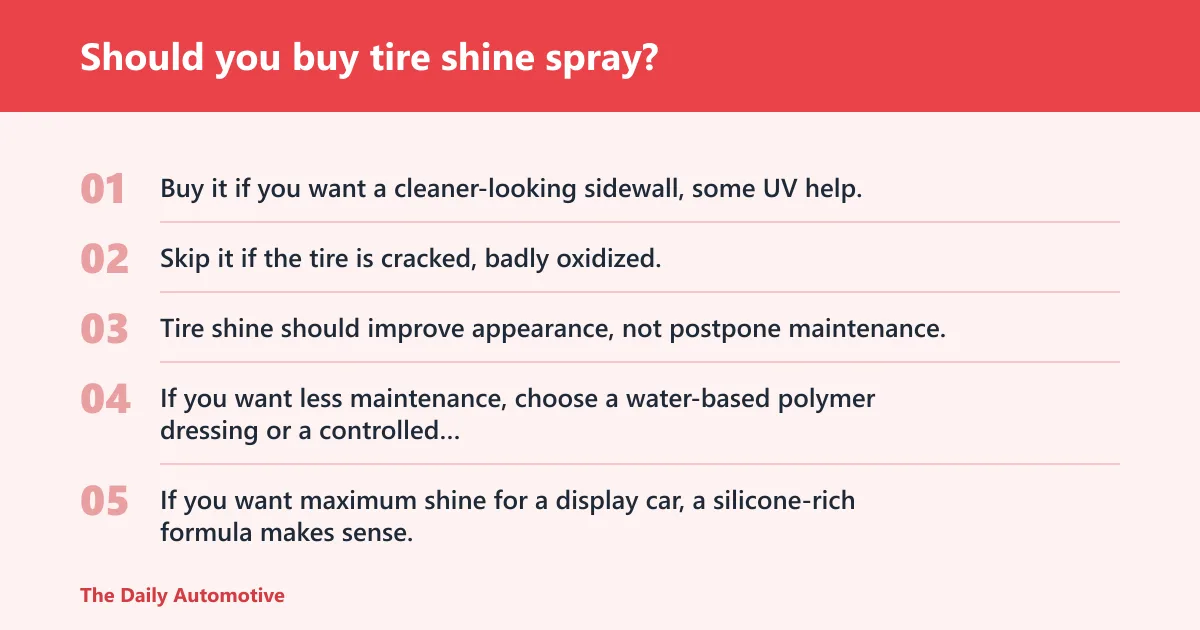
Buy it if you want a cleaner-looking sidewall, some UV help, and a finish that matches your driving conditions. Skip it if the tire is cracked, badly oxidized, or so worn that a cosmetic product is only covering a safety issue. Tire shine should improve appearance, not postpone maintenance.
If you want less maintenance, choose a water-based polymer dressing or a controlled satin product rather than the glossiest wet-look spray. If you want maximum shine for a display car, a silicone-rich formula makes sense, but you should expect more cleanup and more attention to cure time.
How often should you apply tire shine?
Apply tire shine as often as the finish fades, which can mean after a few days, after a wash, or after a week or two depending on the formula and weather. Heavier rain, high-pressure washing, and dusty roads shorten the interval, while a cured, water-resistant dressing usually lasts longer.
How long does tire shine last?
In general, tire shine products tend to last from days to a few weeks rather than months, depending on the finish, weather, and prep. The comparison data here shows one budget formula lasting about 2 to 4 days, while a more durable wet-look product is described as holding about two weeks between applications.
What tire shine has the least sling?
The least-sling choices are usually water-based polymer dressings and dry-touch formulas applied in thin coats. Sling happens when excess product remains on the tire and gets spun off by rotation. A foam applicator, wipe-down, and short cure time before driving reduce the risk further.
What is the safest tire shine?
The safest tire shine is the one that matches the tire’s condition and your commute. For most daily drivers, a low-sling, quick-cure water-based dressing is safest. For older cracked sidewalls, the safest choice may be no dressing at all until the tire is inspected or replaced.
Does tire shine protect tires?
Tire shine can help with UV exposure, drying, and browning, but it does not repair damage or stop normal aging. Think of it as a surface dressing with some protective value, not a shield. If you want real tire protection, keep the tires clean, inflated correctly, and replaced when worn or cracked.
Which is the best tire shine?
The best tire shine is the one that fits your finish preference and driving conditions, not the glossiest bottle on the shelf. For a wet-look daily driver pick, Turtle Wax Wet’n Black is a sensible choice. For more control, a dry-touch or water-resistant formula may suit you better.
Products related to this article
Sponsored / affiliate links. As an Amazon Associate I earn from qualifying purchases. I may earn additional commission from eligible campaigns.