2026 BMW 540i M Sport Review: The Last Great Analog Sports Sedan
The 2026 BMW 540i M Sport is the 5 Series to buy if you want a smooth inline-six, direct controls, and genuine road comfort. Choose it over the 550e or EV rivals if driver feel matters more than headline acceleration. Ignore that, and you may pay luxury-sedan money for a car that feels heavier, more isolated, and less satisfying on broken pavement. This review weighs its control layout, engine refinement, chassis balance, and whether it still beats the outgoing 5 Series and key rivals.
Verdict on the 540i M Sport
Yes, the 2026 BMW 540i M Sport is still worth buying, but only for the shopper who values polish and driver involvement more than the latest screen-led luxury tricks. The current 5 Series is larger than the predecessor and tuned more for comfort, yet the 540i still keeps enough mechanical character to feel like a real sports sedan instead of a rolling tablet.
The powertrain is the heart of the case. BMW pairs the B58 inline-six with a 48-volt mild hybrid system, and the result is 375 hp and 398 lb-ft of torque sent to all four wheels through a ZF eight-speed automatic. That recipe gives the car the classic BMW straight-six smoothness, easy tractability in traffic, and the kind of low-drama response that suits a daily driver.
The new 5 Series does give up something. Steering feel is light and low on feedback, the cabin leans on menus for too many tasks, and the car’s calmer ride tuning means the chassis speaks less than older 5 Series models did. Still, the 540i remains one of the few mid-size luxury sedans that can handle a commute, a long highway run, and a fast back road without feeling like three different cars.
Pros and cons
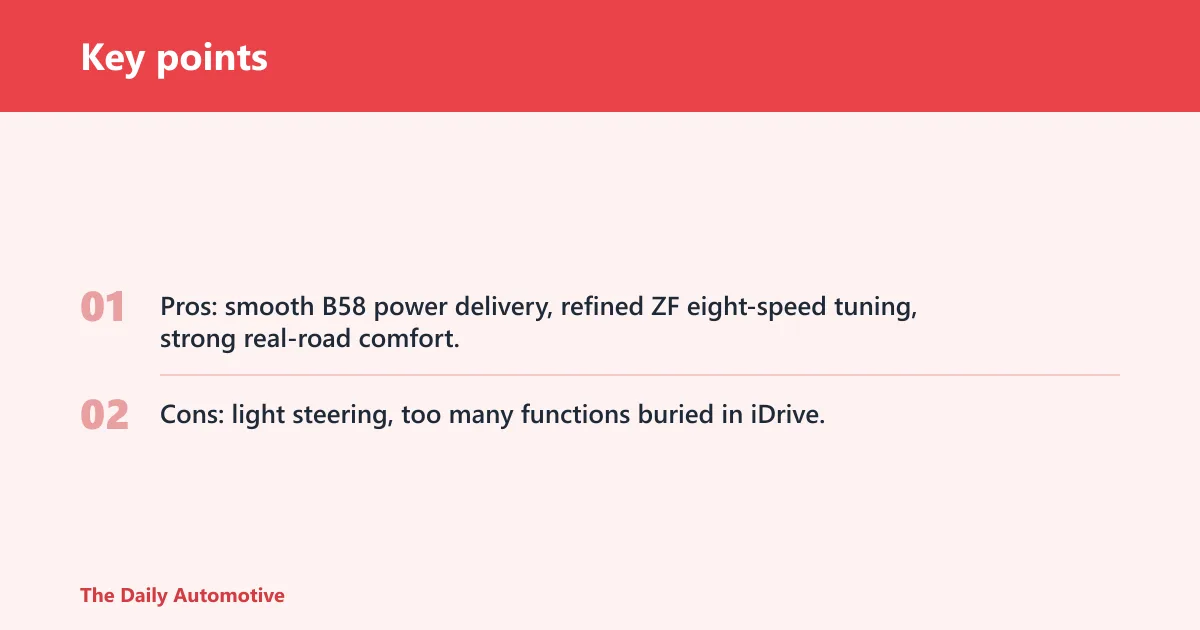
- Pros: smooth B58 power delivery, refined ZF eight-speed tuning, strong real-road comfort, useful xDrive traction, calm start/stop behavior, retained iDrive controller.
- Cons: light steering, too many functions buried in iDrive, 21-inch wheels hurt ride and add risk, some cabin features feel less intuitive than the old button-heavy layout.
Picture a buyer who spends most mornings crawling through traffic, then makes one 200-mile interstate trip every other week. The 540i fits that use case well because the mild hybrid system keeps restart behavior smooth and the gearbox stays unobtrusive in normal use.
A common first-timer mistake is ordering the flashiest wheel package, then discovering the car rides worse on city streets and is more vulnerable to pothole damage. On this car, the showier spec can be the worse daily-driver spec.
What the 540i M Sport is like to drive
The 2026 BMW 540i xDrive M Sport feels quick, smooth, and easy to place in daily use. Its B58 inline-six has the broad, clean torque delivery BMW buyers expect, while the 48-volt mild hybrid system helps the engine restart more cleanly than older stop/start setups. The ZF eight-speed automatic is a strong match, with sensible programming that avoids the busy, hunted feel some luxury sedans pick up in traffic.
That 48-volt system matters most in stop-and-go driving. Instead of the blunt stumble many drivers associate with start/stop, the 540i’s restart behavior is smooth, which means less head-toss and fewer moments where the car interrupts itself at a light. In a sedan aimed at daily comfort, that refinement counts more than another few tenths on a spec sheet.
The steering remains the weak link for enthusiasts. It is too light and missing feel, so the car does not communicate as much through the wheel as older 5 Series versions did. Body control is competent and secure, but the chassis is aimed more at smoothness than at constant feedback.
How fast is it? BMW lists the 540i at about 375 hp and 398 lb-ft, and xDrive helps put that output down with limited wheelspin. That makes the car feel brisk in the real world, especially from low speeds and midrange roll-on, where the straight-six’s tractability matters more than peak numbers.
Suppose you need to merge onto a short freeway ramp after a red light. The 540i’s torque, automatic calibration, and all-wheel drive take the stress out of the move, even if the steering itself never turns rich with feedback.
540i M Sport buyer decision matrix
This is the practical way to judge the car: by how it behaves in the situations owners actually face. The scores below use a 10-point scale, where 10 is best for that use case and 1 is worst.
| Use case | Score | Why it lands there | Best wheel choice | Options to avoid |
|---|---|---|---|---|
| City commute | 9/10 | Smooth powertrain, calm restart behavior, easy automatic tuning, good low-speed composure | 19-inch or smaller | 21-inch wheels, aggressive low-profile tire packages |
| Rough-road daily | 7/10 | Comfort-biased chassis helps, but wheel size can quickly spoil it | 19-inch | 21-inch wheels, the flashiest tire-and-wheel option set |
| Highway cruiser | 9/10 | Quiet, relaxed, strong passing power, mild-hybrid smoothness | 19-inch or 20-inch | 21-inch wheels if pavement quality is mixed |
| Back-road driving | 7/10 | Plenty of pace, but steering feel is muted compared with older BMW sedans | 19-inch for balance | 21-inch wheels unless appearance matters most |
| Ownership simplicity | 8/10 | Proven inline-six reputation, familiar drivetrain, retained controller, but still a complex luxury sedan | 19-inch | Optional wheel packages that raise tire and brake exposure |
The matrix points to the same answer: the best all-around version is the one that keeps wheel size modest. That choice protects ride quality, cuts pothole exposure, and keeps tire replacement less painful when the first set wears out.
How does the 540i ride on real roads?
The 540i rides well, but wheel choice changes the picture. The current 5 Series is tuned for comfort, and that is exactly where the car feels most convincing: on imperfect pavement, on long commutes, and at highway speeds where the suspension can settle into its rhythm. The steering may be light, but the ride quality is the stronger part of the chassis story.
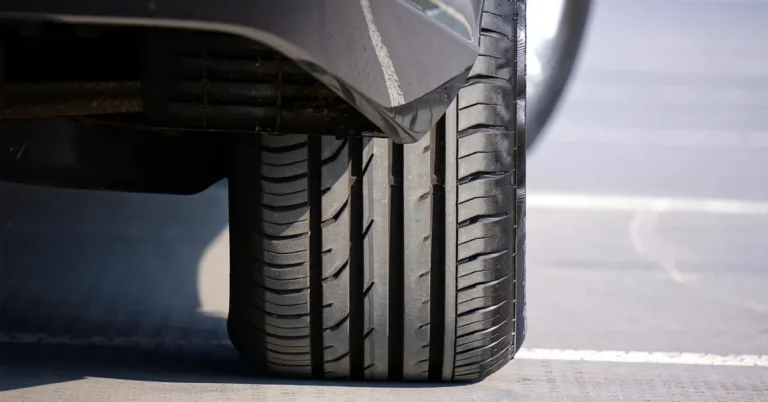
The 21-inch wheels are the wrong buy for most shoppers. They look good in the showroom and can sharpen the stance, but they bring a harsher ride, more impact from potholes and expansion joints, and more risk of wheel damage on bad roads. They also put more pressure on tire comfort, which is exactly where this car should be strongest.
For most buyers, 19-inch wheels are the safer choice. They are the best match for rough pavement, winter use, and mixed commuting. If the car will live on good suburban roads and the owner cares more about appearance than impact isolation, 20-inch wheels can still make sense. The 21s are the least forgiving option.
So how does the 540i compare with the old 5 Series? The newer car feels larger and more insulated, with a ride that prioritizes ease over crispness. That makes it less tactile than the outgoing generation, but also easier to live with if the road surface around you is less than perfect.
Inside the new 5 Series
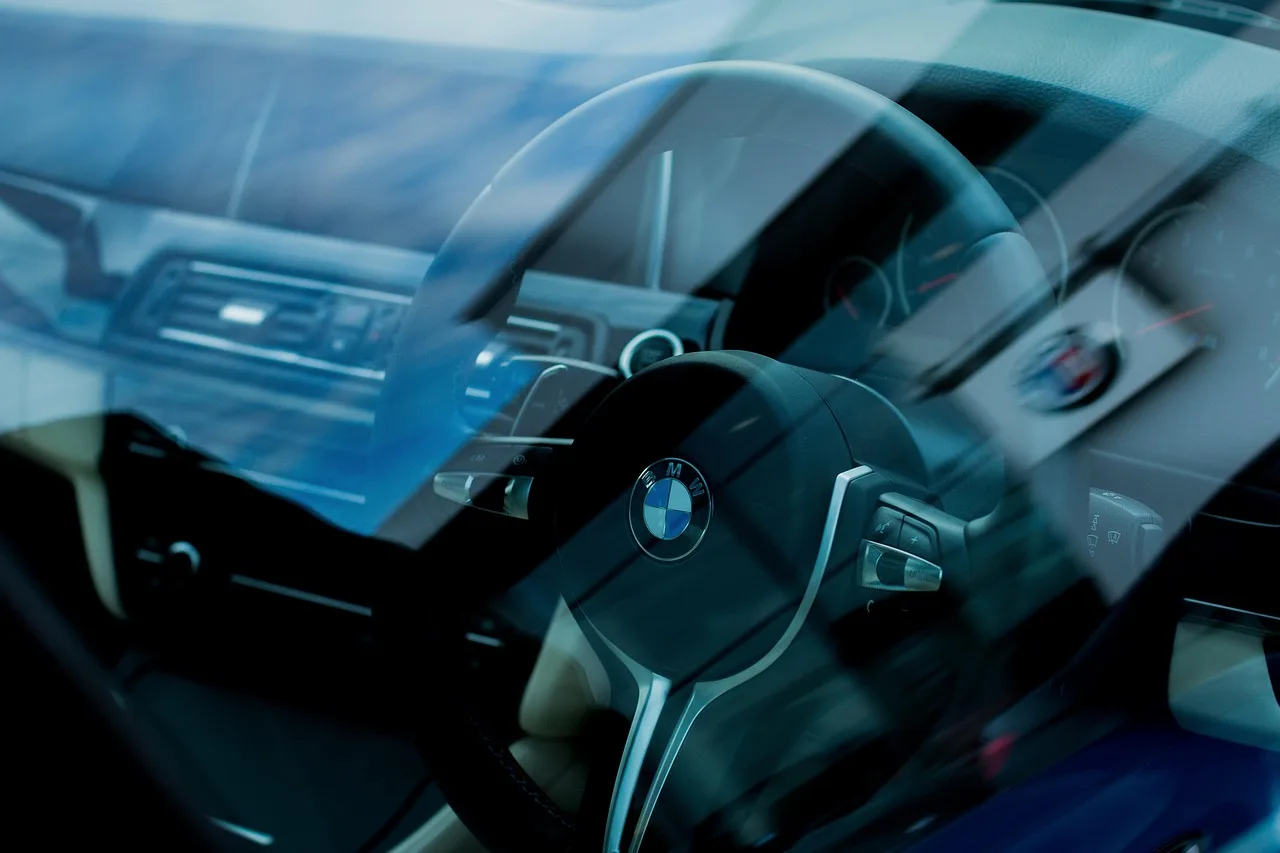
The interior and tech are where the 2026 540i most clearly moves away from old-school BMW habits. Nearly all functions have migrated to iDrive, and the car leans heavily on the touchscreen for climate and seat controls. BMW did keep the iDrive controller, which helps, but the cabin is still far less button-rich than before.

That change matters in daily use because a few common tasks now take more steps than they should. The review criticizes the hidden start/stop button and the menu layers, and that criticism is easy to understand: the more often a control gets moved into software, the more often the driver has to look away from the road.
The best way to judge the cabin is to test the annoying stuff, not the ambient stuff. Look for the controls you will touch in traffic, then decide whether the interface still feels natural after a week instead of only during a showroom demo.
- Try changing climate settings without hunting through menus.
- Use the seat functions and see how many taps they take.
- Check Personal mode, then test walk-away locking and unlocking beeps with a door open and with the key nearby.
The top three annoyances to test on a drive are the hidden start/stop control, the menu depth for common cabin functions, and the lock/unlock chimes tied to walk-away behavior. Those are the things that tend to feel minor at first and then become annoying after a week of ownership, especially if the car sees frequent errands and short stops.
The walk-away behavior deserves special attention. In a garage, at a curbside pickup lane, or when unloading groceries, beeps and automatic locking logic can get old quickly if the timing does not match the way you use the car. That is not a spec-sheet issue. It is a daily-use issue.
Who is the 540i M Sport for?
The 540i M Sport is for buyers who want a luxury sedan with real pace, a smooth six-cylinder, and enough physical control to keep the cabin from feeling fully screen-driven. It suits commuters, highway users, and enthusiasts who still care about a car’s tactile feel more than its touchscreen size.
It is not the best pick for someone who wants the sharpest steering in the class or the simplest cabin interface. It is also a less appealing choice if the local roads are broken enough that 21-inch wheels would make the ride irritating within the first week.
For value-minded shoppers, the safest spec is straightforward: xDrive, standard or modest wheel size, and no showy wheel package unless the roads are excellent. The B58 has a strong reputation in BMW circles, and that helps the 540i’s case, but a used or new buyer should still budget like this is a premium German sedan with premium consumables.
Tire and brake costs are the ownership pain points to watch. Bigger wheels usually mean pricier tires and more sensitivity to impact damage, and the car’s brake hardware can be expensive when it comes time for replacement. That does not make the 540i a bad buy. It just makes the wheel decision more important than many shoppers expect.
Compared with rivals and the outgoing 5 Series, the 540i lands in a useful middle ground. It is less analog than older BMW sedans, but it still feels more driver-friendly than many screen-first luxury cars. If tactile control matters, it remains one of the better choices in the segment.
Frequently asked questions
Is the 2026 BMW 540i M Sport still worth buying?
Yes, if you care about a smooth inline-six, strong real-world pace, and a chassis that stays comfortable on poor pavement. It is less convincing if you want crisp steering feel or a button-heavy cabin. The value depends on whether you prize driving polish over interface simplicity.
How fast is the 2026 BMW 540i xDrive M Sport?
In normal use it feels brisk and effortless, especially in the midrange, where the B58 and ZF eight-speed automatic work together with little fuss.
What engine does the 540i use in 2026?
That combination is known for smoothness, tractable low-speed response, and a refined stop/start character. It is the main reason the car still feels like a proper BMW powertrain rather than a generic luxury drivetrain.
Does the 2026 540i still have buttons and an iDrive controller?
Yes, but not enough buttons to satisfy drivers who want old-school control access. BMW kept the iDrive controller, yet nearly all functions have moved into the iDrive interface, and climate and seat settings now live deeper in menus. That makes some routine adjustments slower than before.
Are the 21-inch wheels a bad idea on the 540i?
For most buyers, yes. They look good, but they trade away comfort, add pothole vulnerability, and raise the odds of expensive tire and wheel damage. If your commute includes rough pavement or winter abuse, 19-inch wheels are the smarter buy.
How reliable is the BMW B58 in the 540i?
Broadly, the B58 has a good reputation, and that helps the 540i’s long-term case. The car is still a complex luxury sedan, though, so buyers should plan for premium tire, brake, and general maintenance costs. Reliability confidence is stronger in the engine than in the idea of cheap ownership.
What changed in the new 5 Series interior and tech?
The biggest change is the move toward a screen-led cabin. Nearly all functions now live in iDrive, with climate and seat controls pushed into menus, though the iDrive controller remains. The result is cleaner visually, but less intuitive for drivers who still prefer fast physical access.
Products related to this article
Sponsored / affiliate links. As an Amazon Associate I earn from qualifying purchases. I may earn additional commission from eligible campaigns.