2026 BMW 535i Oil Type: The Complete N55 Engine Guide
You just rolled past 60,000 miles, and the dashboard is telling you the oil needs service. Maybe you’re staring at the owner’s manual, or maybe you’re scrolling through forums at midnight trying to find a straight answer. The 2026 BMW 535i uses the N55 engine, and it’s pickier about oil than most cars. Getting this wrong can cost you a turbocharger or a high-pressure fuel pump, neither of which is cheap to replace.
This guide cuts through the noise. You’ll learn the exact oil specification, the correct capacity, and why the BMW Longlife-01 certification matters more than the brand name on the bottle. We’ll also cover the DIY process with torque specs, how to interpret oil analysis, and what to do about common N55 oil consumption issues. By the end, you’ll know precisely what to pour in and why.
BMW
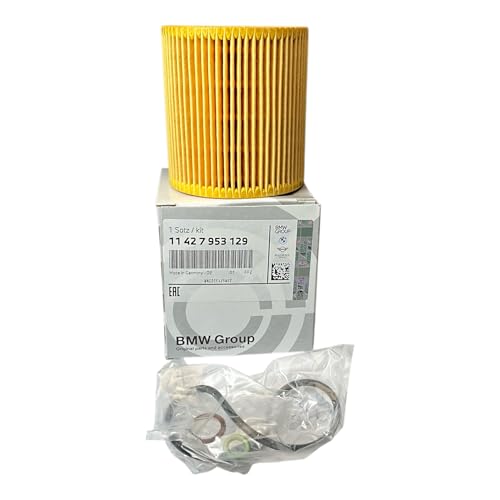
BMW 11427953129 Set Oil Filter Element
- Genuine BMW Product
- BMW oil filters are manufactured using only the highest quality materials
- Guaranteed to meet all specifications for filtration, pressure, and durability
Before we get into the weeds, you’ll need a quality filter to go with that oil. The genuine BMW oil filter element (Part #11427953129) is the right call here. It meets the exact filtration and pressure specs for the N55, and it fits perfectly without worrying about aftermarket tolerances. It’s not the cheapest option, but it’s the one that won’t let you down at 7,000 miles.
The Short Answer: 2026 BMW 535i Oil Type & Capacity
Here’s the quick version. Your 2026 BMW 535i needs a full synthetic oil that meets BMW Longlife-01 (LL-01) approval. The recommended viscosity is SAE 5W-30 for most conditions, though 5W-40 is a valid alternative for hotter climates or harder driving.
The oil capacity for the N55 engine is 6.9 quarts (6.5 liters) including the filter. When you drain it completely and replace the filter, that’s the number you’re filling toward. Don’t just dump in the whole jug and hope for the best.
Your engine also has an oil level sensor instead of a traditional dipstick. That means you’ll rely on the iDrive system to check levels, which can be a bit slow to update. We’ll cover that in the DIY section.
Why BMW LL-01 Certification Matters (and What Happens if You Skip It)
BMW LL-01 isn’t just a sticker on the bottle. It’s a performance standard that tests for shear stability, oxidation resistance, and deposit control under high load. The N55 engine is turbocharged, which means the oil gets hot and gets worked hard. The turbo spins at speeds up to 150,000 RPM, and the oil is responsible for cooling and lubricating those bearings.
Here’s the specific quirk: the N55 uses a high-pressure fuel pump (HPFP) driven by the camshaft. This pump creates enormous pressure, and it shares the engine oil. If the oil shears down in viscosity under heat, the HPFP doesn’t get the protection it needs. That’s a known failure point on these engines, and the wrong oil accelerates it.
What happens if you use a non-approved oil? The viscosity breaks down faster. The oil thins out, the turbo bearings start to wear, and you might notice increased oil consumption. In severe cases, you’ll get timing chain noise or a failed HPFP. The repair bills run into the thousands. A $10 difference per quart doesn’t look so smart then.
Look for the LL-01 logo on the bottle. Castrol Edge, Mobil 1, and Liqui Moly all make versions that carry this approval. If the bottle doesn’t say LL-01, don’t buy it for this car.
5W-30 vs. 5W-40: How to Choose for Your Driving Conditions
Both viscosities are approved under LL-01, so this comes down to your environment and driving style. Let’s break it down simply.
5W-30 is the default recommendation. It flows better when cold, which means quicker oil pressure at startup. It also gives slightly better fuel economy because there’s less drag on the rotating assembly. If you live in a temperate climate and drive normally, this is the one.
5W-40 is the choice for hot climates, track days, or heavy stop-and-go traffic. The higher hot viscosity maintains a thicker oil film at extreme temperatures. If you’re in Arizona, Texas, or anywhere that sees triple-digit summers, 5W-40 gives you an extra margin of safety. It also tends to hold up better if you’re tuned or drive aggressively.
Here’s a decision tree to make it easy:
- Daily driving, temps between 0°F and 90°F → 5W-30
- Hot climate, regular temps above 90°F → 5W-40
- Track days, autocross, or tuned ECU → 5W-40
- Cold winters below 0°F → 5W-30 (or 0W-30 if LL-01 approved)
- Not sure → 5W-30. It’s the safe middle ground.
One more thing to consider: oil analysis. If you send a sample to Blackstone Laboratories, they’ll tell you the actual viscosity at the end of your drain interval. If the oil has sheared down a grade, you need to step up to 5W-40 or shorten your interval. That data beats any forum opinion.
Step-by-Step DIY Oil Change Guide for the N55 Engine
Doing this yourself saves real money and takes about an hour the first time. Here’s the full process with the exact parts you need.
Tools and Parts Needed (with OEM Part Numbers)
- BMW oil filter element: Part #11427953129 (the one linked above)
- Oil drain plug washer: Part #07119904596 (this is a crush washer, replace it every time)
- Oil: 6.5 liters of LL-01 approved 5W-30 or 5W-40
- 17mm socket for the drain plug
- Oil filter cap wrench (36mm or 86mm, depending on the housing)
- Torque wrench
- Drain pan, funnel, and gloves
Draining the Oil and Replacing the Filter
Start with the engine warm. Not hot, just warm enough that the oil flows freely. Jack up the car and support it on jack stands. Never work under a car held only by a jack.
Position your drain pan and remove the 17mm drain plug. The plug is on the oil pan, facing the rear of the car. Let it drain for at least 10 minutes. While that’s happening, move to the filter housing on top of the engine. It’s the black plastic cap on the driver’s side, near the front.
Remove the cap with the appropriate socket. Pull out the old filter element and discard it. Wipe out the housing with a clean rag. Install the new filter element and replace the o-rings on the cap. A light coat of fresh oil on the o-rings helps them seat properly.
Torque Specs and Filling the Correct Amount
This is where people mess up. The drain plug torque spec is 18 lb-ft (25 Nm). That’s it. Don’t crank it down like you’re tightening a lug nut. The oil pan is aluminum, and stripping the threads is a nightmare. Use a torque wrench.
The filter cap torque spec is 18 lb-ft (25 Nm) as well. Same number, same reasoning. The plastic housing cracks if you over-tighten it, and that’s a $100 part plus a mess.
Reinstall the drain plug with the new crush washer. Lower the car and add 6.5 quarts of oil through the filler cap. Start the engine and let it run for 30 seconds. Shut it off and wait a few minutes. Then check the level through the iDrive system. It may take a few minutes to update the reading, so don’t panic if it doesn’t show immediately. Top off if needed, but don’t overfill. Overfilling causes foaming and can damage the engine.
Oil Change Intervals: Mileage vs. Condition-Based Service (CBS)
Your 2026 535i has a Condition-Based Service system that calculates oil life based on driving conditions. It’s not a simple mileage countdown. The computer looks at cold starts, trip length, engine temperature, and driving style. A car that does short trips in winter will show a service due message much sooner than one that cruises on the highway all day.
The CBS system typically triggers an oil change between 10,000 and 15,000 miles. That’s a long interval, and it’s only safe with the correct LL-01 oil. The oil is engineered to hold up for that duration, but it’s at the limit.
Here’s my honest take: 10,000 miles is the ceiling, not the target. If you drive hard, live in a hot climate, or do mostly city driving, change it at 7,500 miles. Oil is cheap insurance. The N55 is a turbocharged engine with a lot of heat, and the oil takes a beating. Cutting the interval in half costs about $80 a year and buys you peace of mind.
If you want to know exactly how your oil is holding up, send a sample to Blackstone Labs. They’ll test for wear metals, viscosity, and contamination. A clean report means you can stretch the interval. High iron or copper means something is wearing, and you should shorten it.
Common Oil-Related Problems in the 2026 535i (HPFP, Leaks, and Consumption)
The N55 is a solid engine, but it has a few oil-related quirks you should know about. Knowing these ahead of time saves you from a surprise repair bill.
Oil consumption. Some N55 engines burn oil, especially as they pass 80,000 miles. A quart every 1,000 miles is excessive. A quart every 3,000 to 5,000 miles is annoying but common. The usual culprits are the valve stem seals or the turbocharger oil seals. If you’re burning oil, check for blue smoke on deceleration. That points to valve seals. If it smokes under boost, it’s the turbo.
Valve cover gasket leaks. This is a wear item on every BMW. The gasket hardens and starts weeping oil down the side of the engine. You’ll smell burning oil when the car is hot. The fix is a new gasket, and it’s a DIY-friendly job if you’re patient. The part is cheap, but the labor is a few hours.
Oil filter housing gasket. Another common leak point. This one sits right above the alternator, and oil dripping onto the alternator can kill it. If you see oil pooling under the car on the driver’s side, check this gasket first. It’s a $20 part and a moderate DIY job.
HPFP failure. The high-pressure fuel pump is a known weak spot on the N55. Symptoms include long cranking, rough idle, and a check engine light. The pump is driven by the camshaft and lubricated by engine oil. Using the wrong oil or extending intervals too far can contribute to premature wear. If the pump fails, it’s a $1,500+ repair. Good oil and regular changes are your best defense.
Final Verdict: The Best Oil Brands for Your 535i
Stick with brands that explicitly carry the BMW LL-01 approval. Here’s how the top options compare.
| Brand | Viscosity | LL-01 Approved | Best For |
|---|---|---|---|
| Castrol Edge | 5W-30 | Yes | Factory fill, daily driving, cold climates |
| Mobil 1 | 0W-40 | Yes | Cold starts, wide temperature range |
| Liqui Moly | 5W-40 | Yes | Hot climates, tuned engines, track use |
| BMW TwinPower Turbo | 5W-30 | Yes | Dealer service, OEM spec, no guesswork |
Castrol Edge is what BMW puts in from the factory, so it’s a safe bet. Mobil 1 0W-40 is excellent if you deal with freezing winters. Liqui Moly 5W-40 is my pick for anyone running a tune or living in the South. The BMW branded oil is just rebranded Castrol, so you’re paying extra for the label.
Whatever you choose, pair it with the genuine BMW filter. The aftermarket filters might save you five bucks, but the N55’s filter housing is sensitive to pressure drop. A cheap filter can cause a low oil pressure warning at idle. Don’t risk it.
Quick Takeaways for the 2026 BMW 535i Owner
- Use only full synthetic oil with BMW LL-01 approval. No exceptions.
- Standard fill is 6.5 quarts (6.9 US quarts) of 5W-30. Choose 5W-40 for hot climates or hard driving.
- Change the oil every 7,500 miles for peace of mind, even if the CBS system says 10,000+.
- Torque the drain plug and filter cap to 18 lb-ft. Over-tightening causes expensive damage.
- Replace the drain plug crush washer every single time.
- Watch for valve cover and oil filter housing gasket leaks after 70,000 miles.
- If the car burns more than a quart every 2,000 miles, get it checked before it damages the catalytic converters.
Your 535i is a fantastic car when it’s maintained properly. The oil choice is the single most important decision you make for the N55 engine. Spend the extra few dollars on the right stuff, and it’ll reward you with hundreds of thousands of miles. For more maintenance guides on BMW models, check out our 2026 BMW 328i oil reset guide or the 2026 BMW 320i oil type breakdown if you have another car in the family.
Products related to this article
Sponsored / affiliate links. As an Amazon Associate I earn from qualifying purchases. I may earn additional commission from eligible campaigns.
 MSMUSAS 2026 New Engine Oil Dipstick Oil Level Dipstick - Replace Part 120 589 07 21 00, 120589072100 - Compatible with Mercedes-Benz R500 2006-2007
 MSMUSAS 2026 New Engine Oil Dipstick Oil Level Dipstick - Replace Part 120 589 07 21 00, 120589072100 - Compatible with Mercedes-Benz SLK55 AMG 2005-2010