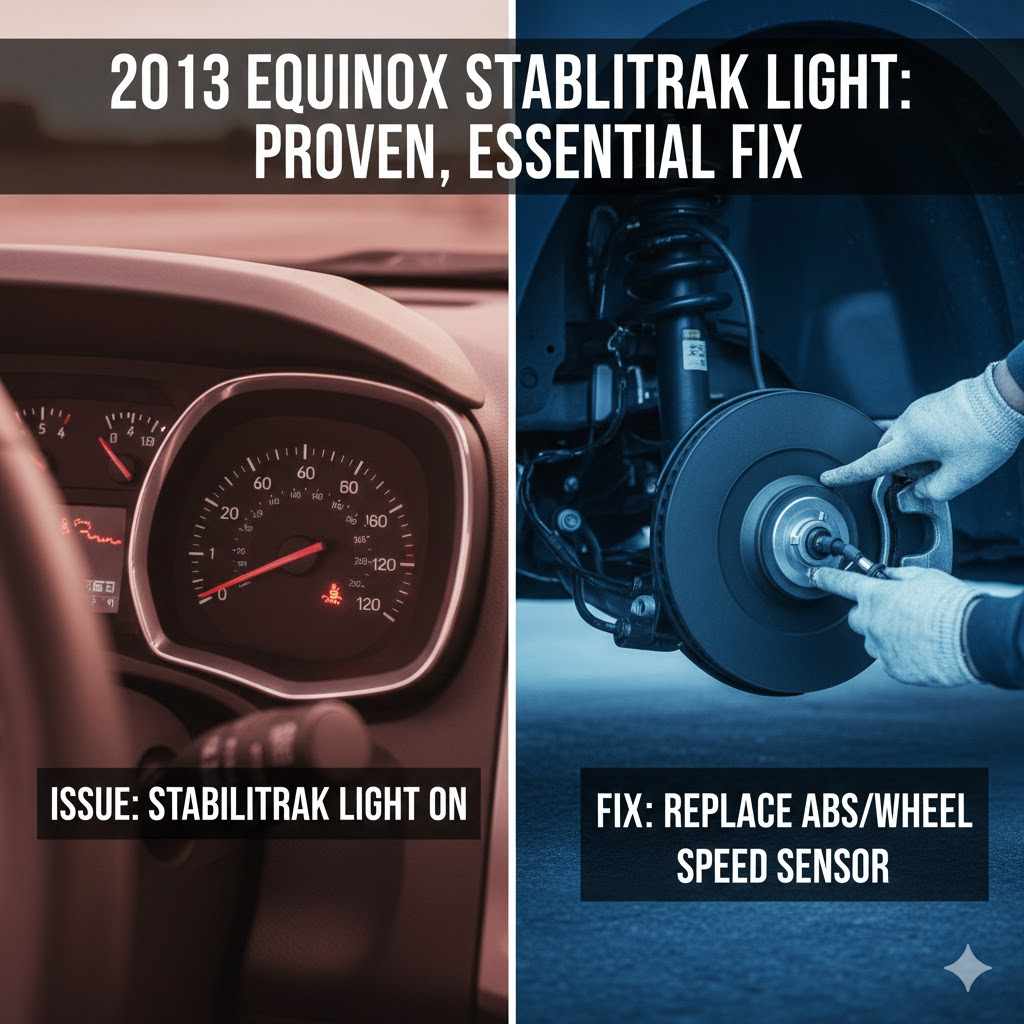
2013 Equinox StabiliTrak Light: Proven, Essential Fix
If your 2013 Equinox StabiliTrak light is on, the most common and essential fix, especially after replacing wheel hubs and sensors, is to inspect and clean the throttle body. Carbon buildup often causes incorrect sensor readings, triggering the light. This simple cleaning procedure can resolve the issue without costly parts.
Seeing a warning light flash on your dashboard can be stressful. When the “Service StabiliTrak” message appears on your 2013 Chevy Equinox, it’s easy to feel a little worried. What does it mean? Is it safe to drive? How much will this cost to fix? Take a deep breath. You’re in the right place, and this is a very common issue that you can often solve yourself.
Many drivers face this exact problem. The good news is that the solution is often much simpler and cheaper than you might think. We are going to walk through the proven, essential fix for this frustrating light, step by step. You don’t need to be a master mechanic. With a little guidance, you can get to the bottom of this and get your Equinox back to running smoothly.
What is StabiliTrak and Why is the Light On?
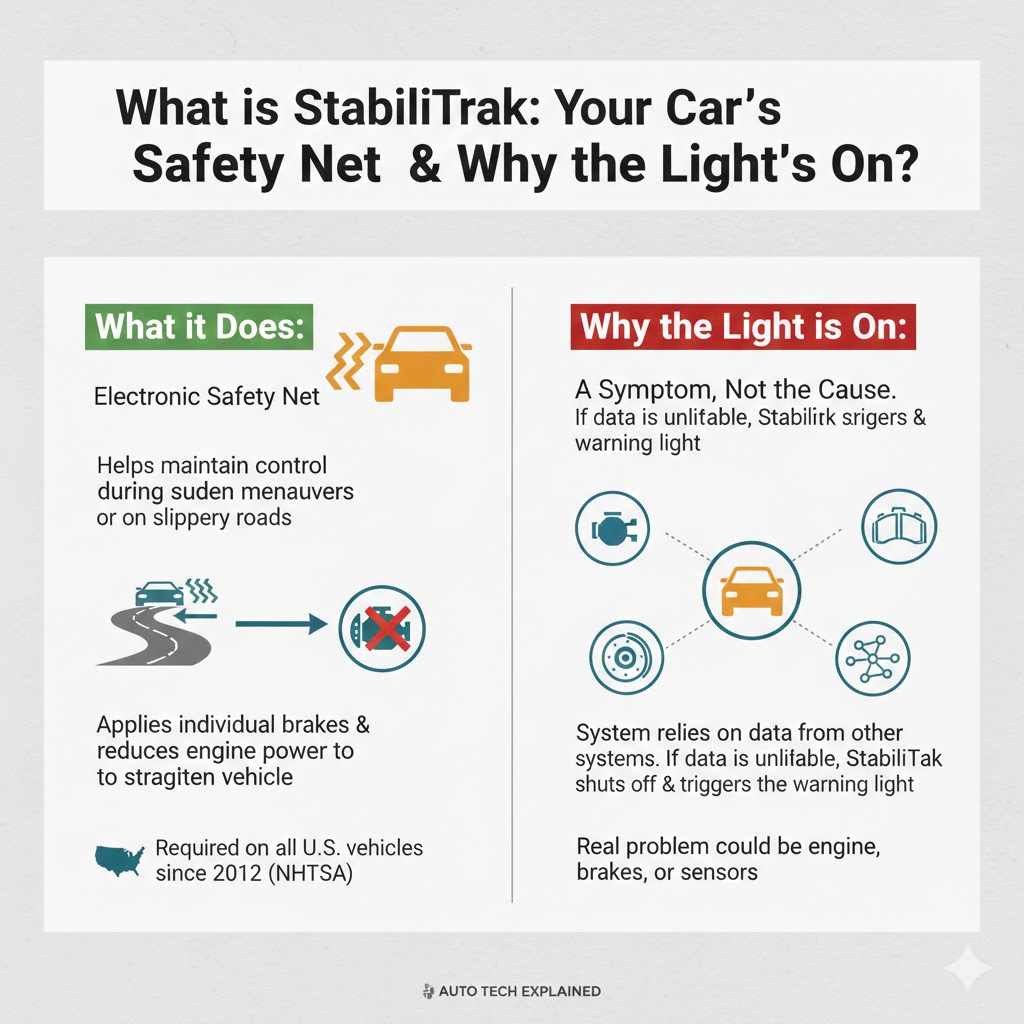
First, let’s quickly talk about what StabiliTrak does. Think of it as your car’s electronic safety net. The StabiliTrak system, also known as Electronic Stability Control (ESC), helps you maintain control of your vehicle during sudden maneuvers or on slippery roads. It uses a network of sensors to monitor your steering wheel angle and the direction your car is actually going.
If it senses you’re starting to skid or lose traction, it can apply individual brakes and even reduce engine power to help straighten your vehicle out. It’s an incredible safety feature required on all U.S. vehicles since 2012, as explained by the National Highway Traffic Safety Administration (NHTSA).
So, why does the light come on? The StabiliTrak system relies on information from many other systems in your car. When one of those related systems has a problem, it can no longer trust the data it’s receiving. As a safety measure, it shuts itself off and turns on the warning light. The StabiliTrak light is often a symptom, not the root cause. The real problem could be related to the engine, the brakes, or the sensor network.
Common Causes of the 2013 Equinox StabiliTrak Light
While many things can trigger the light, a few culprits are incredibly common on the 2013 Equinox. Understanding these can save you a lot of guesswork.
- Faulty Wheel Speed Sensors: Each wheel has a sensor that tells the computer how fast it’s spinning. If one of these sensors fails or its wiring is damaged, StabiliTrak can’t work correctly. This is one of the most frequent causes.
- Bad Wheel Hub Assembly: The wheel speed sensor often works with a magnetic ring inside the wheel hub bearing. If the bearing goes bad, the sensor can get a faulty reading. This is why hubs and sensors are often replaced together.
- Dirty or Failing Throttle Body: This is our “proven, essential fix.” The throttle body controls how much air enters the engine. Over time, it gets coated in carbon and gunk. This buildup can make the internal sensor send incorrect data to the car’s computer, which freaks out the StabiliTrak system.
- Bad Camshaft or Crankshaft Position Sensors: These sensors tell the computer what the internal parts of the engine are doing. A bad signal can disrupt the engine’s performance and trigger the stability light.
- Engine Misfires: If a spark plug or ignition coil is bad, the engine can misfire. This unstable engine performance will almost always trigger the StabiliTrak light.
Common Trouble Codes
When you scan your car with an OBD-II scanner, it gives you codes that point you in the right direction. Here are some codes commonly associated with the StabiliTrak issue:
| Code | What It Usually Means | Common Fix |
|---|---|---|
| C0035 – C0050 | Problem with a specific Wheel Speed Sensor circuit. | Inspect sensor wiring or replace the wheel hub assembly. |
| P0121 | Throttle/Pedal Position Sensor Performance Problem. | Clean or replace the throttle body. |
| P0171 | System Too Lean (Bank 1). | Check for vacuum leaks, clean MAF sensor, or check fuel system. |
| P0300 – P0306 | Random or specific cylinder misfire detected. | Replace spark plugs and/or ignition coils. |
“I Changed the Hubs and Sensors, But the Light is Still On!”
This is the single most frustrating part of this repair for many Equinox owners. You’ve done your research, found the most common cause (wheel hubs/sensors), spent the time and money to replace them, and the stubborn “Service StabiliTrak” light is still glaring at you. It’s enough to make you want to give up.
Don’t worry, you haven’t wasted your time. If your wheel hubs were old, replacing them was good preventive maintenance anyway. But why is the light still on? Here are the most likely reasons:
- The Wiring Harness: The thin wires running to your new wheel speed sensor can get stretched, pinched, or corroded. The connection right at the plug is a common failure point. A tiny break in the wire is enough to keep the light on.
- The Problem Was Never the Hubs: This is where our essential fix comes in. Your car had a different problem all along, and the codes may have been misleading. The throttle body is the next, and most likely, suspect.
- The Codes Weren’t Cleared: Sometimes, after a repair, the car’s computer stores the old error code (called a “hard code”). The light won’t go out until you manually clear it with an OBD-II scanner.
- A Different Sensor Failed: It’s possible that another sensor, like a camshaft position sensor, is the real issue. This is why reading the codes is so important.
Now, let’s get to the fix that works for so many people in this exact situation.
The Proven, Essential Fix: A Step-by-Step Guide
We are going to focus on the fix that solves the problem for a huge number of 2013 Equinox owners after they’ve already tried replacing the wheel hubs: cleaning the throttle body. It’s simple, requires basic tools, and costs next to nothing.
Before You Begin: Tools and Safety
Gathering your tools first makes any job go smoother. You don’t need a professional garage, just a few key items.
Tool List:
- OBD-II Code Scanner (essential for diagnosis)
- Socket set with ratchet (you’ll likely need 8mm and 10mm sockets)
- Flathead screwdriver or pliers for hose clamps
- Throttle Body Cleaner (use only this specific type of cleaner)
- A few clean rags or shop towels
- An old toothbrush or soft-bristled brush
- Safety glasses and gloves
Safety First!
- Work in a well-ventilated area, like an open garage or driveway.
- Make sure your engine is completely cool. Never work on a hot engine.
- Disconnect the negative terminal of your car battery to prevent any electrical shorts. This is usually a 10mm nut.
Step 1: Read the Diagnostic Trouble Codes (DTCs)
Even if you’ve done this before, do it again. A new code may have popped up. Plug your OBD-II scanner into the port under the driver’s side dashboard. Turn the key to the “On” position (don’t start the engine). Write down any codes you see. Codes like P0121 are a strong signal that you should proceed with cleaning the throttle body.
Step 2: A Quick Check of Your Recent Repair
Since you just replaced the wheel hubs, let’s take 5 minutes to double-check that work. Go to the wheels where you replaced the hubs. Find the wire coming from the back of the hub assembly. Follow it as far as you can. Look for:
- A Loose Connection: Is the plug clicked in all the way? Unplug it and plug it back in to be sure.
- Pinched or Damaged Wires: Did the wire get pinched during reassembly? Is the plastic coating rubbed raw anywhere?
- Corrosion: Is there any green or white powder inside the connector plug?
If everything looks perfect, it’s time to move to the engine bay.
Step 3: The “Hidden” Culprit – Cleaning the Throttle Body
This is our main event. The throttle body is located between the air filter box and the engine. It’s the part that the big, black plastic air intake tube connects to.
- Locate the Throttle Body: Open your hood and find the large black plastic engine cover. You may need to remove it (it often just pulls off). Follow the large air duct from the air filter box, and it will lead you straight to the throttle body.
- Remove the Air Intake Duct: Use your screwdriver or pliers to loosen the hose clamp connecting the air duct to the throttle body. You may also need to disconnect a smaller hose or two. Gently wiggle the duct off the throttle body and move it aside.
- Look Inside: You’ll now be looking at a metal flap inside the throttle body. This is the throttle plate. It should be a shiny silver color. In most cases, you will see a thick, black, greasy ring of carbon buildup around the edges where the plate closes. This is our problem!
-
Clean It Thoroughly:
- Spray a generous amount of Throttle Body Cleaner onto a clean rag. Do NOT spray directly into the throttle body while it’s connected electronically.
- Use the rag to wipe away all the black gunk from the inside walls and from both sides of the throttle plate.
- You can gently push the plate open with your finger to clean around the edges.
- For stubborn buildup, spray a little cleaner onto your toothbrush and gently scrub the deposits away.
- Keep wiping with a clean part of your rag until it comes out clean. The inside should be shiny and free of all black residue.
- Reassemble: Once it’s sparkling clean, reattach the air intake duct and tighten the clamp. Make sure any other small hoses are reconnected. Reconnect your battery’s negative terminal.
Step 4: The Relearn Procedure and Test Drive
Your car’s computer was used to the old, dirty throttle body. Now it needs to “relearn” the new, clean position. This is easier than it sounds.
- Turn the key to the “On” position (don’t start the engine) and leave it there for 3 minutes. You may hear some clicking noises from the engine bay. This is normal.
- After 3 minutes, turn the key to “Off” and leave it for at least 1 minute.
- Now, start the engine. It might idle a little high or rough for a moment. Let it run for a few minutes to settle down.
- Take the car for a 10-15 minute test drive that includes some stop-and-go traffic and some steady cruising. The StabiliTrak light should now be off.
When to Call a Professional
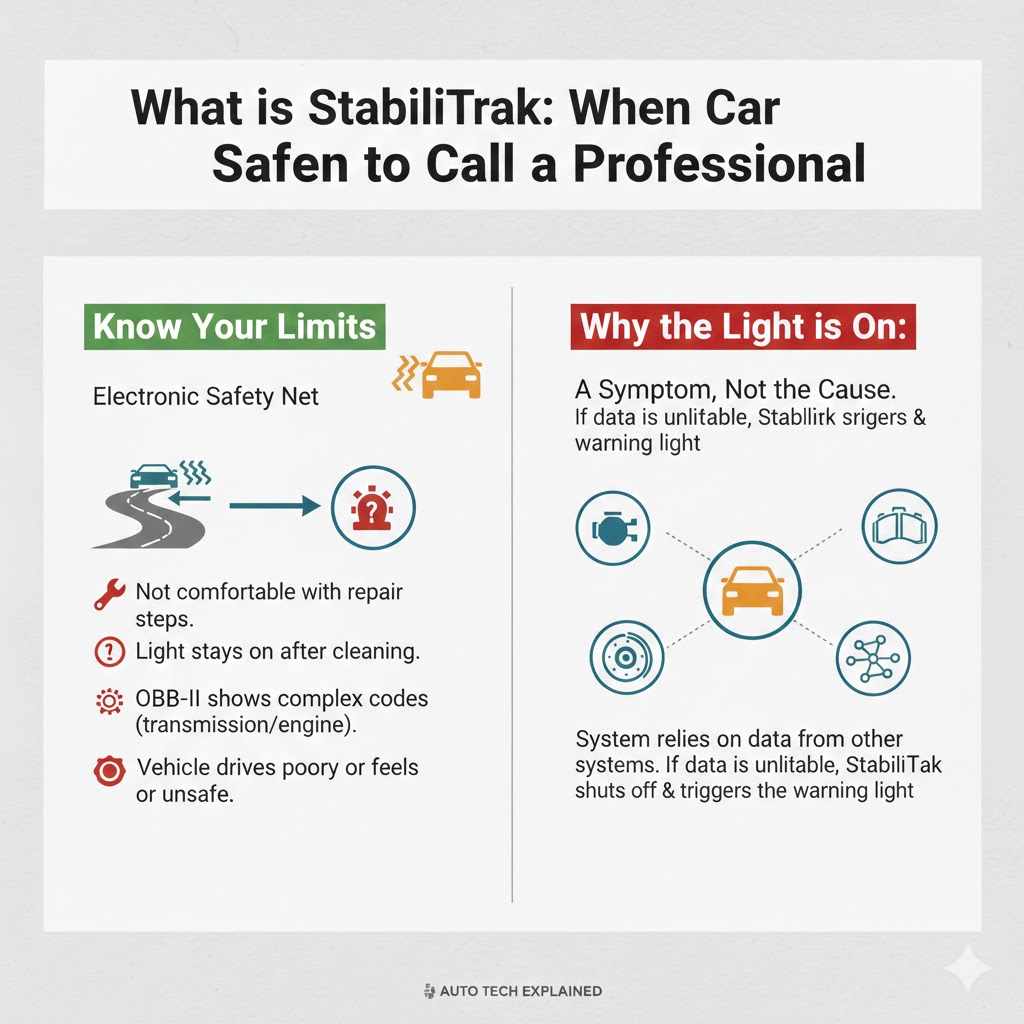
DIY repair is empowering, but it’s also important to know your limits. You should consider taking your Equinox to a trusted mechanic if:
- You are not comfortable performing any of the steps listed above.
- After cleaning the throttle body, the light remains on or comes back quickly.
- Your OBD-II scanner shows complex codes related to the transmission or internal engine components.
- The vehicle is driving poorly, making strange noises, or feels unsafe in any way.
Frequently Asked Questions (FAQ)
Is it safe to drive my 2013 Equinox with the StabiliTrak light on?
Generally, yes, it is safe to drive for short distances under normal conditions. However, the StabiliTrak and traction control systems are disabled. This means you will not have that extra layer of electronic protection on slippery roads or in an emergency maneuver. It’s best to get it fixed as soon as you can.
Can low engine oil cause the StabiliTrak light to come on?
Yes, absolutely. The 2.4L Ecotec engine in many 2013 Equinox models is known for oil consumption. If the oil level is critically low, it can affect the variable valve timing (VVT) system, which can trigger engine codes and, in turn, the StabiliTrak light. Always check your oil level first!
How much does it cost to fix a StabiliTrak issue?
The cost varies wildly depending on the cause. If it’s a simple throttle body cleaning like we described, your only cost is a can of cleaner (about $10). If you need a new wheel hub assembly, the part can cost between $80 and $200, plus labor if you don’t do it yourself. A diagnosis at a shop usually starts around $100-$150.
Why did the “Engine Power is Reduced” message also appear?
This message often appears with the StabiliTrak light. It’s a safety mode, often called “limp mode.” When the car’s computer detects a serious problem (like a faulty throttle body signal), it reduces engine power to prevent further damage and encourage you to get the vehicle serviced. Cleaning the throttle body often resolves this message as well.
Can I just ignore the StabiliTrak light?
You shouldn’t. While the car may drive fine, ignoring the light means you’re driving without a key safety system. Furthermore, the light is warning you about an underlying problem that could get worse over time, potentially leading to more expensive repairs down the road.
Will disconnecting the battery turn off the light?
Disconnecting the battery for about 30 minutes will often clear the codes and turn off the light temporarily. However, if the underlying problem hasn’t been fixed, the computer will detect the fault again and the light will come right back on, usually within a few miles of driving.
Do I need a special tool to clean the throttle body?
No, you don’t need any highly specialized tools. A basic socket set, a screwdriver, some rags, and a can of dedicated Throttle Body Cleaner are all you need for this job. It’s one of the most accessible and effective DIY repairs you can do.
Your Path to a Confident Repair
That flashing light on your dash doesn’t have to be a source of stress or a massive expense. By following these steps, you’ve tackled one of the most common and misunderstood issues with the 2013 Chevy Equinox. You’ve gone beyond the obvious fix and addressed the root cause that many people miss.
Taking the time to understand your car and perform a simple, proven repair like cleaning the throttle body not only saves you money but also builds your confidence. You’ve proven that you are in control. Now you can enjoy a smoother, safer ride, knowing you fixed it yourself. Happy driving!