Car Stalling When Turning: Identifying and Fixing Issues
If your car unexpectedly stalls when you turn, it can be a little scary, especially if you’re a new driver. Don’t worry, though! Car Stalling When Turning: Common Causes are usually easy to spot and fix. This post will explore the usual suspects, breaking them down into simple steps so you can get back on the road safely. We’ll start by looking at some basic things you can check, so you can solve the problem yourself. Let’s get started!
Possible Issues Triggering Stalling
When a car stalls while turning, many things can go wrong. It’s like a puzzle where several pieces have to fit together perfectly. If even one piece is missing or faulty, the car might stop running. Problems often show up when you’re turning because the engine has to work harder. This could be due to more power needed by the power steering or other systems. Let’s explore some of the most likely culprits and what to watch out for. This will help you know the common reasons for your vehicle’s issues.
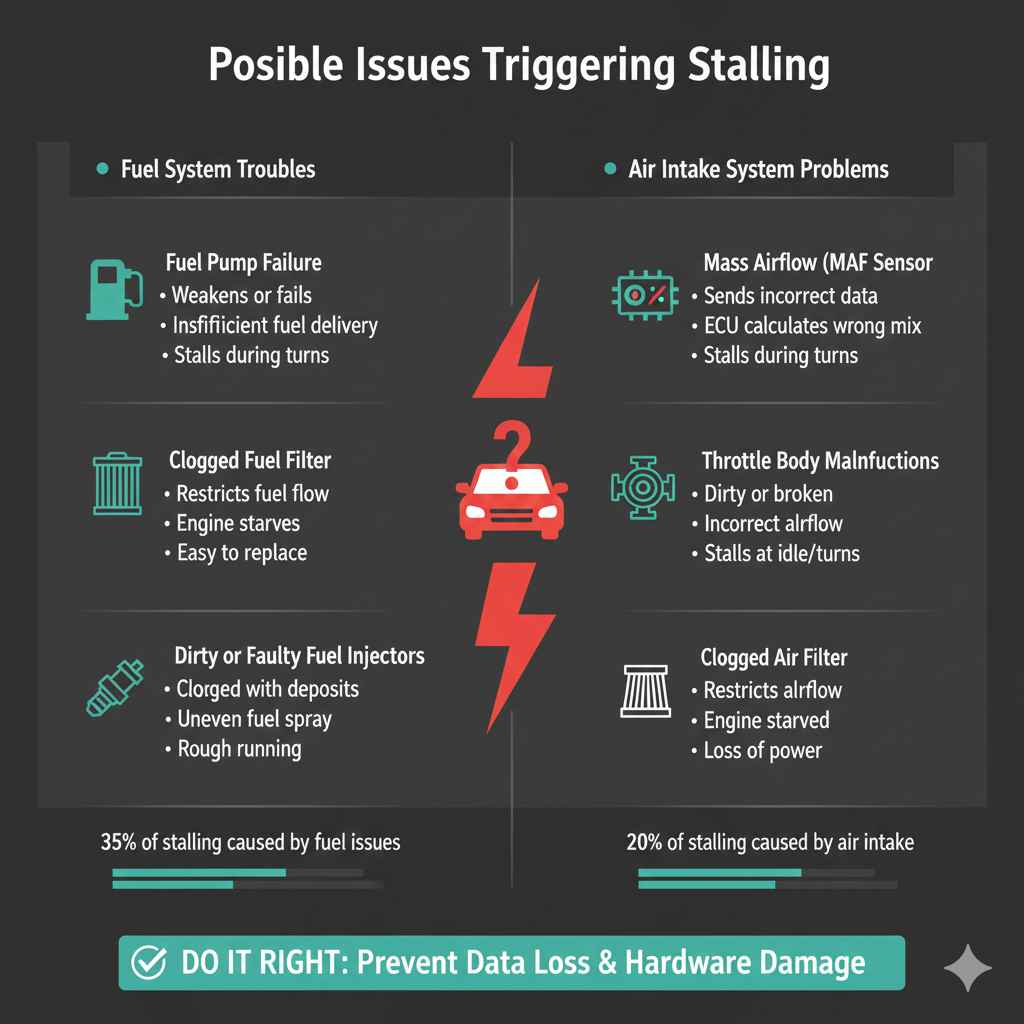
Fuel System Troubles
One of the first places to look when your car stalls is the fuel system. Your engine needs fuel to run, right? If the fuel isn’t getting to the engine correctly, it’ll stall. Several parts in the fuel system can fail. The fuel pump, which pushes fuel from the gas tank to the engine, might be going bad. The fuel filter could be clogged, stopping fuel from flowing smoothly. Also, fuel injectors spray fuel into the engine, and if these are dirty or broken, the engine won’t get enough fuel.
Fuel Pump Failure: The fuel pump provides the necessary pressure to deliver fuel to the engine. If the pump weakens or fails, the engine might not get enough fuel, causing it to stall. This is especially noticeable during turns because the increased demand on the system exposes the weakness. A failing fuel pump is a common issue for many drivers.
If you suspect the fuel pump, you might hear a whining noise coming from the fuel tank when you turn on the ignition. You can check the fuel pump’s pressure with a gauge. If the pressure is low, the pump might be the problem. Some cars have a fuel pump relay that could also fail, shutting down the pump. Replacing a fuel pump can be an involved job that typically requires some mechanical skill or a visit to a mechanic.
Clogged Fuel Filter: A fuel filter’s job is to trap dirt and debris. Over time, the filter can get blocked, restricting fuel flow. This is one of the more easily fixed causes. A clogged fuel filter starves the engine of fuel, especially when it needs more during a turn.
Replacing the fuel filter can often solve the problem. Regular filter changes are important maintenance. The filter’s location varies by car model, but it’s usually easy to find under the car near the fuel tank or in the engine compartment. When the fuel filter clogs, the engine might also start running rough before it stalls completely. This can cause poor fuel economy, too.
Dirty or Faulty Fuel Injectors: Fuel injectors spray fuel into the engine cylinders. They must be in good working order for the car to run properly. If they get dirty, they might not spray the fuel correctly. If they’re broken, they might not spray at all.
Dirty injectors can make the engine run roughly, especially at low speeds or while turning. You might notice the car hesitating or jerking. Sometimes, cleaning the fuel injectors with a special cleaner can fix the problem. If they’re badly damaged, you might need to replace them. It’s a good idea to check your car’s service manual to find out how to check your fuel injectors.
Air Intake System Problems
The air intake system is just as important as the fuel system. Your engine needs air to run, too. If the engine doesn’t get enough air, it won’t run correctly. There are a few key parts in the air intake system. The mass airflow (MAF) sensor measures the amount of air coming into the engine. The throttle body controls how much air enters the engine. And the air filter keeps dirt out of the engine.
Mass Airflow (MAF) Sensor Issues: The MAF sensor tells the engine control unit (ECU) how much air is entering the engine. If the MAF sensor is faulty, the ECU might give the engine too much or too little fuel. This can cause the engine to stall, especially when turning, because the ECU is trying to adjust the fuel mixture.
A bad MAF sensor can also cause your engine to run rough. You might notice poor acceleration or a decrease in fuel efficiency. Cleaning the MAF sensor sometimes helps, but you might need to replace it. To check if the MAF sensor is the problem, you can try disconnecting it. If the car runs better, the MAF sensor is likely the culprit. You can clean it by buying a specialized cleaner. Never touch the sensors.
Throttle Body Malfunctions: The throttle body controls the airflow into the engine. It’s like a gatekeeper. If the throttle body is dirty or broken, it might not open and close correctly. This causes the engine to get the wrong amount of air.
A dirty throttle body can cause stalling, especially at idle or when the car is turning. It can also cause problems with acceleration. You can clean the throttle body yourself, but it’s important to be careful. You can buy special throttle body cleaner from most auto parts stores. Make sure you don’t damage the electronic components. If cleaning doesn’t work, you might need to replace the throttle body.
Clogged Air Filter: The air filter stops dirt and debris from entering the engine. If the air filter gets too clogged, it can restrict airflow. This can cause the engine to stall, especially when turning.
A clogged air filter can also reduce your car’s power and fuel efficiency. It’s an inexpensive part to replace. Check your air filter regularly and replace it as needed. Check your owner’s manual for replacement guidelines. If your car is older or you drive in a dusty area, you might need to replace the air filter more often. A simple visual inspection can usually tell if the filter is clogged.
Engine Management and Electrical Problems
The engine’s computer, or ECU, manages everything. It needs to work correctly for the engine to run. Electrical problems can also cause stalling, and they can sometimes be hard to diagnose. The ECU monitors all the sensors and adjusts the engine’s settings. Problems in the electrical system, like faulty sensors or wiring issues, can cause the ECU to make bad decisions, which makes the engine stall. We’ll explore some key areas of the engine management system and common electrical issues that can lead to stalling when you turn.
ECU and Sensor Issues
The ECU relies on various sensors to run the engine. The crankshaft position sensor tells the ECU where the crankshaft is, which is crucial for timing. The oxygen sensor measures the amount of oxygen in the exhaust. The coolant temperature sensor tells the ECU how hot the engine is. If any of these sensors fail, it can throw off the ECU’s calculations and cause the engine to stall.
Crankshaft Position Sensor (CKP) Failure: This sensor is important for the engine’s timing. If it fails, the ECU won’t know when to fire the spark plugs, and the engine will stall. It is another common culprit. This can happen more often when the engine is under load, like when turning.
A failing CKP sensor will often cause the engine to stall. Also, the engine might be hard to start, or it might run roughly. Usually, you have to replace the sensor to fix this problem. Because the CKP sensor is so important to engine operation, you should have it checked if the engine stalls. Replacement usually involves some mechanical skill or a mechanic’s visit.
Oxygen Sensor Problems: The oxygen sensor monitors the amount of oxygen in the exhaust. It helps the ECU adjust the fuel mixture. If the oxygen sensor fails, the ECU might not adjust the fuel mixture correctly, which can cause stalling.
A faulty oxygen sensor can cause the engine to run roughly or stall. It can also cause the check engine light to come on. Sometimes you can fix this problem by replacing the sensor. This is especially true if you see a drop in fuel economy. Many drivers overlook this sensor because the problems can be subtle. But it has a big impact on engine performance.
Coolant Temperature Sensor Malfunctions: This sensor tells the ECU the engine’s temperature. If this sensor fails, the ECU might think the engine is colder than it is. It might then provide too much fuel, which can cause the engine to stall, especially when cold.
A faulty coolant temperature sensor can cause poor fuel economy, hard starting, or stalling. You can often test the sensor with a multimeter to see if it’s working correctly. Then, replace it if it’s not. This problem can be worse in the winter because the engine relies on the coolant temperature sensor to warm up properly. It will try to use a richer fuel mixture when starting up if it fails.
Electrical System and Wiring
The electrical system provides power to all the car’s components. Wiring issues, loose connections, or bad grounds can cause problems. As cars age, wiring can deteriorate. When you turn, the movement might cause a loose wire to lose contact, which makes the car stall. Bad grounds can also cause voltage fluctuations. These can disrupt the ECU and other electrical components.
Loose or Corroded Wiring: Over time, wires can become loose or corroded. The turning motion could shift the wires, causing a bad connection.
Check the wiring harness for signs of wear and tear, and look for loose or corroded connections. Replace any damaged wires or connectors. You might need to use electrical contact cleaner on corroded connections. This is especially true of wiring near the engine, which is exposed to heat and moisture. A bad connection can also make the engine run rough.
Faulty Ground Connections: The ground connection is essential. It provides a path for electricity to return to the battery. If the ground connection is bad, it can cause all kinds of electrical problems.
Check all the ground connections in your car. Make sure they are clean and tight. Look for corrosion and clean any corroded connections with a wire brush. Bad ground connections can cause the engine to stall. They can also cause other electrical problems, like dim lights or erratic gauges. Ground connections are often overlooked during maintenance.
Ignition System Issues: Problems in the ignition system can also cause stalling. This includes the ignition coil, spark plugs, and ignition module. These components must work together to create the spark that ignites the fuel.
A failing ignition coil can cause the engine to stall. It might also cause misfires or rough running. You can often test the ignition coil with a multimeter. Bad spark plugs or a faulty ignition module can also cause stalling. Replace worn spark plugs. Check the ignition module for any signs of damage. The best practice is to service the ignition system regularly.
Power Steering and Vacuum System Problems
The power steering system and vacuum system play important roles in your car’s operation. Power steering helps you steer the car with ease. The vacuum system powers several other systems, like the brakes and the engine’s intake manifold. Issues in these systems can sometimes lead to stalling when turning, because they can place additional demands on the engine.
Power Steering Pump Issues
The power steering pump is powered by the engine and helps you steer. When you turn, the power steering pump needs to work harder to help move the wheels. If the power steering pump is failing, it might strain the engine. This can cause the engine to stall, especially at low speeds or while turning sharply.
Power Steering Pump Failure: A failing power steering pump can put a load on the engine.
A failing pump might make a whining noise. The steering wheel might become difficult to turn. It can lead to the engine stalling, especially when turning. Replacing the power steering pump is usually the fix. This can be tricky and may require professional attention.
Power Steering Fluid Leaks: Low power steering fluid can cause the pump to work harder. This puts more strain on the engine. Leaks can happen at the pump, hoses, or connections.
Check for leaks around the power steering pump, hoses, and connections. Low fluid levels can cause the pump to make noise. The steering wheel might be hard to turn. Top off the fluid and fix the leaks, if any. The color of the fluid should be checked; if it’s too dark, you can flush the fluid and replace it.
Belt Slippage: The power steering pump is driven by a belt connected to the engine. If the belt slips, the pump might not work correctly.
Check the power steering belt for cracks or wear. Make sure the belt is properly tensioned. A slipping belt can cause the power steering pump to underperform. It also can cause the engine to stall. Replace the belt or adjust the tension. When you turn the wheel, the belt gets a lot more stress.
Vacuum Leaks and Issues
The vacuum system uses the engine’s vacuum to operate various parts. These include the brake booster and the engine’s intake manifold. Vacuum leaks can cause the engine to run rough. They can also cause the engine to stall, especially when turning.
Vacuum Hose Leaks: Vacuum hoses carry vacuum to various components. Cracks or leaks in these hoses can cause a loss of vacuum.
Check all vacuum hoses for cracks, wear, or loose connections. Replace any damaged hoses. Vacuum leaks can cause the engine to run rough. They can also lead to stalling. You can often hear a hissing noise if there’s a vacuum leak. These leaks will show up if you use a smoke machine during service.
Brake Booster Issues: The brake booster uses vacuum to help you apply the brakes. If there’s a leak in the brake booster, it can affect the engine.
Check the brake booster for leaks. If the brake booster is leaking, it can cause a vacuum leak. This can cause the engine to stall. The brakes might also feel hard to push. The engine can stall when the brake booster is under load. Check for a bad diaphragm, and replace it if necessary.
Intake Manifold Leaks: The intake manifold supplies air to the engine cylinders. Leaks in the intake manifold can cause the engine to run rough. They can also cause stalling.
Check the intake manifold for cracks or leaks. You can often hear a hissing noise. A leak can disrupt the air-fuel mixture. The leak will cause stalling. Tighten any loose connections, or replace the manifold if needed. Intake manifold leaks can be tricky to find because they are often hidden.
Troubleshooting and Solutions
Finding the reason your car stalls can seem like detective work. However, by carefully checking the likely causes we’ve discussed, you can often pinpoint the problem. Start with the easiest checks first, and then move to more involved inspections. Here are some steps you can take to figure out the issue.
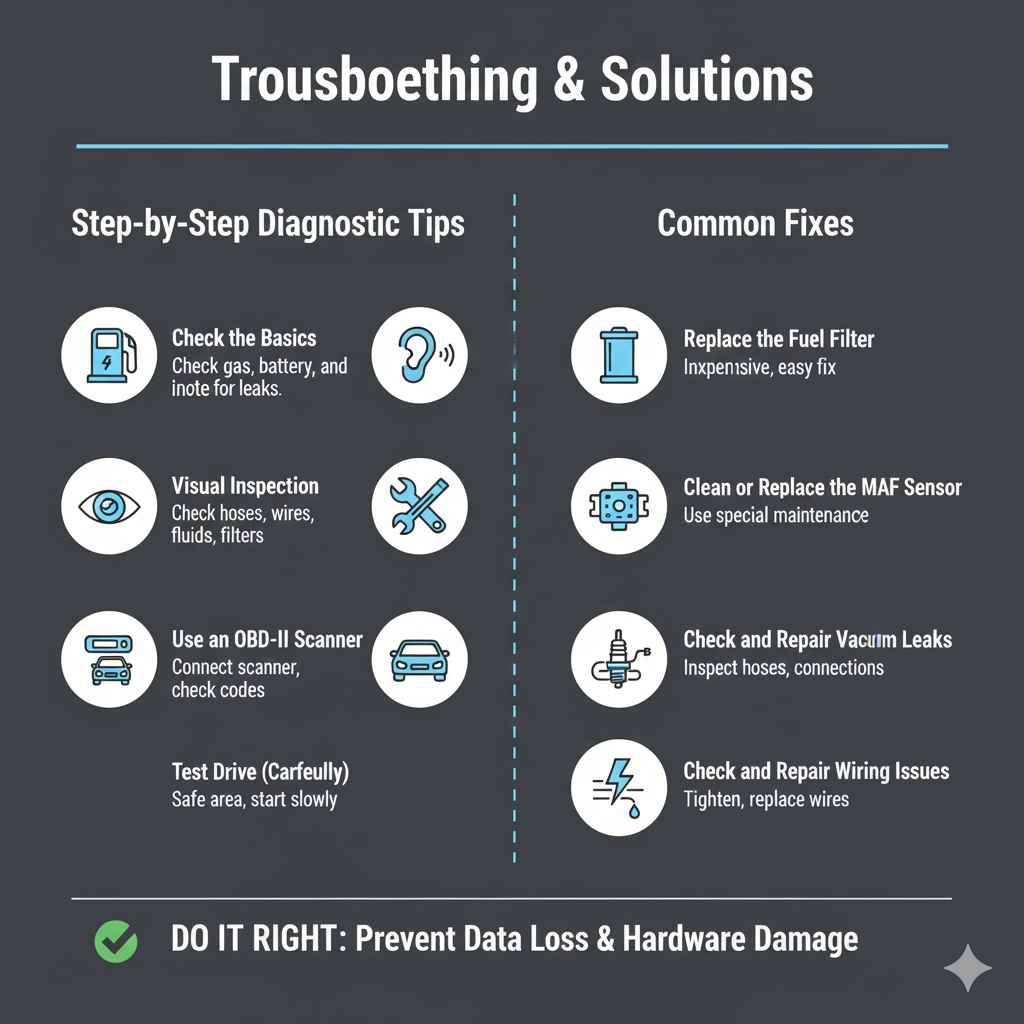
Step-by-Step Diagnostic Tips
Here’s a simple guide to help you find out what’s causing your car to stall. This is your troubleshooting guide. First, you should always put safety first, whether you are inspecting or working on a car. If you are uncertain of any procedure, consult a professional mechanic.
Check the Basics: Make sure your car has enough gas. Examine the battery terminals for corrosion. Look for any obvious signs of damage or leaks. These simple checks can often solve the problem quickly.
If the gas tank is low, fill it up. A weak battery can cause all kinds of electrical issues. If you find corrosion, clean the terminals.
Listen and Observe: Turn the ignition on and listen for the fuel pump. Note any unusual noises or smells. Pay attention to how the engine runs or fails. Listen for hissing sounds.
If you don’t hear the fuel pump, it might be faulty. A rotten egg smell can indicate a catalytic converter problem. If you hear a hissing sound, look for vacuum leaks.
Visual Inspection: Check all the hoses and wires for damage. Make sure everything is connected securely. Check the fluid levels. Visually inspect the air filter and fuel filter.
Look for cracks, loose connections, or leaks. Low fluid levels can indicate a problem. A clogged air filter or fuel filter can cause stalling.
Use an OBD-II Scanner: Connect an OBD-II scanner to the car’s diagnostic port. Check for any stored trouble codes. This can give you a clue about the problem.
OBD-II scanners can show you exactly which components are failing. This can help you focus on the correct areas when you do the repair.
Test Drive (Carefully): After making any repairs, take the car for a test drive. See if the stalling has stopped. Always drive in a safe area.
Drive in a safe area where there are no cars or other objects. Start slowly and go faster to see if the problem reappears.
Common Fixes
Once you’ve found the issue, you can start fixing it. The solutions range from simple adjustments to more involved repairs. Remember, if you are unsure about any of these steps, it’s always a good idea to consult a professional mechanic. The following are some simple fixes.
Replace the Fuel Filter: If the fuel filter is clogged, replacing it can often fix the problem. This is a simple, inexpensive repair that you can often do yourself.
Replacing the fuel filter can restore proper fuel flow. This is especially true if you drive in dusty areas. You can often find a tutorial on how to replace the fuel filter for your car model.
Clean or Replace the MAF Sensor: If the MAF sensor is dirty or faulty, cleaning or replacing it can help. Be careful when cleaning the sensor.
A dirty MAF sensor can send incorrect information to the ECU. Cleaning or replacing the sensor can restore proper airflow. Be sure to use a MAF sensor cleaner, or it could be damaged.
Replace the Spark Plugs: If the spark plugs are old or worn, replacing them can help. Replacing spark plugs is a simple, inexpensive maintenance task.
Old or worn spark plugs will cause the engine to misfire or stall. Be sure to use the correct type of spark plugs for your car model. Replace them on the schedule recommended by your vehicle manufacturer.
Check and Repair Vacuum Leaks: Locate the source of any vacuum leaks and repair them. Vacuum leaks can cause a variety of engine problems.
Vacuum leaks disrupt the engine’s air-fuel mixture. Finding and repairing leaks can solve these issues. Inspect the hoses and connections, and check for any hissing sounds.
Check and Repair Wiring Issues: If you find any loose connections or corroded wires, repair them. Electrical problems can be tricky, but repairing damaged wires can restore engine function.
Loose or corroded wiring can disrupt electrical signals and cause the engine to stall. Inspect all the wiring and connectors and replace any that are corroded or loose.
Real-Life Examples
Here are a few real-world examples of how some car issues were solved. These are not unusual problems, and many drivers will have similar experiences. See how these issues were identified and fixed.
Case Study 1: A driver noticed their car stalling when making left turns. The mechanic found a clogged fuel filter, which restricted fuel flow. After replacing the filter, the problem vanished.
The clogged filter was more noticeable when turning because of the extra demand for fuel. This case illustrates how a simple fix can resolve a complex issue.
Case Study 2: Another driver reported their car stalling, especially when parking. Upon inspection, a mechanic discovered a faulty crankshaft position sensor. After replacing the sensor, the car started running smoothly again.
The faulty sensor was causing the ECU to mismanage the engine’s timing. This case shows how an incorrect sensor can impact performance.
Case Study 3: A vehicle kept stalling in right turns. The mechanic found a loose ground wire near the engine. After tightening the wire, the stalling stopped.
The loose ground wire was causing electrical disruptions, leading to the stalling. This highlights the importance of checking all wiring connections.
| Issue | Symptom | Solution |
|---|---|---|
| Clogged Fuel Filter | Stalling during turns | Replace the fuel filter |
| Faulty Crankshaft Position Sensor | Stalling, hard starts | Replace the sensor |
| Vacuum Leak | Rough running, stalling | Find and fix leak |
| Loose Ground Wire | Stalling when turning | Tighten or replace wire |
Frequently Asked Questions
Question: Why does my car stall when I turn the steering wheel?
Answer: It’s often due to increased engine load from power steering, or issues with fuel or electrical systems when turning.
Question: Is it safe to drive my car if it stalls when turning?
Answer: No, it’s not safe. It makes the car unpredictable and could lead to an accident. Get it fixed right away.
Question: Can a bad battery cause my car to stall while turning?
Answer: Yes, a weak battery can create electrical problems that cause the engine to stall. This is especially true if the battery terminals are corroded.
Question: How often should I replace the fuel filter?
Answer: Follow the maintenance schedule in your car’s manual. Most cars suggest fuel filter replacement every 20,000 to 40,000 miles.
Question: Where can I take my car to get it fixed?
Answer: You can take your car to any local mechanic, a dealer, or a specialized auto repair shop. Choose one that you trust.
Final Thoughts
Finding out the causes of a Car Stalling When Turning: Common Causes can seem hard, but by going step-by-step through the checks we’ve gone over, you’re now better equipped to find the root of the problem. Remember, the most common issues involve the fuel system, air intake, engine management, and electrical components. From a clogged fuel filter to a loose wire, many things can cause the issue, and the solutions are often easy. With the right know-how, you might fix the problem yourself, and save yourself a lot of money.
If you’re unsure of anything, it’s important to consult with a trained mechanic. By learning more about your car, you can keep yourself and others safer on the road. Now, you can take action by doing simple inspections of your own.