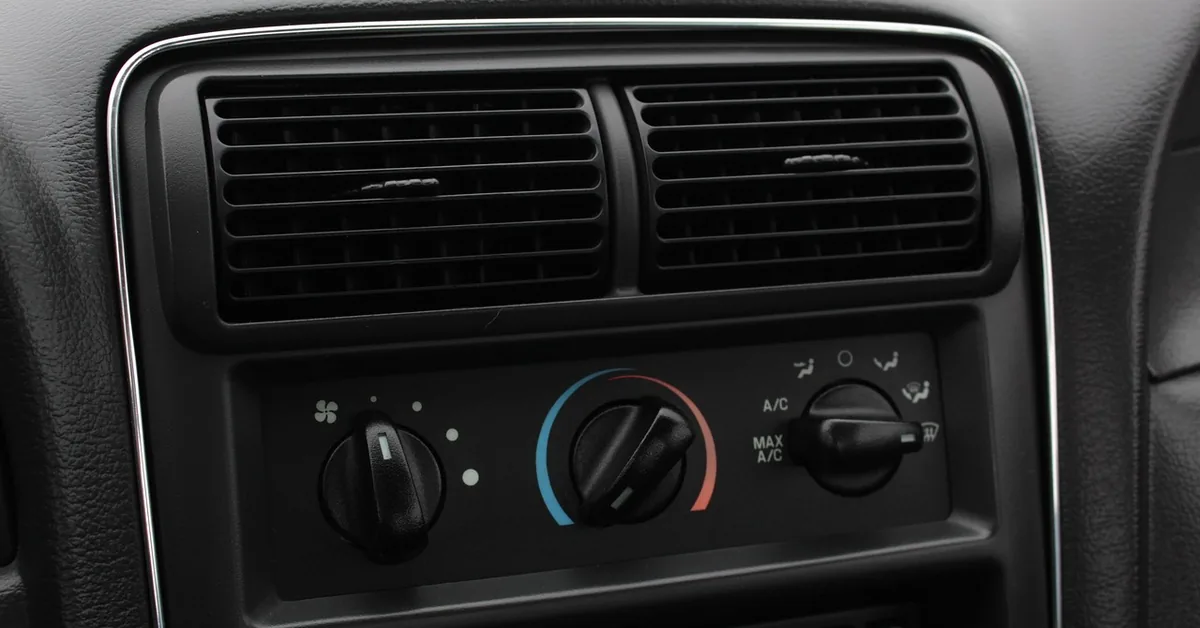
Hot Air From Some Car Vents? Blend Door vs. Mode Door Fix
Hot air from only some vents — not every vent, not all the time — almost always points to a stuck blend door or mode door actuator, not low refrigerant or a failed compressor. A blend door mixes hot and cold air to hit your set temperature; a mode door routes that air to the dash, floor, or defrost vents, and either motor can jam in the wrong position, sometimes with a clicking noise behind the dashboard. This guide covers how to tell the two apart, what replacement actually costs ($150–$599), and a free battery-disconnect reset worth trying first.
Quick Answer
If every vent blows hot air no matter the setting, the blend door is stuck in the heat position — a compressor or refrigerant problem is more likely (see our full AC blowing hot air guide). But if the temperature is right and only comes out the wrong vent, or one vent runs hot while another runs cold, that’s the mode door actuator, not the blend door — try a 5-minute battery-disconnect reset before replacing anything.
Understanding Your Car’s AC System
Your car’s AC works like a small refrigerator: a refrigerant fluid circulates through a closed loop, absorbing heat from the cabin and releasing it outside. Four main components make this happen — the compressor, condenser, expansion valve, and evaporator. But getting that cooled air to the right vent, at the right temperature, also depends on two small electric motors most drivers have never heard of: the blend door actuator and the mode door actuator.
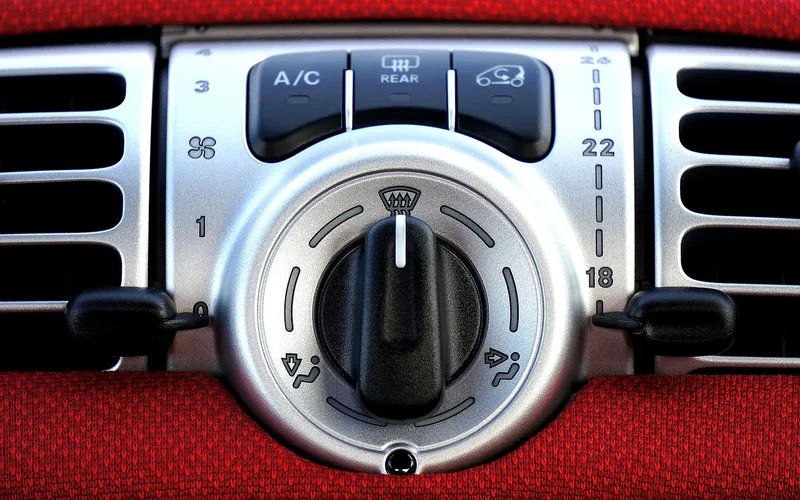
Blend Door vs. Mode Door: Which One Is Actually Causing Your Hot Air?
These two parts get confused constantly because both fail with a similar symptom (unwanted hot air) and both live behind the dashboard, but they do completely different jobs. The blend door is a flap that mixes air from the heater core (hot) with air from the evaporator (cold) to hit your set temperature — if it jams, the whole cabin gets stuck at one temperature. The mode door is a separate flap that decides which outlet the air exits through — dash vents, floor vents, or the defrost vents — if it jams, the right temperature comes out, just from the wrong place.
| Symptom | Blend Door Problem | Mode Door Problem |
|---|---|---|
| Every vent blows the same temperature | Yes — stuck in heat or cold position | No — temperature isn’t the issue |
| Air comes from the wrong vent (e.g., defrost instead of dash) | No | Yes — classic sign |
| One vent hot, another vent cold at the same time | Possible on dual-zone systems | Possible if doors are split per side |
| Clicking or grinding behind the dashboard on startup | Common | Common |
| Typical replacement cost | $150–$599 | $150–$450 |
If every vent in your car blows hot air with no cool air at all, no matter the setting, that’s a different problem — see our full guide on why your car AC might be blowing hot air for compressor and refrigerant-focused causes. This page focuses specifically on cases where only some vents, or only certain fan modes, are affected. If your air gets cool but never truly cold, that’s usually a weaker-cooling issue instead — see Car AC Blowing Cool But Not Cold.
Best Actuator Diagnostic Pick

VDIAGTOOL D200 Bidirectional OBD2 Scanner
A bidirectional scanner lets you command the blend or mode door actuator to move from the tool itself — the fastest way to tell a stuck actuator from a simple wiring fault.
- Best for: confirming an actuator is truly dead before you remove any dashboard trim
- Why we picked it: bidirectional control triggers actuator movement on command so you can listen and watch for a response
- Main drawback: bidirectional actuator tests aren’t supported on every make and model — check compatibility first
Compare more actuator diagnosis and access tools
 Option 1 AstroAI Digital Multimeter
|
 Option 2 GOOACC 5PCS Auto Trim Removal Tool Kit
|
 Option 3 Dorman 604-214 HVAC Blend Door Actuator
|
As an Amazon Associate we earn from qualifying purchases.
Common Reasons for Hot Air from Vents
There are several reasons why your car might be blowing hot air. Let’s go through the most frequent ones, starting with the easiest to check.
1. Low Refrigerant Levels
This is probably the most common reason for an AC system that isn’t cooling effectively — but it affects every vent equally, not just one. Refrigerant is the “lifeblood” of your AC. Over time, small leaks can develop in the hoses, seals, or other parts of the AC system, allowing the refrigerant to escape. When the level gets too low, the system can’t effectively cool the air.
How to tell: You might notice that the air is becoming less cold over time, or it’s only slightly cool across every vent. You may also hear a faint hissing sound if there’s a significant leak.
The Fix: A DIY AC recharge kit can top off refrigerant, but it won’t fix a leak — it’s a temporary patch. For the full walkthrough on diagnosing this specific pattern, see our guide on why your car AC might be blowing hot air across the board.
2. Faulty Blend Door Actuator
This is a more technical issue, but it’s a very common cause of hot air blowing when you want cool, or vice-versa. Your car has a “blend door” inside the dashboard. This door is controlled by an electric motor called an actuator. Its job is to mix hot air from the heater core with cold air from the evaporator to achieve your desired temperature. If the blend door actuator fails or gets stuck in the “heat” position, you’ll only get hot air, no matter what you set the temperature to — from every vent.
How to tell: If you can hear clicking or grinding noises coming from behind the dashboard when you change the temperature setting, a gear inside the actuator motor is likely stripped or slipping.
3. Issues with the AC Compressor
The AC compressor is like the heart of your AC system. It pressurizes the refrigerant, allowing it to circulate and do its cooling job. If the compressor isn’t engaging or is failing, your AC won’t blow cold air from any vent.
How to tell: You might not hear the usual “clutch” engagement sound when you turn on the AC. The compressor pulley might not be spinning with the belt. You can test the compressor clutch yourself — see our step-by-step guide on how to test the AC compressor in your car.
The Fix: Check the serpentine belt first — a loose or broken belt means the compressor won’t turn at all, regardless of electrical health.
4. Clogged Condenser or Evaporator
The AC condenser (usually located at the front of the car, near the radiator) and the evaporator (inside the dashboard) can become clogged with debris over time. The condenser dissipates heat from the refrigerant, and if it’s blocked by leaves, dirt, or bugs, it can’t do its job effectively. Similarly, a clogged evaporator can restrict airflow and cooling.
How to tell: The condenser might look visibly dirty or blocked. If the airflow from your vents is weak overall, even when the AC is on, it could be a sign of a blockage — check our guide if your AC gets Car AC Blowing Cool But Not Cold for this weaker-cooling pattern specifically.
The Fix: Gently spray the condenser with a hose from the engine bay side (never the radiator fins directly) to clear debris.
5. Electrical Problems
The AC system relies on several electrical components, including fuses, relays, and sensors. A blown fuse or a faulty relay can prevent the compressor from engaging, or a bad sensor might be giving incorrect readings to the car’s computer — including the mode door and blend door actuators themselves, which run on their own dedicated circuits.
How to tell: Sometimes, the AC might work intermittently. Other times, nothing happens at all when you try to turn it on.
The Fix: Consult your car’s owner’s manual to locate the fuse box and identify the fuses and relays related to the AC system. Visually inspect them or test them with a multimeter before assuming the actuator motor itself is dead.
6. Free Fix First: Resetting a Stuck Actuator
Before you buy a replacement part, it’s worth trying a free reset. Blend and mode door actuators are often controlled by a small computer module that can lose track of the door’s actual position — a “recalibration” error rather than a truly dead motor. Disconnect the negative battery terminal for about 5 minutes, then reconnect it and start the car. On many vehicles, the HVAC control module will recalibrate the actuators’ positions on the next startup, and a clicking noise from behind the dash can stop entirely. This doesn’t fix a physically broken gear, but it costs nothing and takes five minutes, so it’s worth trying before any parts purchase.
Troubleshooting Steps: What to Check First
Don’t worry if all this sounds a bit overwhelming. We can break it down into manageable steps. Here’s a practical approach to figuring out why you’re getting hot air:
- Listen when you turn on the AC: Do you hear a distinct “click” or the engine RPM change slightly? This usually means the AC compressor is trying to engage. If you hear nothing, it could be electrical, a clutch issue, or a very low refrigerant charge.
- Check the temperature setting: This might sound obvious, but ensure your climate control is set to “AC” or the snowflake symbol, and the temperature dial is set to the coldest position.
- Cycle through the vent modes: Switch between dash, floor, and defrost while listening for clicking behind the dashboard — a repeating click on every mode change points straight to a stripped mode door actuator gear.
- Check which vents are affected: Every vent hot points to the blend door or the AC system itself; only one vent or mode affected points to the mode door.
DIY vs. Professional Repair
Deciding whether to tackle a repair yourself or take it to a professional depends on your comfort level, the complexity of the issue, and the tools you have available. Here’s a quick breakdown:

DIY-Friendly Fixes:
- Refrigerant recharge (with a kit and careful adherence to instructions)
- Cleaning the condenser
- Checking and replacing AC fuses and relays
- Visual inspection for obvious component failures (like a loose belt)
- The battery-disconnect actuator reset above
When to Call a Professional:
- Suspected AC compressor failure
- Suspected refrigerant leaks that require diagnosis and repair
- Blend or mode door actuator replacement if it’s difficult to access
- Any electrical diagnosis beyond simple fuse checks
- When you’re unsure of the exact problem
Many experts, like those at ASE (National Institute for Automotive Service Excellence), recommend professional inspection for complex AC issues to ensure safety and proper repair.
Cost of Repairs: What to Expect
The cost of fixing hot air from your car vents can vary widely depending on which part is actually failing. Here’s a general idea:
| Problem Area | Estimated Cost (Parts & Labor) | DIY Difficulty |
|---|---|---|
| Refrigerant Recharge (no leak fix) | $75 – $200 | Easy (with kit) |
| Mode Door Actuator Replacement | $150 – $450 | Medium |
| Blend Door Actuator Replacement | $150 – $599 | Medium (accessibility varies) |
| AC Compressor Replacement | $500 – $1,500+ | Difficult / Not Recommended |
| Condenser Replacement | $300 – $800 | Medium |
| Fuse/Relay Replacement | $10 – $50 (parts) | Easy |
These are just estimates — prices differ based on your car’s make and model, your location, and the specific shop you visit. Some actuators require removing airbags and partially dismantling the dashboard, which increases labor costs significantly, especially on luxury models where a blend door actuator alone can run over $900.
Preventative Maintenance for Your AC System
Keeping your car’s AC system in good shape can prevent future headaches and costly repairs. Here are a few tips:
- Run your AC regularly: Even in cooler months, run your AC for about 10-15 minutes once a month. This circulates the refrigerant and keeps seals lubricated, preventing leaks.
- Keep the cabin air filter clean: A clogged cabin air filter restricts airflow from your vents and can strain your AC system. Check and replace it according to your car’s maintenance schedule, usually every 15,000-30,000 miles. See our guide on whether your car has a cabin air filter.
- Listen for unusual noises: Pay attention to any new clicking or grinding sounds your AC system makes — catching a slipping actuator gear early is far cheaper than waiting for it to fail completely.
Frequently Asked Questions (FAQ)
Why is my car blowing hot air only on really hot days?
On extremely hot days, the AC system works harder. If the system is low on refrigerant or has a component that’s starting to fail, it might struggle to keep up, leading to warm air across every vent. It’s often a sign your AC needs a professional check-up.
Can I just add more refrigerant if my AC isn’t cold?
You can use a DIY recharge kit if you suspect low refrigerant, but follow instructions precisely and don’t overfill. Adding refrigerant without fixing a leak is a temporary fix, and the problem will return. Using the wrong type of refrigerant can also damage your system.
I hear a rattling or clicking noise from my dashboard when I turn on the AC. What could that be?
A rattling or clicking sound from behind the dashboard almost always points to a blend door or mode door actuator trying and failing to move — a stripped gear inside the motor is the most common cause. It’s worth investigating before the actuator fails completely.
Why is hot air coming out of only one vent, or one side of the dashboard, while another vent stays cool?
This is the signature symptom of a mode door actuator problem, not a blend door or compressor issue. The mode door routes air to specific outlets, and if it’s stuck or only partially working, air can exit the wrong vent while another vent keeps working normally. A dual-zone climate system can also show this pattern if one side’s blend door has failed independently of the other.
Can I reset a stuck blend or mode door actuator myself before paying for a replacement?
Yes, it’s worth trying first. Disconnect your car’s negative battery terminal for about 5 minutes, then reconnect it and start the engine. This forces the HVAC control module to recalibrate the actuators’ positions on many vehicles, which can resolve a confused-but-not-broken actuator and stop clicking noises. It won’t fix a physically stripped gear, but it costs nothing to try.
My car AC blows cold sometimes, but then turns hot. What’s wrong?
This often points to an electrical issue with the AC compressor clutch, a failing compressor, or a pressure switch problem rather than the blend or mode door. For this specific cold-then-warm cycling pattern, see our dedicated guide on why your car AC blows cold then warm.
My car’s AC used to be super cold, but now it barely cools. What changed?
This gradual decrease in cooling performance across every vent is a classic sign of low refrigerant. As seals age or minor leaks develop, refrigerant slowly escapes, reducing the system’s efficiency over time. It’s time for a recharge and inspection for leaks.
Conclusion
Hot air from only some vents, or only certain modes, is almost always a stuck blend door or mode door actuator — not the same problem as an AC that never gets cold at all. Try the free battery-disconnect reset first, then use a bidirectional scanner or multimeter to confirm which actuator has actually failed before paying $150–$599 for a replacement. If every vent blows hot with no cool air at all, check our guide on why your car AC might be blowing hot air instead, and if your AC just runs weak or lukewarm rather than truly hot, see Car AC Blowing Cool But Not Cold.
Products related to this article
Sponsored / affiliate links. As an Amazon Associate I earn from qualifying purchases. I may earn additional commission from eligible campaigns.
 Autoexact AC Compressor for Car, Air Conditioner Compressor w/Clutch for Chevy Silverado 1500/GMC Sierra 1500 2014-2019, Silverado 2500 2014-2017, for 2015-2020 Chevy Suburban/Tahoe/GMC Yukon XL
 ACARLUOY Portable Air Compressor for Car Tires - 3X Faster Inflation, Fit for Kia sorento (2011-2016),6000mAh Battery, LCD Screen, LED Light,Auto Shutoff