Car Swaying Side to Side: Finding the Answers
Car swaying side to side usually points to tire, wheel, suspension, or alignment trouble. If the motion gets worse with speed, braking, or bumps, treat it as a fault that needs inspection now. Ignoring it can wear tires faster, cut control, and turn a small repair into a safety issue. This guide shows how to narrow the cause by when it happens, where you feel it, and what changed right before it started.
What side-to-side sway actually means


A sway feels like the vehicle is moving left and right in repeated motions, not as a steady pull. You may feel it through the steering wheel, seat, floor, or body of the vehicle, and the location of that sensation helps separate tire and wheel issues from brakes, suspension, or driveline problems.
The first job is to separate sway from other motions. Steering-wheel shake points more toward the front tires or wheel balance. Brake pulsation points toward the brake system. A vibration that shows up mainly during acceleration points more toward axles, joints, or mounts than to alignment.
Why speed, braking, and acceleration matter
Speed, braking, and throttle input are the fastest clues you have. A wobble that grows with road speed often points to tire, wheel balance, bent rim, or wheel damage. A shake felt mainly through the steering wheel usually points toward the front end, while vibration through the seat or floor often comes from rear tires, wheels, or driveline parts.
Whole-car swaying may involve tire pressure, suspension wear, alignment, damaged components, or road conditions. The same symptom can point to very different faults. The trigger matters as much as the motion itself.
What a driver can note before a shop visit
- Note the speed range where the sway starts.
- Write down whether braking changes it.
- Check whether acceleration makes it worse.
- Look for a pull to one side on a straight road.
- Inspect tires for low pressure, bulges, cuts, and unusual wear.
- Check for a recent pothole hit, curb strike, or tire change.
Say your car tracks straight at 30 mph but begins a left-right wobble at 65 mph. That pattern leans toward tire or wheel balance rather than steering linkage. Suppose the same car only sways after braking from highway speed; the brake system moves higher on the list.
Car sway diagnostic matrix
This matrix helps you sort the most likely system by trigger, then pick the right first inspection. Use it as a triage tool, not a diagnosis.
| Symptom trigger | Likely system | Quickest driveway check | Stop-driving warning | Book first |
|---|---|---|---|---|
| Highway-only sway | Tires, wheel balance, bent rim, out-of-round wheel | Check tire pressure and look for bulges, cuts, or uneven wear | Stop if the sway grows quickly with speed or the steering feels unstable | Tire shop |
| Braking sway | Brake rotor issues or uneven brake contact | Feel whether the wheel shakes only when the brakes are applied | Stop if braking makes the vehicle dart, shake hard, or lose straight-line control | Brake inspection |
| Acceleration sway | Axles, joints, driveline parts, worn mounts | Note whether the sway appears only under throttle and eases off when coasting | Stop if the vibration is severe or changes suddenly after a fresh noise | Suspension diagnosis |
| Post-pothole sway | Bent rim, damaged tire, alignment shift, loose suspension mounting | Inspect the tire sidewall and wheel face for fresh damage | Stop if the tire is bulging, losing air, or the wheel feels loose | Alignment shop |
| Sway with tire noise | Tire wear, cupping, scalloping, belt damage, wheel bearing, wheel balance | Listen for humming, growling, or a rhythmic thump that rises with speed | Stop if the noise is loud, the tire shows a bulge, or the car begins to pull hard | Tire shop |
Could your tires be the cause?
Yes. Tire trouble is one of the most common matches for side-to-side sway, especially when the feeling grows with speed or the car starts wandering after a recent tire change. Underinflation can affect handling and let a tire flex more than intended, while uneven wear can make the car feel unstable.
Underinflation and uneven wear
Low tire pressure can soften the tire’s sidewall too much, which changes how the tire supports the car in a turn or lane change. Uneven wear can do the same thing by making one section of the tread carry more load than another. Either one can create a vague, loose feel.
Check all four tires when the car is cold if possible. A tire that is visibly low, worn on one edge, or worn in a different pattern than the others deserves attention before you look elsewhere.
Cupping, scalloping, and belt damage
Cupping or scalloping often creates a repeating vibration or thumping feel, and it can be paired with a sway that is worse at certain speeds. Internal belt damage can also make a tire behave unpredictably even if the tread still looks usable from a distance.
A tire with broken internal belts may appear slightly lumpy or have a section that looks deformed. That is not a tire to keep driving on for long.
Bulges, tread separation, and why they matter
A sidewall bulge is a major warning sign. Tread separation is more serious still, because part of the tire can begin to lift away from the carcass. Either one can turn a sway complaint into a tire failure.
Do not keep driving on a tire with a bulge, a flap of tread, or exposed cords. If the sway began after a pothole or curb strike and the tire now has a bubble, roadside help is the safer choice.
Is wheel balance or rim damage to blame?
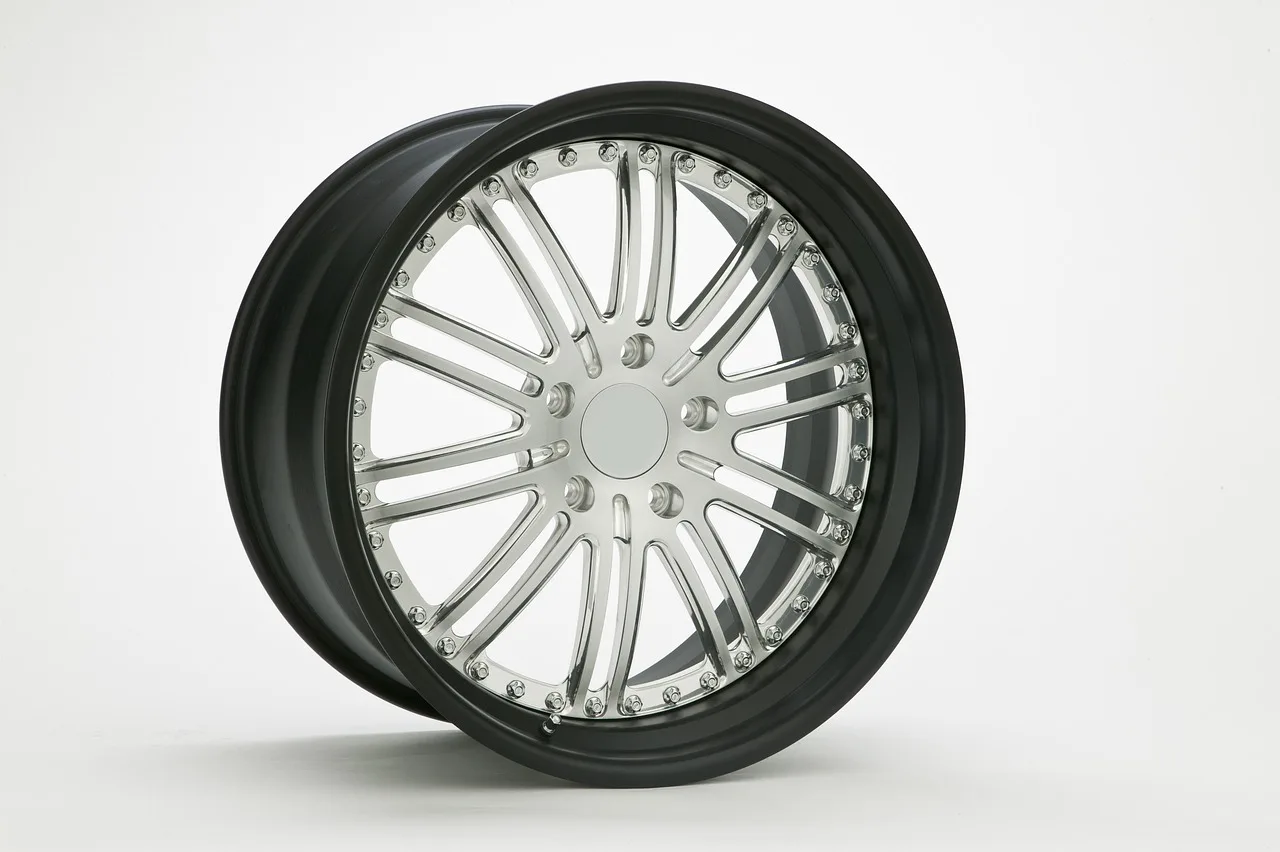
Often, yes. A wobble that builds with road speed can point to wheel balance, a bent rim, or an out-of-round wheel. Balance problems are common enough that they are often one of the first inspections a tire shop should perform when the symptom is speed-related.
Speed-related vibration versus true sway
True sway feels like the car is wandering side to side. A balance problem often feels more like a vibration that rises and falls with speed. The two can overlap, though, especially if the tire or wheel is damaged enough to throw the car off line.
If the steering wheel shakes more than the body of the vehicle, the front wheels are more likely involved. If the seat or floor vibrates more, the rear wheel set or driveline deserves closer attention.
Front or rear wheel imbalance
Front wheel imbalance often shows up in the steering wheel first. Rear wheel imbalance can feel like a seat or floor vibration, sometimes with a general rear-end shimmy. Either way, balancing is a reasonable first inspection step when the problem tracks closely with speed.
Balance alone will not fix every case. If the tire has a bent belt, the wheel is bent, or the tread is separating, the underlying part must be repaired or replaced.
Bent rims and out-of-round wheels after impact
A pothole or curb strike can bend a rim or knock a wheel out of round. That can create a wobble, a shake, or a constant low-speed thrum that gets worse as speed rises. Fresh impact damage also raises the chance of a slow leak or hidden tire damage.
Inspect the wheel lip for dents, flat spots, or fresh scuffs. If a wheel looks bent and the car started swaying right after the hit, a tire shop should inspect the wheel and tire first.
Could steering or suspension wear be involved?
Yes. Loose steering parts, worn joints, worn shocks or struts, and loose suspension mounting can all create a side-to-side feel. These problems often show up as play or looseness, a delayed response to steering input, or body movement that keeps going after a bump.
Loose steering parts and linkage play
Front-end linkage wear can create play in the steering wheel before the tires respond. That makes the car feel vague or darty, especially at higher speeds or on rough roads. The driver may notice the wheel needs small corrections just to stay centered.
If the steering wheel has unusual free play or the car feels loose even on smooth pavement, steering inspection should move up the list quickly.
Worn shocks, struts, and joints
A car that continues to bounce after a bump may have worn shocks or struts. Worn joints can let the wheel move in ways it should not, which can feel like sway, a shimmy, or a floaty front end.
These faults often show up after expansion joints, potholes, or rough pavement. The car may settle slowly instead of recovering in one motion.
Loose mounting points after road impact
Loose suspension mounting can follow a hard strike to the wheel or underbody. Once a bushing, mount, or control-arm connection shifts, the vehicle may pull, sway, or feel off-center even if the tire itself looks normal.
If the problem began right after an impact, do not assume it is only a tire issue. Suspension diagnosis is the safer first booking if the wheel and tire look intact but the car still feels loose.
When brakes or bearings change the feel
Brakes and wheel bearings can change the way a car feels, but they usually leave different clues. Brake rotor issues tend to appear during braking. Wheel bearings often announce themselves with noise during turns, a handling change, or side-to-side play.
Brake rotor issues and uneven contact
A wobble during braking points toward rotor issues or uneven brake contact. The steering wheel, pedal, or body may pulse in a way that appears only when the brakes are applied. That pattern is different from a sway that happens all the time at speed.
If braking makes the car tug or shake hard enough to upset lane position, stop driving and arrange a brake inspection. Brake faults can grow quickly.
Wheel bearing noise, play, and handling change
Wheel bearings often create a humming or growling noise that changes in turns. A worn bearing can also produce handling changes or side-to-side play when the wheel is checked. That play can make the car feel loose, especially on faster roads.
A bearing problem is not the most common cause of sway, but it should move higher on the list if a turning noise changes when you steer left versus right.
Why braking and cornering clues matter
Braking and cornering separate systems that look similar from the driver’s seat. If the car sways only while braking, think brakes first. If it changes while cornering or turning, think tires, alignment, or bearings. If it worsens under throttle, shift attention to driveline parts.
Alignment and driveline checks
Alignment problems can show up as a pull to one side, a crooked steering wheel, or a handling change after an impact. Driveline problems usually show up as vibration during acceleration, especially if the sway eases when you lift off the throttle.
Toe and camber clues
Toe and camber changes can make a vehicle pull to one side and feel nervous on the highway. If the car used to track straight and now wants constant correction, an alignment issue belongs on the list.
Alignment also matters after tire replacement, suspension work, or any impact that may have shifted a component. If the car feels off even though the tires are new, the alignment still needs to be checked.
Pulling after a pothole or curb strike
A pull after an impact often means more than alignment alone. The wheel may be bent, the tire may be damaged, or a suspension part may have shifted. A post-impact inspection should include the tires, wheels, and suspension mounting points.
Picture a front tire that hits a deep pothole and, afterward, the car starts pulling right and the steering wheel sits off-center. That combination makes a simple balance issue less likely and a bent or shifted component more likely.
Axles and joints under acceleration
Axles and joints can create vibration during acceleration that feels like sway or shake. If the symptom appears under throttle and fades when coasting, driveline parts deserve attention before the issue is blamed on alignment.
This is especially important when the vehicle feels fine at a steady speed but shakes as soon as power is applied. That pattern points away from a tire-only explanation.
What causes car to sway while driving
Common causes include tire, wheel balance, wheel damage, steering looseness, suspension wear, brake issues, alignment problems, and driveline faults. The right answer depends on when the sway happens, where you feel it, and whether speed, braking, or acceleration changes the symptom.
If the cause is unclear, book an inspection rather than guessing. A quick tire check can rule out obvious damage, but a recurring sway needs a system-based diagnosis.
Is it safe to drive if my car is swaying side to side?
Mild sway may be safe only if it stays stable and does not worsen with speed, braking, or bumps. Sudden, severe, or growing wobble is unsafe. Pull over if the steering feels loose, the car darts across the lane, or you see a bulge or fast air loss in a tire.
If the symptom appeared after a pothole, curb strike, or fresh tire work, treat it as urgent until a tire or suspension fault is ruled out. Roadside help is the right call when control feels compromised.
Frequently asked questions
What causes car to sway while driving: most side-to-side sway comes
Most side-to-side sway comes from tires, wheel balance, bent wheels, steering looseness, worn suspension parts, alignment problems, brakes, or driveline components. The exact cause depends on whether the symptom shows up at speed, during braking, after an impact, or only under acceleration.
Why does my car sway side to side at highway speed?
Highway-only sway can point to tire wear, underinflation, wheel imbalance, bent rims, or an out-of-round wheel. If the shake grows as speed rises, a tire shop is usually the best first stop because balancing and tire inspection come before more invasive work.
Is it safe to drive if my car is swaying side to side: mild sway that stays steady?
Mild sway that stays steady may let you reach a shop carefully, but sudden or severe sway is not safe to ignore. If the vehicle pulls hard, the steering feels loose, or the tire shows a bulge or separation, stop driving and get help.
What does it mean when a car pulls and sways to one side?
Pulling and sway together often point to alignment, tire pressure, uneven tire wear, a bent wheel, or a suspension issue. If the problem started after a pothole or curb strike, check for tire or wheel damage first, then inspect alignment and suspension mounting.
Can tire problems make a car sway while driving?
Yes. Underinflation, uneven wear, cupping, scalloping, internal belt damage, sidewall bulges, and tread separation can all make the car feel unstable. Tire problems are especially likely when the symptom changes with speed or comes with a rhythmic noise from one corner.
Do worn shocks or struts cause car swaying?
Yes. Worn shocks or struts can let the body keep moving after a bump, which makes the car feel loose or floaty. If the vehicle keeps bouncing after rough pavement or feels unsettled in lane changes, suspension diagnosis should move up the list.
Products related to this article
Sponsored / affiliate links. As an Amazon Associate I earn from qualifying purchases. I may earn additional commission from eligible campaigns.