Where Is the Fuel Pump Located in a Car?
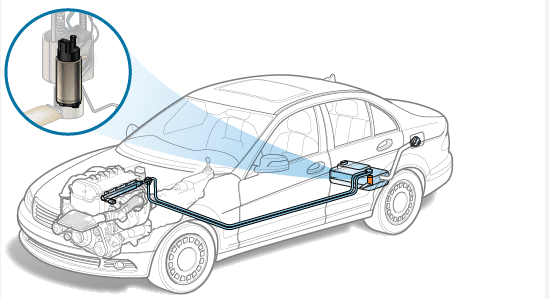
On most vehicles built since the 1980s, the fuel pump sits inside the fuel tank, not under the hood. It is normally reached through an access panel under the rear seat or beneath the trunk floor, where it delivers pressurized fuel to the engine’s injectors. Older carbureted cars, from before the 1980s, mount a mechanical fuel pump on the engine block itself instead. The sections below cover exactly where to look on your car, the warning signs of a failing pump, and what a replacement costs.
What Is a Fuel Pump and Why Location Matters
BEST FOR DIY FUEL PRESSURE TESTING
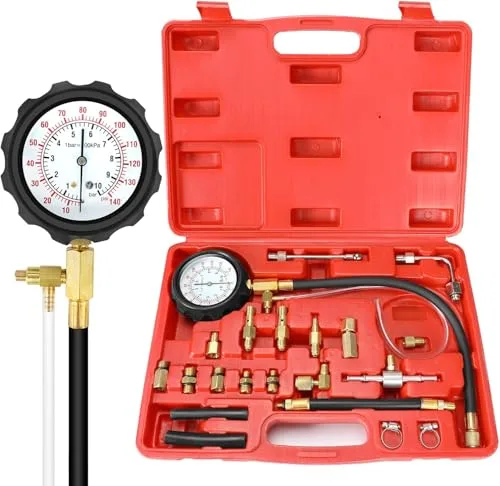 |
BETOOLL Fuel Pressure Tester Kit – $31.99 Confirm a weak or failing pump yourself before you buy a replacement, using the same pressure test a shop charges $50 to $100 to run.
|
A fuel pump moves gasoline or diesel from the tank to the engine at the pressure the fuel system needs to run properly. On a modern fuel-injected engine, that pressure typically falls between 40 and 80 psi, held steady by an electric pump that runs continuously whenever the ignition is on. Without it, the engine either will not start, or will stall and lose power as fuel starves the injectors.
Knowing where the pump sits matters for more than curiosity. If a car cranks but will not fire, sputters at speed, or loses power going uphill, the fuel pump is one of the first parts a mechanic checks, and finding it yourself can mean the difference between a quick DIY fix and paying labor charges just to access the part.
Where Is the Fuel Pump Located in Most Cars?
In the vast majority of gasoline and diesel passenger vehicles built after the 1980s, the fuel pump is submerged inside the fuel tank as part of a sealed module that also houses the fuel level sensor and a strainer or filter sock. Submerging the pump in fuel keeps it cool and quiet, and the fuel itself lubricates the pump’s internal parts. The tank, and the pump inside it, usually sits toward the rear of the car, under the back seat cushion or beneath the trunk floor.
To reach it, most cars have a round or rectangular access panel. On sedans and many SUVs, that panel is under the rear seat bottom cushion, which lifts or unclips without tools. On other models, particularly those with a folding rear seatback, the panel is under the trunk carpet instead. A few vehicles require dropping the fuel tank partway to reach the pump module, which is more of a shop job than a driveway one.
Exceptions: Older, Diesel, and Performance Vehicles
Cars built before the 1980s, and many carbureted vehicles, use a mechanical fuel pump instead, bolted directly to the side of the engine block and driven by a lobe on the camshaft. On these engines, the pump sits under the hood, usually near the front of the engine on the side facing the carburetor.
Some diesel trucks add a second, low-pressure lift pump mounted on the frame rail or near the tank, which feeds the high-pressure injection pump; see our breakdown of diesel pump fitment for how that differs from a gas pump. High-performance and turbocharged engines sometimes pair the in-tank pump with a second, engine-mounted high-pressure pump to supply direct-injection fuel rails. Fully electric vehicles have no fuel pump at all, since there is no liquid fuel to move.
How to Find the Fuel Pump in Your Car
If you are not sure which category your car falls into, work through these steps in order:
- Check the owner’s manual: most manuals include a fuel system diagram showing whether the tank sits under the rear seat or trunk, and whether there is a dedicated access panel.
- Look under the rear seat: lift or unclip the bottom cushion and look for a round or oval metal or plastic cover, usually held by a handful of screws or clips.
- Check the trunk floor: if there is no panel under the seat, pull back the trunk carpet and spare-tire cover; many cars hide the same access panel there instead.
- Pop the hood on older cars: on pre-1980s and carbureted engines, look near the front of the engine block, on the side closest to the carburetor, for a small mechanical pump with two fuel lines attached.
- Call a parts store or mechanic: if the panel still is not obvious, most parts stores can pull up a vehicle-specific diagram in a few minutes at no charge.
Always disconnect the negative battery terminal before opening any panel near the fuel pump wiring, and work in good light. The module’s electrical connector and fuel line fittings are usually the first things to look for once the cover is off.
Types of Fuel Pumps
Not every fuel pump looks or sits the same way. The type installed on your car narrows down exactly where to search:
- Electric in-tank pump: standard on nearly all gasoline cars built since the 1980s, submerged in the fuel tank and wired to run whenever the ignition is on.
- Mechanical pump: used on older carbureted engines, bolted to the engine block and driven mechanically by the camshaft, with no wiring involved.
- Lift pump: a low-pressure electric pump used on many diesel trucks, mounted on the frame or tank, feeding fuel to the engine’s high-pressure injection pump.
- High-pressure pump: found on direct-injection and performance engines, mounted on or near the engine to boost pressure for the fuel rail; see our guide to fuel injectors for how this pairs with the injection system.
Fuel Pump Locations by Vehicle Type
The table below maps those pump types to where you will actually find them, plus which access point to check first. See our roundup of fuel pump options if you are shopping for a replacement.
| Car Type | Fuel Pump Location | Pump Type | Access Point |
|---|---|---|---|
| Modern Sedan/SUV | Inside the fuel tank | Electric | Under the rear seat or trunk floor |
| Classic Car (pre-1980) | Engine compartment | Mechanical | Bolted to the engine block |
| Diesel Truck | Tank and/or frame rail | Electric lift pump + injection pump | Tank access panel or frame rail |
| Performance/Direct-Injection | Tank and engine | Electric + high-pressure | Tank access panel and near the fuel rail |
| Electric Vehicle | Not applicable | None | Not applicable |
Signs of a Failing Fuel Pump
A weakening fuel pump usually gives some warning before it quits outright. Watch for:
- No start, no hum: turning the key to “on” should produce a brief hum or whine from the tank for a second or two; silence often points to a dead pump or a blown fuse.
- Sputtering or stalling at speed: a pump that cannot keep up with demand under load causes hesitation or stalling on the highway, then often runs fine again at idle.
- Loss of power under load: struggling to maintain speed going uphill or towing is a classic sign the pump cannot supply enough pressure.
- Whining noise from the rear of the car: a failing pump motor commonly develops a whine that gets louder as it wears.
- Falling gas mileage: a pump working harder than it should to maintain pressure can quietly drag down fuel economy before it fails completely.
How to Test Your Fuel Pump
Before replacing a pump, confirm it is actually the problem:
- Listen for the prime hum: turn the key to “on” without starting the engine; a healthy pump hums audibly near the tank for one to two seconds, then stops.
- Test fuel pressure: connect a fuel pressure gauge, or a full test kit, to the fuel rail’s test port and compare the reading to your engine’s spec, typically 40 to 80 psi depending on the vehicle.
- Check the fuse and relay: a blown fuel pump fuse or a failed relay produces the exact same symptoms as a dead pump, and costs a fraction as much to fix.
- Inspect the wiring and connector: corroded or loose pins at the pump’s electrical connector can cause intermittent failures that mimic a bad pump.
A shop will typically charge $50 to $100 just to run these same tests, so confirming the fault yourself with a basic pressure gauge is one of the cheapest diagnostic steps in this repair.
Fuel Pump Replacement: What the Job Involves
Replacing an in-tank pump is a moderately involved DIY job on cars with a rear-seat or trunk access panel, and a much bigger one on cars that require dropping the tank. The general process:
- Relieve fuel pressure: pull the fuel pump fuse and run the engine until it stalls to bleed pressure out of the lines before disconnecting anything.
- Disconnect the battery: always disconnect the negative terminal first to eliminate any spark risk around fuel vapor.
- Access the pump module: lift the seat or trunk panel, or drop the tank if your car requires it, to expose the pump assembly.
- Disconnect fuel lines and wiring: most modern pumps use quick-connect fittings and a single electrical plug.
- Remove and replace the module: the old pump, filter sock, and level sensor typically come out and go back in as one sealed unit.
- Reseal and test: reinstall the panel, reconnect the battery, and cycle the key to “on” a few times before starting the engine to let the system re-prime.
This is a job worth leaving to a shop if your car requires dropping the fuel tank, or if you are not comfortable working around a pressurized fuel system.
Fuel Pump Replacement Cost
Costs vary mainly by how hard the pump is to reach and whether the tank has to come out:
- DIY parts cost: $100 to $300 for the pump module itself, plus $30 to $50 in basic tools if you do not already own a fuel line disconnect tool.
- Professional shop cost: $400 to $1,000 total, split between parts ($150-$400) and labor ($200-$600), depending on how much disassembly the job needs.
- Luxury and performance vehicles: $800 to $2,000 or more, since these often use higher-spec dual-pump systems and require more labor to access.
Get quotes from at least two shops before committing. Labor time for this job varies more between shops than the parts cost does.
Common Fuel Pump Problems
Beyond simple wear, a few specific issues account for most fuel pump failures:
- Clogged strainer or filter: debris in the tank can block the pump’s intake sock, starving it of fuel even when the motor itself is healthy.
- Worn pump motor: electric pumps have a finite service life, typically 100,000 miles or more, before the internal motor simply wears out.
- Damaged wiring or connector: corrosion or a loose pin at the pump’s electrical connector can cause intermittent or total failure.
- Running the tank low too often: consistently letting the tank drop below a quarter full deprives the pump of the fuel that cools and lubricates it, shortening its life.
How to Make a New Fuel Pump Last
A little routine care goes a long way toward getting the full service life out of a replacement pump:
- Keep the tank above a quarter full: fuel cools and lubricates the pump, so running consistently low shortens its lifespan.
- Replace the fuel filter on schedule: a clean filter, roughly every two years or per the maintenance schedule, keeps the pump from working against unnecessary resistance.
- Use fuel from reputable stations: low-quality or contaminated fuel can leave deposits that clog the pump’s strainer over time.
- Check fuel lines annually: inspect visible lines for cracking or seeping, especially on older vehicles.
- Drive the car regularly: a vehicle that sits unused for long stretches is harder on fuel system seals and the pump itself than one driven regularly.
A healthy fuel pump running efficiently also means less wasted fuel and fewer emissions from a straining engine, on top of avoiding a breakdown. Whether you are troubleshooting a stall or just want to know your car better, checking under the rear seat or trunk floor is the right place to start on almost any car built in the last four decades.
FAQs
Where is the fuel pump in my car?
In nearly all vehicles built since the 1980s, the fuel pump is inside the fuel tank, accessed through a panel under the rear seat or trunk floor. Cars built before the 1980s, and most carbureted engines, mount a mechanical pump on the engine block instead.
How do I know if my fuel pump is bad?
Common signs include the engine cranking without starting, sputtering or stalling at highway speed, losing power under load, a whining noise from the rear of the car, and gradually worsening gas mileage. A fuel pressure test is the most reliable way to confirm the pump itself is at fault.
Can I replace a fuel pump myself?
Yes, on most cars with a rear-seat or trunk access panel, replacing the pump module is a manageable DIY job with basic hand tools. Cars that require dropping the fuel tank, or situations where you are not comfortable working around a pressurized fuel system, are usually better left to a shop.
How much does a fuel pump replacement cost?
DIY parts run about $100 to $300 for the pump module. A professional shop typically charges $400 to $1,000 total, and luxury or performance vehicles with dual-pump systems can run $800 to $2,000 or more.
How can I make my fuel pump last longer?
Keep the tank above a quarter full, replace the fuel filter on schedule, use fuel from reputable stations, and drive the car regularly. Running a tank consistently low is one of the most common causes of premature pump failure.
Products related to this article
Sponsored / affiliate links. As an Amazon Associate I earn from qualifying purchases. I may earn additional commission from eligible campaigns.