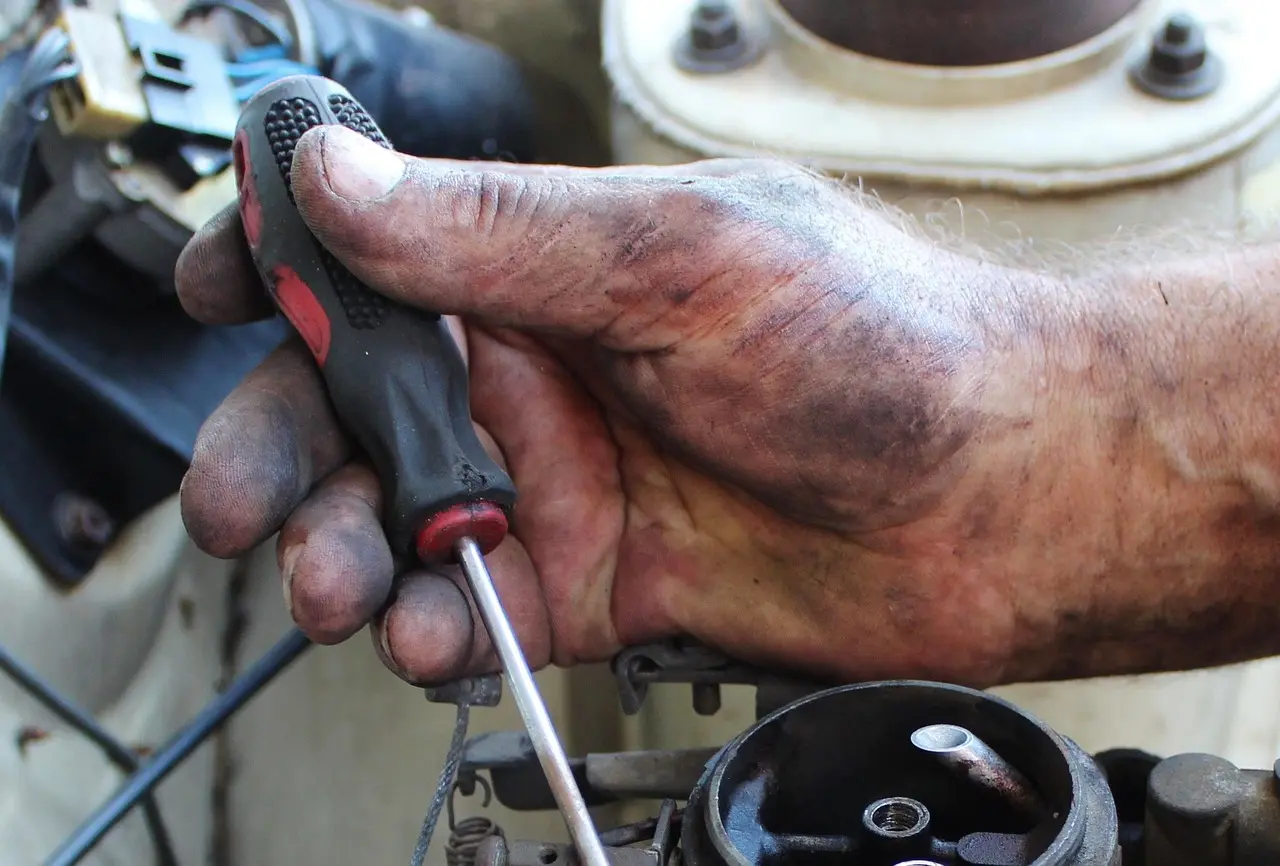
Are Carburetors Reliable? Essential Technology for Owners
Carburetors are reliable in stored, well-tuned, mechanically simple engines. EFI is the better choice for daily-driven cars, weather-exposed vehicles, and engines fed ethanol-blended fuel. Ignore that split, and you can end up with hard starts, flooding, stalling, varnish buildup, and higher repair costs. This guide explains where carburetors still work well, where EFI wins, and how to judge reliability by use case.
Are carburetors reliable?
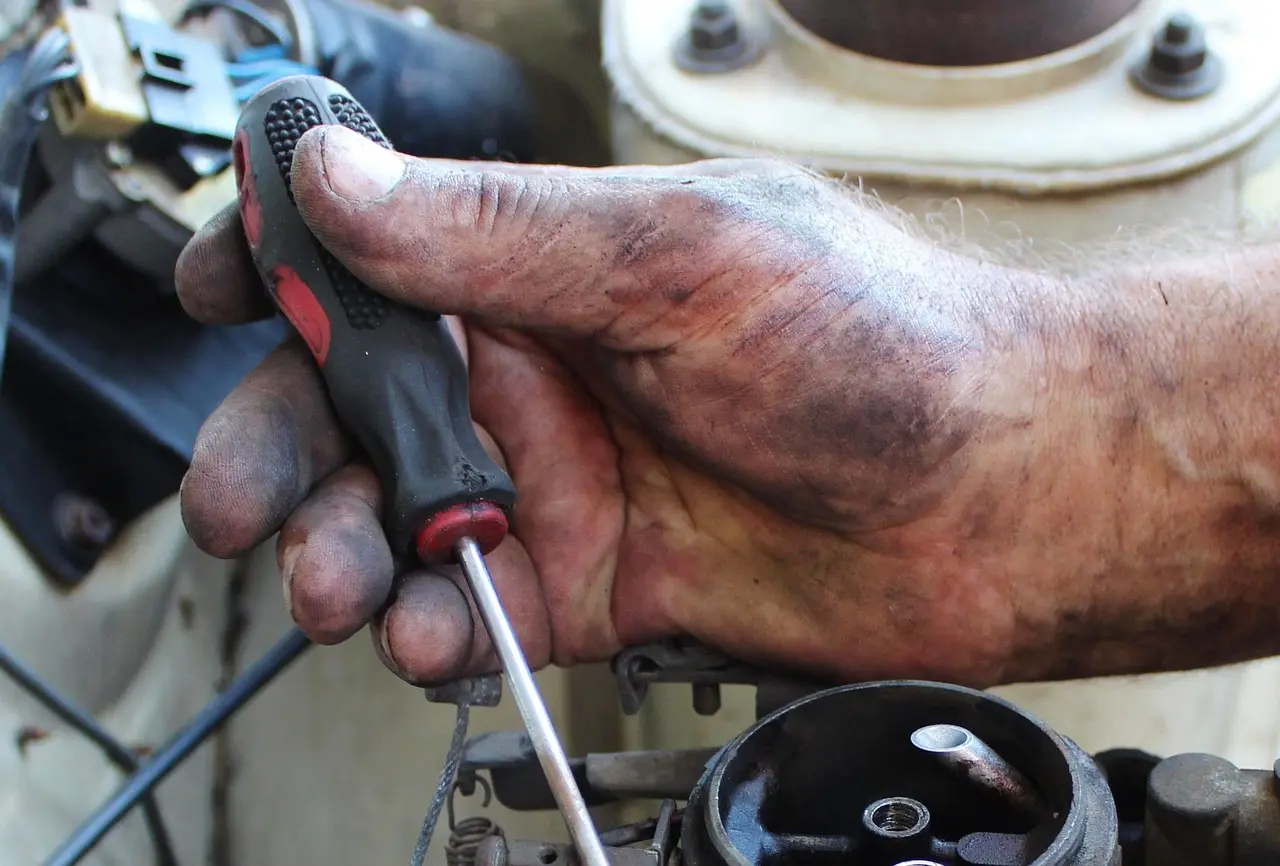


Yes, carburetors can be reliable when the engine is simple, the fuel stays clean, and the vehicle gets regular attention. Their reliability drops when the car sits, the climate swings hard, or the fuel contains ethanol and moisture. EFI has the edge for cold starts, altitude changes, and long service gaps.
Where carburetors stay dependable
Carburetors meter the air and fuel entering a gasoline engine. The Venturi and Bernoulli effect help draw fuel without electronics. That simplicity works well on stored classics, race engines, and other setups that stay tuned and serviced on schedule.
They can also fit engines that run often enough to keep fuel fresh and passages clean. Carburetors are still used by some small engines, motorcycles, and smaller outboard engines, and they remain widely used on piston-engine-driven aircraft.
Where EFI has the reliability edge
Since the 1990s, carburetors have been largely replaced by fuel injection for cars and trucks. EFI controls mixture more precisely during cold starts, hot restarts, and weather changes. It also handles daily driving, stop-and-go use, and long idling better than most carbureted street setups. (en.wikipedia.org)
That does not make carburetors poor devices. It means reliability depends on the job. A carb on a weekend classic can be dependable. A carb on a commuter parked outside in winter is a harder reliability bet.
📊 National Carburetors says it has rebuilt hundreds of thousands of carburetors since 1954. Source: Nationalcarburetors.
How a carburetor meters fuel
A carburetor works by using airflow through a narrowed passage to pull fuel from the bowl into the airstream. Fuel level, jet size, throttle opening, and circuit design all affect mixture. When those parts are clean and matched to the engine, the system can be stable and predictable.
Venturi, float chamber, jets, and circuits
The float chamber is vented to ambient air pressure and maintains fuel level for the main metering circuit, accelerator pump, idle circuit, and transition circuits. Those parts are sensitive to contamination and wear. Dirt, water, or stale fuel can change the mixture fast.
Common layouts include 2-barrel, 4-barrel, downdraft, and side draft carburetors. Holley units often appear in performance 2-barrel and 4-barrel forms. Weber carburetors are common in conversion kits and vintage restorations, especially where intake packaging or throttle response matters.
Throttle shafts and linkage as wear points
The throttle shaft is one of the biggest reliability weak points. Wear here can create a vacuum leak that makes idle unstable and tuning inconsistent. Linkage wear can add sticking, poor return, or an off-idle stumble that looks like a fuel problem even when the root cause is mechanical.
What usually makes a carburetor unreliable
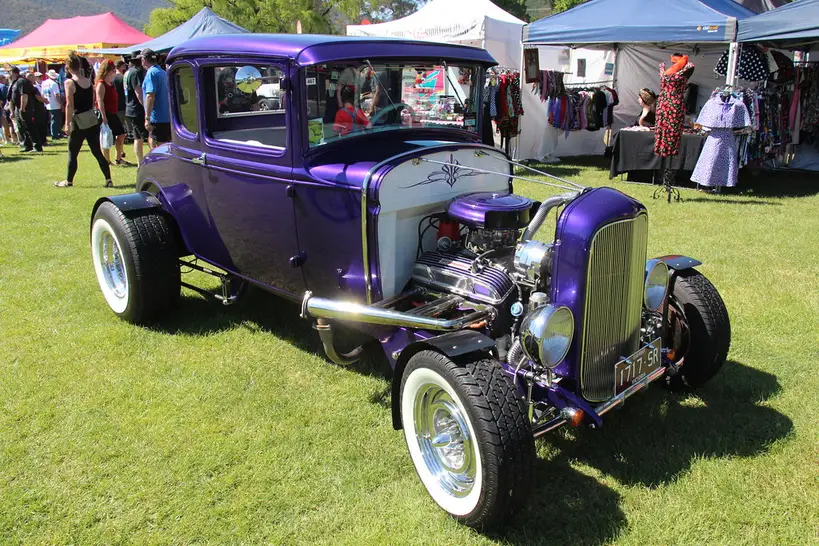
Most carburetor failures start as small faults: vacuum leaks, stale fuel, varnish, contamination, or heat-related fuel issues. The carburetor itself is often not “bad”; it is usually out of tune, worn at the shafts, or starved of clean fuel. Reliability falls when those faults stack up.
Vacuum leaks and worn throttle shafts
Vacuum leaks change the air-fuel ratio and make idle quality drift. Worn throttle shafts are common because the shaft rocks in the base plate over time. A quality rebuild should include rebushed throttle shafts when wear is present, not just new gaskets and a shine-up.
Stale fuel, varnish, and contamination
Modern fuel can cause carburetor problems because ethanol absorbs water and fuel left to sit can leave varnish in jets and passages. During storage, phase separation risk rises when fuel ages and moisture enters the tank. Small bits of debris can also clog idle and main circuits quickly.
Picture an older sedan parked for several months with some fuel still in the tank. The engine may crank, catch, and die because the idle passages are restricted, the bowl fuel is stale, and the accelerator pump cannot cover the transition cleanly.
Heat soak, flooding, and cold-start issues
Heat soak can boil fuel in the bowl or line after shutdown, which leads to hot-start complaints and fuel smell. Flooding points to float level problems, a sticky needle and seat, or pump pressure that is too high for the carb. Cold-start issues often trace back to choke setup or weak enrichment.
Are carburetors better than fuel injection for older engines?
For older engines, carburetors are better when the goal is simple mechanical service on a fair-weather vehicle that sees regular use. EFI is better when the goal is easy starting, steady drivability, and lower sensitivity to weather, altitude, and fuel aging. The best choice depends on use, not age alone.
Daily driving and weather changes
Daily-driven classics face rain, temperature swings, and traffic heat. EFI handles those changes with less adjustment. Carburetors can still work, but the owner has to accept more seasonal tuning and more chances for mixture drift as conditions change.
Cold starts and hot starts
Can a carburetor be tuned for cold starts and hot starting? Yes, within limits. Choke calibration, float level, idle speed, and accelerator pump settings all matter. Even so, EFI usually wins when the vehicle must start cleanly every morning and restart cleanly after a hot fuel soak.
Maintenance access and owner tolerance
If maintenance access is easy and the owner is willing to clean, adjust, and inspect the system, a carburetor can remain reliable enough. If the vehicle sits outside, gets used irregularly, or must “just start” every time, EFI is the safer reliability choice.
Which carburetors are most reliable for classic cars?
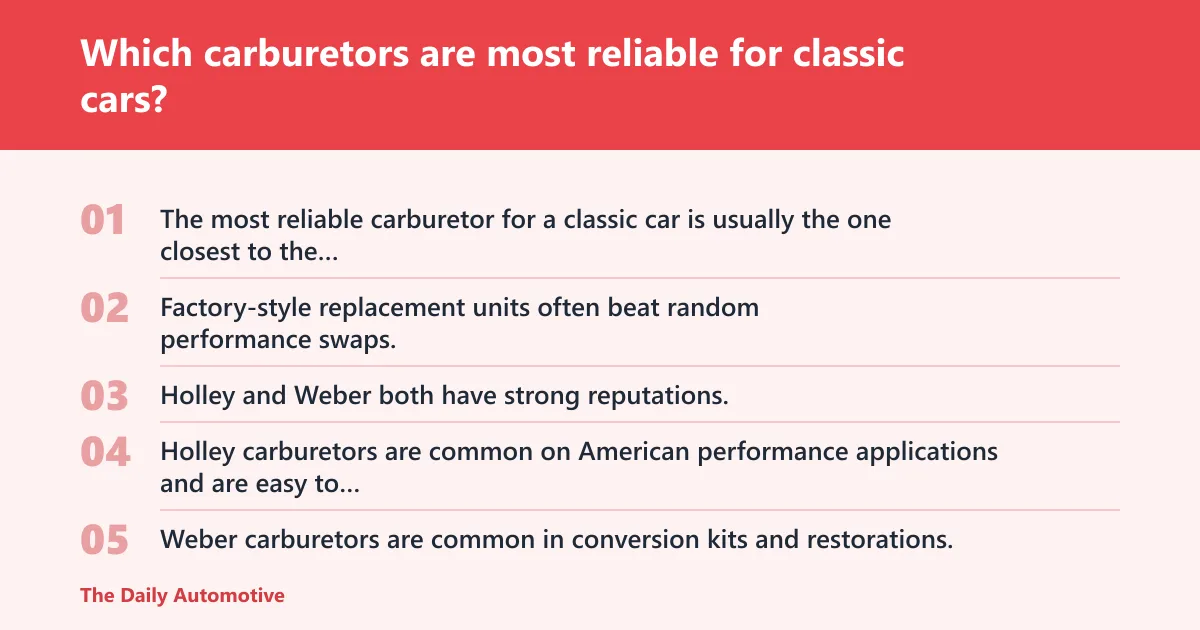
The most reliable carburetor for a classic car is usually the one closest to the engine’s original calibration and easiest to service correctly. Factory-style replacement units often beat random performance swaps. Holley and Weber both have strong reputations, but the right choice depends on the engine, layout, and use.
Holley vs Weber by use case
Holley carburetors are common on American performance applications and are easy to service with available parts. Weber carburetors are common in conversion kits and restorations, and they often suit smaller displacement or multi-carb setups. Neither brand is immune to wear; both need correct setup.
Suppose an inline-six uses a carburetor kit for weekend driving. That can be dependable if the fuel stays clean and the choke is set correctly. A mismatched universal carb on the same engine is more likely to run poorly and need repeated adjustment.
Two-barrel, four-barrel, downdraft, and side draft layouts
Two-barrel carbs are often simpler and easier to keep stable on mild engines. Four-barrel units can be reliable too, but they add more metering hardware and tuning variables. Downdraft designs are common because packaging is straightforward. Side draft carbs often appear in performance and conversion applications where intake layout demands them.
Factory-style replacement versus conversion kits
Factory-style replacement carburetors usually win on drivability when the engine was designed around them. Conversion kits can work well, but they should be chosen for the engine’s airflow needs, hood clearance, and fuel delivery. Pierce Manifolds says it sells Weber 32/36 DGEV kits and dual 45 DCOE conversion kits, which shows how specific these choices can be.
Carburetor reliability decision matrix
Use this matrix to judge whether a carburetor is reliable enough for the vehicle’s real job. Higher scores point toward better suitability. Lower scores suggest more tuning work, stricter upkeep, or an EFI conversion if the vehicle must be dependable in all conditions.
| Factor | 5 points | 3 points | 1 point |
|---|---|---|---|
| Use case | Stored classic, weekend use | Seasonal driver | Daily driver |
| Fuel type | Non-ethanol or fresh fuel | E10 fuel used often | Old fuel left to sit |
| Storage habit | Runs monthly and fuel stabilized | Runs every few weeks | Sits for months |
| Climate | Mild, consistent temperatures | Mixed weather | Large swings, cold mornings, heat soak |
| Maintenance access | Easy access, owner checks often | Moderate access | Poor access, infrequent service |
How to read the score
- 20-25 points: Carburetor reliability is strong for this use.
- 13-19 points: Carburetor reliability is acceptable only with regular service.
- 5-12 points: EFI is the safer reliability choice.
Maintenance intervals and red-flag symptoms
Recommended maintenance is tied to use, not a universal mileage number. For stored vehicles, inspect fuel condition before each season and service the carburetor whenever hard starting, smell, or idle quality changes. For driven classics, inspect linkage, float level, and leaks at every major service interval.
- Hard starting after sitting
- Rich or lean idle that will not hold
- Stalling on tip-in or light throttle
- Flooding or fuel smell from the intake
- Vacuum leak symptoms at the throttle shaft
- Hot restart complaints after heat soak
Rebuild, remanufacture, or replace?
A rebuild makes sense when the carburetor body is sound, the wear is normal, and the engine is worth keeping close to original specification. Replacement is better when the casting is damaged or the unit has severe shaft wear, warped surfaces, or missing parts that make restoration uneconomical.
When a rebuild makes sense
Rebuilds are the right fix for most serviceable carburetors. A master rebuilding kit should cover gaskets, needles, seats, and wear parts. If the throttle shaft is loose, rebushing should be part of the repair. That is a reliability repair, not an optional extra.
What a quality remanufactured carburetor should include
National Carburetors says it has rebuilt hundreds of thousands of carburetors since 1954, that each unit is individually built to order by technicians, that base plates are rebushed to remove wear around the throttle shaft, and that every carburetor is flow bench or live engine tested. Those are the kinds of details that matter for reliability.
National Carburetors says it carries carburetors for American cars and trucks, classic cars, boats, and industrial engines. GET’M Performance says its carburetors are American-made products built for racers. For buyers, the key question is not the label alone; it is whether the unit has verified wear correction and testing.
When EFI conversion is the better reliability move
Choose EFI when the vehicle must start in the cold, tolerate weather exposure, or sit through long storage periods without fuel-system drama. EFI conversion costs more and can add wiring, sensors, and pump work, so it is not the casual answer. It is the stronger reliability move when the operating conditions are punishing.
Frequently asked questions
Are carburetors reliable for daily driving?
Carburetors can be reliable for daily driving only when the vehicle is well maintained, starts often, and runs in stable weather. EFI has the edge because it handles cold starts, altitude changes, and fuel variation better. Daily use also exposes throttle shaft wear and stale-fuel problems faster.
How long do carburetors last before rebuild?
There is no fixed lifespan that applies to every carburetor. Rebuild timing depends on fuel quality, storage habits, and wear at the throttle shaft and metering circuits. If idle quality drifts, flooding starts, or the carb shows vacuum leaks, the rebuild is due regardless of age.
What makes a carburetor fail?
The common causes are vacuum leaks, worn throttle shafts, dirty jets, stale fuel, varnish, and float problems. Heat soak and contamination can trigger flooding or hot-start trouble. A carburetor often fails gradually, so hard starts and unstable idle usually appear before a complete no-start condition.
Are carburetors better than fuel injection for older engines?
Carburetors are better when the goal is original mechanical simplicity and the vehicle sees occasional use. Fuel injection is better when the goal is dependable starts, consistent fueling, and lower sensitivity to weather and fuel age. For most older engines used on the road, EFI is the safer daily-driver pick.
Do modern fuels cause carburetor problems?
Yes. Ethanol can absorb moisture, fuel can age into varnish, and stored fuel can create phase separation risk. Carburetors have small passages and a vented float chamber, so they react quickly to contamination. Keeping fuel fresh and the system clean matters more now than it did with older fuel blends.
When is a carburetor rebuild better than replacement?
Rebuild is the better move when the casting is sound, the engine needs an original-style setup, and wear is limited to service parts or the throttle shaft. Replacement makes more sense after damage, stripped threads, or severe internal wear. A remanufactured unit is often the middle ground.
Products related to this article
Sponsored / affiliate links. As an Amazon Associate I earn from qualifying purchases. I may earn additional commission from eligible campaigns.