Best Silicone Sealant for Cars: Permatex vs. J-B Weld RTV
The best silicone sealant for cars is a sensor-safe, oil-resistant RTV silicone gasket maker like Permatex Ultra Black, not a general-purpose caulk-tube silicone from the hardware store.
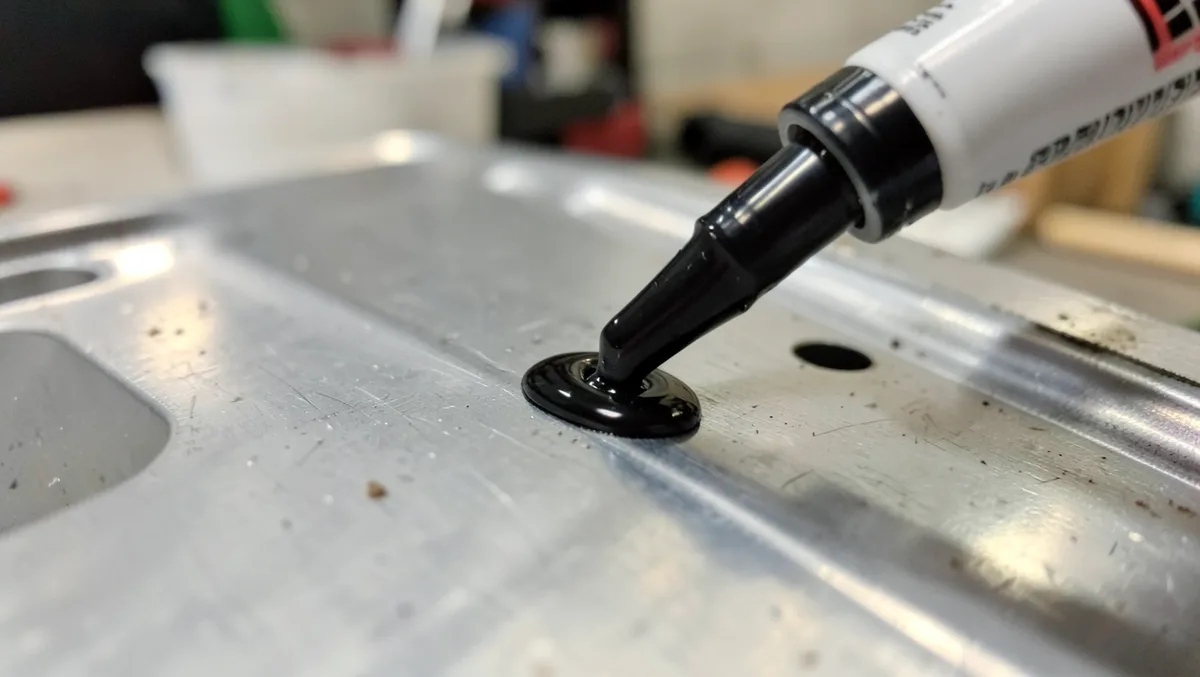
RTV (room temperature vulcanizing) silicone cures by reacting with moisture in the air rather than by drying, so it stays flexible instead of hardening brittle. That flexibility is what lets it fill gaps between an oil pan, valve cover, or timing cover and the engine block and keep sealing through years of heat cycling and vibration. Permatex Ultra Black RTV Silicone Gasket Maker is the pick most mechanics reach for first because it is sensor safe and rated to 500°F, while Permatex 81158 covers general body and trim sealing and J-B Weld 31314 is built for exhaust-adjacent parts that see sustained heat up to 550°F. This guide compares all three, walks through how to apply silicone sealant correctly, and explains when a tube of silicone is the wrong tool for the job.
Best Silicone Sealant for Cars
BEST SILICONE SEALANT FOR ENGINE GASKETS
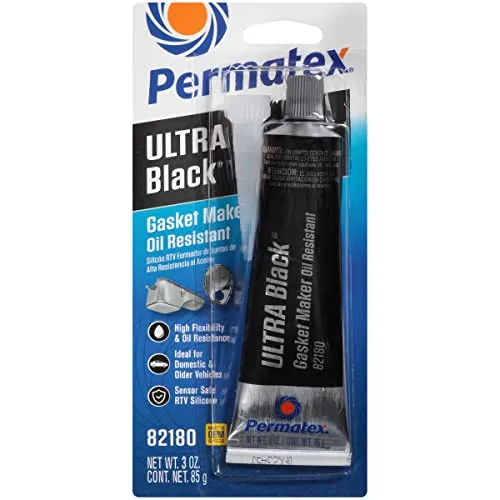 |
Permatex Ultra Black RTV Silicone Gasket Maker (82180) – $7.56 A sensor-safe, oil-resistant RTV silicone built for oil pans, valve covers, and timing covers on modern engines.
|
Permatex Ultra Black earns the top spot because it is formulated to be safe around oxygen and knock sensors, which matters if the reseal is anywhere near an oil pan or valve cover on a modern engine. Older, general-purpose acetoxy-cure silicones release acetic acid vapor as they cure, and that vapor can corrode sensor wiring over time. Ultra Black uses a neutral-cure formula instead, so it will not damage sensors, and it stays flexible enough to handle the constant flex and oil exposure around a running engine.
How to Apply Silicone Sealant to a Car Gasket
Before reaching for the tube, confirm the leak is actually coming from the gasket surface and not somewhere else on the engine; our guide to telling what is leaking from your car walks through how to trace a drip back to its real source. Once you know it is the gasket, the application itself is straightforward if you work quickly and keep it clean.
- Remove the old gasket material completely with a plastic scraper, then wipe both mating surfaces with brake cleaner or isopropyl alcohol. Any leftover oil, grease, or old sealant will keep the new bead from bonding.
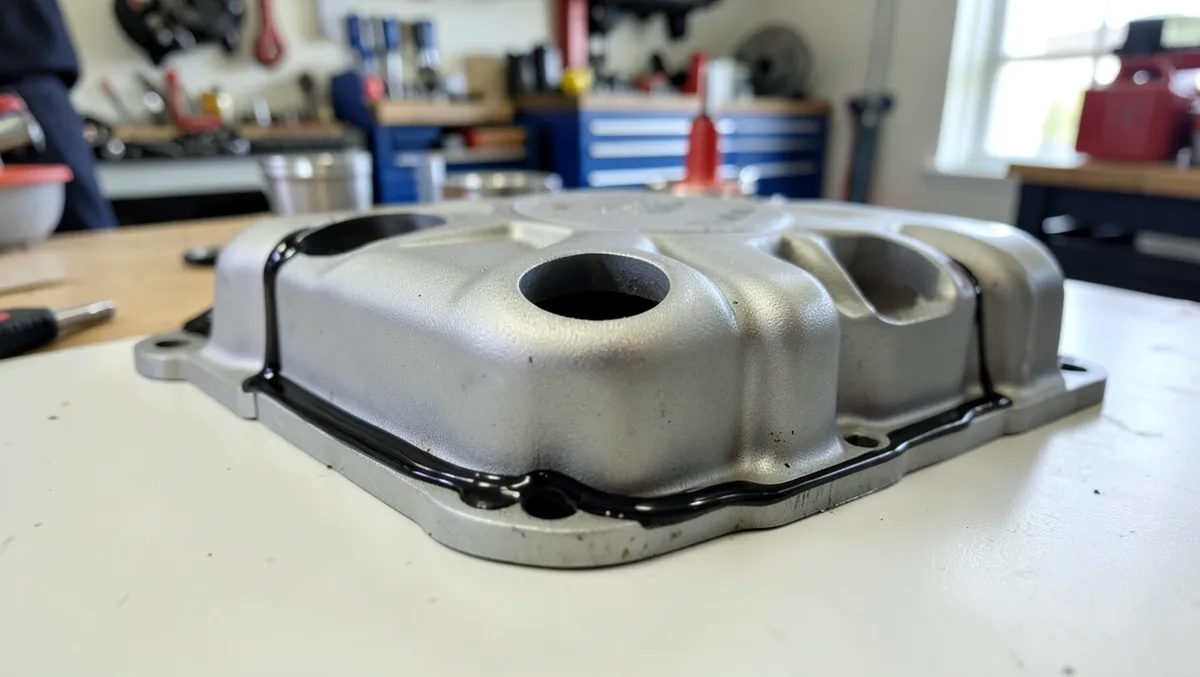
- Run a continuous bead of silicone about the width of a pencil around the sealing surface, circling the inside of every bolt hole so the bead is not interrupted where a bolt passes through.
- Work quickly. Most RTV silicone starts to skin over within 5 to 10 minutes at room temperature, and the parts need to go together while the bead is still wet.
- Install the cover or pan and torque the bolts to the manufacturer’s spec in the correct sequence, usually working from the center outward in a crisscross pattern, while the silicone is still soft.
- Leave the assembly undisturbed for at least an hour before adding fluid, and avoid starting the engine until the sealant reaches a full cure, typically 24 hours at room temperature. Cold shop temperatures slow this down further.
- Wipe away any silicone that squeezed out past the edge before it sets, since cured excess can break off later and clog an oil pickup or passage.
Permatex 81158 vs. 82180 vs. J-B Weld 31314: Which Should You Buy?
All three are RTV silicones, but they are not interchangeable. Match the product to where the seal actually sits on the car.
| Product | Temperature Rating | Best For |
|---|---|---|
| Permatex 81158 Black | -75°F to 450°F | General body, trim, glass, and weatherstripping seals |
| Permatex 82180 Ultra Black | -65°F to 500°F intermittent | Oil pans, valve covers, timing covers near sensors |
| J-B Weld 31314 Red | 550°F continuous, 650°F intermittent | Exhaust manifolds, differential covers, high-heat areas |
Permatex 81158 Black Silicone Adhesive Sealant
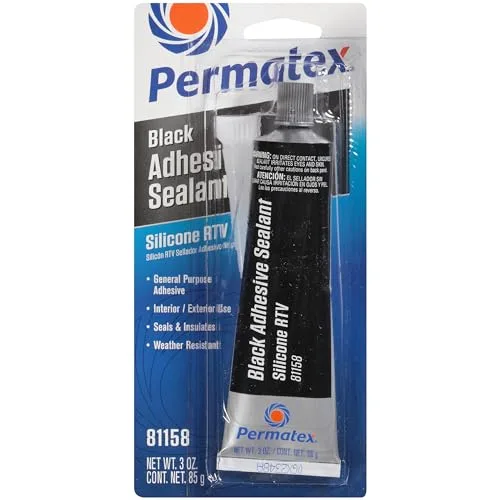
This is the general-purpose option, rated from -75°F to 450°F and meant for sealing glass, metal, plastic, fabric, vinyl, and weatherstripping rather than an oil-soaked gasket surface. It has a 10-minute work life, a functional cure at about 1 hour, and reaches full cure in 24 hours. Reach for this one for a leaking taillight housing, a sunroof frame seam, or a trim panel, not an engine gasket. Check the price on Amazon.
J-B Weld 31314 Red High-Temperature RTV Silicone Gasket Maker
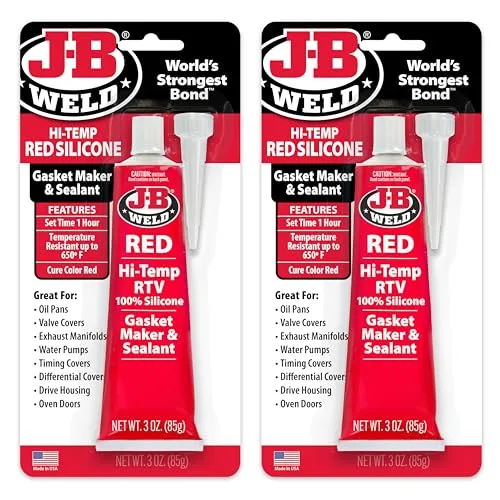
Rated for sustained heat up to 550°F and intermittent spikes to 650°F, this red RTV is built for the parts that sit closest to exhaust heat: exhaust manifolds, differential covers, timing covers, water pumps, and drive housings. It sets in about an hour and comes as a 2-pack, which is handy since a single tube rarely stretches across two separate jobs. Check the price on Amazon.
Silicone Sealant vs. Weatherstrip Glue: Which Do You Need?
These two get mixed up constantly because both come in a similar-looking tube. RTV silicone sealant is a gap-filling compound: it cures into a soft bead that seals a joint, such as an engine gasket surface or a seam around a sunroof frame. It is not built to bond a strip of rubber to painted metal, and it makes a poor substitute for that job. If your rubber door, trunk, or window seal has come unstuck rather than developed a fluid leak at a gasket, see our guide to gluing a rubber seal back onto a car instead, which covers the dedicated weatherstrip contact adhesives built for that job.
Frequently Asked Questions
What Is Silicone Sealant Used for in a Car?
RTV silicone sealant fills gaps and seals mating surfaces on a car, most often an oil pan, valve cover, or timing cover where a factory gasket has failed. It also works on smaller jobs like a sunroof frame seam or a cracked taillight housing. Because it cures flexible rather than rigid, it keeps sealing through the heat cycling and vibration a running engine produces.
What Is the Best Silicone Sealant for an Engine Gasket?
Permatex Ultra Black RTV Silicone Gasket Maker is the best all-around choice for an engine gasket. It is sensor safe, non-corrosive, resists engine oil, and holds up to intermittent temperatures around 500°F, which covers most oil pan and valve cover applications without risking damage to nearby oxygen or knock sensors.
Is Permatex Ultra Black Sensor-Safe?
Yes. Permatex Ultra Black uses a neutral-cure formula instead of the acetic-acid-releasing acetoxy cure found in some general-purpose silicones. That makes it safe to use near oxygen sensors and other electronics without the risk of corrosion that an older-style silicone could cause.
How Hot Can J-B Weld 31314 Get Before It Fails?
J-B Weld 31314 is rated for sustained, continuous heat up to 550°F, with intermittent spikes tolerated up to 650°F. That range covers exhaust manifolds and other high-heat mounting points, which is well beyond what a general-purpose silicone sealant like Permatex 81158 is rated to handle.
How Long Does RTV Silicone Sealant Take to Fully Cure?
Most automotive RTV silicone skins over within 5 to 10 minutes and reaches a functional cure within about an hour, but full cure typically takes 24 hours at room temperature. Cold shop temperatures slow the cure down further, so it is worth waiting longer before starting the engine on a cold day.
Can You Use Silicone Sealant Instead of a Gasket?
On many oil pans, valve covers, and timing covers, yes, a bead of the correct RTV silicone is the factory-recommended repair and does not need a paper or rubber gasket underneath it. It is a different fix from a chemical stop-leak additive poured into the oil, which only masks a leak rather than resealing the surface; see our breakdown of whether stop-leak is bad for your car for that comparison. On a factory gasket surface that specifically calls for a rubber or cork gasket, silicone alone is not a reliable substitute.
Conclusion
For most engine reseals, Permatex Ultra Black RTV Silicone Gasket Maker is the right call: sensor safe, oil resistant, and rated to handle the heat around an oil pan or valve cover. Save Permatex 81158 for general body and trim sealing where oil exposure and sensors are not a concern, and reach for J-B Weld 31314 only on parts that sit close enough to the exhaust to see sustained heat above 450°F.
Whichever one you use, clean the old gasket material off completely first, run a continuous bead, and get the parts torqued down while the silicone is still wet. Rushing the reassembly or skipping the cleanup is the most common reason a fresh silicone gasket leaks again within a few weeks.
Products related to this article
Sponsored / affiliate links. As an Amazon Associate I earn from qualifying purchases. I may earn additional commission from eligible campaigns.