Wheel Alignment Cost: What You’ll Pay
A wheel alignment usually costs about $75 to $200; costs are often higher for luxury, lifted, or multi-link suspensions, and it may be worth getting checked if the car pulls, the steering wheel is off-center, or tires are wearing unevenly. Waiting can turn a $100 service into early tire replacement and weaker braking stability. This guide explains what changes the price, which symptoms justify service now, and when you can wait.
What wheel alignment costs
A chain or local shop alignment should cost less than $100, but the bill can climb with vehicle design, suspension wear, and whether the shop is doing a simple correction or chasing a deeper problem. The service corrects wheel angles to manufacturer guidelines and is typically performed by a technician in under an hour.
Typical price range by shop type
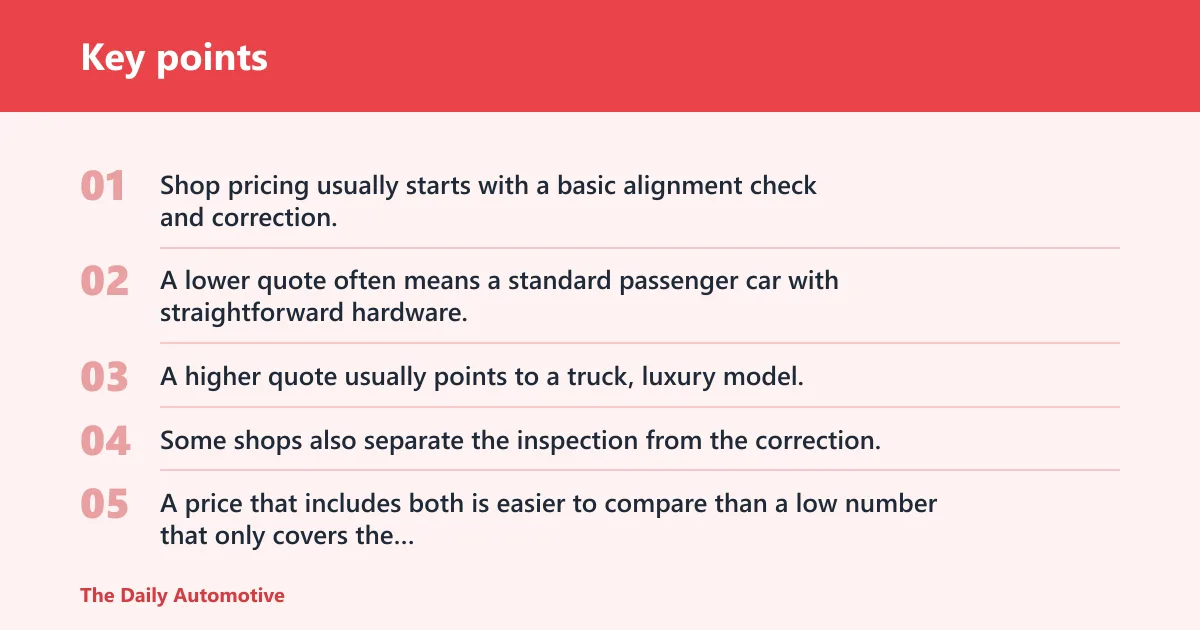
Shop pricing usually starts with a basic alignment check and correction, then moves up when the vehicle needs extra adjustment time. A lower quote often means a standard passenger car with straightforward hardware. A higher quote usually points to a truck, luxury model, or a setup that needs more time to reach spec.
Some shops also separate the inspection from the correction. That matters if you are comparing quotes. A price that includes both is easier to compare than a low number that only covers the check.
How vehicle type changes the bill
Vehicle design changes access, adjustment range, and labor time. A compact car with common suspension hardware is often cheaper to align than a lifted SUV, a performance sedan, or a vehicle with multi-link rear suspension. Those layouts can take more time to set up and may need additional adjustment if previous repairs changed the geometry.
Hidden suspension damage can also make the price climb. Misaligned wheels can cause vibrations and extra wear on suspension components, and that is where a simple alignment quote can turn into a larger repair conversation.
Why some quotes include a check and others include correction
One shop may quote only an inspection. Another may quote inspection plus adjustment. That difference matters because alignment checks often include steering wheel centering, toe, camber, and related suspension angles such as thrust angle. A quote that covers more of that work is usually the better apples-to-apples comparison.
📊 A chain or local shop alignment should cost less than $100. Source: Thedrive.
Why alignment price changes
The cheapest quote is not always the cheapest final repair. If the tires are already wearing unevenly or the suspension is damaged, the right service may include more than an angle reset. That can protect the tires you already own and help avoid repeat visits.
Two-wheel versus four-wheel alignment
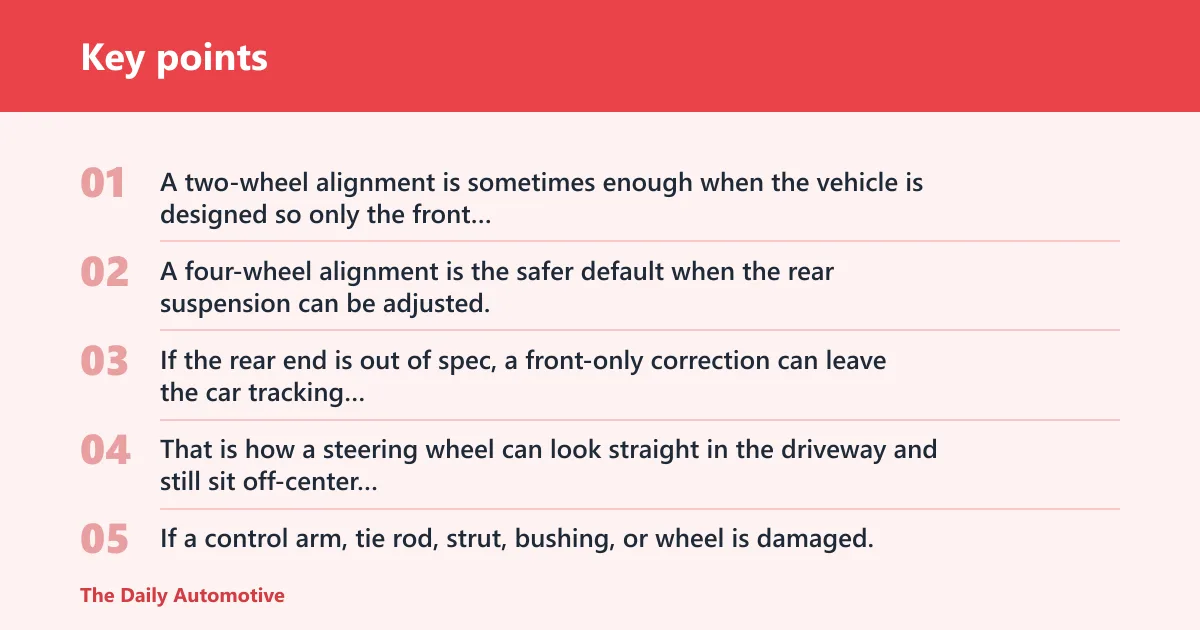
A two-wheel alignment is sometimes enough when the vehicle is designed so only the front angles are adjustable, or when the rear axle is fixed and confirmed to be in spec. A four-wheel alignment is the safer default when the rear suspension can be adjusted, when the vehicle has been hit hard, or when the shop needs to set the thrust angle and steering wheel center together.
If the rear end is out of spec, a front-only correction can leave the car tracking crooked. That is how a steering wheel can look straight in the driveway and still sit off-center on the road.
Suspension wear and damaged parts
Alignment does not repair bent parts. If a control arm, tie rod, strut, bushing, or wheel is damaged, the angles may not hold after adjustment. That is one reason a good shop inspects the suspension system before setting final angles.
Misaligned cars can rack up big repair bills when tires and components need replacement. The bill is often larger when a shop finds the cause after the tire wear has already started.
How tire condition changes the job
Tire wear can change how useful an alignment will be. Uneven wear is a common result of misalignment, and it can show up before major handling issues. If the tread is already scalloped or feathered, alignment may stop the problem from getting worse, but it will not restore worn rubber.
If the front tires show inside-edge wear after about 8,000 miles and the car still drives straight, that can justify an alignment check. That can still justify an alignment now, because the wear pattern may be the first clue that toe or camber has drifted.
Do you need an alignment after a pothole?
A pothole hit does not automatically mean an alignment is needed, but it can increase the chance that toe, camber, or thrust angle moved out of spec. Book now if the car pulls, the wheel sits off-center, or a new vibration starts after the impact. If none of that happened, monitor the tires and steering closely.
Signs the impact likely changed the angles
Watch for a steering wheel that no longer sits level, a car that drifts on a flat road, or a new tire wear pattern on one edge. Those are stronger clues than the pothole itself. The impact matters because the suspension system takes the hit, and that system controls the alignment angles.
Suppose you hit a deep pothole with the right front wheel and the car starts drifting left the next day. That is a stronger case for service than a pothole with no new pull, no noise, and no visible wear change.
When to book now versus watch for symptoms
Book now if the vehicle pulls, the steering wheel is off-center, or the tires already show unusual wear. Watch first if the impact was mild and the car tracks straight, but plan a tire inspection soon. The longer you wait, the more likely the tires will wear unevenly and mask a larger suspension issue.
Alignment cost decision table
This table turns common events into a simple decision path. It helps you decide whether to book now, ask for a check first, or look for damage before paying for correction.
| Symptom or event | Likely service needed | Risk if delayed | What to ask the shop |
|---|---|---|---|
| Pothole impact | Alignment check; correction if angles are out | Extra tire wear, possible bent suspension parts | Ask whether toe, camber, and thrust angle are in spec |
| Curb strike | Alignment plus suspension inspection | Steering pull, vibration, hidden wheel or suspension damage | Ask for a check of tie rods, control arms, and wheel condition |
| Uneven tire wear | Alignment now, before new tires are wasted | Faster tire replacement and continued wear pattern | Ask whether wear points to toe, camber, or both |
| Steering wheel off-center | Alignment with steering wheel centering | Driver fatigue and poor straight-line tracking | Ask if the wheel can be centered while keeping the angles in spec |
| New tire installation | Alignment recommended; balancing is separate | New tires can wear unevenly from the start | Ask for alignment before or right after the tire install |
| Repeated pulling to one side | Alignment and a full suspension check | Ongoing wear, masked brake or suspension problems | Ask whether tire pressure, brake drag, or suspension damage is involved |
Toe, camber, and the angles shops check
Toe and camber are the two alignment metrics most drivers hear about first. Toe refers to how straight the wheels are in relation to each other. Camber refers to the wheels’ angle in relation to the ground. Both affect tire tracking and wear, and both can drift after impacts or normal suspension movement over time.
Toe and tire tracking
Toe can point inward or outward. Too much toe-out or toe-in makes the tires scrub as they roll, which raises wear and can make the car feel nervous on the highway. Because toe changes how the tires point relative to each other, it is one of the first angles a technician checks.
Camber and tire wear
Camber is the wheel’s lean relative to the ground. In a healthy setup, it usually stays close to 90 degrees from the road surface. If a wheel leans too far in or out, the tread can wear on one edge faster than the rest, especially during long highway use.
Steering wheel centering and thrust angle
Alignment work is not only about toe and camber. A shop may also check steering wheel centering and thrust angle so the vehicle tracks straight and the wheel sits level. That matters when the rear axle points slightly off-center, because the front wheels may need to compensate just to keep the car going straight.
Wheel balancing is different. Balancing addresses weight distribution in the wheel and tire assembly; alignment addresses wheel angles. If the steering wheel shakes at speed, balancing may be the right service. If the car pulls or the tires wear unevenly, alignment is the better place to start.
How long does a wheel alignment take?
A skilled tire tech should complete an alignment job in under an hour, although damaged parts, seized adjusters, or a detailed inspection can add time. Most of the delay comes from finding why the angles moved, not from the adjustment itself. A clean, routine correction is usually quick. (Thedrive)
What slows the job down
Rust, bent hardware, aftermarket suspension parts, and previous repairs can all slow the process. A vehicle that needs both a correction and a repair will take longer than one that simply needs the angles set back to spec. That is also where the cost can climb above the basic service price.
What a shop may inspect before adjusting
Before turning the alignment machine loose on the vehicle, a shop may inspect the tires, wheels, steering links, and suspension system for obvious damage. That early check helps explain why one car gets a basic alignment while another needs a separate repair estimate.
Can you check wheel alignment at home?
You can check for obvious clues at home, but a driveway check is not a substitute for a proper alignment. Checking alignment at home should take about an hour and can help you spot pull, steering wheel offset, or uneven tire wear before booking a shop visit.
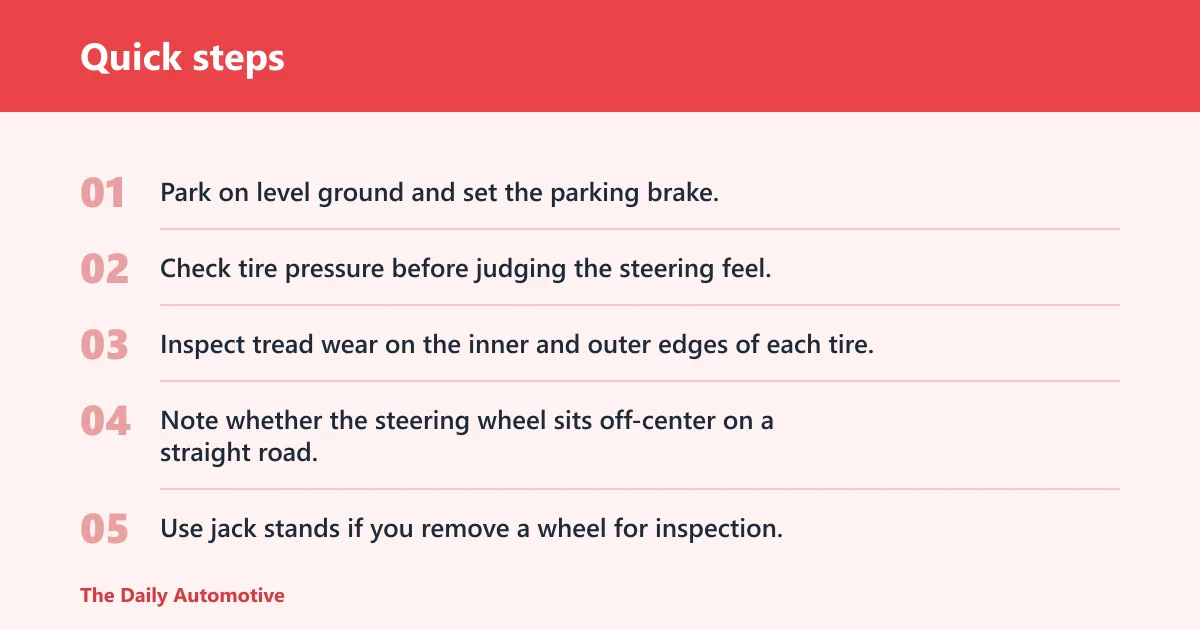
Simple signs you can inspect in a driveway
Look at the tread on both front tires and compare the wear across the inner and outer edges. Then drive on a flat road and note whether the car pulls or the steering wheel sits straight. A quick visual check will not measure angles, but it can tell you whether the problem is getting worse.
Safe tools for a basic check
If you remove a wheel for inspection, use approved jack stands on level ground. Use a torque wrench when reinstalling the wheel so the fasteners are tightened correctly and the wheel stays secure at highway speeds. If you are marking tire movement, use chalk or paint markers in a ventilated area.
- Park on level ground and set the parking brake.
- Check tire pressure before judging the steering feel.
- Inspect tread wear on the inner and outer edges of each tire.
- Note whether the steering wheel sits off-center on a straight road.
- Use jack stands if you remove a wheel for inspection.
- Reinstall the wheel with a torque wrench.
- Use chalk or paint markers only in a ventilated area if you are marking tire movement.
Why a shop is still needed for final adjustment
A home check can tell you whether the car is likely out of alignment, but a shop is still the place for the final correction. That is where the angles get measured against manufacturer guidelines and adjusted with the right equipment. If the vehicle pulls, the tires wear unevenly, or the suspension may be damaged, pay for the pro check.
Frequently asked questions
How much does a wheel alignment cost?
Expect more if the vehicle has a lifted suspension, luxury hardware, or rear-angle adjustments that take extra labor.
What is the average price for a wheel alignment?
The average price depends on shop type and vehicle type, so there is no single figure that fits every car. A basic quote is often lower for a standard passenger vehicle and higher when the shop must adjust more angles or inspect damaged suspension parts.
Do I need an alignment after hitting a pothole?
Not always. If the car still tracks straight, the steering wheel stays centered, and the tires show no new wear, you may be able to monitor it. Book an alignment if the pull starts, the wheel shifts off-center, or a vibration appears after the hit.
What is the difference between toe and camber?
Toe is how straight the wheels point relative to each other. Camber is the wheel’s angle relative to the ground. Toe tends to affect straight-line tracking and feathered wear, while camber often shows up as wear on one shoulder of the tire.
Is a wheel alignment the same as tire balancing?
No. Tire balancing corrects weight distribution in the wheel and tire assembly, while alignment corrects wheel angles. A shake at speed often points to balancing, while a pull, off-center wheel, or uneven wear points more toward alignment.
Products related to this article
Sponsored / affiliate links. As an Amazon Associate I earn from qualifying purchases. I may earn additional commission from eligible campaigns.