AGM vs EFB Car Battery
Match the battery to your vehicle’s OEM spec first: if it came with AGM, replace it with AGM; if it came with EFB, use EFB unless the maker explicitly allows an AGM upgrade. Choosing the wrong type can lead to poor start-stop operation, undercharging, shortened battery life, and warning lights. This guide compares AGM vs EFB car batteries, explains charging-system compatibility, and shows when AGM is worth the extra cost.
| Decision factor | AGM | EFB Car Battery | Winner |
|---|---|---|---|
| OEM fitment for advanced start-stop and recuperation | Often the factory match | Usually the lower-spec match | AGM |
| Purchase price | Higher | Lower | EFB Car Battery |
| Cold-cranking performance | Stronger in low temperatures | Good, but usually the lower performer here | AGM |
| Cycle life under repeated starts | High cycle life for heavy use | About double conventional starter-battery cycles | AGM |
| Simple start-stop and cost-sensitive use | May be more battery than needed | Often the correct OEM-matched choice | EFB Car Battery |
AGM vs EFB at a glance
AGM often wins on output and winter performance. EFB often wins on fit and price. The real question is which battery type matches the car’s charging system, start-stop intensity, and OEM battery spec.
The core trade-off
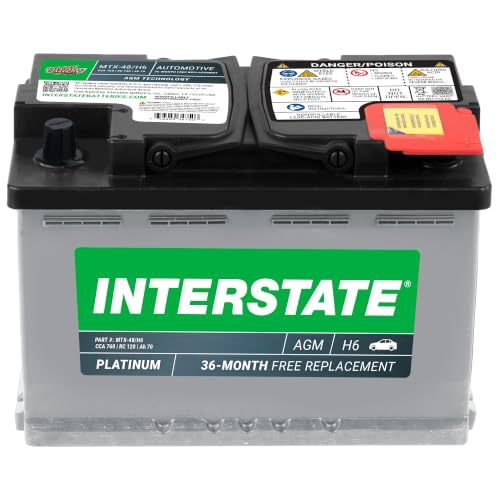
AGM, or absorbed glass mat, is a sealed valve-regulated lead-acid design that stores electrolyte in glass mat separators. EFB, or enhanced flooded battery, is a revised flooded lead-acid design that is commonly described as having lower internal resistance than a standard starter battery and a lower cost than AGM. (Wikipedia)
That difference matters because start-stop systems raise cycling demand. Vehicles with simple start-stop can often use EFB, while more advanced start-stop systems with recuperation or a higher electrical load often point toward AGM.
Why OEM fitment comes first
Battery choice is not only about hardware. It also depends on the vehicle’s charging strategy, battery coding, and how the alternator is calibrated to manage state of charge. If the owner’s manual specifies AGM, replacing it with EFB can create compatibility problems even if the car still starts.
How AGM and EFB differ
AGM batteries are built for fast recharge behavior, stronger cold-cranking performance, and higher cycle life than standard flooded batteries. EFB batteries are an evolution of conventional lead-acid batteries and are aimed at lower-cost improvement over a standard starter battery.
AGM construction and sealed design
AGM stands for absorbed glass-mat. The mat holds the electrolyte in place, and the sealed valve-regulated lead-acid design helps the battery tolerate repeated charging and discharging better than a conventional flooded design.
That construction is why AGM is commonly specified for start-stop, recovery, and high-electrical-load vehicles. It is also why AGM can recharge faster than regular batteries and resist damage from vibration and extreme temperature better than standard batteries.
EFB as upgraded flooded lead-acid
EFB is still a flooded lead-acid battery, but it is built to handle more cycling than a regular starter battery. A common published claim is that EFB batteries have double the number of charging cycles versus conventional starter batteries.
That makes EFB the correct lower-cost match for many simple start-stop cars and for some demanding non-start-stop vehicles. It is not a “cheap AGM.” It is a different match for a different duty cycle.
Recharge speed, internal resistance, and cycle life
Lower internal resistance helps a battery accept charge and handle repeated use. Both AGM and EFB are marketed around lower internal resistance than standard flooded batteries, but AGM generally brings more reserve for heavy cycling and fast recharge.
Cycle life matters most in city driving, where the car restarts often and short trips leave little time to replenish charge. AGM usually has the edge there. EFB still improves on conventional starter batteries, but it is the better fit when the vehicle was designed around that level of demand.
Cold-cranking and high-load behavior
Cold-cranking performance matters in low temperatures because starting effort rises when the engine oil thickens and chemical activity slows. AGM is often the stronger winter choice and is commonly described as having very good cold-start characteristics.
Higher electronics load also pushes the decision toward AGM. Backup cameras, Bluetooth modules, touchscreens, comfort features, and infotainment all draw power while the vehicle is off or idling, and AGM is commonly recommended for vehicles with that kind of load.
Which battery does your car need?
Check the owner’s manual and the label on the current battery. If the manual specifies AGM, that is the replacement type to buy unless the maker allows an approved alternative. If the car came with EFB, staying with EFB is usually the safest OEM match.
Check the owner’s manual first
The manual may list a battery type, a minimum capacity, or a battery management requirement. That is the most reliable clue because the car’s charging system was built around a specific battery behavior, not just a physical size.
Read the label on the existing battery
Many batteries are marked AGM or EFB on the case. If the battery is original or the replacement history is unknown, that label is useful evidence, but it should still be cross-checked against the manual.
Suppose a hatchback with simple start-stop has an EFB label under the hood and the manual lists EFB as the approved type. In that case, moving to AGM is not automatically necessary. The lower-cost match is still the correct one if the vehicle does not call for more.
Match the charging system and battery coding
Some vehicles need battery registration or coding after replacement so the charging system knows what type has been installed. If that step is skipped, the car may charge the battery less effectively, shorten its life, or trigger warning messages.
A common first-timer mistake is buying the right physical size but the wrong chemistry. The battery fits the tray, then the car undercharges it because the charging strategy still expects a different profile.
Why start-stop changes the decision
Start-stop systems raise restart frequency and increase battery cycling demand. That is why a battery that is acceptable in a conventional car may fail early in a start-stop car, especially if the vehicle is used mostly for short trips and city traffic.
Simple start-stop versus advanced start-stop
Simple start-stop systems shut the engine off at a stop and restart it at pull-away. That raises cycling demand, but it does not always require the highest-spec battery. EFB is often the OEM match for this level.
Advanced start-stop systems do more, especially when the vehicle also uses recuperation. Those systems place higher charging demand on the battery and are more likely to require AGM.
What rekuperation changes
Rekuperation recovers energy during braking and sends it back into the battery. That sounds helpful, and it is, but it also increases charging stress and makes the battery work harder in a more complex way.
That is why AGM is recommended for vehicles with recuperation and is often described as the ideal energy-storage unit for start-stop vehicles with recuperation. In that setting, EFB can be the wrong step down.
Why city driving is hard on batteries
City use combines short journeys, frequent stops, accessory loads, and little time for a full recharge. A battery in that pattern needs strong cycle life and good recharge acceptance, not just enough cranking power on a warm day.
AGM is usually the better fit for that use case. EFB can still be correct if the vehicle was designed for it, but the battery has less reserve for heavier use patterns.
Battery decision matrix
| Use case | Recommended battery type | Why | Replacement risk | What to verify in the owner’s manual |
|---|---|---|---|---|
| Simple start-stop | EFB Car Battery | Built for lower-cost start-stop duty and higher cycling than a conventional starter battery | Low if the car was designed for EFB; higher if the car was originally AGM | Approved battery type, capacity, and any battery registration requirement |
| Advanced start-stop with rekuperation | AGM | Handles recuperation and higher charging demand better | High if downgraded to EFB | Battery type, charging system notes, and whether AGM is mandatory |
| High-electronics load | AGM | Better for vehicles with heavier accessory draw and fast recharge needs | Moderate to high if the vehicle was built around AGM | Electrical load guidance, battery type, and coding or adaptation steps |
| Cold-climate commuting | AGM | Stronger cold-cranking performance and better winter reserve | Low if AGM is the OEM match; higher if the manual expects EFB | Minimum cold-start spec, battery type, and tray fitment details |
Simple start-stop
EFB is the correct answer here. It is the lower-cost alternative to AGM and is commonly used in simple start-stop vehicles that do not have the most demanding charging strategy.
If the manual says EFB, buy EFB. If the manual says AGM, do not downgrade just to save money.
Advanced start-stop with rekuperation
AGM is the safer choice here because recuperation adds charging demand and the system is often tuned for a battery that accepts charge quickly and tolerates heavier cycling. This is where an EFB swap can create trouble even before the battery appears “bad.”
High-electronics load
Vehicles with more infotainment, comfort, and convenience electronics tend to need the stronger recharge behavior and reserve capacity of AGM. That is especially true when the car spends a lot of time idling or making short trips.
Cold-climate commuting
Cold weather stresses starting ability and battery reserve. AGM generally has the better cold-cranking behavior, so it is the better bet when winter starts are frequent and temperatures are low.
Choose AGM if… / Choose EFB Car Battery if…
Choose AGM if your manual specifies AGM, your vehicle has recuperation, your car carries a heavy electronics load, or you drive in cold weather with frequent short trips. Choose EFB Car Battery if your vehicle was built for simple start-stop, your manual names EFB, and you want the lower-cost OEM-matched option.
Choose AGM if…
Choose AGM if the existing battery is AGM and the manual says the replacement should also be AGM. Choose it if the car has advanced start-stop with recuperation, if winter starting matters, or if the battery must support heavier accessory use.
Suppose a midsize SUV has start-stop, recuperation, heated seats, and a large infotainment screen. That is a strong AGM case because the charging system and accessory load both point in the same direction.
Choose EFB Car Battery if…
Choose EFB Car Battery if the vehicle came from the factory with EFB and the manual supports that type. It is the correct lower-cost match for many simple start-stop vehicles and for some demanding non-start-stop vehicles that still need more than a standard flooded battery.
If the car’s battery label says EFB and the manual agrees, paying more for AGM may add cost without adding a meaningful benefit.

Can you replace AGM with EFB?
Only do that when the vehicle maker explicitly allows it. If the car was designed for AGM, replacing it with EFB is risky because the charging profile, battery management, and cycling demand may no longer line up with the battery’s limits.
When a downgrade is risky
A downgrade is most risky in vehicles with recuperation, heavy electronics, or aggressive start-stop logic. In those cars, an EFB battery may not accept charge fast enough or may wear out sooner than expected.
AGM replacement should only be AGM replacement unless the manufacturer says otherwise. That rule is simple because the wrong swap can be expensive in a second way: the battery may fail early and still leave the charging issue unresolved.
What can go wrong after the swap?
Undercharging is common when the vehicle expects AGM behavior and the replacement battery cannot keep up. Overcharging can also become a concern if the system is not matched correctly, and either case can shorten battery life or trigger electrical complaints.
There can also be compatibility problems after the wrong swap if the vehicle needs battery coding. In some cars, the battery management system has to know exactly what was installed.
When the same type should be kept
Keep the same type when the manual is specific, when the existing battery label matches the manual, or when the vehicle uses start-stop with recuperation. In those cases, the OEM choice is usually the right one, even if another type looks cheaper.
Frequently asked questions
Which is better EFB or AGM battery?
AGM is better for higher-demand use: recuperation, heavier electronics, stronger winter starting, and more frequent cycling. EFB is better when the vehicle was designed around simple start-stop and the goal is to match the OEM spec at a lower cost. The right answer depends on the car, not the label alone.
What is the difference between EFB and AGM battery?
EFB is an upgraded flooded lead-acid design that improves on a standard starter battery. AGM is a sealed valve-regulated lead-acid battery with glass mat separators, faster recharge behavior, and stronger performance in high-cycling and cold-start situations.
What is the difference between AGM and EFB batteries?
AGM generally offers higher cycle life, better cold-cranking performance, and faster recharge. EFB is usually the more affordable option and is often used in simple start-stop vehicles. Both are better than a standard flooded battery for repeated cycling, but they are not interchangeable in every car.
Can I replace an AGM battery with an EFB battery?
Only if the manufacturer allows that downgrade. If the vehicle was designed for AGM, replacing it with EFB can cause undercharging, shorter service life, and compatibility problems with the battery management system. Check the manual and the existing battery label before buying.
Is AGM worth it over EFB for my car?
Yes, if your car has recuperation, a high electronics load, cold-weather commuting, or a manual that specifically names AGM. No, if your vehicle is a simple start-stop model and EFB is the OEM spec. AGM is worth the extra cost when the vehicle’s demand justifies it.
Does my car need AGM or EFB battery?
Check the owner’s manual first, then read the label on the current battery. If the manual calls for AGM, replace with AGM. If it calls for EFB, use EFB unless the manufacturer explicitly approves an AGM upgrade. The charging system and battery coding should guide the decision.
Products related to this article
Sponsored / affiliate links. As an Amazon Associate I earn from qualifying purchases. I may earn additional commission from eligible campaigns.