Are Japanese Cars Illegal in US? 2026 Info
Lots of people wonder about Are Certain Japanese Cars Illegal in the US? 2026 Update. It can seem like a really tricky question to answer, especially if you’re new to figuring out car import rules.
But don’t worry! We’ll walk through this step-by-step so it’s easy to understand. You’ll learn exactly what you need to know to get clear answers.
Let’s start by looking at what makes some cars okay and others not.
Understanding Japanese Car Import Laws in the US
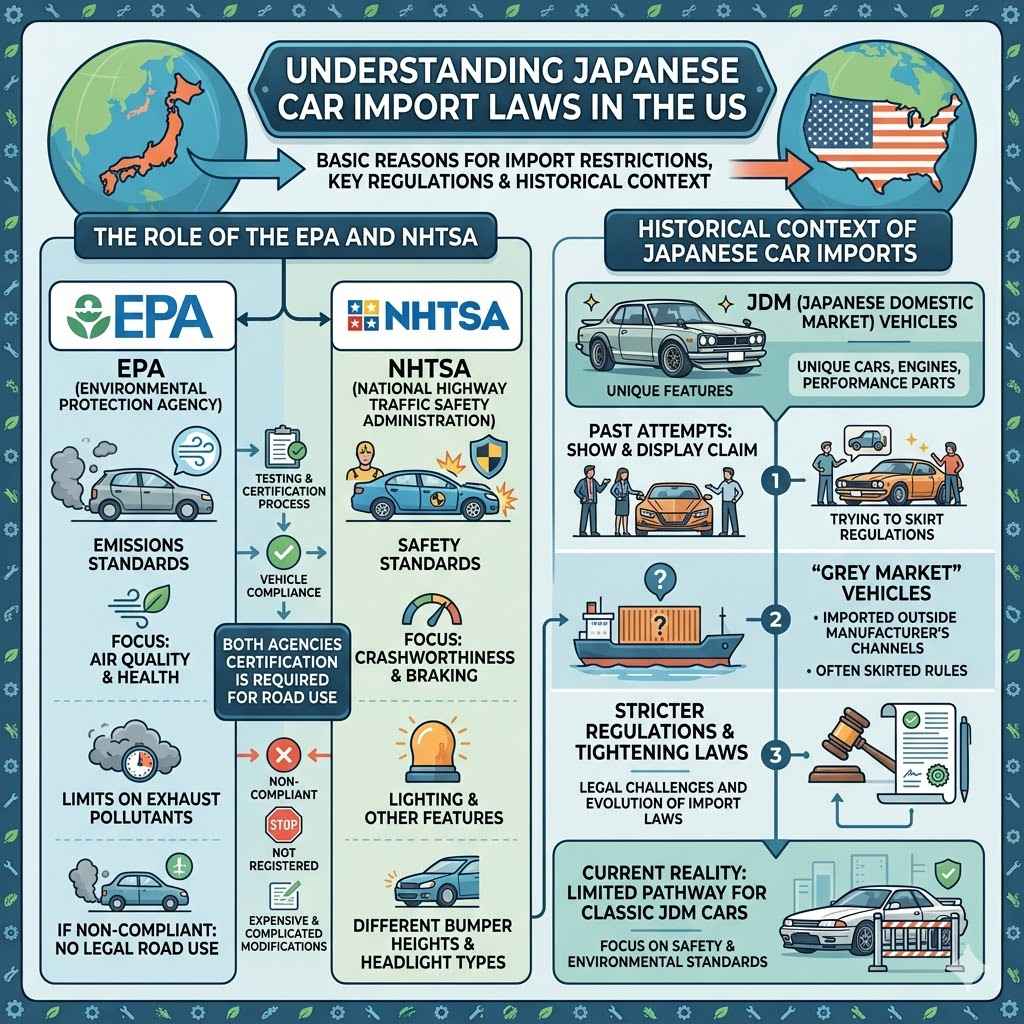
This section covers the basics of why some Japanese cars face import restrictions into the United States. We will explore the historical context and the primary regulations that govern vehicle imports, setting the stage for why certain models are not permitted for direct sale or registration in the US. This will include an overview of the Environmental Protection Agency (EPA) and National Highway Traffic Safety Administration (NHTSA) standards.
The Role of the EPA and NHTSA in Vehicle Imports
The Environmental Protection Agency (EPA) and the National Highway Traffic Safety Administration (NHTSA) are the two main government bodies that dictate whether a vehicle can be legally imported and used in the United States. The EPA focuses on emissions standards, ensuring that a car’s exhaust pollutants meet specific limits. These limits are designed to protect air quality and public health.
If a car, particularly an older or specialized Japanese model, was not originally designed or tested to meet these US emissions standards, it cannot be legally imported for general use.
The NHTSA, on the other hand, is concerned with vehicle safety. This includes crashworthiness, braking systems, lighting, and other safety features. Cars manufactured for the Japanese domestic market might not have safety equipment that aligns with US regulations.
For instance, different bumper heights, headlight types, or seatbelt systems could prevent a car from being compliant. Both agencies have rigorous testing and certification processes that vehicles must pass.
Without proper certification from both the EPA and NHTSA, a vehicle is considered non-compliant. This means it cannot be registered for road use in most US states. The process for making a non-compliant vehicle meet these standards can be extremely expensive and complicated, often involving significant modifications and re-testing.
Historical Context of Japanese Car Imports
For many years, the US market has been flooded with popular Japanese car models. However, some enthusiasts and collectors have always been drawn to unique Japanese domestic market (JDM) vehicles that were never officially sold in the US. These cars often feature different engine options, right-hand drive configurations, and specialized performance parts.
The desire to import these cars has led to a complex legal landscape.
In the past, some individuals attempted to import these JDM cars by claiming they were for “show and display” purposes, or by trying to modify them to meet US standards. However, the regulations have become stricter over time. The concept of “grey market” vehicles, which were imported outside of the manufacturer’s official channels, has been a recurring issue.
These grey market imports often skirted EPA and NHTSA rules, leading to legal challenges and the eventual tightening of import laws.
The evolution of these laws means that the pathway to legally importing many classic or enthusiast JDM cars is limited. Understanding this history helps explain why a simple import process isn’t always available for every Japanese car. The focus is always on ensuring that any vehicle on US roads meets stringent environmental and safety requirements.
Navigating the 25-Year Import Exemption Rule
The United States has a specific rule that allows certain vehicles to be imported without meeting current EPA and NHTSA standards. This rule is based on the vehicle’s age. We will explore this exemption in detail, explaining how it works, its limitations, and what it means for enthusiasts looking to import classic Japanese cars.
This is a key area that often causes confusion.
What is the 25-Year Exemption?
The 25-year exemption is a federal law that allows vehicles 25 years or older to be imported into the United States without needing to meet the current Federal Motor Vehicle Safety Standards (FMVSS) set by the NHTSA or the emissions standards set by the EPA. This date is based on the vehicle’s manufacture date. For example, a car manufactured in January 1999 would become eligible for import under this exemption in January 2024.
This exemption was put in place to allow classic and historically significant vehicles to be preserved and enjoyed. It recognizes that older vehicles were built to different standards and regulations than modern cars. For many JDM car enthusiasts, this 25-year rule is the primary way they can legally bring desirable models from Japan into the US.
It’s important to note that the exemption applies to the vehicle being 25 years old, not necessarily the model year. This means a car built in December 1999 would still need to wait until December 2024 to be eligible. The clock starts ticking from the date of manufacture.
Once a vehicle meets this age requirement, it can be imported into the US without the extensive and costly process of proving compliance with current regulations.
How the 25-Year Rule Affects JDM Cars
The 25-year exemption has been a lifeline for many JDM car fans. It opens the door to importing iconic Japanese sports cars, kei cars, and other unique models that were never officially sold in the American market. For example, legendary vehicles like the Nissan Skyline GT-R (R32, R33 generations), various Mazda RX-7 models, and many older Toyota Supra variants become eligible for import once they reach their 25th birthday.
This rule allows enthusiasts to bypass the stringent testing and modification requirements that would otherwise make importing these cars prohibitively expensive. However, it’s not a free pass for all vehicles. There are still other regulations to consider, such as potential restrictions on certain highly polluting vehicles or vehicles that may have been banned for other reasons.
The demand for JDM cars has surged as they become eligible under the 25-year rule. This has led to a thriving market for import services and specialized mechanics. Many of these cars are brought in for restoration or to be kept in their original, unmodified state.
The popularity of this exemption highlights the cultural significance and lasting appeal of these Japanese automobiles.
Example of a 25-Year Eligible Car
Consider a 1995 Mazda RX-7 FD. This car, celebrated for its twin-turbo rotary engine and sleek design, was never officially sold in the US in its initial production years. By 2020, it reached its 25th birthday, making it eligible for import into the US without needing to meet current EPA or NHTSA standards.
An individual looking to import a 1995 RX-7 FD could do so, provided they follow all import procedures and customs declarations.
The importer would still need to handle customs clearance, pay any applicable duties and taxes, and ensure the vehicle is properly declared. While the EPA and NHTSA compliance hurdles are removed, other logistical and legal steps remain. This often involves using an experienced import broker who understands the process thoroughly.
The eligibility of cars like the RX-7 FD under the 25-year rule has allowed a new generation of car enthusiasts in America to experience these sought-after Japanese performance vehicles firsthand, preserving automotive history and providing access to rare models.
Understanding “Show or Display” Exemptions
Beyond the 25-year rule, there are other, more limited ways to import certain Japanese cars. The “Show or Display” exemption is one such avenue, often used for extremely rare or historically significant vehicles. This section will clarify what this exemption entails, who qualifies, and its significant restrictions.
What is the Show or Display Exemption?
The Show or Display exemption is a specific provision managed by the NHTSA that allows a limited number of vehicles, up to 2,500 per year, to be imported into the United States without meeting current federal safety and emissions standards. This exemption is intended for vehicles that are considered rare, historically or technologically significant, or of cultural interest.
To qualify for this exemption, a vehicle must be at least 25 years old, measured from the date of manufacture. The importer must also demonstrate that the vehicle has significant historical or technological value. Furthermore, the exemption comes with strict limitations on how much the vehicle can be driven.
It can only be driven a maximum of 2,500 miles per year.
The purpose of this exemption is to allow museums, collectors, and cultural institutions to preserve and display significant automotive examples. It is not intended as a loophole for regular road use of non-compliant vehicles. Obtaining this exemption involves a formal application process with the NHTSA, requiring detailed documentation and justification.
Limitations and Requirements for Show or Display
The primary limitation of the Show or Display exemption is the strict mileage cap of 2,500 miles per year. This means the vehicle cannot be used as a daily driver or for regular transportation. The importer must maintain records of the vehicle’s mileage.
If the 2,500-mile limit is exceeded, the vehicle could lose its exempt status.
Another significant requirement is that the vehicle must be maintained in its original or historically accurate condition. Modifications that alter its historical or technological significance are generally not permitted. The application process itself can be complex, requiring evidence of the vehicle’s rarity, engineering, or historical importance.
This often involves letters from automotive historians, museum curators, or documentation from the manufacturer.
If a vehicle imported under the Show or Display exemption is later intended for sale or regular use, it must then be brought into compliance with all applicable federal safety and emissions standards. This often involves extensive and costly modifications, making it impractical for most importers. Therefore, this exemption is best suited for those who genuinely wish to preserve and display a rare vehicle.
Case Study: Importing a Rare JDM Concept Car
Imagine a collector wants to import a one-off concept car from a Japanese manufacturer, built in 1998. This car was never produced in mass quantities and features innovative design and technology for its time. While it is less than 25 years old, it might be eligible for the Show or Display exemption due to its historical and technological significance.
The collector would need to submit a detailed application to the NHTSA, including extensive photographic evidence, design specifications, and testimonials from automotive experts about the car’s unique value. They would have to prove that this car represents a significant moment in automotive design or engineering.
If approved, the car could be brought into the US and displayed at car shows or in a private collection. However, the collector would be limited to driving it only 2,500 miles per year. This scenario highlights how the Show or Display exemption caters to very specific needs for rare automotive preservation, not general importation.
Are Certain Japanese Cars Illegal in the US? 2026 Update Considerations
This section directly addresses the core question, focusing on what might change or remain consistent regarding Japanese car imports into the US, particularly looking towards future years like 2026. We will discuss how the existing rules are applied and what potential shifts in policy or interpretation could occur, impacting the availability of certain vehicles.
Current Status of Japanese Car Imports
As of now, the primary gateway for importing most desired JDM cars into the US remains the 25-year exemption rule. Vehicles that have reached their 25th birthday are generally eligible for import, provided they are not otherwise prohibited. This continues to be the most accessible pathway for enthusiasts looking to acquire models like older Nissan Skylines, Mitsubishi Evos, or various classic sports cars from Japan.
Cars that are less than 25 years old generally cannot be legally imported for road use unless they are modified to meet current US EPA emissions and NHTSA safety standards. This modification process is typically very expensive and technically challenging, often making it unfeasible for most individuals. The “Show or Display” exemption offers a limited alternative for extremely rare vehicles but comes with significant restrictions.
The legal landscape is largely stable under current administrations, with the focus remaining on enforcing the existing regulations. However, the continuous aging of Japanese car models means that more sought-after vehicles are regularly becoming eligible for import under the 25-year rule, fueling continued interest and activity in the JDM import market.
Potential Changes and Future Outlook (Approaching 2026)
Looking ahead to years like 2026, the core import regulations are unlikely to see dramatic, sudden changes. The 25-year rule is a federal statute that has been in place for a long time and is generally stable. Each year, more Japanese vehicles will simply pass the 25-year mark and become eligible for import.
For example, cars manufactured in 2001 will become eligible in 2026.
This means that models like the early 2000s Nissan 350Z, some earlier generations of the Subaru WRX STI, and various other popular performance cars from that era will become legal to import. This ongoing eligibility expansion is a predictable and consistent aspect of the import market. Any potential policy shifts would likely involve increased scrutiny on the import process itself or enforcement of existing rules, rather than changing the fundamental 25-year exemption.
It is always wise for individuals interested in importing to stay informed about any announcements from the NHTSA or EPA, although significant policy shifts are rare. The main “update” is simply that more cars are becoming eligible as time passes. Therefore, if a specific Japanese car was not legal to import a few years ago due to its age, it might be legal now or very soon.
Sample Scenario: Importing a 2001 Model Year Car
Let’s consider a car manufactured in 2001, such as a popular JDM sedan or sports coupe. In 2026, this car will have reached its 25th birthday. An individual in the US who wishes to import this vehicle can begin the process through an established import company or by handling it themselves.
The steps would involve finding a suitable vehicle in Japan, arranging for its purchase, and then coordinating shipping to the US. Upon arrival, customs paperwork must be completed, including declaring the vehicle’s origin and age. As it meets the 25-year exemption, it would not require extensive modifications for EPA emissions or NHTSA safety compliance.
The importer would still be responsible for any import duties, taxes, and state-specific registration requirements, which can vary by location. This straightforward process, enabled by the 25-year rule, is why many enthusiasts eagerly await the eligibility of their favorite models.
The Process of Importing a Japanese Car
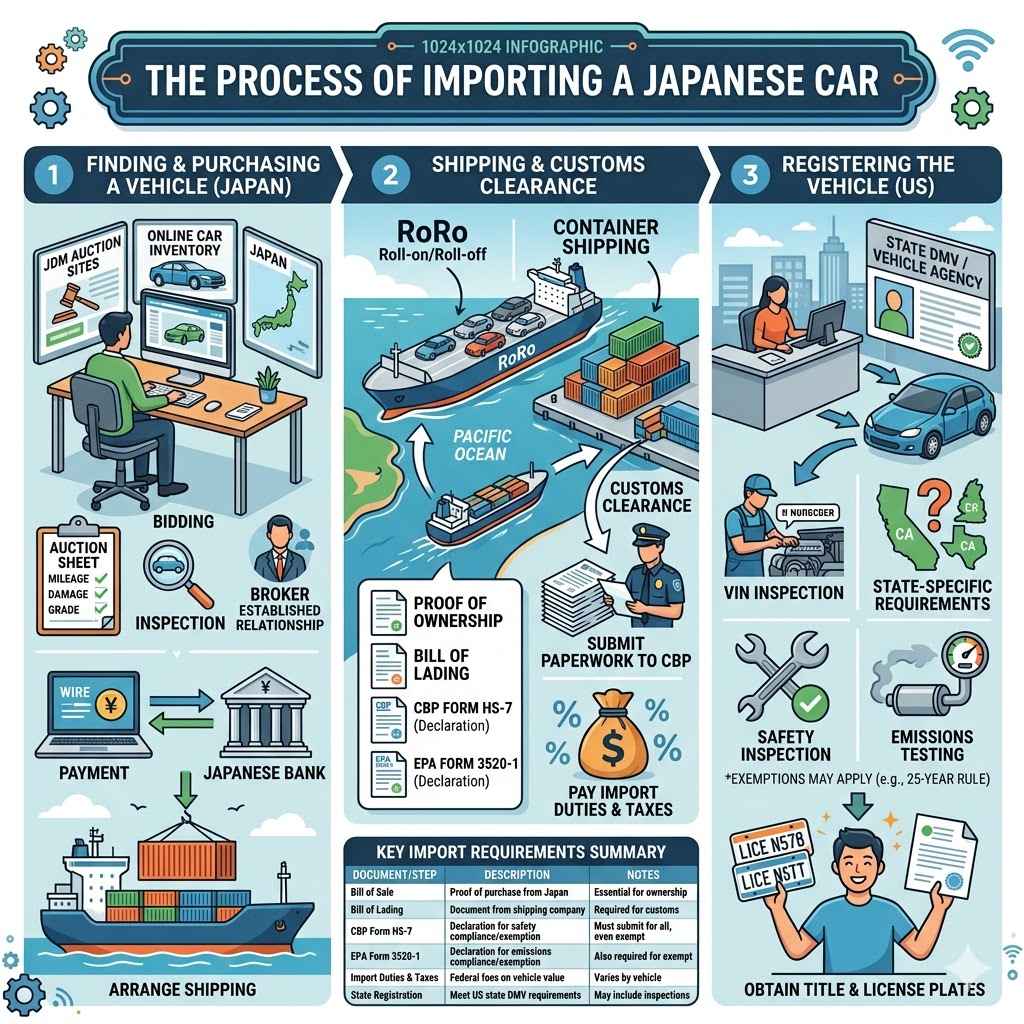
Successfully importing a Japanese car involves several key steps. This section will break down the logistical and administrative requirements, from finding a car in Japan to registering it in the US. It is crucial to understand these procedures to avoid legal pitfalls and ensure a smooth importation.
Finding and Purchasing a Vehicle in Japan
The first step is finding the desired vehicle. Many enthusiasts use online JDM car auction sites or work with specialized import brokers. Auction sites provide access to a wide inventory, allowing buyers to bid on vehicles.
Working with a broker can simplify the process, as they often have established relationships with Japanese dealers and auction houses and can handle the initial inspection and bidding.
When purchasing, it is vital to get as much information as possible about the car’s condition. This includes checking the auction sheet, which provides details on the vehicle’s mileage, any existing damage, and its overall grade. Professional inspection services can also be hired to thoroughly examine the car before purchase.
Payment for the vehicle typically involves wire transfers to the seller or auction house. Once the purchase is complete, arrangements need to be made for shipping the vehicle from Japan to a US port. This usually involves a specialized car shipping company.
Shipping and Customs Clearance
Shipping costs can vary depending on the size of the vehicle and the shipping method chosen (e.g., roll-on/roll-off or container shipping). Roll-on/roll-off (RoRo) is generally the most cost-effective option, where vehicles are driven onto a ship and secured. Container shipping offers more protection but is typically more expensive.
Upon arrival at a US port, the vehicle must go through customs clearance. This involves submitting all necessary paperwork to US Customs and Border Protection (CBP). For vehicles 25 years or older, the CBP form HS-7 (Declaration Form) and EPA Form 3520-1 are still required to declare that the vehicle is exempt or compliant.
The importer must also provide proof of ownership and the bill of lading.
Any applicable import duties and taxes must be paid at this stage. The rate of duty can vary, but for most vehicles, it is a percentage of the vehicle’s value. It is crucial to have all documentation in order to avoid delays or penalties during customs clearance.
Registering the Imported Vehicle in the US
After clearing customs, the vehicle needs to be registered in the US state where the owner resides. This process varies significantly by state. Generally, you will need proof of ownership, a bill of sale, the customs clearance forms, and potentially a VIN inspection to verify the vehicle’s identification number.
Some states may require a safety inspection, even for vehicles that are exempt from federal standards. Emissions testing requirements also vary by state. In states with strict emissions testing, you may need to demonstrate that your imported vehicle meets local standards, although vehicles over a certain age or those imported under the 25-year rule are often exempt from these tests.
Obtaining a title and license plates is the final step. This requires working with your local Department of Motor Vehicles (DMV) or equivalent agency. Having all the necessary import and ownership documents readily available will greatly streamline the registration process.
| Document/Step | Description | Notes |
|---|---|---|
| Bill of Sale | Proof of purchase from the seller in Japan. | Essential for proving ownership. |
| Bill of Lading | Document from the shipping company detailing the shipment. | Required for customs. |
| CBP Form HS-7 | Declaration of compliance or exemption for safety standards. | Must be submitted even for 25-year exempt vehicles. |
| EPA Form 3520-1 | Declaration of compliance or exemption for emissions standards. | Also required for exempt vehicles. |
| Import Duties and Taxes | Payment of federal fees based on vehicle value. | Varies by vehicle and origin. |
| State Registration | Meeting requirements of your US state DMV. | May include VIN inspection, safety checks. |
Frequently Asked Questions
Question: Are all Japanese cars automatically illegal in the US if they are right-hand drive?
Answer: No, not all right-hand drive Japanese cars are illegal. The primary factors are compliance with US safety and emissions standards. Once a car reaches 25 years old, it is generally exempt from these standards and can be legally imported and registered, regardless of whether it is right-hand drive.
Question: Can I import any car from Japan that is over 25 years old?
Answer: Generally, yes. If a car is 25 years or older, it is usually exempt from federal safety and emissions standards. However, you must still follow all import procedures, pay duties, and meet any state-specific registration requirements.
Question: What happens if I try to import a car that is not compliant and is less than 25 years old?
Answer: Importing a non-compliant vehicle that is less than 25 years old without proper modification and certification can result in the vehicle being seized by customs. You may also face fines. It is much more practical and legal to either wait for the vehicle to meet the 25-year exemption or modify it extensively to meet all standards.
Question: Do I need to be a US citizen to import a Japanese car?
Answer: No, you do not necessarily need to be a US citizen. However, you will need to follow all US import regulations and customs procedures. Residency in the US is typically required for state registration after import.
Question: Will the rules for importing Japanese cars change significantly by 2026?
Answer: It is unlikely that the fundamental rules, particularly the 25-year exemption, will change dramatically by 2026. The main “change” is that more vehicles will become eligible for import each year as they turn 25.
Conclusion
Navigating Japanese car import rules is clear when you focus on the 25-year exemption. Most Japanese cars less than 25 years old are not legal for US road use unless heavily modified. Older vehicles meeting the age requirement can be imported legally.
Always follow customs and state registration steps.