Best Car Alarms for Security (2026): We Compared
For most cars, the strongest anti-theft setup is a hidden GPS tracker plus an immobilizer. Add a loud alarm and steering-wheel lock only when your main risk is keyless relay theft, towing, or parts theft. Pick the wrong tool, and you can waste hundreds on gear that alerts too late, fails against towing, or never helps recovery. This guide compares alarms, trackers, immobilizers, and physical deterrents by theft scenario, total cost, and recovery value.
Quick comparison
| Product | Badge | Best for | Price | ||
|---|---|---|---|---|---|
 |
Viper 5706V 2-Way Car Security with Remote Start SystemViper | Our pick | 2-way security system · Viper · Remote start | $283.00
Price as of 16 Oct 2026
|
View |
 |
Compustar CS4900S/CS5300-S 2-Way All-in-One Remote Start &Compustar | Budget pick | All-in-one system · Compustar · Keyless entry | $139.00
Price as of 16 Oct 2026
|
View |
 |
Tevlaphee Steering Wheel Lock Anti-Theft Car Device HeavyTevlaphee | Also great | Steering wheel lock · Tevlaphee · Heavy duty | $32.39
Price as of 16 Oct 2026
|
View |
 |
Cube Pro Real-Time GPS Tracker for Cars & Trucks w/ 4G LTECUBE | Upgrade pick | GPS tracker · CUBE · Real-time tracking | $69.99
Price as of 16 Oct 2026
|
View |
Vehicle thefts fell to 659,880 in the US in 2025, 23% fewer than 2024, and that was the lowest theft total in decades. Even so, model risk still varies; the Hyundai Elantra is the most-stolen model named in the source data, so your best choice depends on where you park and how thieves usually take cars like yours.
How we chose
We compared each device by the theft method it addresses, install effort, recurring cost, recovery value, and visible deterrence. We also weighed whether it helps prevention, recovery, or both, because those jobs are not the same.
Cost matters over time. A tracker with a low sticker price can become expensive after subscription fees, while an immobilizer may cost more to install but carry no monthly bill.
Vehicle use case matters too. A daily driver in a garage, a truck full of tools, and a fleet van parked on a street do not need the same stack.
Car alarm system: best for audible deterrence
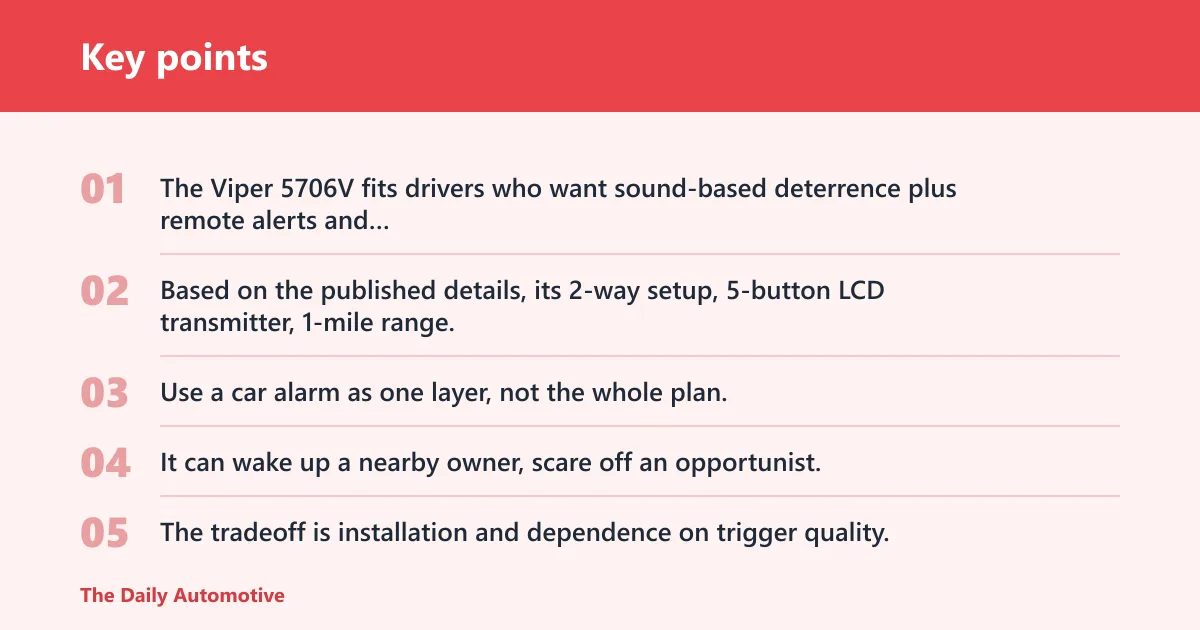
The Viper 5706V fits drivers who want sound-based deterrence plus remote alerts and remote start in one system. Based on the published details, its 2-way setup, 5-button LCD transmitter, 1-mile range, and door and trunk triggers make it a stronger choice than a basic siren-only kit.
Use a car alarm as one layer, not the whole plan. It can wake up a nearby owner, scare off an opportunist, and send an app or remote alert when a trigger trips, but it does not stop a thief from loading the car, disabling power, or leaving before anyone responds.
The tradeoff is installation and dependence on trigger quality. DIY kits can suit simple jobs, while professional installation is the safer call for vehicles with complex wiring, because a sloppy install can create nuisance alarms or weak coverage. In other words, this is good for attention; it is not recovery gear.
How alarms work in practice
Alarms rely on sound and sensor triggers. Door, trunk, shock, tilt, and glass-break inputs can all prompt a siren, and some systems add phone-based alerts so you know something happened even if the car is out of earshot.
That matters most in driveways, apartment lots, and street parking where a thief wants speed. A loud alarm makes that harder. It does less against theft that starts with a tow truck, a flatbed, or a hidden key access problem.
GPS tracker: best for recovery
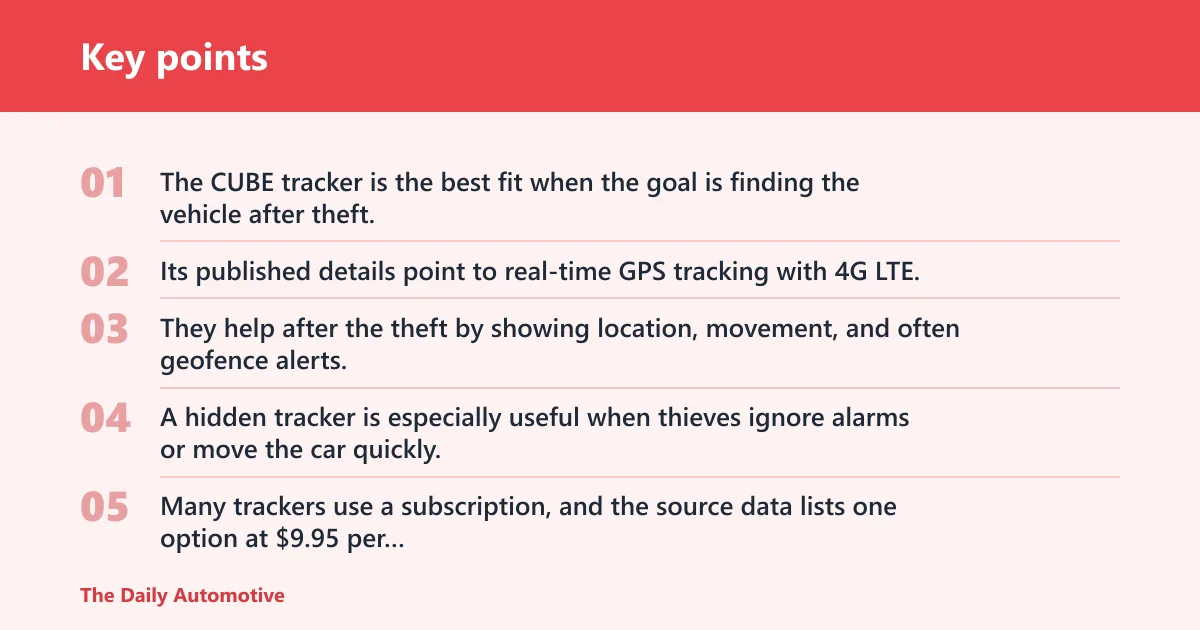
The CUBE tracker is the best fit when the goal is finding the vehicle after theft. Its published details point to real-time GPS tracking with 4G LTE, IP67 waterproof housing, and hidden magnetic attachment, which are the traits you want in a recovery-first device.
Trackers do not prevent theft. They help after the theft by showing location, movement, and often geofence alerts, which can speed recovery if you act fast and share the location with law enforcement. A hidden tracker is especially useful when thieves ignore alarms or move the car quickly.
Expect ongoing cost. Many trackers use a subscription, and the source data lists one option at $9.95 per month; another lists a free first year and then about $0.30 per day. Battery-powered units also need charging or replacement planning, while hardwired units depend on clean concealment and power access.
Hidden magnetic vs OBD2 trackers
Hidden magnetic trackers are better when you want concealment and flexible placement. Battery-powered versions reduce wiring work, while hardwired versions avoid charging but need a proper install and more care to keep them hidden and weather-resistant.
OBD2 trackers are easier to fit because they plug into the diagnostic port. That also makes them easier to find and remove, so they suit fleet use and short-term monitoring better than stealth-heavy recovery plans unless you can conceal the port area well.
Where trackers help most
Suppose a thief steals a crossover from a grocery lot and drives it to a garage within minutes. An alarm may be ignored, but a hidden tracker can still point officers to the vehicle before it disappears into chop-shop or export channels.
That is the real value: location after the fact. A tracker does not stop the first movement, but it can shorten the gap between theft and recovery.
Immobilizer: best for blocking starts
An immobilizer is the strongest prevention-first option for many cars because it blocks ignition or start authorization. The EASYGUARD IM002 is positioned as an immobilizer with no ongoing cost, which is exactly what you want if you care more about stopping the drive-away than getting a recovery ping later.
Immobilizers typically use RFID or electronic authorization. Without the right signal or credential, the car should not start, which means the thief has to defeat the authorization system before the vehicle even moves.
That gives immobilizers an edge over alarms for prevention. Alarms can be ignored; a properly fitted immobilizer can stop the theft attempt from becoming a stolen vehicle in the first place.
Why immobilizers beat alarms for prevention
Sound can pressure a thief to leave quickly. Authorization failure can stop the theft before it starts. Those are very different outcomes, and only one of them keeps the car where it is.
If your vehicle is already prone to relay attacks or key cloning, an immobilizer belongs near the top of the list. Add a tracker after that if recovery matters too.
Physical locks: best for visible barriers
A steering wheel lock or wheel clamp adds visible resistance. It is tool-free, cheap compared with electronics, and obvious enough that many opportunistic thieves will move on to an easier target.
The Tevlaphee Steering Wheel Lock is the best steering wheel lock in the source list. It is described with a double-protection design, four locking hooks, and a universal fit for most vehicles, which makes it practical for daily use when you want a strong visual cue.
Steering wheel lock
Steering wheel locks are best when you want a quick, visible barrier. They are easy to remove by the owner and add little complexity, which is why they remain useful even in cars with electronic protection.
The weak point is obvious: determined thieves can cut, pry, or work around some designs. Still, a visible bar across the wheel changes target choice, and that alone matters in open parking areas.
Wheel clamp or wheel lock
Wheel clamps are better for long parking situations and anti-tow or anti-roll use. They create more tamper resistance than a steering wheel bar and send a clearer message that the vehicle is not a fast grab.
That makes them useful for storage lots, trailers, airport parking, and vehicles that sit for weeks. A clamp is awkward to defeat quietly, but it is bulky, so it fits fixed parking better than a daily commuter.
Anti-theft stack matrix
The right answer depends on the theft method. The table below maps common scenarios to the most sensible stack, with install effort, recurring cost, and the main weakness of each approach.
| Threat type | Recommended device stack | Install effort | Recurring cost | Primary weakness |
|---|---|---|---|---|
| Relay theft on keyless cars | Immobilizer + hidden GPS tracker + steering wheel lock | Medium to high | Low to medium if tracker is subscribed | Alarm-only setups are often ignored |
| Tow-away or flatbed theft | Wheel clamp + hidden GPS tracker | Low to medium | Low to medium if tracker is subscribed | Clamp only works if it is installed before the tow |
| Tool theft from trucks | Alarm with door and cargo triggers + bed or cab lock + tracker | Medium | Low to medium if tracker is subscribed | Alarm may trigger too late in a busy lot |
| Daily street parking | Steering wheel lock + immobilizer + tracker | Low to high depending on immobilizer | Low to medium if tracker is subscribed | Physical locks deter, but do not stop every attack |
| Long-term storage | Wheel clamp + hidden tracker + immobilizer | Medium | Low to medium if tracker is subscribed | Bulky hardware is inconvenient for daily use |
- Match the stack to the theft method first.
- Choose prevention gear before recovery gear if the vehicle is high risk.
- Add a tracker when you need location after theft or towing.
- Use visible barriers when the car sits where thieves can see it.
- Count subscription, install, battery, and replacement costs before buying.
What anti-theft device is best for your vehicle?
The best device depends on the vehicle and the threat. High-theft compact cars need start prevention and recovery support; Hyundai and Kia owners should prioritize immobilization and visible deterrence; trucks with tools need alarm coverage plus access resistance; long-term parking calls for physical locks and tracking.
Insurance often changes the math too. Some carriers care more about installed prevention than alarms alone, and model risk matters because theft rates are not even across the market. If you own a high-risk model, a layered stack is easier to justify than a single gadget.
High-theft compact cars
For a compact car that draws attention from opportunistic thieves, start with an immobilizer, then add a hidden tracker. A steering wheel lock is a low-cost extra if the car sits on the street overnight.
This mix handles both prevention and recovery. It also avoids overspending on a loud alarm that may scare a thief without stopping the theft.
Hyundai and Kia owners
For a Hyundai or Kia, the best anti-theft device is usually an immobilizer first, then a tracker, then a visible lock. That order matters because many owners need actual start prevention, not only noise after the break-in attempt begins.
Since the Hyundai Elantra is named as the most-stolen model in the source data, the risk case is not abstract. A layered stack is a better fit than a single alarm.
Trucks with tools
For trucks that carry tools, an alarm with door and cargo triggers is helpful, but the main need is making access slow and obvious. Pair that with a tracker, and use locked storage for tools whenever possible.
A thief who wants tools may ignore a weak siren if the payoff is quick. A visible lock on the vehicle and a locked tool area both change that calculation.
Long-term parking
For long-term parking, a wheel clamp or wheel lock is the best first layer because it resists roll-away and towing. Add a hidden tracker so you can find the vehicle if someone moves it anyway.
That combination matters most at airports, storage lots, and seasonal parking. A steering wheel lock helps, but a clamp sends a stronger signal over a longer period.
Which one should you buy?
If you want the simplest answer, buy a hidden GPS tracker plus an immobilizer first. Add a steering wheel lock if you park outside, and buy a car alarm only if you want noise and remote alerts as another layer. Use a wheel clamp when towing or long-stay parking is part of the risk.
If budget is tight, start with a visible lock and an immobilizer. If recovery matters more than prevention because you park on the street or in public lots, prioritize the tracker. If you own a fleet or a work truck, pick the system that balances live location with controlled access to the vehicle.
For ongoing cost, remember that trackers can run monthly or daily charges, while immobilizers usually do not. That difference matters over one year and matters even more over three.
Say your sedan lives on a city street and you worry about relay theft. A hidden tracker alone will not stop a drive-away, but pairing it with an immobilizer and a steering wheel lock forces the thief to beat three separate layers instead of one.
Suppose your truck sits at a job site with power tools locked inside. A loud alarm helps, but a lock on the cargo area and a tracker matter more because the goal is both deterring entry and finding the truck if it is moved.
Frequently asked questions
What is the best car alarm for security?
The best alarm in the source list is the Viper 5706V, but the better question is whether an alarm matches your theft risk. Alarms are strongest as audible deterrence and alerting tools. They work best with an immobilizer or tracker, not as a standalone answer.
Do car alarms or GPS trackers work better against theft?
They do different jobs. Alarms help scare off thieves and alert nearby people, while GPS trackers help recover the car after theft. If your main risk is drive-away theft, a tracker plus immobilizer is usually the smarter base, with an alarm added as support.
What anti-theft device is best for a Hyundai or Kia?
An immobilizer is the best first pick for a Hyundai or Kia, especially on models with higher theft risk. Add a hidden tracker if recovery matters, then use a steering wheel lock for visible deterrence. That stack covers prevention, location, and opportunistic theft.
Are steering wheel locks worth using with a GPS tracker
Yes. A steering wheel lock adds a visible barrier that may move a thief to an easier target, while a GPS tracker improves recovery if the car is taken anyway. The two do different jobs, so they work better together than either does alone.
How much does a car GPS tracker cost per month?
Pricing varies by device and plan. The source data lists one tracker from $9.95 per month and another with a free first year, then about $0.30 per day. Check total ownership cost, not just monthly billing, because batteries, replacement hardware, and installation can add up.
Will a hidden tracker help recover a stolen car?
Yes, if it stays powered, hidden, and connected. A hidden tracker is recovery gear, not prevention gear, so it helps most when the vehicle is moved after theft or towing. Hidden placement and weather resistance matter because a discovered or damaged tracker loses most of its value.
Products related to this article
Sponsored / affiliate links. As an Amazon Associate I earn from qualifying purchases. I may earn additional commission from eligible campaigns.
 4G GPS Tracker Car Anti-Theft Long Battery Life 20000mAh Real Time GPS Tracking Device Magnet No Geographic Restriction Car Tracker with Alerts, Geo Fence, History Playback TK905C
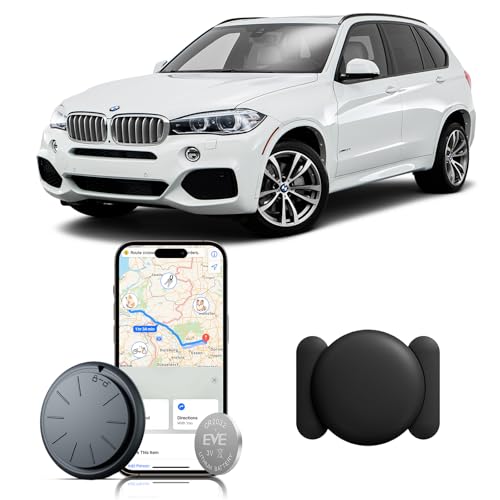 ZFSJTAG Car GPS Tracking Device for Vehicles, 1PCS Real Time GPS Tracker for Car, Work with Find My (iOS Only),Hidden Mini GPS Tracker,No Monthly Fee (Black Tracker, Black Magnetic Case)