Best RWD Drivetrain for Budget Sports Cars
Pick RWD if you want the cleanest steering feel and easier power delivery in a budget sports car; choose AWD for stronger launches and better rain grip, or FWD if purchase price and running costs matter most. Pick the wrong layout and you pay for tires, traction limits, or a chassis that works against your goals. This guide compares RWD, AWD, and FWD for street use, autocross, drift, drag racing, and wet-weather driving.
RWD vs AWD vs FWD at a glance
In plain terms, RWD sends power to the rear axle, AWD sends power to both axles, and FWD sends power to the front axle. For a budget sports car, “best” means more than horsepower: it also means a usable limited-slip differential when possible, sensible gearing, and repair costs that fit an older chassis. (Motortrend)
| Drivetrain | Street use | Drifting | Drag racing | Autocross and track-day use | Wet-weather use |
|---|---|---|---|---|---|
| RWD | Best balance and steering feel; easier to rotate | Best fit; rear slip is easier to control | Traction-limited off the line | Strong choice for predictable balance and exit traction | Good with proper tires, but easier to spin than AWD |
| AWD | Heavier and costlier, but stable in poor grip | Less natural for drift work | Often the strongest launch choice | Fast in many cars, but can add understeer bias | Best traction and confidence in rain or low grip |
| FWD | Usually cheaper to buy and run | Least favored for rear-slip driving | Can struggle with wheelspin and weight transfer | Can be quick, but often loses feel and exit traction to RWD | Predictable enough, though not as secure as AWD |
That table is the short version. RWD is the default sports-car layout because it gives the front tires one job and the rear tires another. AWD puts more grip to work at launch and on corner exit. FWD often wins the ownership-cost race, but it usually gives up the cleanest performance feel.
📊 MotorTrend’s 2016 Best Driver’s Car field included 12 sports cars. Source: 2016 Motor Trend Best Driver’s Car.
What makes RWD the budget sports-car default?
RWD is the classic sports-car layout because it separates steering from propulsion. The front axle does the turning, while the rear axle puts power down. That split usually gives cleaner steering feel, easier rotation, and a chassis that reacts in a way performance drivers often want.
For budget shoppers, RWD also shows up in cars that were built around driver feel rather than all-weather utility. Used-market examples include older Japanese and German coupes and roadsters. The second-hand market has been on fire for a couple of years, so condition and ownership history matter as much as badge appeal.
Rear-axle drive and chassis balance
RWD typically makes a car more predictable at the limit because throttle input can help rotate the chassis instead of fighting the front tires. That matters in corner entry, mid-corner balance, and corner exit. For a budget sports car, the layout can make the car feel more adjustable without requiring expensive power.
It is also why many drivers prefer RWD for a street car that still sees spirited driving. You get a clearer link between steering input, throttle, and weight transfer. That matters more than peak horsepower on a public road or a local autocross course.
Why simpler layouts can cost less
Compared with AWD, a rear-drive layout usually has fewer driveline parts. That can mean lower purchase price, less weight, and fewer components to repair. It is not a free lunch, though. A worn differential, bad bushings, or tired half-shafts can erase the bargain fast.
Budget sports-car buyers should look at the whole ownership picture: tire size, brake wear, diff condition, clutch health, and whether the gearbox matches the intended use. A cheap RWD car with a neglected rear end can be a worse buy than a pricier AWD car in better shape.
Why a limited-slip differential matters
A limited-slip differential helps the rear tires share torque instead of sending too much of it to the wheel with less grip. That matters on corner exit, in light rain, and anytime one tire wants to spin first. For a budget RWD car, a healthy LSD is one of the biggest upgrades you can already have from the factory. (Wikipedia)
Not every used RWD sports car has one. Some need a retrofit, and that adds cost. Clutch-type, helical, and viscous units behave differently, so the right choice depends on how the car will be used. For a street-and-track car, the factory hardware already installed is often the smartest budget answer.
Which drivetrain is best for racing?
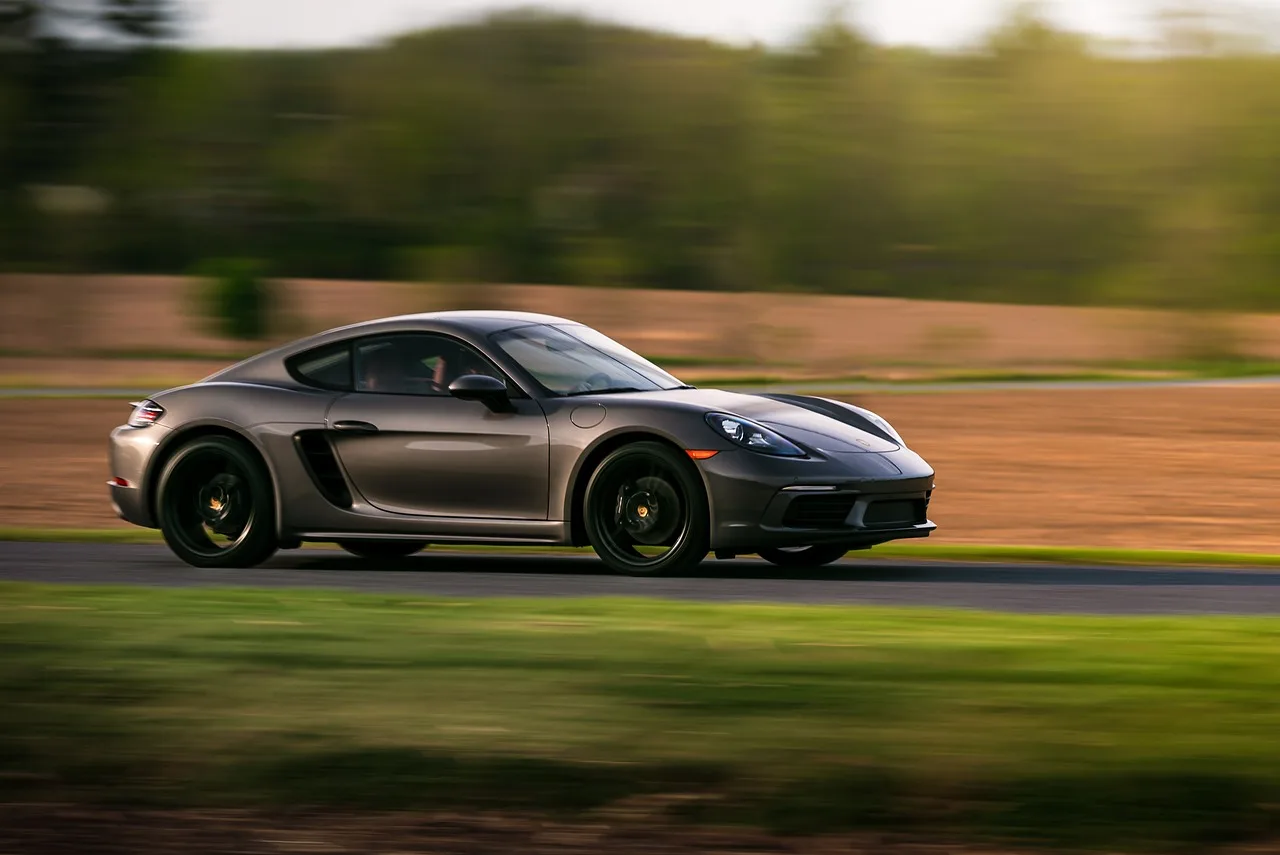
For many budget sports cars, RWD is often a strong all-around racing drivetrain because it can balance steering feel, corner-exit traction, and predictable handling. AWD can be faster when traction is the limiting factor, especially on low-grip surfaces or in rain. FWD can work, but it is usually the compromise choice when price and running costs matter most.
Track-day balance and corner exit traction
Track-day driving asks a car to brake, turn, and accelerate in the same lap. RWD does that well because it keeps the front axle focused on steering while the rear axle handles much of the power delivery. That usually gives better balance at speed than FWD and less complexity than AWD.
AWD can be very quick on exit, but it can also add understeer bias. For a driver who wants a car that turns in cleanly and responds to throttle in a readable way, RWD is often the better starting point. In a budget chassis, predictable matters more than chasing the last few tenths.
Autocross response and rotation
Autocross rewards quick rotation, throttle modulation, and immediate response. RWD usually makes it easier to rotate the car without fighting front-tire drive forces. That does not make every RWD car faster automatically, but it does make the chassis easier to place in tight transitions.
A common first-timer mistake is assuming more drive wheels always mean more speed. In a cone course, extra traction can help, but extra weight and more understeer can slow the car down. If the goal is a nimble budget sports car, RWD is often the cleaner fit.
Where AWD can beat RWD
AWD can beat RWD when the course surface is slippery, the launch matters, or the car makes enough torque to overwhelm the rear tires. For racing that starts from a stop or slow roll, AWD often puts power down more consistently. That is why many traction-focused builds lean that way.
AWD also helps when the weather is part of the equation. If the car has to get home in the rain, or if wet grip is a major concern, AWD gives a larger safety margin. The tradeoff is cost, weight, and the fact that some AWD systems lean toward understeer.
Which drivetrain is best for drifting?
RWD is the best drivetrain for drifting because it makes rear slip controllable instead of accidental. The rear wheels can break traction while the front wheels continue to steer the car. That basic layout is why drift setups usually start with rear-drive hardware, not a conversion from another layout.
Why RWD is the natural drift layout
Drifting depends on balancing throttle, steering angle, and weight transfer. RWD makes that easier because the rear axle is doing the pushing while the front axle is pointing the car. A driver can manage slip with the throttle instead of constantly fighting the front tires.
That does not mean every RWD car drifts well in stock form. A drift setup often benefits from stiffer suspension, steering changes, and a differential that locks or biases torque in a useful way. The chassis has to be controllable, not just rear-driven.
Suspension, steering, and diff setup
For drift use, a healthy limited-slip differential matters more than raw horsepower in many budget builds. Suspension that reduces surprise weight transfer helps the car stay readable. Steering angle and front-end response matter too, because the car has to stay pointed while the rear slides.
Newer cars may offer electronic drift aids, which can help a novice manage the car more safely. Even then, RWD remains the natural starting point. AWD and FWD can be made to slide, but they usually require more compromise and less of the clean rear-slip behavior drivers want.
Which drivetrain is best for drag racing?
AWD is often a strong drivetrain for drag racing because it sends power to both axles and can improve launch traction. Off-the-line grip is the big problem in a straight-line start, and AWD often solves more of it than RWD or FWD. For repeated launches, power delivery consistency matters as much as peak output.
Launch traction and power delivery
Drag racing rewards whatever helps the car leave hard and repeatably. AWD typically wins here because all four tires share the load. That matters especially on low-grip pavement, street tires, or a surface that is not prepped like a drag strip.
AWD swaps can add traction off the line and out of corners, but they also add complexity and weight. For some cars, that tradeoff is worth it. For a budget buyer, it is only worth it if drag racing is the main use case and the chassis can handle the added cost.
Why RWD can still make sense on a budget
RWD can still be the better budget choice if the car is used for mixed driving and occasional straight-line fun. It is simpler, often cheaper to buy, and easier to live with when the car is not built only for launches. The rear tires may spin sooner, but the rest of the chassis often feels better on the street.
Gear ratios, tire choice, and differential health matter a lot here. A tired rear end or the wrong tire can make a good RWD platform feel slow. If straight-line traction is the top priority, though, AWD is the cleaner answer.
RWD decision matrix
This matrix separates the most common use cases so the choice does not get blurred by brand loyalty. RWD is the best fit in some situations and the wrong fit in others. The key is matching the chassis to the job, not the badge to the dream.
| Use case | RWD | AWD | FWD | Short recommendation |
|---|---|---|---|---|
| Street use | Strong balance and steering feel | Stable in poor grip, usually heavier | Cheapest to own in many cases | Choose RWD if you want the most sports-car feel |
| Wet-weather use | Good with proper tires | Best traction and confidence | Acceptable, but less composed than AWD | Choose AWD if wet grip is a major need |
| Drift use | Best match for controllable rear slip | Possible, but less natural | Poor fit for this goal | Choose RWD for drift setup work |
| Drag use | Can work, but traction is the limit | Best launch traction | Usually struggles most with hard launches | Choose AWD if launching hard is the priority |
| Autocross and track-day use | Usually the best balance of feel and rotation | Fast when traction matters most | Can be quick, but often gives up balance | Choose RWD for predictable chassis behavior |
Suppose a buyer wants a weekend coupe for autocross and canyon roads, but also needs it to stay affordable to repair. RWD usually fits that brief better than AWD because it keeps the steering clean and the layout simpler. If the same buyer had to deal with deep snow every winter, AWD would move up the list fast.
Picture a budget coupe with worn rear tires, no limited-slip differential, and a driver who wants to learn drifting on closed courses. RWD is still the right layout, but only after the chassis is sorted. If the diff is tired and the suspension is sloppy, the car will fight the driver regardless of drivetrain.
Buy RWD if… / Avoid RWD if…
Buy RWD if your priority is a sports-car chassis that feels balanced, rotates well, and responds cleanly to throttle inputs. Avoid RWD if your real need is traction on bad pavement, hard drag launches, or the most forgiving winter and rain behavior. The wrong drivetrain can cost more than the right one in tire wear and frustration.
Buy RWD
- You want the best steering feel in a budget sports car.
- You plan to autocross, do track days, or learn controlled oversteer.
- The car already has a healthy limited-slip differential.
- You can live with traction limits off the line.
- You value a simpler layout and often lower purchase cost.
Avoid RWD
- Your main goal is drag racing from a stop.
- You need the most confidence in rain, snow, or low-grip commuting.
- You want the easiest possible launch behavior without traction drama.
- The available car has a bad diff, worn rear suspension, or expensive tires.
- You are buying on a tight budget and the better example is AWD or FWD.
Frequently asked questions
What is the best drivetrain for racing?
For most budget sports cars, RWD is the best all-around racing drivetrain because it balances steering feel, rotation, and predictable corner behavior. AWD is better when traction is the main limit, especially in wet or low-grip conditions. FWD can be quick, but it usually gives up balance and exit feel.
What drivetrain is best for drag racing?
AWD is usually the best drivetrain for drag racing because it spreads the launch load across both axles and improves traction off the line. RWD can still work on a budget, but it is more sensitive to tire choice and surface grip. FWD is usually the hardest to launch hard.
What drivetrain is best for speed?
If “speed” means straight-line acceleration, AWD often wins because it can put power down more consistently. If “speed” means lap pace in a balanced sports car, RWD often gives the better mix of feel and control. The best answer depends on whether you care more about launches or handling.
What drivetrain is best for drifting?
RWD is the best drivetrain for drifting because it allows controllable rear slip while the front tires keep steering the car. A good drift setup also needs suspension tuning, steering response, and a differential that helps manage torque. AWD and FWD can slide, but they are less natural.
Is AWD or RWD better for racing?
RWD is better for most budget sports-car racing because it usually gives better balance, clearer steering feel, and a more adjustable chassis. AWD is better when traction decides the result, such as launches or slippery conditions. The right answer depends on the racing style.
Is front wheel drive vs RWD: which is better?
RWD is usually better for performance driving because it keeps the steering axle free from drive forces and improves chassis balance. FWD can be cheaper to buy and run, which matters on a tight budget, but it usually loses to RWD for rotation, exit traction, and feel.
Products related to this article
Sponsored / affiliate links. As an Amazon Associate I earn from qualifying purchases. I may earn additional commission from eligible campaigns.