Best Car Pet Hammocks for Travel (2026): We Compared
The best car pet hammock for travel is the one that fits your dog’s size, your rear seat shape, and how much mess you expect; for most owners, a waterproof, padded, seat-anchored hammock with side flaps is the safest default. A poor fit lets dogs slide, mud reaches upholstery, and loose covers can distract the driver. This guide breaks down which hammock type suits small, medium, and large dogs, short errands and long road trips, plus cars, SUVs, and trucks.
Quick comparison
| Product | Badge | Best for | Price | ||
|---|---|---|---|---|---|
 |
Dog Car Seat Cover, 600D Heavy Dute Car Seat Cover for DogsVictoper | Our pick | Standard Black · Waterproof · Nonslip | $23.38
Price as of 20 Oct 2026
|
View |
 |
MIXJOY Dog Car Seat for Large Medium Dogs, Back SeatMIXJOY | Also great | L-28 * 22 * 20.5in · Waterproof · Scratch-proof | $49.99
Price as of 20 Oct 2026
|
View |
 |
Dog Car Seat Cover for Back Seat, Dog Hammock for Car, SUV,Petloox | Also great | Machine Washable · Waterproof · Scratch Resistant | $29.41
Price as of 20 Oct 2026
|
View |
 |
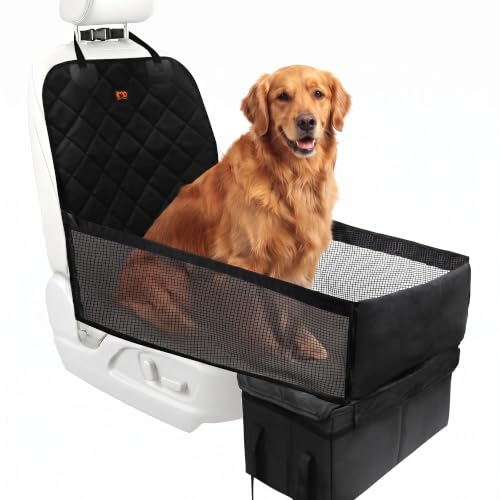
URPOWER Back Seat Extender for Dogs, Large Hard Bottom DogURPOWER | Upgrade pick | 550 lbs Support · Waterproof · Adds 45% Space | $57.99
Price as of 20 Oct 2026
|
View |
 |
GeerDuo Dog Car Seat with Storage Organizer, Waterproof DogGeerDuo | Pair with it | Storage Organizer · Waterproof · Heavy-Duty | $69.99
Price as of 20 Oct 2026
|
View |
Use this as the fast filter before you buy. The right choice changes with seat shape, dog weight, and how often you haul mud, salt water, or shed hair.
The top pick for most buyers is the Petloox soft hammock: it balances waterproofing, non-slip fit, and easy cleanup without the bulk of a hard-bottom extender.
How we chose
We compared these covers on five things that matter in real travel: fit and vehicle compatibility, movement control, cleanup and drying, dog size and age, and airflow or visibility for longer trips. Comfort features such as pockets, extra padding, and storage organizers were treated as convenience only, not safety upgrades.
Fit mattered most. A cover that slips in a narrow sedan or bridges poorly over a bucket-seat rear bench is a worse buy than a simpler hammock that stays put.
We also separated restraint-related features from comfort-only extras. Seatbelt access, anchors, non-slip backing, and a secure headrest strap layout affect how the cover behaves in the car. Padding does not.
| Pick | Best for | Key fit notes | Cleanup burden | Storage size |
|---|---|---|---|---|
| Petloox soft hammock | Most daily drivers | Works best in standard rear benches and most SUVs | Low to moderate | Folds small |
| URPOWER hard bottom extender | Large dogs and seniors | Best in wider rear seats where the platform can sit flat | Moderate | Bulky |
| Victoper waterproof cover | Budget buyers | Standard sedan, SUV, or truck bench use | Low | Compact |
| MIXJOY back seat extender | Space-seeking dogs | Needs enough depth to support the added platform | Moderate | Bulky |
| GeerDuo mesh-window extender | Hot-weather and long-haul travel | Works best when airflow and visibility matter more than packability | Moderate to high | Bulky |
Dog hammock decision matrix
This matrix scores hammock types, not brands, against the trips people actually take. Higher stability helps, but fit and cleanup still decide whether the cover works in your vehicle.
| Travel scenario | Fit risk | Cleanup time | Stability | Ventilation | Storage burden | Best hammock type |
|---|---|---|---|---|---|---|
| Daily commute | Low if the bench is standard | Low | Good with anchors and non-slip backing | Usually adequate | Low | Soft waterproof hammock |
| Muddy hike return | Low to moderate | High unless the surface wipes clean quickly | Good if straps and anchors stay tensioned | Moderate | Low to moderate | Waterproof multi-layer hammock with side flaps |
| Senior dog transport | Moderate | Moderate | Very good in hard-bottom versions | Moderate | High | Hard bottom seat extender |
| Full-size truck use | High if sizing is wrong | Moderate | Good if the model is truck-specific | Good with mesh window | High | Truck-specific extender with mesh window |
| Long road trips | Moderate | Moderate | Good if the platform stays flat | Critical | High | Hard bottom or mesh-window extender |
Best waterproof soft hammock: easy cleanup for muddy trips
Petloox is the best fit for buyers who want a straightforward rear-seat hammock that handles everyday mud, fur, and wet paws without turning into a bulky platform. Based on the published specs and buyer feedback, its non-slip base and waterproof, scratch-resistant Oxford cloth make it a practical default for sedans, SUVs, and truck benches.
The drawback is clear: soft hammocks trade away the extra floor-like support of a hard-bottom extender. If your dog slides forward under braking or has trouble balancing on a curved bench, a soft hammock may not solve that problem.
600D Oxford fabric is common in budget and midrange hammocks because the weave is dense enough to resist abrasion and usually carries waterproof or water-resistant claims. Those claims usually mean the cover blocks splash, rain, saliva, and light mud well, but seam leakage can still happen where panels are stitched together.
Side flaps with zippers matter here because they protect doors from scratches and make entry and exit easier in tight parking spaces. They are useful if your dog claws the door panel while turning around or when you open the rear door on a muddy day.
Best hard-bottom hammock: stable support for large dogs
URPOWER is the better choice when your main problem is sagging, not just dirt. The manufacturer lists 550 lbs support, about 45% more space, 900D Oxford fabric, and a hard bottom that helps keep the rear seat level for older dogs or larger dogs that struggle on a soft hammock.
The drawback is weight and bulk. A hard-bottom seat extender is harder to stow than a soft cover, and it can be overkill for a 20-pound dog on short errands. It also needs enough rear-seat depth to sit flat without forcing the front edge up against the front seats.
Are hard bottom dog car hammocks safer than soft hammocks? They are usually more stable and reduce sagging, which can help a dog feel secure and stay balanced, but they are not a substitute for a crash-tested restraint. The real safety gain is better support and less sliding, not full restraint protection.
Hard-bottom extenders with reported capacities in the 400 lbs to 450 lbs range are aimed at bigger dogs or multi-dog loads. That extra support helps in SUVs and some trucks, but it can become a downside in smaller cars where storage space is tight and the seat base is short.
Best budget hammock: simple waterproof protection
Victoper is the pick for buyers who want a lower-cost waterproof cover with the basics done right. The listed 600D heavy duty waterproof hammock fabric and included seatbelt access make it a sensible option for standard commuting, quick grocery runs, and dogs that mostly ride quietly.
The drawback is that budget covers often rely on thin padding and simple attachment hardware. That means they can be fine for cleanliness, but they usually do less for ride comfort and may not be the best choice if your dog leans hard into turns or hates an unsupported seat base.
Non-slip backing helps prevent the cover from sliding during braking and cornering, especially when it works with headrest straps and seat anchors. It improves movement control, but it does not replace a harness or a properly attached dog restraint.
Seatbelt access slots are worth checking before you buy. They keep the rear bench restraint points usable, which matters if you attach a harness or need the belt path to stay open on a split bench.
Best truck hammock: airflow and visibility on long hauls
GeerDuo is the better pick when the vehicle is a full-size truck and the dog rides for long stretches. The mesh windows help airflow and visibility, which can matter in hot weather or for anxious dogs that settle better when they can see out.
The drawback is that truck-focused setups are less forgiving on fit. A model that works in a sedan may leave gaps, shift on a higher floor, or fail to cover the full rear area of a truck cab. Check the dimensions before you assume it will drop into place.
Mancro’s full-size truck hammock is listed at 85 inches by 53 inches and includes a ventilation mesh window. That is the kind of sizing truck buyers should look for first, because full-size cab width and seat depth can demand more coverage than a standard rear bench.
Seatbelt access slots matter in trucks too. If the rear bench positions do not line up with the openings, the harness becomes awkward to route and the cover loses one of its main practical advantages.
Best back seat extender for space: room for big dogs
MIXJOY is the pick for owners who want more usable flat space in the back seat without jumping all the way to the heaviest hard-bottom setups. The listed size of 28 x 22 x 20.5 in and the back-seat extender design make it attractive for medium and large dogs that sprawl, shift, or want room to lie down.
The drawback is packaging complexity. More structure usually means more parts to install and more bulk to store when the cover is out of the car. It can also be too much hardware for small sedans with short rear benches.
For seniors, a hard bottom can make entry and exit easier because the dog is not dropping into a hammock-shaped trough. The tradeoff is weight. That extra support is useful only if you actually need it.
Which one should you buy?
Start with your dog, not the product card. Small and medium dogs on short, clean trips usually do best in a soft waterproof hammock. Large dogs, older dogs, and dogs that sink into a soft seat are better matched to a hard-bottom extender or a back-seat platform.
Choose by vehicle layout next. Narrow sedans need a cover that does not bunch at the door openings. Bucket-seat rear layouts and high-floor trucks are harder cases, and truck-specific sizing is worth paying attention to before you order.
Choose by cleanup tolerance after that. If your dog comes back from trailheads, beaches, or wet grass, a waterproof multi-layer build is worth the extra attention, but look closely at seams and zipper points. Waterproof fabric is useful; stitched weak points are still weak points.
Choose by trip length and temperature last. On long summer drives, airflow and visibility matter more than pocket count. A mesh window can help, while a sealed, heavy cover may trap heat and make a restless dog less willing to settle.
Say your dog is a 65-pound lab in a midsize SUV and you do weekend trail runs. A soft hammock may keep the seats clean, but a hard-bottom extender is the better match if the dog sags through the center panel or needs a flatter place to lie down.
Suppose you drive a full-size truck and the dog rides after beach days. A truck-sized model with a mesh window, proper width, and seatbelt openings is a better fit than a generic rear-seat hammock that leaves the corners exposed.
A common first-timer mistake is buying for “most cars” without checking bench width and seatback shape. Narrow sedans, bucket-seat rear layouts, and tall truck cabs need different dimensions, and the wrong size creates the very sliding problem the hammock is supposed to stop.
How to choose
- Measure the rear bench. Check bench width and length against the product dimensions before you buy. A cover that is too short exposes upholstery, and one that is too wide can interfere with door closures or seatbelt buckles.
- Match support to dog weight and age. Older dogs, big dogs, and dogs with joint stiffness usually do better with a hard bottom seat extender. Smaller dogs and calm commuters often do fine with a soft hammock.
- Check movement control hardware. Look for non-slip backing, headrest straps, and seat anchors. These features work together. None of them replaces a harness.
- Inspect seatbelt access. The slot should line up with the rear bench positions you actually use. If you need the belt path for a harness, misaligned openings are a real problem.
- Judge cleanup by failure mode. Mud and fur wipe off most waterproof covers, but seams, zippers, and anchor points can trap grime. If you haul wet dogs often, simpler surfaces are easier to live with.
- Think about airflow and visibility. For hot weather, summer traffic, or anxious dogs, a mesh window can make long rides calmer. A sealed panel does not help if it overheats the back seat.
Waterproof dog hammocks are worth it for muddy dogs because they keep the dirty part of the trip off the seat fabric. The key is not to overread the waterproof label. It helps with wet fur, mud, and spills, but seams, zipper teeth, and anchor holes can still leak if the mess sits there long enough.
How do you keep a dog hammock from sliding in the back seat? Use the headrest straps, seat anchors, and any non-slip backing together, then make sure the cover is pulled tight across the bench before the dog gets in. Loose slack is what lets the hammock shift during turns and braking.
Do dog car hammocks protect doors from scratches? Yes, side flaps with zippers or tuck-in panels help a lot because they cover the painted and trim surfaces the dog hits first. They are most useful when the dog stands up to look out, claws while turning, or scrambles at arrival.
Frequently asked questions
What is the best car pet hammock for travel?
The best car pet hammock for travel is the one that fits your vehicle and your dog’s behavior, not the one with the longest feature list. For most buyers, a soft waterproof hammock with non-slip backing, seat anchors, and side flaps is the best default. Bigger dogs often need a hard-bottom extender instead.
Are hard bottom dog car hammocks safer than soft hammocks?
Hard-bottom hammocks are usually more stable because they reduce sagging and keep larger dogs from sinking into the center. That said, they do not replace a crash-tested restraint system. Their main safety value is better support, less sliding, and easier balance for older or larger dogs.
What size dog hammock fits my car or truck?
Measure bench width, bench length, and the height of the rear seatback before you buy. Standard sedans and SUVs often fit common rear-bench hammocks, but full-size trucks usually need truck-specific dimensions such as the 85 inches by 53 inches class. Bucket-seat layouts need extra caution.
How do I keep a dog hammock from sliding in the back seat?
Look for a cover with non-slip backing, headrest straps, and seat anchors, then install it tightly. The straps hold the top edge, while the anchors help keep the lower section from creeping forward. If the cover bunches or sags, it will move more under braking.
Do dog car hammocks protect doors from scratches?
Yes, side flaps with zippers help protect the door panels and lower trim from claw marks and muddy paws. They also make entry and exit easier because the dog has a cleaner edge to step over. They work best when the flap reaches the contact area your dog actually hits.
How do I clean a dog hammock after a road trip?
Start by shaking out loose hair and grit, then wipe the surface with a damp cloth or rinse according to the manufacturer’s instructions. Check seams, zipper tracks, and anchor points for trapped mud. If the cover is machine washable, let it dry fully before reinstalling it.
Products related to this article
Sponsored / affiliate links. As an Amazon Associate I earn from qualifying purchases. I may earn additional commission from eligible campaigns.