Pet Covers for Car Seats: How to Choose the Right One
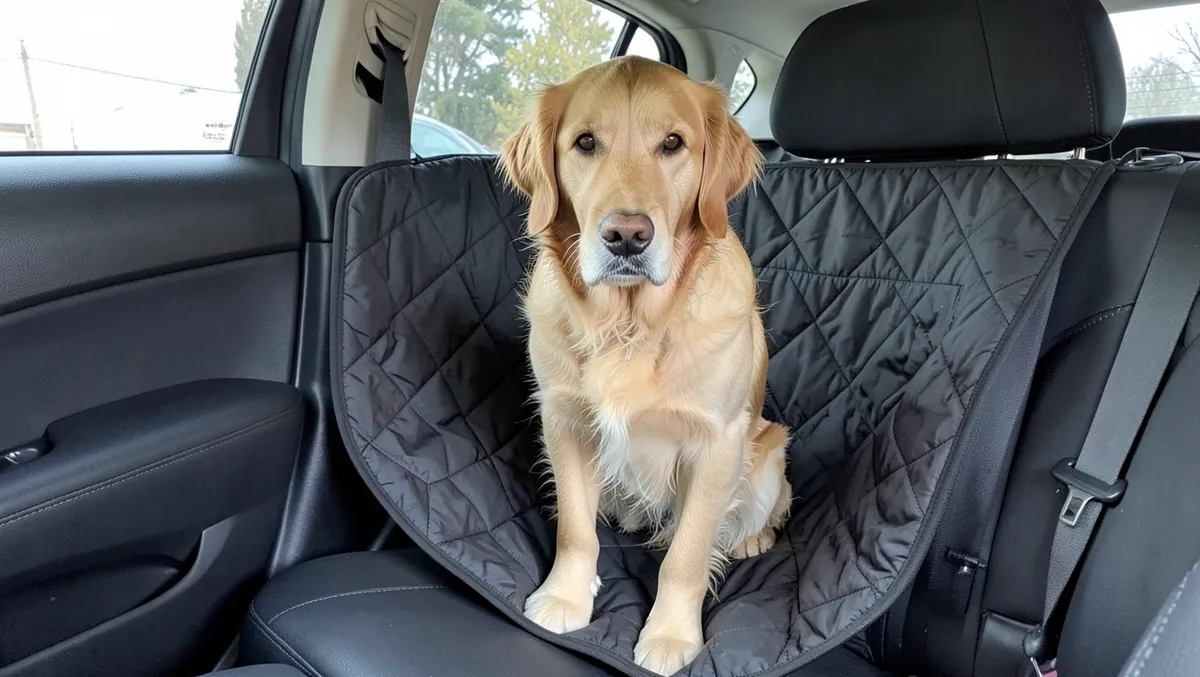
A pet cover for car seats is a fitted, usually waterproof liner that goes over your seat to catch fur, dirt, drool, and scratches before they reach the upholstery underneath. Most are either a hammock-style cover that clips to the front headrests and drapes down to the floor, or a simpler bench cover that just lies across the seat cushion and backrest.
They come in a range of materials and price points, and the right pick depends less on your dog’s breed than on how the cover attaches, whether it still gives you access to the seatbelt buckle and door, and whether the fabric actually holds up to claws. This guide covers the main types, how to install one so it stays put, and one thing most product listings never mention: a seat cover protects your seats, not your pet.
What Types of Pet Car Seat Covers Are There?
Almost every pet cover on the market falls into one of four styles, and they are not interchangeable — a cover built for the back bench will not protect a cargo area, and a cargo liner will not stop a dog from sliding into the footwell.
| Cover Type | What It Covers | Best For | Watch Out For |
|---|---|---|---|
| Hammock cover | Seat cushion, backrest, and the footwell gap between the front and back seats | Dogs that pace, lie down, or are medium to large breed | Can block rear-door access unless it has slits or a shorter “half-hammock” design |
| Bench (seat-only) cover | Seat cushion and backrest only, no footwell coverage | Smaller dogs, or a carrier or crate riding on the seat | Gaps at the sides let fur and dirt reach the door panels and floor |
| Cargo liner | The trunk or cargo area behind the back seat in an SUV or hatchback | Larger dogs riding loose in the back with the seats folded down | Look for one with a bumper flap, or paint on the rear bumper can still get scratched when the dog jumps out |
| Door and side panel cover | Door panels and armrests next to the seat | Dogs that scratch at the door while riding | Almost always sold separately from the seat cover itself |
Hammock covers are the most common because they solve the two biggest complaints pet owners have: fur working its way into the seam between the cushion and backrest, and a dog sliding forward into the footwell under braking. If you only buy one cover, a hammock style for the back bench covers the most ground.
RELIABLE BUDGET PICK
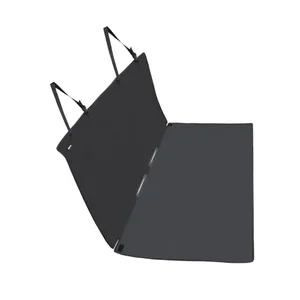 |
Amazon Basics Waterproof Dog Car Seat Cover – $26.99 A straightforward 56 x 47-inch bench cover for the back seat — a practical starting point if you just want a waterproof layer between your dog and the upholstery.
|
How to Install a Pet Seat Cover the Right Way
Most covers fail the same way: they were never actually anchored, so the first hard stop bunches the whole thing up under the dog. A few extra minutes at installation prevents that.
- Fold the seat down if the manufacturer’s instructions call for it, or leave it up if the cover is designed to loop over an upright headrest instead.
- Drape the cover over the backrest first, then pull the bottom section down and over the seat cushion so the two panels overlap at the seam.
- Clip the top straps around the front seat headrest posts. This is the anchor point that keeps the entire cover from sliding forward under braking — skipping it is the most common installation mistake.
- Secure the bottom edge, either by tucking it into the seat crease or clipping it around the base of the cushion, so it can’t ride up while your dog moves around.
- Locate the seatbelt buckle through the cover’s built-in slit before anyone sits there. Most quality covers include these slits; if yours does not, a human passenger will not be able to buckle in safely on that seat.
- Give the installed cover a firm tug from a few different directions. It should not shift more than an inch or two — if it slides freely, re-anchor the straps or add hook-and-loop tabs to the underside.
What Material Should You Look For?
Most covers are built from a heavy Oxford-weave polyester — often labeled 300D, 420D, or 600D, where the number roughly tracks the thickness and durability of the weave — with a waterproof PVC or TPU coating laminated to the underside. The outer layer is usually quilted for cushioning, which also happens to distribute a dog’s claws across a wider area instead of concentrating scratches on one spot.
Waterproofing and scratch resistance are two separate properties, and a cover can have one without the other. A thin waterproof liner can still shred under a large dog’s nails, while a heavy-denier fabric with no coating will stop scratches but still let spills soak through to the seat. Check both specs separately rather than assuming “heavy-duty” automatically means waterproof, or the reverse.
On the underside, look for a nonslip rubber or silicone-dot backing, especially if your seats are leather or vinyl. Without it, the cover itself can slide around on a smooth seat even after the straps are clipped in place.
A Seat Cover Protects Your Upholstery, Not Your Pet
This is the part most listings leave out: a pet seat cover is a cleaning and comfort product, not a safety device. The Center for Pet Safety, a nonprofit that crash-tests pet travel products with specially built test-dog dummies, has found that even dedicated pet safety seats and harnesses frequently fail during simulated crashes — straps releasing, buckles breaking, or anchors pulling loose. A hammock or bench cover on its own does nothing to restrain your pet in a collision; it is not designed or tested for that job at all.
If you want your pet actually secured while traveling, that means a separate crash-tested harness that clips into the seatbelt, or a secured travel crate — used in addition to, not instead of, the seat cover. It’s also worth knowing that a loose dog in the front seat is a real airbag risk: a deploying passenger airbag can seriously injure or kill a pet, so the back seat is the safer place regardless of what kind of cover you use.
A handful of states also regulate this directly. Hawaii, Rhode Island, and New Jersey have laws that specifically address unrestrained pets in moving vehicles, and several other states — including Arizona, Connecticut, and Washington — can apply general distracted-driving statutes to a driver whose loose pet is creating a hazard, even without a pet-specific law on the books.
How to Clean a Pet Car Seat Cover
Shake or vacuum off loose fur before washing anything — it saves your washing machine’s filter and keeps hair from redistributing onto the rest of the load. From there, cleaning depends on the material:
- Machine-washable fabric covers: Wash on cold with a gentle cycle, and air dry instead of using a dryer — heat can warp or crack the waterproof backing over time.
- PVC or vinyl-backed covers: These usually cannot go in a washing machine at all. Wipe them down with mild soap and water, or a diluted pet-safe disinfectant, and let them air dry.
- Always check the care label first. “Waterproof” and “machine washable” are two different claims, and not every waterproof cover is safe to machine wash.
Frequently Asked Questions
What Are Pet Covers for Car Seats?
They are fitted, usually waterproof liners — hammock-style, bench-style, or cargo-area liners — that go over a car seat or trunk area to protect the upholstery from pet hair, dirt, scratches, and spills.
How Do You Install a Pet Car Seat Cover?
Drape it over the backrest and seat cushion, clip the top straps around the front headrest posts so it can’t slide forward under braking, then anchor the bottom edge. Always confirm the seatbelt buckle is still reachable through the cover before anyone sits there.
Are Pet Car Seat Covers Machine Washable?
Many fabric covers are machine washable on a cold, gentle cycle, but PVC or vinyl-backed covers usually are not — those typically need to be wiped down by hand instead. Check the specific care label before washing.
Do Pet Car Seat Covers Fit All Vehicles?
Most are marketed as universal, which generally means they fit a standard back bench seat width, but it does not guarantee a perfect fit. Measure your seat and check the headrest spacing against the product’s listed dimensions before buying.
Does a Pet Seat Cover Count as a Safety Restraint?
No. A seat cover protects your upholstery from mess and scratches, but it is not crash-tested and does nothing to keep your pet secured in a collision. If you want your pet restrained while driving, use a separate crash-tested harness or secured travel crate along with the cover.
Is It Illegal to Drive With an Unrestrained Pet?
It depends on the state. Hawaii, Rhode Island, and New Jersey have laws specifically addressing unrestrained pets in vehicles, and several other states can apply general distracted-driving laws if a loose pet is creating a hazard, even without a pet-specific statute.
Conclusion
A good pet cover comes down to three things: a style that matches how your pet actually rides (hammock, bench, or cargo liner), a material that’s genuinely both waterproof and scratch-resistant, and an installation that actually anchors the cover instead of letting it float loose on the seat. Get those three right and it will do its job for years.
Just remember what it isn’t: a cover keeps your car clean, but it’s not a substitute for a proper crash-tested harness or crate if you want your pet genuinely secured. And if your dog tends to get carsick rather than just messy, a waterproof cover is even more worth having — see our guide on what to give a dog for car sickness for ways to prevent the mess in the first place.
Products related to this article
Sponsored / affiliate links. As an Amazon Associate I earn from qualifying purchases. I may earn additional commission from eligible campaigns.