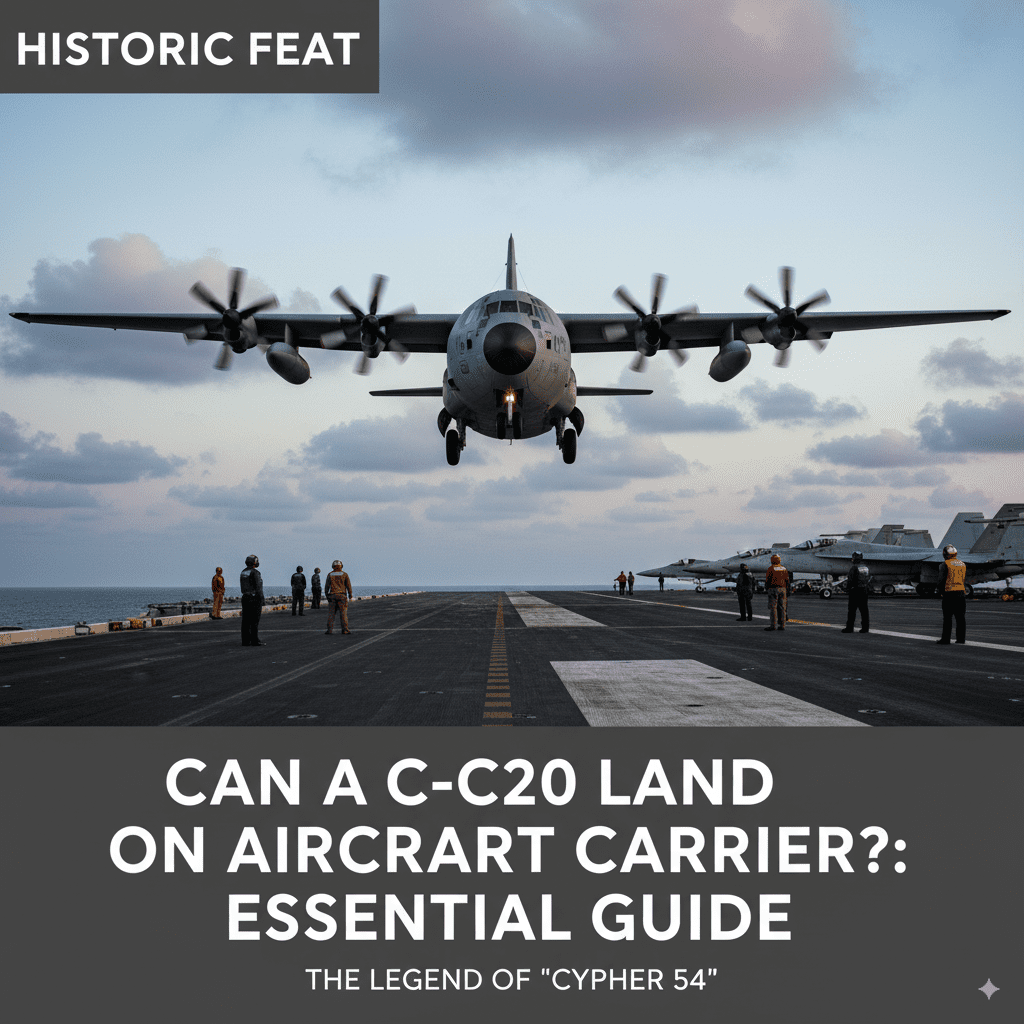
Can a C-130 Land On Aircraft Carrier? Essential Guide
Can a C-130 land on an aircraft carrier? The short answer is no, not in the way a fighter jet does. While incredible, the C-130 Hercules is too large and heavy for standard carrier operations. This guide explains why and explores the unique challenges and rare exceptions.
Ever seen a massive cargo plane and wondered if it could pull off those incredible carrier landings? It’s a fascinating question, especially when you think about the precision and power involved in naval aviation. You might imagine a huge C-130 Hercules, a workhorse of the skies, touching down on the bouncing deck of an aircraft carrier. It’s a dramatic image, but is it actually possible? Many people wonder about this, and it’s easy to get confused by dramatic movie scenes or misunderstood news. Don’t worry, we’re going to break down the facts in a way that’s easy to understand, no confusing jargon here. We’ll explore why this isn’t a routine thing and what it would actually take.
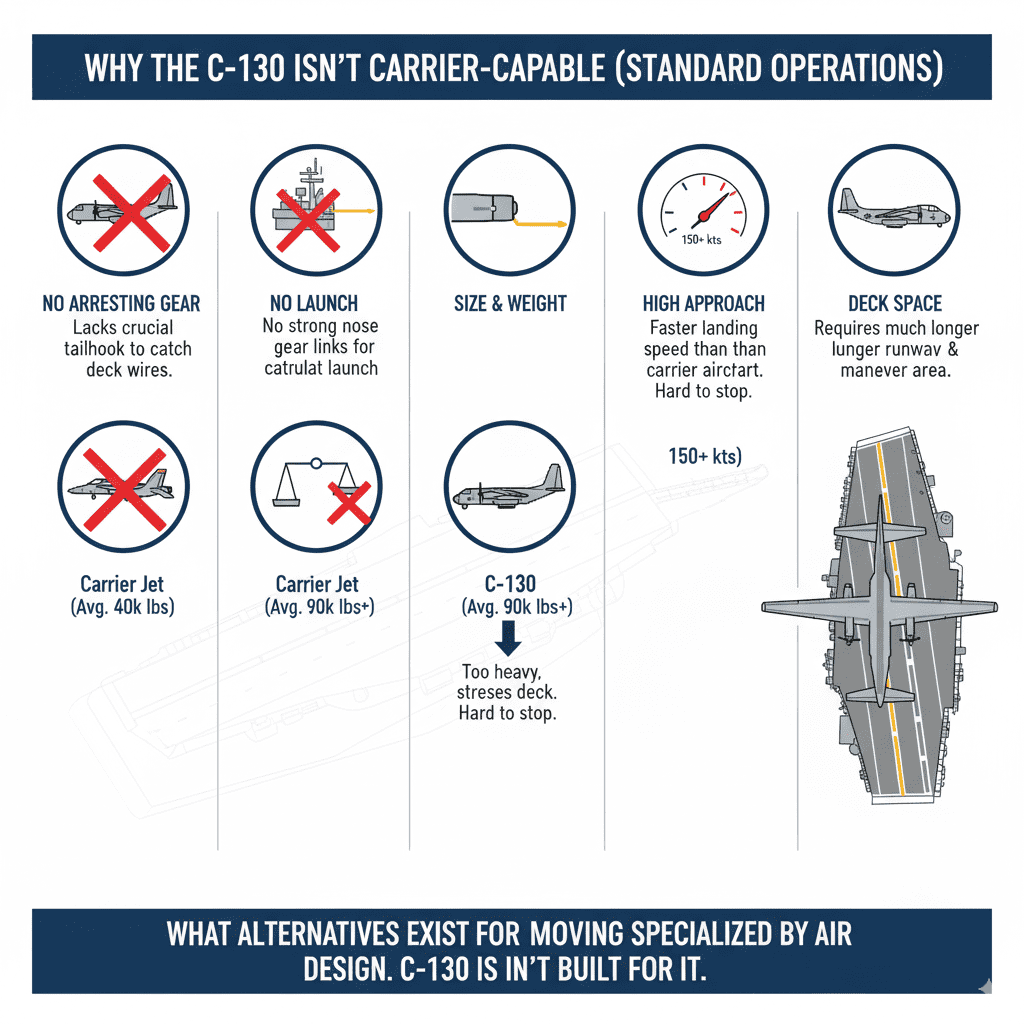
Why The C-130 Isn’t Carrier-Capable (Standard Operations)
Aircraft carriers are amazing feats of engineering, designed to launch and recover high-performance jets. They have specific features and require planes to meet very strict criteria. The C-130 Hercules, while a legendary and incredibly versatile aircraft, simply isn’t built for this environment in its standard configuration.
When we talk about a C-130 landing on an aircraft carrier, we’re usually thinking about the way fighter jets and some other naval aircraft operate. This involves:
- Arresting Gear: C-130s do not have the crucial tailhook needed to grab onto the arresting wires on a carrier deck. These wires are essential for slowing down the aircraft rapidly from high speeds to zero in just a few hundred feet.
- Launch Catapults: Similarly, C-130s are not equipped with the strong nose gear attachment points required to link up with the carrier’s steam or electromagnetic catapults for assisted launches.
- Size and Weight: The C-130 is a significantly larger and heavier aircraft than typical carrier-based planes like the F/A-18 Super Hornet. Landing a C-130 would put immense stress on the flight deck and potentially exceed the structural limits of the carrier’s capabilities for routine operations.
- Approach Speed: C-130s typically fly at much higher approach speeds for landing than carrier aircraft. While carrier landings require a precise airspeed that can be maintained through the visual landing aids, the C-130’s speed would be problematic for the confined space and short landing roll.
- Deck Space: The flight deck of an aircraft carrier is extremely limited. A C-130 requires a much longer runway and wider space for maneuvering than what’s available on a carrier.
The Unique World of Carrier Aviation
Landing on an aircraft carrier isn’t like landing on a land-based runway. It’s a complex, high-stakes operation that requires specialized aircraft and highly trained pilots. Think of it like parking a massive truck in a tiny, moving parking spot. Everything has to be perfect.
Here’s a breakdown of why carrier operations are so different:
- The Flight Deck Environment: A carrier’s flight deck is a dynamic and often chaotic space. It’s constantly moving with the ocean, has limited straight-line distance, and is packed with other aircraft, personnel, and equipment. This demands incredible precision from pilots.
- Arresting Gear System: This is perhaps the most iconic piece of carrier landing technology. It consists of thick steel cables stretched across the deck, connected to hydraulic engines below. The pilot aims to catch one of these wires with a tailhook. If successful, the airplane is brought to a complete stop in about 300 feet (91 meters). This system is vital for aircraft that cannot stop on their own in such a short distance. You can learn more about the sophisticated design of these systems on resources like the Naval Air Systems Command (NAVAIR) website.
- Launch Catapults: To get heavy aircraft into the air from such a short deck, carriers use catapults. These powerful systems, typically steam or electromagnetic, accelerate the aircraft to flying speed in about two seconds, usually over a distance of 250-300 feet (76-91 meters).
- The “Meatball” and LSO: Pilots use a visual landing aid called the “meatball” (a system of lights) and are guided by Landing Signal Officers (LSOs), who are expert pilots themselves. They talk the pilot down, issue corrections, and ensure the aircraft is in the correct position for a safe trap (arrested landing).
What Makes a Plane Carrier-Capable?
For an aircraft to be designed for carrier operations, it needs several key features:
- Ollie Hook (Tailhook): As mentioned, this is non-negotiable for arrested landings. It must be strong enough to withstand the immense forces of catching a cable.
- Stronger Landing Gear: The nose and main landing gear must be reinforced to handle the high sink rates and the forces of catapult launches and arrested landings.
- Folding Wings: Many carrier aircraft have wings that can fold. This allows more planes to be stored on the limited space of the carrier’s hangar deck and flight deck.
- Specific Aerodynamic Properties: Aircraft designed for carrier operations often have high-lift devices like slats and flaps that allow them to fly at lower speeds, which is critical for precise approaches.
- Robust Construction: The airframe itself is built to handle repeated stresses that are far greater than those experienced in land-based operations.
The C-130 Hercules: A Different Kind of Workhorse
The C-130 Hercules is renowned for its ruggedness and ability to operate from unimproved or short airfields. It’s designed for versatility, but its strengths lie in different areas than carrier aviation.
Key characteristics of the C-130 include:
- STOL Capabilities (Short Takeoff and Landing): While it can operate from short fields, this is different from carrier-style arrested landings and catapult launches. The C-130’s STOL capability relies on longer, albeit still short, runways and its powerful engines and airframe design.
- Payload and Range: It’s built to carry significant cargo and personnel over long distances, making it ideal for troop transport, cargo delivery, search and rescue, and even gunship roles.
- Robust Landing Gear: The C-130’s landing gear is designed for durability on rough terrain, not the specific high-stress environment of a carrier deck.
- Wingspan: The C-130 has a large wingspan, which is beneficial for lift but would be a major hindrance on a crowded carrier deck.
The C-130’s design principles prioritize payload, range, and access to remote locations, not the highly specialized requirements of carrier operations.
Rare Exceptions and Experimental Landings
While a standard C-130 cannot land on an aircraft carrier like a fighter jet, there have been unique, experimental, and extremely rare instances that blur the lines.
The most famous example is arguably the C-130 FSDS (Fat / Small / Dumb / Slow) variant that was evaluated in the 1960s. This was a highly modified C-130 designed for testing carrier launch and recovery concepts. It involved:
- Extensive Modifications: The aircraft was fitted with a tailhook and a strengthened airframe.
- Arresting Gear Testing: It was successfully recovered using the carrier’s arresting gear, but this was a controlled test, not routine operation.
- No Catapult Launch: Critically, these tests did not involve catapult launches, which are a major part of carrier aviation and would have required even more significant aircraft and deck modifications.
These were highly controlled experiments, pushed by the desire to see if larger aircraft could operate from carriers for specific missions, like delivering large cargo directly to naval bases or amphibious assault ships. However, the results highlighted the many challenges and limitations, and the concept was not pursued for operational deployment.
Another less direct connection is the XC-142A, which wasn’t a C-130 but a tiltrotor experimental aircraft. While not a C-130, it demonstrated vertical take-off and landing (VTOL) capabilities and was tested from amphibious assault ships and even an aircraft carrier. This shows the military’s continuous exploration of unconventional aviation platforms, but it’s a different technological approach than modifying a traditional fixed-wing transport like the C-130 for carrier operations.
Comparing the C-130 to Carrier Aircraft
To truly understand why the C-130 isn’t suited for carrier landings, let’s compare its characteristics to a typical carrier-based jet, like the F/A-18 Super Hornet.
| Feature | C-130 Hercules | F/A-18 Super Hornet |
|---|---|---|
| Typical Landing Weight | ~70,000 lbs (32,000 kg) – Varies widely | ~40,000 lbs (18,000 kg) – Varies widely |
| Wingspan | ~132.6 ft (40.4 m) | ~43 ft (13.2 m) (wings folded: ~30 ft / 9.3 m) |
| Approach Speed | ~120-140 knots | ~140-160 knots (can be slower with specific configurations) |
| Presence of Tailhook | No (standard configuration) | Yes |
| Presence of Catapult Attachment Points | No | Yes |
| Designed for Carrier Deck | No | Yes |
| Primary Role | Cargo/Troop Transport, Logistics | Fighter/Attack Aircraft |
As you can see from the table, the differences in size, weight, and crucial carrier-specific equipment are stark. The foldability of wings on the F/A-18 is a massive advantage for space management on a carrier, something entirely absent on the C-130. The C-130’s massive wingspan alone would make it an operational nightmare on a carrier flight deck.
Why the Military Chooses Specialized Aircraft
The military invests heavily in designing aircraft specific to their intended operating environments for very good reasons:
- Safety: Operating outside an aircraft’s design parameters is incredibly dangerous. Specialized aircraft are engineered to handle the unique stresses and demands of their missions. For carrier aviation, this means surviving the forces of catapult launch and arrested landing repeatedly.
- Efficiency: Specialized aircraft are optimized for their role. A carrier-based fighter is built for speed, maneuverability, and operating from a confined space. A cargo plane like the C-130 is built for hauling capacity and range, often from larger, more conventional runways.
- Cost-Effectiveness: While developing specialized aircraft is expensive, it’s more cost-effective in the long run than risking the loss of expensive platforms and highly trained personnel due to unsafe operations.
- Mission Capability: Each type of aircraft is designed to fulfill a specific mission. The C-130 excels at long-range airlift, while carrier-based aircraft project power across oceans from the mobile platform of a carrier.
The naval aviation community has developed some truly remarkable aircraft that can operate from carriers, from the earliest biplanes to modern jets. They are a testament to ingenuity and dedication to overcoming challenging environments.
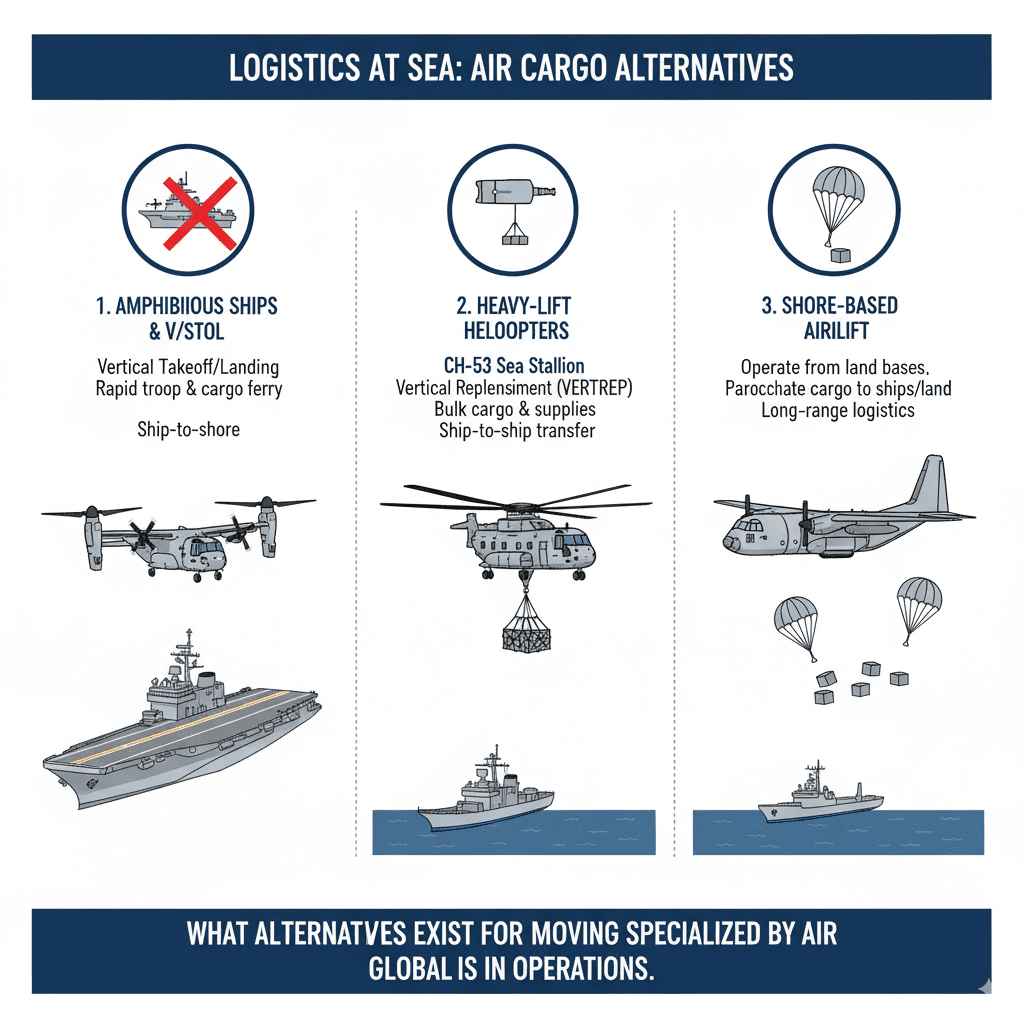
What Alternatives Exist for Moving Cargo by Air to Ships?
Since a C-130 can’t just hop onto an aircraft carrier, how does the military move large amounts of supplies or personnel rapidly via air to naval vessels or other operating areas? They employ various specialized methods:
- Amphibious Assault Ships: These large ships, sometimes called “Gators,” can carry helicopters and V/STOL (Vertical/Short Takeoff and Landing) aircraft like the MV-22 Osprey. They are designed to ferry troops and cargo directly to shore or to other vessels. The MV-22 Osprey is a particularly versatile platform that can take off and land vertically like a helicopter but fly much faster like a plane, making it ideal for ship-to-ship or ship-to-shore logistics.
- Helicopters: Large military helicopters, such as the CH-53 Sea Stallion or Super Stallion, are routinely used for vertical replenishment (VERTREP) to move cargo and supplies between ships at sea, including to aircraft carriers. These helicopters can lift thousands of pounds of supplies, from food and spare parts to ammunition.
- Fixed-Wing Logistics Aircraft Operating from Shore Bases: For supplying forces operating near coastlines, C-130s and other large transport aircraft can operate from land bases and parachute supplies to ships or land forces.
- Naval Ship-to-Ship Transfer: The most common method for routine resupply between ships involves using smaller vessels or specialized transfer equipment, but for speed, air is sometimes necessary or preferred.
The choice of method depends on the type of cargo, the urgency, the distance, and the availability of assets. The U.S. Navy and Marine Corps have extensive systems for logistics, ensuring that ships at sea have everything they need to operate effectively, even in remote locations.
Frequently Asked Questions (FAQ)
Can a C-130 land on an aircraft carrier at all?
In its standard configuration, a C-130 cannot perform a conventional arrested landing on an aircraft carrier. However, highly modified C-130s were tested experimentally for carrier recovery using arresting gear, but not for routine operations and not with catapult launches.
Why do fighter jets need tailhooks and catapults?
Fighter jets are typically heavy and fast. Tailhooks allow them to catch arresting wires on a carrier deck for a rapid stop, while catapults provide the necessary acceleration to get airborne from the short runway of a carrier.
What is the main difference between carrier planes and planes like the C-130?
Carrier-capable aircraft are specifically designed with reinforced structures, tailhooks, and catapult attachment points. The C-130 is designed for cargo transport and operational flexibility from land-based, often unimproved, airfields.
Has a C-130 ever landed on an aircraft carrier successfully?
There have been experimental landings of modified C-130s on carriers using arresting gear. These were specific test events, not operational deployments, and did not involve catapult launches.
Why aren’t C-130s modified for carrier operations?
The modifications required would be extensive and costly, and the resulting aircraft would still face limitations in size, maneuverability, and deck space. The C-130’s strengths lie in its land-based airlift capabilities, and specialized naval aircraft are more suitable for carrier operations.