Car Last 300000 Miles: The Real Maintenance Costs and Models That Make It
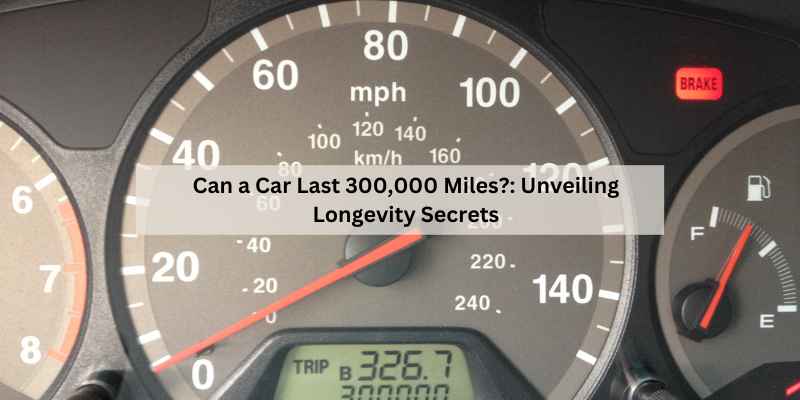
You see it on Craigslist all the time: a 2026 Camry with 280,000 miles, a cracked dashboard, and a seller who still wants $2,500. Most people scroll past. But someone buys that car, drives it another 50,000 miles, and never thinks twice about it. That’s the difference between a car that was built to last and one that was built to be traded in.
Getting a car to 300,000 miles isn’t about luck. It’s about buying the right platform, following a brutal maintenance schedule, and understanding that the $400 timing belt job at 90,000 miles is what separates a 200k car from a 300k car. This guide covers the exact cost breakdowns at each major interval, the models with the highest survival rates, how to inspect a high-mileage candidate, and whether modern EVs and turbos can hang with the old guard.
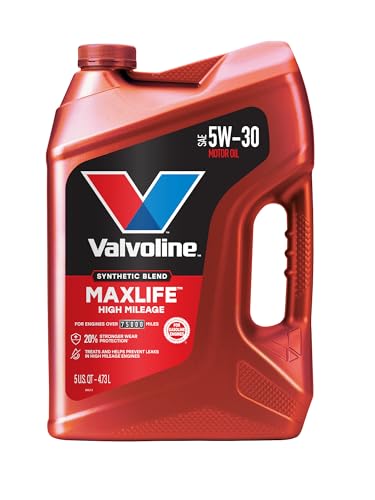
Valvoline
Valvoline MaxLife High Mileage 5W-30 Synthetic Blend…
- Formulated for engines with 75,000 miles or more, Valvoline MaxLife High Mileage synthetic blend is formulated with seal condition…
- Delivers 20% better wear protection and 15% better sludge defense than industry standards to help prevent engine breakdown
- Extra detergents safeguard against friction, corrosion and deposits to keep high-mileage engines clean
You’ll walk away knowing exactly what it costs to run a car to 300k, which engines are worth your money, and how to spot a car that will make it versus one that will strand you.
For the engines that do make it, the oil choice matters more than most owners realize. A high-mileage synthetic blend like Valvoline MaxLife 5W-30 uses seal conditioners that re-swell dried-out gaskets, which cuts oil consumption and stops small leaks before they become major drips. It’s a cheap insurance policy for an engine that already has 150,000 miles on the clock.
The 300,000-Mile Reality: It’s Not Luck, It’s Engineering
Here’s the truth nobody tells you: hitting 300k is mostly about the engine and transmission combo, not the brand badge. A 1998 Ford Crown Victoria with the 4.6L V8 will outlast a 2026 Audi A4 with the 2.0T. Why? The Ford was designed in the 1970s with massive tolerances and a cast-iron block. The Audi is a precision instrument that runs hot and stresses its cooling system.
Owner forum data from sites like CarComplaints and Reddit’s r/HighMileage suggests that roughly 1 in 4 Toyota Camrys and Honda Accords built before 2026 will see 300k if they aren’t totaled in an accident. For the average European sedan, that number drops to about 1 in 20. The engineering gap is real, and it’s visible in the parts: Toyota uses timing chains on many 4-cylinders that last the life of the engine, while some German automakers spec timing belts that grenade the motor if you miss the 80k service.
Rust is the other killer. A car with a perfect engine but a rotted subframe is a parts donor. If you live in the salt belt, the frame and suspension mounting points fail long before the engine does. That’s why the 300k club is full of Texas and California cars, not Michigan daily drivers.
The Non-Negotiables: Maintenance That Guarantees the Mileage
You cannot skip oil changes. Not one. A car that goes 10,000 miles between conventional oil changes is slowly grinding its bearings into dust. The 5,000-mile interval with a quality synthetic blend is the single cheapest way to guarantee engine longevity. That’s roughly $40 per oil change, or $2,400 over 300,000 miles.
Cooling system maintenance is the second non-negotiable. Overheating warps heads and blows head gaskets. Flush the coolant every 60,000 miles, replace the thermostat at 100k, and replace the radiator hoses before they crack. That’s about $300 in parts over the life of the car, and it prevents a $2,500 head gasket job.
The 100k/200k/300k Service Intervals That Matter Most
Here’s the hard cost breakdown you rarely see. These are realistic shop prices, not dealer quotes.
- 100,000 miles: Timing belt (if equipped) or chain inspection ($500–$1,000), spark plugs ($150–$300), transmission fluid drain and fill ($150–$250), coolant flush ($100–$150), brake fluid flush ($80–$120). Total: roughly $1,000–$1,800.
- 200,000 miles: Replace all engine mounts ($300–$600), replace the water pump ($400–$700) while the belt is off, new oxygen sensors ($200–$400), new shock absorbers and struts ($600–$1,200). Total: roughly $1,500–$2,900.
- 300,000 miles: This is the ‘catch-up’ interval. Rebuild or replace the alternator ($300–$500), replace the starter ($200–$400), new fuel pump ($400–$700), full suspension bushing kit ($500–$1,000), and possibly a transmission rebuild if you’ve neglected fluid changes ($1,500–$3,000). Total: roughly $3,000–$5,600.
Add those up, and the total maintenance cost to run a car to 300k is between $5,500 and $10,300, excluding tires and brakes. Spread over ten years, that’s less than $100 a month. That’s the price of a car that lasts.
The Undisputed Champions (Toyota & Honda)
You already knew this was coming. Toyota and Honda dominate the 300k club for one reason: they build engines with conservative tuning. The 2.4L Camry engine and the 1.8L Civic engine make modest horsepower, run low compression, and don’t stress their internal parts.
The Land Cruiser and Sequoia: The Immortal SUVs
The Toyota Land Cruiser is the gold standard. The 5.7L V8 (3UR-FE) is an iron block with a timing chain, and it’s not uncommon to see them cross 400k with nothing but oil changes. The Sequoia uses the same engine and is cheaper on the used market. If you want an SUV that will outlive your mortgage, these are the only real answers.
They’re not perfect. The Sequoia gets 14 mpg on a good day, and the Land Cruiser’s 4WD system adds complexity that can fail if you never use it. But the engines themselves are practically indestructible.
The Camry and Accord: Sedans That Refuse to Die
The 4-cylinder Camry (2.5L) and Accord (2.4L) from the 2026–2026 era are the peak of sedan longevity. They use timing chains, have simple port injection, and don’t have turbochargers. The weak point is the automatic transmission, specifically the Honda V6 transmissions from the early 2000s. If you buy a V6 Accord, verify the transmission was serviced or replaced.
One caveat: the 2026–2026 Camry 2.4L had an oil consumption lawsuit. If you buy one, check the dipstick weekly. The 2026+ models fixed this, so prioritize those.
The American Icons: V8 Trucks and SUVs That Go the Distance
American V8s don’t get the same respect as Japanese 4-cylinders, but the pushrod V8s from GM and Ford are some of the most durable engines ever made. The key is simplicity: overhead valves, iron blocks, and low-stress output.
Ford Crown Victoria, Chevy Silverado, and GMC Yukon
The Ford Crown Victoria (and its siblings, the Mercury Grand Marquis and Lincoln Town Car) is the ultimate 300k car. The 4.6L Modular V8 is a workhorse, and the 4-speed automatic behind it is similarly stout. Taxi fleets ran these to 400k regularly. They’re cheap, parts are everywhere, and any mechanic can work on them.
The Chevy Silverado and GMC Yukon with the 5.3L V8 (specifically the pre-2026 iron block, non-AFM versions) are also legendary. The 2026+ models have Active Fuel Management (AFM) that kills lifters around 150k. If you buy a 2026+ GM truck, budget $2,000 for an AFM delete kit or buy a tuner to disable it.
The trade-off is fuel economy. You’ll pay $80 to fill the tank, and you’ll be doing it every week. But the cost per mile of ownership is lower than a new car payment.
The Dark Horses: Subaru, Lexus, and Volvo
Subaru’s 2.5L Boxer engine is a mixed bag. The non-turbo versions are reliable, but the head gaskets fail around 120k–150k. That’s a $1,500 repair. If you buy a Subaru, check for external coolant leaks on the sides of the engine block. If it’s already been replaced, you have a car that will easily hit 300k. The all-wheel-drive system is robust, and the chassis holds up well.
Lexus is just a dressed-up Toyota. The ES350 (which is a Camry underneath) and the GX460 (a Land Cruiser Prado) are excellent 300k candidates. The RX350 with the 2GR-FE V6 is also solid, though the timing cover oil leak is a known issue that costs $1,000 to fix.
Volvo’s 5-cylinder engines from the 2000s (like the 2.5T in the V70) are over-engineered and can run forever. The weak point is the electronic throttle body and the PCV system. If you keep the PCV clean, the engine will keep going. Parts are more expensive than Toyota, but the cars are often cheaper to buy used.
Why Some Cars Fail Before 200k (And How to Spot Them)
Most cars don’t fail from engine wear. They fail from neglect and design flaws. Here’s what kills them early:
- Transmission neglect: The number one killer. If the transmission fluid is dark brown or smells burnt, the clutches are already wearing. A transmission that’s never been serviced will die around 150k.
- Coolant neglect: Old coolant becomes acidic and eats the heater core and radiator. Green or orange sludge in the overflow tank means it’s too late.
- Turbocharger failures: Turbos run at 150,000 RPM. If you buy a turbo car, you must use the correct oil and let it idle for 30 seconds before shutting off. Most turbo failures are from oil starvation.
- CVT transmissions: Nissan’s early CVTs (2026–2026) are notoriously unreliable. Many failed before 100k. If you’re looking at a high-mileage car, avoid Nissan CVTs unless you have proof of fluid changes every 30k.
Spotting these issues is simple. Check the transmission dipstick (if it has one). Look at the coolant color. Listen for a whining turbo. Pull the oil cap and look for sludge. A car with clean fluids and a dry engine bay is a car that was cared for.
The Buying Guide: How to Inspect a 250k-Mile Car for a 300k Future
Buying a car with 250,000 miles is a gamble, but you can tilt the odds. Here’s the checklist you need, in order of importance.
- Frame rust check: Bring a flashlight and a small hammer. Tap the frame rails, the floor pans, and the strut towers. If the hammer punches through, walk away. Surface rust is fine; structural rust is not.
- Transmission fluid test: Warm the car up, then check the fluid. It should be pinkish-red and smell sweet. If it’s brown, the transmission is on borrowed time.
- Compression test: This is the only way to verify engine health. A compression gauge costs $30 at AutoZone. All cylinders should be within 10% of each other. If one is low, you have a burned valve or a cracked ring.
- Leak-down test: This tells you if the rings are sealing. More than 20% leakage on a cylinder means the engine is tired.
- Service records: This is the most important item. A car with a folder of receipts for oil changes and timing belts is worth $1,000 more than the same car without them. If the seller has no records, assume the worst.
- Check the odometer for rollback: Look for mismatched wear on the pedals and steering wheel. A 250k car with a brand-new driver’s seat is a red flag.
If you’re not comfortable doing this yourself, pay a mechanic $150 for a pre-purchase inspection. It’s the cheapest insurance you’ll ever buy. And remember, this used car mileage guide explains why 250k isn’t automatically a dealbreaker.
The Future of 300k: Can Modern EVs and Turbos Do It?
The old rules don’t apply to electric vehicles. A Tesla Model 3 has about 20 moving parts in the drivetrain versus 2,000 in a combustion car. There’s no oil to change, no timing belt to snap, no transmission to slip. The battery is the only major wear item, and modern lithium-ion packs are rated for 1,500–2,000 charge cycles. That’s 300,000–500,000 miles of range.
The catch is battery degradation. A Tesla will lose about 10% of its range in the first 100k miles, then level off. The battery isn’t dead at 300k; it just has less range. The real question is cost. A replacement battery for a Model 3 is around $12,000. If you buy a used EV with 150k miles, you’re gambling on a battery that might need replacement.
Hybrids are a different story. The Toyota Prius is one of the most reliable cars ever made. The 1.8L engine is understressed, and the electric motor adds torque without stressing the gas engine. Taxi fleets have run Priuses to 400k. The hybrid battery is the weak point, but Toyota’s warranty covers it for 10 years/150k miles in most states, and aftermarket replacements cost $1,500.
Modern turbocharged engines are the risk. A 2026 Honda Accord with the 1.5T is more efficient than the old 2.4L, but it runs hotter and has more parts to fail. The direct injection system will need walnut blasting to clean carbon off the intake valves around 80k. It’s not impossible to get a turbo car to 300k, but it costs more to maintain. If you want a guaranteed 300k car, buy a naturally-aspirated engine from Toyota or Honda.
The Bottom Line: Is the 300k Goal Worth It?
Running a car to 300k only makes sense if you buy the right car and do the work yourself. If you’re paying a shop $150/hour for every repair, the math gets tight. But if you can turn a wrench, the savings are enormous. A 2026 Camry costs $3,000 to buy and $7,000 to maintain to 300k. That’s $10,000 total for ten years of driving. A new car costs $35,000 and loses half its value in five years.
The decision comes down to your tolerance for downtime. A 300k car will occasionally need a weekend in the garage. It won’t be as quiet or as comfortable as a new car. But it will be paid off, and that’s a feeling no car payment can match.
Practical Tips for the Long Haul
- Stick to a 5,000-mile oil change interval with a high-mileage synthetic blend; it’s the cheapest insurance you can buy.
- Service the transmission every 60,000 miles without fail. A $150 fluid change beats a $3,000 rebuild.
- Flush the coolant every 60,000 miles to prevent head gasket failure from overheating.
- Buy a car from the South or West Coast to avoid frame rust, which kills more high-mileage cars than engine failure.
- Prioritize naturally-aspirated engines from Toyota, Honda, or GM; avoid early Nissan CVTs and any car with a timing belt you can’t prove was replaced.
- Keep a $1,000 emergency repair fund for the inevitable alternator or starter failure.
- Check the mileage versus age trade-off before you buy; a 15-year-old car with 80k miles is often worse than a 10-year-old car with 200k miles.
Getting a car to 300,000 miles is a commitment, not a fantasy. The cars that make it are the ones that were bought with a plan, maintained with discipline, and driven with a light foot. Do that, and the odometer will keep rolling. For more on what’s realistic, check out this average car lifespan breakdown.
Products related to this article
Sponsored / affiliate links. As an Amazon Associate I earn from qualifying purchases. I may earn additional commission from eligible campaigns.