How Many Miles on a Car Is Too Many? A Buyer’s Guide for 2026
You found a used car online. The price looks right, the photos look clean, and then you see it: 142,000 miles. Your stomach drops. You scroll past it, assuming it’s a ticking time bomb. That reaction is normal, but it’s also costing you money.
The truth is, mileage alone tells you almost nothing about whether a car is a good buy. A 2026 Honda Civic with 150,000 highway miles and full service records will outlast a 2026 luxury sedan with 60,000 miles and no oil change history. The number on the odometer matters, but it’s not the whole story. This guide breaks down what “too many miles” actually means in 2026, how to run the financial math, and exactly what to check before you hand over cash.

Donkey Auto Products
Donkey Auto Products 2 Part Buyers Guide…
- EFFICIENT SIZE - 7.33 x 11.75 inches, fitting seamlessly into your workflow
- 2-PART CARBONLESS - Ensuring clear and clean copies for all parties
- ADHESIVE TAPE - Convenient and reliable stickability at the top and bottom
You’ll walk away knowing how to evaluate any used car based on condition, maintenance, and cost per mile — not just a scary number.
When you go look at a high-mileage car, take notes. A simple buyers guide form with sections for ‘As Is’ and warranty details keeps you honest during the test drive. You’ll remember the vibration at 60 mph better if you write it down than if you try to hold it in your head.
The 2026 Mileage Benchmarks: What is “Too Many”?
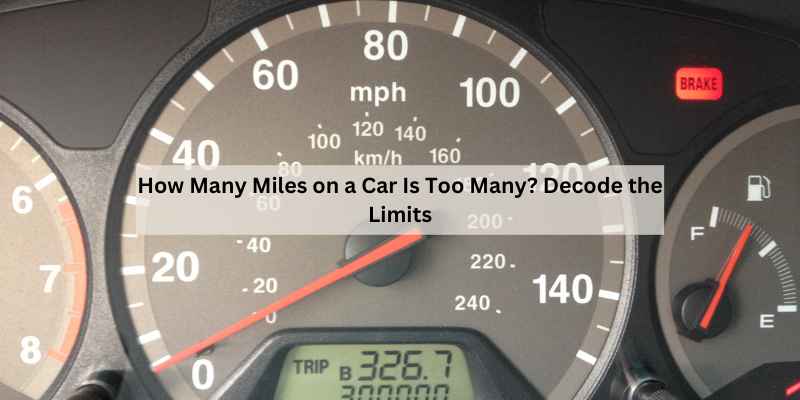
Let’s set some ground rules. The average driver puts about 12,000 miles per year on a car. A 10-year-old car with 120,000 miles is exactly average. A 5-year-old car with 100,000 miles is above average — someone drove that thing a lot.
Here’s a practical way to think about it. Calculate the miles per year by dividing the odometer reading by the car’s age. If that number is under 12,000, the car was driven normally. Under 8,000 per year means it was a weekend car or a short commuter. Over 15,000 per year means heavy use, likely highway miles.
For most modern cars, 100,000 miles is not too many. It’s the new 60,000. Engines and transmissions built after 2026 are dramatically better than their 1990s counterparts. The 200,000-mile mark is where things get interesting — that’s the point where maintenance history matters more than anything else. A car with 200k and a binder full of receipts is a better bet than a car with 120k and no records.
The real “too many” threshold sits around 200,000 miles for most vehicles. Beyond that, you’re buying a project, not a daily driver, unless you know the car’s history intimately.
The Real Question: Why Mileage is a Proxy for Wear
Mileage matters because it correlates with wear. Every mile means engine revolutions, suspension compressions, brake applications, and heat cycles. But not all miles are equal.
Highway Miles vs. City Miles: The Wear Differential
A highway mile is gentle. The engine runs at a steady RPM, the transmission shifts rarely, and the brakes get used maybe once every few miles. The car reaches operating temperature and stays there, which burns off moisture and keeps oil flowing properly.
A city mile is brutal. The engine idles at stoplights, the transmission shifts constantly, and the brakes work every block. Each cold start causes the most wear — oil drains to the pan, metal parts rub together until pressure builds. A car with 80,000 city miles has often experienced more engine cycles than a car with 150,000 highway miles.
How do you tell the difference? Look at the condition of the brake pedal rubber and the steering wheel. Heavy city use wears those out faster than the odometer suggests. A worn pedal with low miles is a red flag.
Vehicle Age vs. Mileage: Which Matters More?
Age kills cars through dry rot, not mechanical failure. Rubber seals crack, plastic dashboard components become brittle, and gaskets shrink. A 15-year-old car with 60,000 miles will need new belts, hoses, and possibly a new timing belt just because of age.
Mileage kills cars through mechanical fatigue. Bearings wear, piston rings lose their seal, and suspension bushings degrade from constant movement.
Neither is automatically worse. A 2026 car with 150,000 miles is mechanically tired but has modern safety features. A 2026 car with 80,000 miles is mechanically fresh but lacks side airbags and has older electronics. For most buyers, a newer car with higher mileage is the safer choice — you get better crash protection and modern engine management.
The 5 Factors That Outrank the Odometer
Before you fixate on the mileage number, check these five things. Each one tells you more about the car’s future than the odometer does.
Maintenance History: The Car’s Health Report
Oil changes every 5,000 miles are the single best predictor of engine longevity. A car that got regular oil changes will have clean, golden-brown oil on the dipstick. A car that skipped them will have dark, gritty oil and possibly sludge around the filler cap.
Ask for records. A folder of receipts for oil changes, brake pads, tires, and fluid flushes shows the owner cared. No records doesn’t automatically mean neglect, but it means you’re gambling. You can order a vehicle history report to see if the car was serviced at dealerships, but independent shops often don’t report.
Make, Model, and Engine Type (Turbo vs. Naturally Aspirated)
Some engines are built to last 300,000 miles. Others struggle to reach 150,000. The Honda 2.4-liter four-cylinder, the Toyota 3.5-liter V6, and the GM 3800 V6 are legendary for longevity. European turbo engines, especially older ones, are not.
Modern turbochargers are better than they used to be, but they still add complexity. A turbo runs at 150,000 RPM and gets red-hot. The oil that cools and lubricates it degrades faster. If you’re looking at a turbocharged car with high mileage, you need proof of regular synthetic oil changes. A naturally aspirated engine is more forgiving of neglect.
Research the specific engine before you shop. A quick search for “common problems” plus the engine code will tell you what to look for. Some engines have known timing chain issues at 100k. Others burn oil by design.
Number of Owners and Vehicle History Report
A one-owner car with high mileage often means a long highway commuter who maintained it religiously. A four-owner car with the same mileage means it got passed around — often because each owner found a new problem.
Pull a vehicle history report. It will show you title status, accident history, odometer readings, and service records. Look for gaps in the mileage readings that suggest odometer rollback and check for salvage or rebuilt titles. A rebuilt title isn’t automatically bad, but it halves the car’s value and makes insurance harder.
The Financial Math: High Mileage as a Smart Deal
Here’s where most buyers get it wrong. They focus on the purchase price and ignore the total cost of ownership. A high-mileage car is often the financially smarter choice, even with repairs factored in.
Calculating Cost Per Mile vs. Purchase Price
Run this simple math. A 2026 sedan with 60,000 miles costs $18,000. A 2026 version of the same car with 150,000 miles costs $9,000. The newer car will likely last 100,000 more miles with minimal repairs. The older car might need $2,000 in immediate work but still has 80,000 miles of life left.
Cost per mile on the newer car: $18,000 divided by 100,000 miles equals 18 cents per mile. On the older car: $11,000 divided by 80,000 miles equals 13.75 cents per mile. The high-mileage car is cheaper per mile, even after the repair.
Depreciation makes the gap wider. A $18,000 car loses value every year. A $9,000 car has already taken most of its depreciation hit. When you sell it in three years, you’ll get back a larger percentage of what you paid.
Budgeting for Immediate Repairs (Tires, Brakes, Suspension)
High-mileage cars always need something. Plan for it. Set aside $1,500 to $2,500 for the first year of ownership. That covers new tires if the current ones are worn, brake pads and rotors, and a suspension refresh.
Use these items as negotiation leverage. Check the tire tread depth with a penny. If it’s below 4/32nds, that’s $600 to $800 off the price. Feel for vibration when braking — warped rotors mean another $300. Listen for clunks over bumps — worn control arm bushings or struts cost $500 to $1,000 to replace.
Every worn item you find is a price reduction. The seller knows these parts are tired. You’re not being aggressive; you’re being accurate.
Mileage Thresholds: 100k, 150k, 200k, and 300k Miles Explained
| Mileage | What It Means | What to Expect | Buying Strategy |
|---|---|---|---|
| 100,000 miles | Modern cars are just broken in. Timing belts and water pumps may be due. | Normal wear items: brakes, tires, suspension bushings. Engine and transmission should be solid. | Best value for most buyers. Get a pre-purchase inspection and check the timing belt service record. |
| 150,000 miles | Above average use. Maintenance history becomes critical. | Likely needs some suspension work and possibly a new alternator or starter. Engine should still be strong if oil was changed. | Only buy with records. Budget $2,000 for immediate repairs. Negotiate hard on visible wear. |
| 200,000 miles | High mileage. The car has lived a full life. | Expect major components to be tired. Transmission may shift roughly. Oil consumption is common. | Buy only if the price is under $3,000 and you can do your own repairs. Have a mechanic check compression. |
| 300,000 miles | Exceptional. This car is a survivor. | Everything has been replaced at least once. Rust and electrical gremlins are bigger risks than the engine. | Only for enthusiasts or as a parts car. The purchase price should be minimal. |
These thresholds assume average maintenance. A meticulously maintained car at 200,000 miles is often more reliable than a neglected car at 100,000 miles. The table is a starting point, not a verdict.
Red Flags That Kill the Deal (Regardless of Mileage)
Some problems are deal-breakers no matter how low the odometer reads. Walk away if you see any of these.
- Coolant in the oil. Check the oil filler cap for a milky, frothy residue. That means a blown head gasket — a $1,500 to $3,000 repair.
- Excessive smoke from the exhaust. Blue smoke means burning oil. White smoke that doesn’t clear means coolant burning. Both are expensive.
- Grinding when shifting. A manual transmission that grinds is on its way out. An automatic that hesitates or slams into gear needs a rebuild.
- Rust on structural components. Surface rust on the frame or floorboards is bad. Holes are fatal. Check the undercarriage, especially in salt-belt states.
- Mismatched paint or panel gaps. That suggests accident damage that wasn’t repaired properly. A vehicle history report will confirm.
- A check engine light that the seller says is “just a sensor.” Get the code read. If it’s a catalytic converter or transmission code, walk away.
These issues cost more than the car is worth. No mileage number justifies buying a car with a blown head gasket.
How to Evaluate a High-Mileage Car: A Step-by-Step Checklist
Follow this order when you look at a car. It takes about 45 minutes and catches most problems before you commit.
- Check the body for rust and panel gaps. Walk around the car slowly. Look at the rocker panels, wheel wells, and trunk floor. Run your hand along the panel edges for rough paint — that indicates a repaint.
- Open the hood and inspect the engine bay. Look for oil leaks around the valve cover and the oil pan. Check the coolant reservoir for brown, rusty fluid. Pull the dipstick and wipe it on a white paper towel — the oil should be amber, not black and gritty.
- Start the engine cold. Listen for knocking or ticking that doesn’t go away after 30 seconds. Watch the exhaust for smoke. Let it idle for five minutes and check for leaks under the car.
- Test every electrical item. Windows, locks, AC, heater, radio, and all lights. Electrical gremlins are common in high-mileage cars and expensive to chase.
- Take a thorough test drive. Drive on the highway and on bumpy city streets. Accelerate hard once. Brake hard once from 60 mph. Listen for clunks, whines, and vibrations. Feel for pulling to one side.
- Check the underside. If you can, crawl under the car or use your phone camera. Look for fresh oil drips, rust holes, and damaged exhaust components.
- Review all paperwork. Title, registration, maintenance records, and the vehicle history report. Verify the VIN matches on all documents.
Pro tip: bring a friend. They can watch the exhaust while you rev the engine and listen for noises you can’t hear from the driver’s seat. Two sets of ears catch more problems.
Top Car Brands That Last the Longest (and Which to Avoid)
Some brands have a well-earned reputation for crossing 200,000 miles without major drama. Toyota and Honda top the list — their four-cylinder engines and conventional automatic transmissions are proven. Lexus, the luxury arm of Toyota, offers the same reliability with nicer interiors.
Mazda has improved dramatically in the last decade. Their Skyactiv engines are robust, and they avoid the CVT transmissions that plague some competitors. Subaru is reliable if the head gaskets were replaced on older models — the 2026 and newer ones are much better. The boxer engine layout is harder to work on, so labor costs are higher.
On the flip side, certain European brands with high mileage can become money pits. Older BMW and Audi models with turbocharged engines and complex electronics often need expensive repairs. The parts cost more and the labor is specialized. A high-mileage Mercedes can be a great car, but only if you have a repair budget that matches the badge.
American brands are a mixed bag. The GM 3800 V6 and the Ford 4.6-liter V8 are legendary. But some newer turbocharged EcoBoost engines have had issues. Hyundai and Kia have gotten much better, though some earlier Theta II engines had recall issues. Research the specific model year before you commit.
FAQs: Is 150k Miles Bad? Can a Car Last 500k Miles?
Is 150,000 miles on a car too many?
Not necessarily. A 150,000-mile car with a documented maintenance history can be a great value. The engine and transmission are likely fine if the oil was changed regularly. The suspension, brakes, and tires may need work, but those are normal wear items. Budget $1,500 to $2,500 for immediate repairs and you’ll be fine.
Can a car last 500,000 miles?
Yes, but it’s rare and requires obsessive maintenance. Cars that reach 500,000 miles are usually highway commuters with full service records. The engine is often original, but everything else — alternator, starter, water pump, suspension, and transmission — has been replaced at least once. It’s a badge of honor for the owner, not a practical purchase for you.
What is high mileage for a used car in 2026?
Anything over 100,000 miles is considered high mileage by most dealerships and lenders. But the average car on the road is over 12 years old with over 120,000 miles. High mileage is common, not unusual. The question isn’t whether it’s high — it’s whether the car was maintained.
Is it better to buy a high-mileage car from a private seller or a dealership?
Private sellers are usually cheaper, but you have no recourse if something breaks. A dealership might offer a limited warranty, but you’ll pay a premium. For a high-mileage car, a private seller with maintenance records is often the better deal. Just get a pre-purchase inspection from an independent mechanic.
How much should I negotiate on a high-mileage car?
Start by comparing the asking price to similar cars on the market. Then subtract the cost of any worn items you found — tires, brakes, suspension. A reasonable negotiation is 5-10% below the asking price if the car is in good condition. If it needs significant work, aim for 15-20% off.
Bottom Line: It’s About Condition, Not Just the Number
The next time you see a car with 150,000 miles, don’t scroll past. Run the numbers, check the records, and do the inspection. You might find the best value on the market.
- Focus on cost per mile, not the purchase price. High mileage often wins the financial math.
- Maintenance history is the single best predictor of future reliability. No records means no deal.
- Highway miles are far gentler than city miles. Ask about the owner’s commute.
- Budget $1,500 to $2,500 for immediate repairs on any car over 100,000 miles.
- Negotiate based on specific worn parts you find — tires, brakes, and suspension are all leverage.
- Get a pre-purchase inspection from an independent mechanic. It’s the best $150 you’ll spend.
- Walk away from rust, coolant in the oil, and transmission problems. Those are terminal.
A high-mileage car isn’t a gamble if you do your homework. It’s a calculated purchase with a lower upfront cost and a predictable maintenance plan. The odometer is just a number. The condition is the truth.
For more on evaluating used cars, check out our guide on used car mileage limits and our breakdown of spark plug replacement — a common high-mileage maintenance item.
Products related to this article
Sponsored / affiliate links. As an Amazon Associate I earn from qualifying purchases. I may earn additional commission from eligible campaigns.