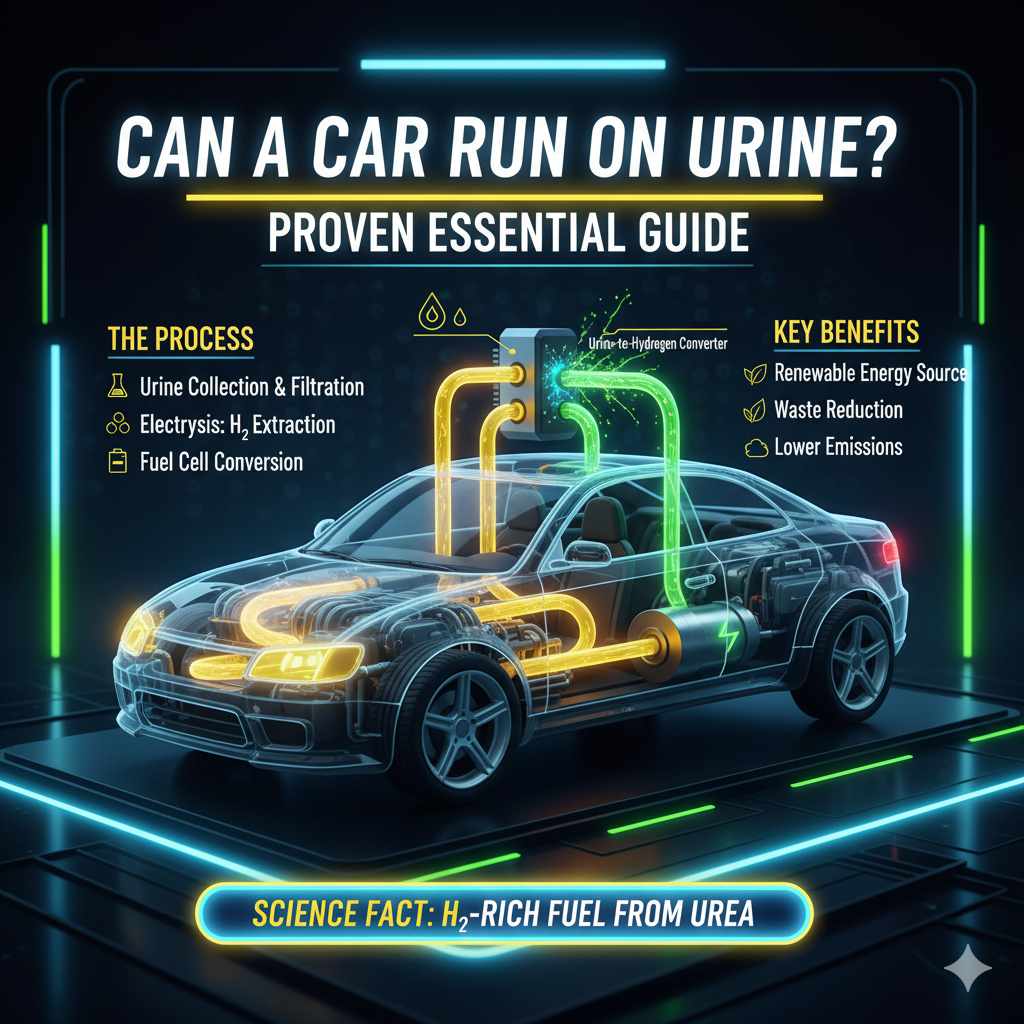
Can a Car Run On Urine? Proven Essential Guide
Can a car run on urine? No, a standard car cannot run on urine. While urine contains compounds that can be processed into fuel, direct use is impossible. This guide explores the science, the potential, and why your car needs conventional fuel.
Ever heard a wild rumor about fueling your car with something… unusual? One of the strangest ideas floating around is whether a car can actually run on urine. It sounds bizarre, right? You’re not alone if you’ve ever wondered about this – it’s a curious question that pops up now and then. The good news is, you don’t need to start stocking up on gallons of… well, you know. This guide will clear up the mystery surrounding cars and urine, explaining the science in a way that’s easy to understand. We’ll look at what makes cars go, what’s in urine, and why they absolutely cannot be mixed directly.
Understanding How Cars Get Their Power
Before we dive into the world of unconventional fuels, let’s quickly touch on how your car actually works. Most cars on the road today use an internal combustion engine. This engine is a clever piece of engineering that creates a small explosion inside a cylinder. This explosion pushes a piston, which turns a crankshaft, and that’s what ultimately makes your wheels spin.
What’s the magic ingredient that causes this explosion? It’s fuel, usually gasoline or diesel. These fuels are made of hydrocarbons – molecules containing hydrogen and carbon atoms. When fuel mixes with air and is ignited by a spark plug (in gasoline engines) or compressed to a high temperature (in diesel engines), it burns very rapidly. This rapid burning, or combustion, is what generates the power to move your car. The key here is that the fuel needs to be highly combustible and energy-dense to create that powerful, controlled explosion.
What is Urine and What’s Inside It?
Urine is a liquid waste product produced by your kidneys. Its primary job is to filter waste and excess water from your blood and then expel them from your body. So, what exactly is in urine?
- Water: This makes up the vast majority of urine, typically around 95%.
- Urea: This is the main waste product from protein metabolism. It’s a compound containing nitrogen and carbon.
- Salts and Minerals: Urine contains dissolved salts like sodium, potassium, chloride, and phosphates.
- Other Waste Products: It can also contain small amounts of other substances like creatinine, uric acid, and various hormones or byproducts of medication.
While urine does contain chemicals like urea, it’s fundamentally a watery solution filled with waste. It’s not designed to be a source of energy in its raw form, and importantly, it lacks the properties needed for combustion in an engine. Think of it like trying to burn water to power your car – it just won’t work.
Can a Car Truly Run on Urine? The Simple Answer
The short and definitive answer is no, a car absolutely cannot run on urine directly.
Your car’s engine is designed to run on specific types of fuel like gasoline or diesel. These fuels have a high energy content and the right chemical makeup to burn efficiently and powerfully in the engine. Urine, on the other hand, is mostly water and contains waste products. It’s not combustible, meaning it won’t burn. Attempting to put urine into your fuel tank would be like pouring water into it – it would cause significant damage and your car simply wouldn’t start or run.
The components in urine, particularly urea, are not fuel in the way we understand it for engines. They don’t have the energy density or the combustion properties required. In fact, the water content alone would prevent any form of ignition, and the salts and other waste could corrode and clog vital engine parts.
The Science Behind Fuel and Why Urine Doesn’t Cut It
Let’s get a little more technical, but still keep it simple! The goal of fuel is to release a lot of energy when it burns. This energy release needs to be controlled and happen very quickly to push pistons and turn the engine.
Key Properties of Engine Fuel:
- High Energy Density: Fuels like gasoline pack a lot of chemical energy into a small volume. This means a relatively small amount of fuel can produce a lot of power.
- Combustibility: The fuel must be able to ignite easily (with a spark or heat) and burn rapidly, releasing a significant amount of heat and expanding gases.
- Stable Chemical Composition: Engine fuels are refined to have a consistent chemical structure, typically hydrocarbons. This consistency ensures the engine runs predictably and efficiently.
- Liquid State at Operating Temperatures: Fuel needs to remain liquid so it can be easily pumped from the tank to the engine.
Why Urine Fails These Tests:
- Low Energy Density: Urine has almost no usable energy content for combustion. The “energy” often discussed in relation to urine is after it’s been processed, not in its natural state.
- Non-Combustible: Due to its high water content, urine will not burn. It will simply sit there or boil off without igniting.
- Unstable and Corrosive Composition: Urine contains salts, acids, and urea, which can be corrosive to metal parts and can clog fuel systems. It would actively damage your engine, not power it.
- Not a Designed Fuel: Nature designed urine for waste elimination, not for powering mechanical devices.
Exploring the “Processing Urine for Fuel” Idea
Now, you might be thinking, “But I’ve heard about people making fuel from urine!” This is where the confusion often starts. It’s true that scientists and engineers have explored ways to extract useful compounds from substances like urine and turn them into fuel, but this is a complex, multi-step process, and very different from pouring urine into your gas tank.
What Researchers Are Doing:
The primary focus is on extracting the urea from urine. Here’s a simplified look at some of the concepts being explored:
- Fuel Cells: Some research has focused on using urine in specialized fuel cells. A fuel cell is different from an internal combustion engine. It generates electricity through a chemical reaction. In this case, certain types of microbes or catalysts can react with urea to produce electricity. This electricity could then be used to power an electric vehicle. This technology is still largely experimental and not something you’d find in a typical car today. For more on fuel cell technology, NASA provides excellent resources on how fuel cells work.
- Hydrogen Production: Another area of research involves using bacteria to break down urea, which can release hydrogen gas. Hydrogen is a clean fuel that can be used in specialized engines or fuel cells. Again, this requires significant processing and equipment, not just collecting urine and putting it in a car.
- Biodiesel Production: In some experimental setups, urine has been used as a nitrogen-rich input for processes that help produce biodiesel from sources like algae. The urea helps the microorganisms grow faster, which in turn produce oils that can be converted into biodiesel.
These processes are complex, often energy-intensive themselves, and are currently more in the realm of scientific research and development than practical, everyday applications. The key takeaway is that the urine is being transformed into something else, a fuel, through advanced methods. It’s not being used as fuel itself.
Why Direct Use is Dangerous: A Warning
Let’s be very clear: attempting to use urine as fuel in your car is a bad idea and will cause severe damage.
Imagine putting syrup in your gas tank – it’s thick, sticky, and full of sugars that would gum up everything it touches. Urine, while being mostly water, also contains dissolved solids, salts, and urea. If you were to put it in your fuel tank:
- Fuel Pump Failure: The dissolved solids and urea could clog your fuel filter and damage the delicate parts of your fuel pump.
- Injector Clogging: The fine mist of fuel that sprays into the engine cylinders would become blocked by the waste products.
- Corrosion: The salts and acidity in urine can corrode metal components within your fuel system and engine.
- Engine Seizure: If any liquid other than the proper fuel mixture enters the combustion chamber, it can cause the engine to seize up, leading to catastrophic and expensive damage.
The cost of repairing this kind of damage would far outweigh any potential, and frankly, impossible, savings from trying to use urine as fuel. Your car’s engine is a finely tuned machine, and it deserves the correct fuel designed for it.
Alternative Fuels and Your Car
While urine isn’t a viable fuel, the world of alternative fuels is vast and exciting! If you’re curious about using something other than standard gasoline or diesel, there are already options available and more being developed:
Common Alternative Fuels:
- Ethanol: Often blended with gasoline (like E10 or E85), ethanol is an alcohol made from plants like corn or sugarcane. Many modern cars can handle some ethanol blend.
- Biodiesel: Made from vegetable oils or animal fats, biodiesel can be used in diesel engines, sometimes blended with petroleum diesel (like B5 or B20).
- Compressed Natural Gas (CNG): This is a clean-burning fuel stored under high pressure. Vehicles designed to run on CNG have special tanks and fuel systems.
- Propane (Liquefied Petroleum Gas – LPG): Similar to CNG, LPG is another alternative fuel that can be used in specially converted vehicles.
- Electric Vehicles (EVs): The most prominent alternative right now is electricity stored in a battery, powering an electric motor.
- Hydrogen Fuel Cell Vehicles: These vehicles use hydrogen to generate electricity, emitting only water vapor. This technology is still developing but holds great promise.
If you’re interested in alternative fuels, it’s crucial to ensure your car is compatible or has been converted by a professional. Using the wrong fuel can lead to the same kind of damage as putting something completely unsuitable, like urine, in your tank.
When You Need to Fuel Up: The Right Way
For the vast majority of car owners, sticking to the fuel recommended by your car’s manufacturer is the safest and most reliable option. You’ll find this information in your car’s owner’s manual.
Where to Find Fuel Information:
- Owner’s Manual: This is your car’s bible! It will tell you exactly which fuel type (e.g., Unleaded 87, Premium Unleaded 91) and octane rating your engine requires.
- Fuel Door Sticker: Many cars have a sticker near the fuel cap indicating the recommended fuel.
- Manufacturer’s Website: You can often find digital copies of your owner’s manual online.
Always double-check the fuel type before you pump. Using the wrong octane rating can affect performance, and using the wrong fuel type altogether (like putting diesel in a gasoline car, or vice-versa) can cause serious immediate damage.
Frequently Asked Questions (FAQ)
Q1: Can I really pour urine into my gas tank?
Absolutely not! Your car’s engine is designed for gasoline or diesel. Urine is mostly water and waste products, won’t burn, and will severely damage your fuel system and engine.
Q2: I heard urine can be processed into fuel. Is that true?
Yes, but it’s a complex scientific process. Researchers are exploring ways to extract hydrogen or generate electricity from compounds in urine using advanced technology like fuel cells or bacterial conversion. You cannot use urine directly as fuel.
Q3: What happens if I accidentally put urine in my gas tank?
Your car will likely not start or run. The water content will prevent combustion, and the salts and urea can clog filters, damage the fuel pump, and corrode engine parts. You’ll need professional repairs.
Q4: What are alternative fuels I can use?
Common alternatives include ethanol blends (like E10 or E85), biodiesel, compressed natural gas (CNG), propane (LPG), and electricity for electric vehicles. Always ensure your car is compatible or converted.
Q5: How can I tell what fuel my car needs?
Check your owner’s manual. It’s the most reliable source for fuel type and octane recommendations. You might also find a sticker on the fuel door.
Q6: Are there any DIY ways to turn urine into fuel for a car?
No, there are no safe or practical DIY methods to turn urine into fuel for a standard car suitable for everyday driving. The science and engineering involved are far beyond typical at-home capabilities.
Q7: If urine can’t fuel a car, can it fuel anything else?
In specialized research settings, urine can be a source for producing hydrogen fuel or powering experimental fuel cells, but this is not for direct use and requires significant processing and complex equipment. Think of laboratories, not your garage.
Conclusion
As we’ve explored, the idea of a car running on urine is a fascinating one, but it belongs firmly in the realm of science fiction and experimental research, not in your everyday driving. Your car’s engine needs specific, energy-rich hydrocarbons found in gasoline or diesel to work. Urine, with its high water content and waste products, is simply not combustible and would cause serious, expensive damage if introduced into your fuel system.
While scientists are looking at creative ways to use components of waste products, like urea in urine, as a starting point for producing cleaner fuels through advanced processes, these methods are complex and not available for direct use in your vehicle. For now, and for the foreseeable future, the best way to keep your car running smoothly and reliably is to use the fuel recommended by the manufacturer. Always refer to your owner’s manual, fuel up correctly at the pump, and you’ll keep your vehicle happy and healthy for miles to come!