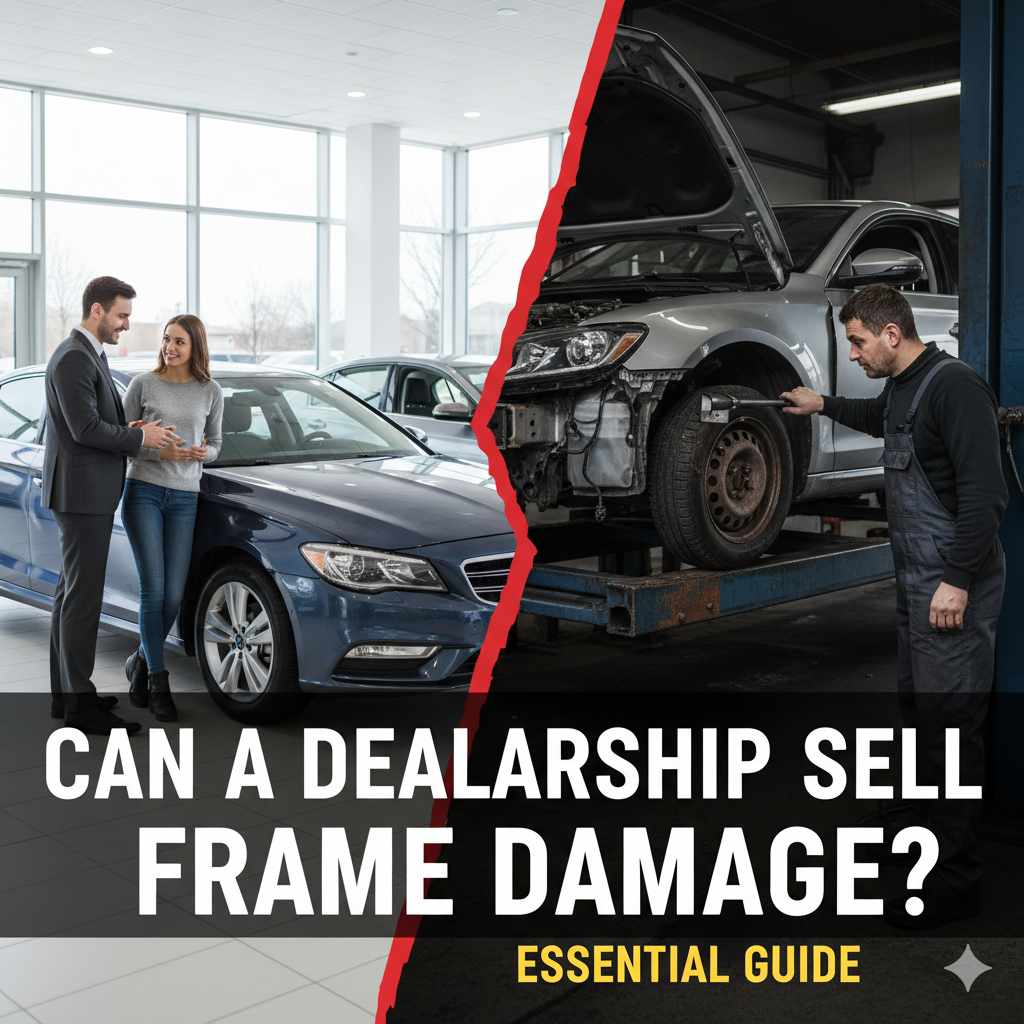
Can A Dealership Sell A Car With Frame Damage: Essential Guide
Quick Summary: Yes, dealerships can legally sell a car with previous frame damage, but they must disclose it if it’s «material» and affects the vehicle’s safety or value. Unrepaired or poorly repaired frame damage can be dangerous and costly. Always get a pre-purchase inspection by an independent mechanic to be safe.
Buying a car is exciting, and you want to feel good about your choice. But what if you find out a car you’re looking at has frame damage? It’s a common worry, and knowing the facts can save you a lot of trouble. Frame damage can sound scary, but with clear information, you can make a smart decision. This guide will walk you through exactly what you need to know about dealerships, frame damage, and how to protect yourself. We’ll cover what dealerships must tell you, what to look for, and how to ensure the car you buy is safe and sound.
Understanding Car Frame Damage
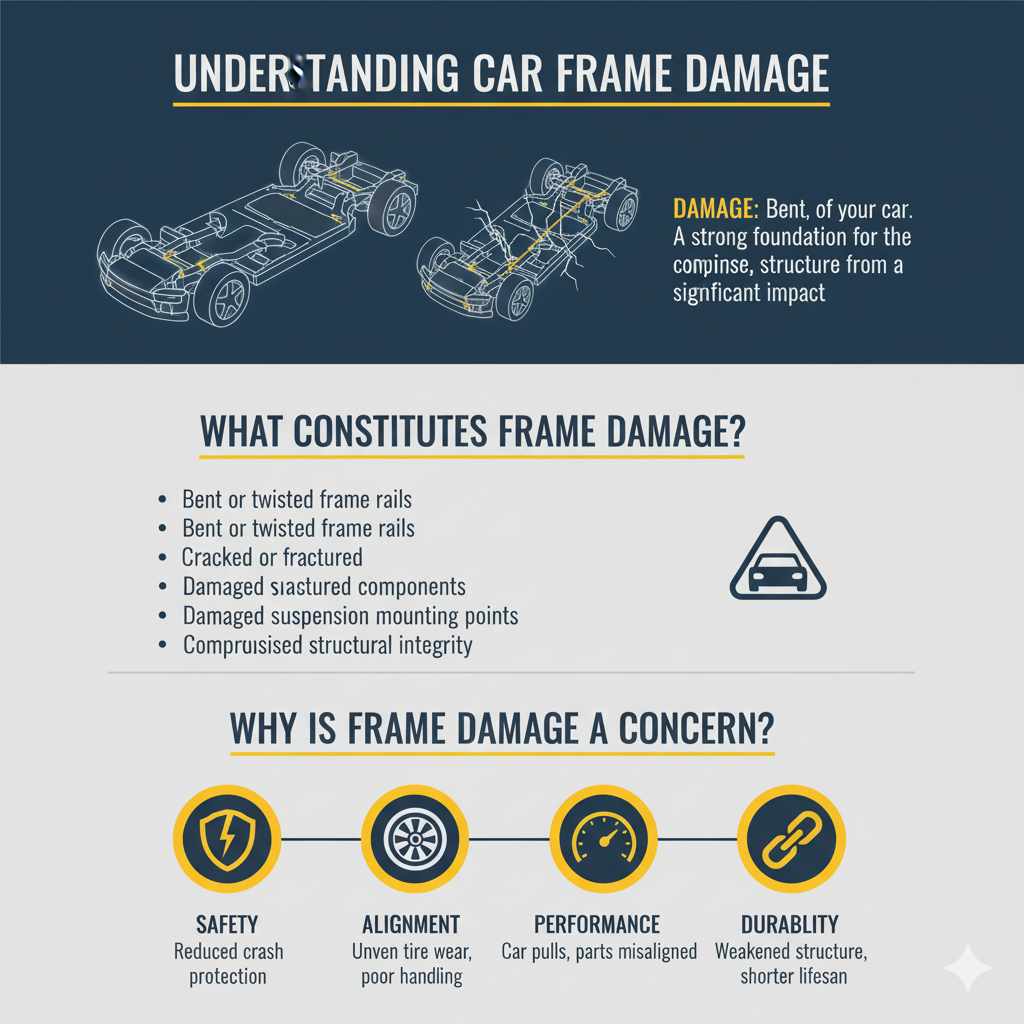
The frame, or chassis, is the very backbone of your car. It’s the strong foundation that everything else attaches to – the engine, suspension, body panels, and more. Think of it like the skeleton of a person; it supports everything and keeps it all in place. When a car’s frame is damaged, it means this essential structure has been bent, twisted, or compromised in some way. This usually happens because of a significant impact, like a serious accident or collision.
What Constitutes Frame Damage?
Frame damage isn’t just a minor ding. It refers to structural compromises to the vehicle’s chassis. This can include:
- Bent or twisted frame rails.
- Cracked or fractured frame components.
- Damage to suspension mounting points on the frame.
- Compromised structural integrity following a major impact.
It’s important to understand that not all cars with a history of major accidents have frame damage. Some can sustain significant body damage without compromising the underlying frame. However, if the impact was severe enough to affect the frame, it’s a big deal.
Why is Frame Damage a Concern?
A compromised frame can lead to a variety of serious issues:
- Safety: The frame is crucial for crash protection. If it’s damaged, it might not absorb impact force as designed, putting occupants at greater risk.
- Alignment: Frame damage can cause the car’s wheels to be out of alignment, leading to uneven tire wear, poor handling, and a car that pulls to one side.
- Performance: The car might not drive straight, and parts might not function correctly because they are no longer properly aligned.
- Durability: The structural integrity is weakened, making the car more susceptible to further damage and potentially reducing its lifespan.
Can a Dealership Sell A Car With Frame Damage? The Legalities
This is the big question on many people’s minds. In most places, the answer is yes, but it comes with important responsibilities for the dealership.
Disclosure Requirements
Dealerships generally must disclose a car’s history if it’s relevant to the buyer’s decision, especially if it affects safety or value. This often includes significant frame damage. Laws vary by state and country, but here’s a general idea:
- Material Damage: If the frame damage is considered “material” – meaning it significantly impacts the vehicle’s safety, structural integrity, or market value – the dealership is typically required to disclose it to the buyer.
- Documentation: This disclosure usually needs to be in writing, often as part of the vehicle’s title or a separate disclosure document.
- “Salvage” vs. “Rebuilt” Titles: Cars with severe frame damage might have a “salvage” title, meaning they were declared a total loss by an insurance company. If repaired, they might be issued a “rebuilt” or “reconstructed” title. Dealerships are almost always required to disclose these titles.
The challenge is that “material” can sometimes be a gray area, and not all frame damage is easily detectable or always reported. This is why being an informed buyer is so crucial.
You can find more specific information on vehicle history disclosure requirements from government agencies like the Federal Motor Carrier Safety Administration (FMCSA), though they focus more on commercial vehicles, general consumer protection laws often cover these disclosure aspects for passenger vehicles.
“As-Is” Sales
Some cars are sold “as-is,” meaning the dealer offers no warranty. While this might apply to minor issues, it doesn’t typically exempt a dealer from disclosing known material defects like significant frame damage. It’s always wise to clarify what “as-is” means with the dealership.
Identifying Potential Frame Damage
Even if a dealership discloses frame damage, you’ll want to know how to spot it yourself. This is where a little detective work and a lot of caution come in handy.
Pre-Purchase Inspection (PPI) is Key
This is arguably the most important step. Always, always have an independent mechanic you trust inspect any used car before you buy it. They have the trained eye and tools to spot issues you might miss. A PPI can reveal frame damage, hidden rust, or other problems that could cost you a fortune down the road. A good mechanic will be thorough and give you an unbiased report.
Visual Inspection by You
Before even getting to the mechanic, you can do some initial checks:
Exterior Checks
- Panel Gaps: Look at the spaces between body panels (doors, hood, trunk, fenders). Are they even all around? Uneven gaps can indicate the frame underneath has shifted.
- Door, Hood, and Trunk Alignment: Do doors open and close smoothly? Do they sit flush when closed? If they seem misaligned, it could be a sign of frame issues.
- Paint Mismatches: Look for areas where the paint color or texture doesn’t quite match. This might suggest parts have been replaced or repaired after an accident.
- Cracked or Bent Trim/Bumpers: While minor, these can sometimes hide underlying structural damage.
Underneath the Car
This is where the frame really lives. If you can safely get under the car (or have a mechanic do it), look for:
- Bent or Twisted Frame Rails: These are the long beams running along the length of the car. Any obvious bends, kinks, or visible repairs here are red flags.
- Cracks or Welds: Look for any signs of fresh welds or cracks in the metal.
- “Sagging” Suspension: Does the car sit lower on one side than the other? This can point to frame stress affecting suspension mounts.
Interior Checks
- Loose Interior Panels: Do the dashboard or door panels feel loose or make unusual noises? This could be a sign of the car’s structure shifting.
- Water Stains: Check the carpets for damp spots or water stains, especially in the trunk or by the doors. This might indicate past leaks due to seal damage from an accident.
Test Drive Clues
How the car drives can tell you a lot:
- Pulling to One Side: If the car consistently drifts left or right, even on a straight road, it could be alignment issues stemming from frame damage.
- Wandering Steering: Does the steering wheel feel loose or does the car feel like it’s “wandering” instead of tracking straight?
- Bouncing or Vibrations: Excessive bouncing after hitting bumps, or vibrations felt through the steering wheel or car body, can be related to structural problems.
- Noises: Listen for unusual clunks, rattles, or squeaks, especially when turning or going over bumps.
What About Repaired Frame Damage?
Sometimes, frame damage can be repaired. However, the quality of the repair is critical.
The Importance of Professional Repair
A professional repair shop using specialized equipment can sometimes realign a bent frame. This process is called frame straightening or alignment.
When is Repaired Damage Okay?
If frame damage has been expertly repaired by a reputable shop, and the car has been thoroughly inspected and deemed safe, it might be a viable option. However, this requires a high level of trust and verification.
Red Flags with Repaired Damage
- Poor Quality Repairs: Janky welds, sections that don’t match, or obvious signs of amateur work are a big warning.
- Lack of Documentation: If the dealership can’t provide detailed records of who repaired it, how it was repaired, and evidence it passed safety checks, be very wary.
- Structural Compromise Subsists: Even with repairs, the frame might never be exactly as strong as it was originally.
A common industry resource for vehicle repair standards is the I-CAR (Inter-Industry Conference on Auto Collision Repair). While I-CAR training is for professionals, their existence and focus on proper repair techniques highlight the complexity and importance of quality collision repair.
Factors Affecting Repairability and Value
Not all frame damage can or should be repaired. Some impacts are so severe that repairing the frame might not be feasible or safe.
- Severity of Damage: Minor kinks might be fixable. Major twists or breaks can be much harder, if not impossible, to repair back to factory specifications.
- Location of Damage: Damage to critical structural points is often more problematic than damage to less critical areas.
- Type of Vehicle Structure: Some vehicles use unibody construction (where the body and frame are integrated), while others use body-on-frame construction (like many trucks and SUVs). Repair techniques and the impact of damage can differ.
Cars with Frame Damage: Pros and Cons
Buying a car with a history of frame damage, even if disclosed, is a big decision. Here’s a look at potential upsides and significant downsides.
Potential Pros (With Extreme Caution!)
These are few and far between, and usually only applicable if the damage was very minor, expertly documented as repaired, and comes with a significant price reduction.
- Lower Purchase Price: The most common “pro” is that a car with disclosed frame damage will almost always be cheaper than an identical car without such a history.
- Potential for a Good Deal (If You’re an Expert or Have One): If you or your mechanic can thoroughly assess the repair and deem it sound, and the price reflects the risk, it could be a bargain.
Significant Cons (More Likely Outcomes)
- Safety Risks: This is paramount. A compromised frame might not protect you as well in an accident.
- Handling and Performance Issues: The car may not drive straight, steer correctly, or absorb road imperfections as it should.
- Uneven Tire Wear: Poor alignment will quickly wear out your tires, costing you more money.
- Difficulty in Future Sale: When you decide to sell it later, the frame damage will likely be a major deterrent for other buyers.
- Higher Insurance Premiums: Some insurance companies may deem a car with frame damage too risky, leading to higher premiums or refusal of coverage.
- Mechanical Issues: Problems with suspension, engine mounts, or even transmission can arise if the frame it’s attached to isn’t straight.
- Hidden Costs: You might end up spending more on repairs, tire replacements, and potentially even a less safe vehicle.
A Step-by-Step Guide to Buying Smart
Here’s how to approach buying a used car, especially if you suspect or know about potential frame issues.
Step 1: Research the Vehicle History
Before you even visit a dealership, get a vehicle history report (like CarFax or AutoCheck). While not foolproof, these reports can flag accidents, title issues (like salvage or rebuilt), and other red flags. If frame damage is reported, it’s a major point to investigate further.
Step 2: Conduct Your Own Visual Inspection
Use the tips in the “Identifying Potential Frame Damage” section above. Look for those uneven panel gaps, misaligned doors, and any signs of shoddy repair work underneath.
Step 3: The Crucial Test Drive
Drive the car on different types of roads. Listen for noises, feel for vibrations, and pay attention to how it tracks and steers. Does it feel “right”?
Step 4: Get an Independent Pre-Purchase Inspection (PPI)
This is a non-negotiable step. Take the car to a mechanic you choose and trust. Explain your concerns, especially about potential frame damage. A good mechanic will put the car on a lift and meticulously inspect the chassis, suspension, and overall structure. This is where hidden frame damage is most likely to be uncovered. Reputable shops often charge a fee for this service, but it’s a small price to avoid a potentially huge mistake.
Step 5: Review Disclosures Carefully
If the dealership discloses frame damage, ask for all documentation. Understand what was repaired, by whom, and when. Be wary if they are vague or can’t provide details.
Step 6: Negotiate Based on Findings
If the PPI reveals minor, well-repaired frame damage and you still want the car, use the mechanic’s report to negotiate the price. If the damage is significant or poorly repaired, it’s usually best to walk away.
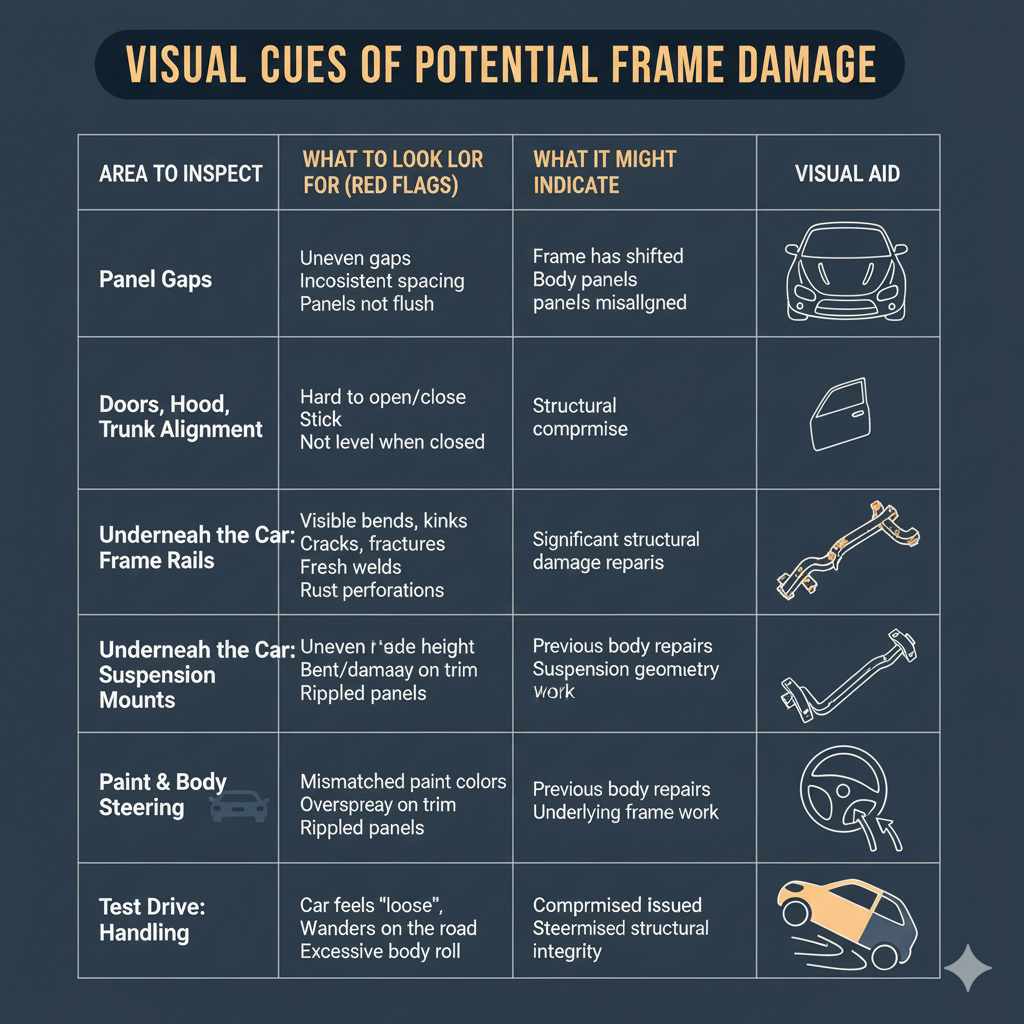
Table: Visual Cues of Potential Frame Damage
Here’s a quick reference to help you spot potential problems during your inspection:
| Area to Inspect | What to Look For (Red Flags) | What it Might Indicate |
|---|---|---|
| Panel Gaps (between doors, hood, trunk) | Uneven gaps, inconsistent spacing, panels not flush. | Frame has shifted, body panels are misaligned. |
| Doors, Hood, Trunk Alignment | Doors hard to open/close, stick, or are not level when closed. | Structural compromise affecting door fitment. |
| Underneath the Car: Frame Rails | Visible bends, kinks, cracks, fresh welds, rust perforations. | Significant structural damage or poor repairs. |
| Underneath the Car: Suspension Mounts | Uneven ride height, bent or damaged suspension components. | Frame stress impacting suspension geometry. |
| Paint & Body | Mismatched paint colors, overspray on trim, rippled panels. | Previous body repairs, potential underlying frame work. |
| Test Drive: Steering | Car pulls to one side, steering wheel not centered when driving straight. | Wheel alignment issues due to frame damage. |
| Test Drive: Handling | Car feels “loose,” wanders on the road, excessive body roll. | Compromised structural integrity. |
FAQs About Dealerships and Frame Damage
Q1: Can a dealership sell a car with minor frame damage?
Yes, a dealership can sell a car with minor frame damage, but they must disclose it if it’s considered “material” or affects the vehicle’s safety or value. Always ask about any disclosed frame damage and get an independent inspection.
Q2: What is a “salvage” title, and does it mean frame damage?
A salvage title is issued when a vehicle is declared a total loss by an insurance company (often due to accidents, flood, or theft). Severe accidents that cause significant frame damage are a common reason for a salvage title. A car with a salvage title is illegal to drive until it’s repaired, inspected, and re-titled as “rebuilt” or “reconstructed.”
Q3: If a car has a “rebuilt” title, does it definitely have frame damage?
Not always. A rebuilt title means a car with a salvage title has been repaired and passed a state inspection. While many cars requiring a salvage title have frame damage, other issues like extensive flood damage or theft recovery may also lead to a salvage/rebuilt title.
Q4: Should I buy a car that had frame repair?
It depends entirely on the quality of the repair, documentation provided, and the price. If repairs were done by a reputable shop, are well-documented, and the car passed all subsequent inspections, it might be okay. However, it always carries more risk than a car with no frame history.
Q5: How can I be sure a dealership isn’t hiding frame damage?
The best way is to get an independent pre-purchase inspection (PPI) from a mechanic you trust. They have the tools and expertise to find hidden damage that might not be obvious during a visual inspection or disclosed by the seller.
Q6: Is frame damage always a deal-breaker?
For many buyers, yes, it is a deal-breaker due to safety and handling concerns. However, if the damage was minor, professionally repaired, documented, and the car is priced significantly lower to reflect the history, some buyers might consider it. But the risk is substantial.