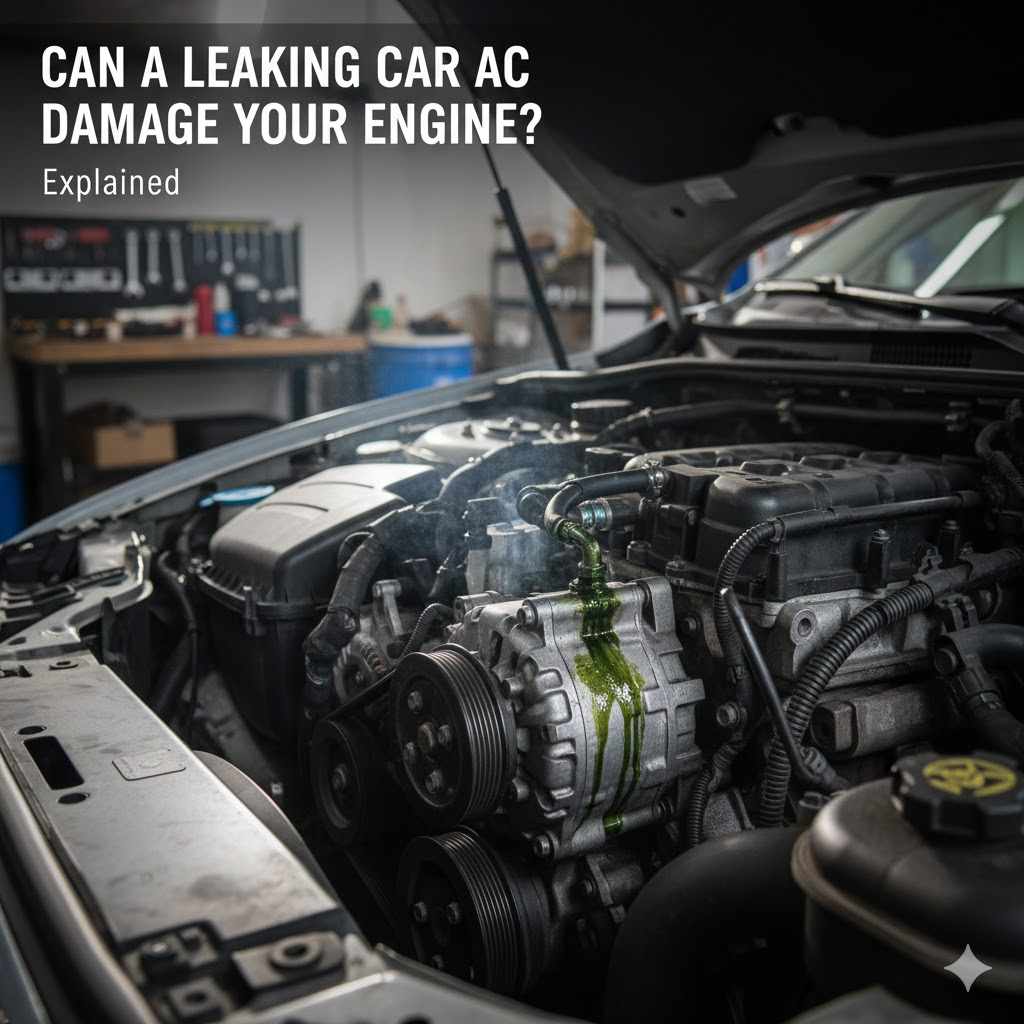
Can a Leaking Car AC Damage Your Engine? Explained
Many car owners wonder, “Can a leaking car AC damage your engine? Explained” this might seem tricky at first because it involves understanding how your car’s air conditioning system works and how it connects to other parts. Don’t worry, though.
This guide will make it super simple to understand, with easy steps. We’ll break down what you need to know about AC leaks and your engine so you can feel confident.
Understanding AC Leaks and Potential Engine Issues
This part explores what happens when your car’s air conditioning system leaks. We’ll look at the different types of leaks and the materials involved. It’s important to know that AC systems use special fluids and gases.
When these leak out, they can sometimes cause unexpected problems. We want to make sure you get a clear picture of how this might affect your car’s engine, even if it doesn’t seem directly connected at first glance.
What Is an AC Leak?
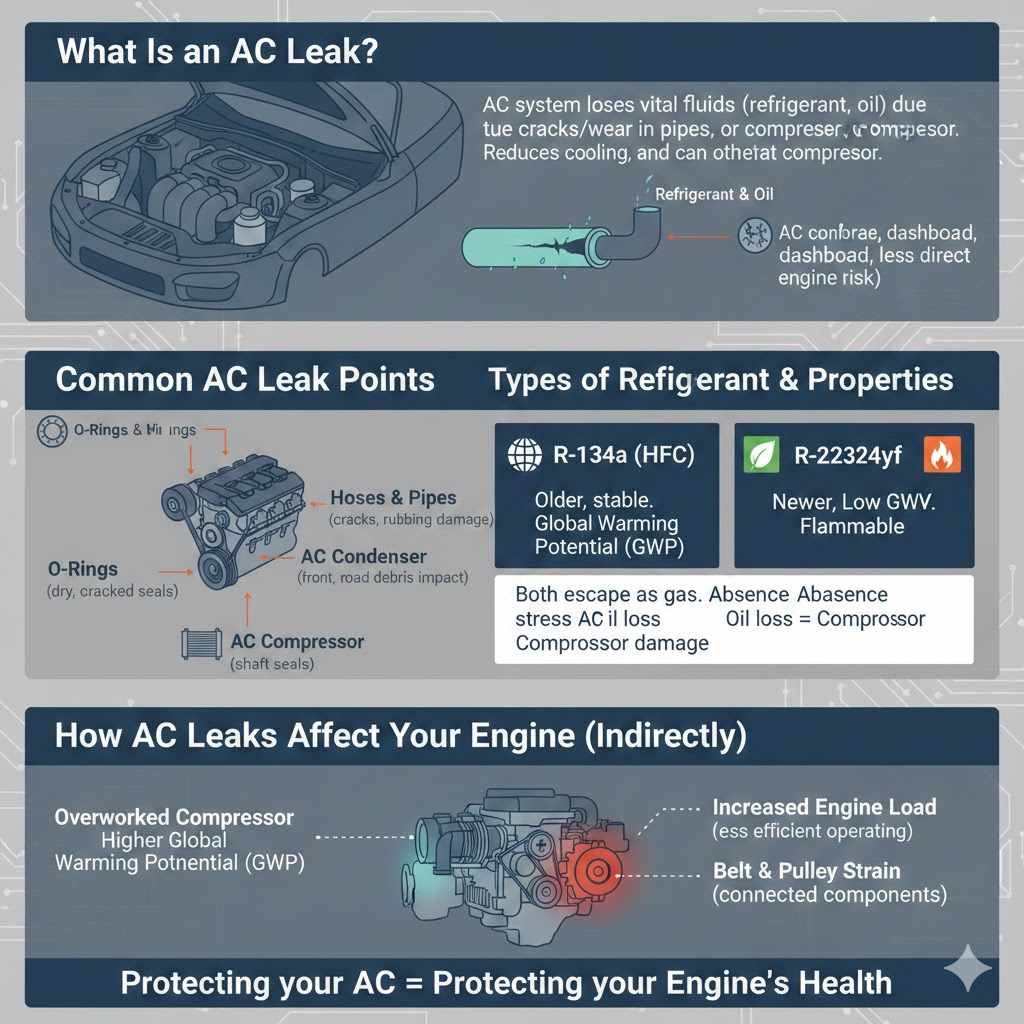
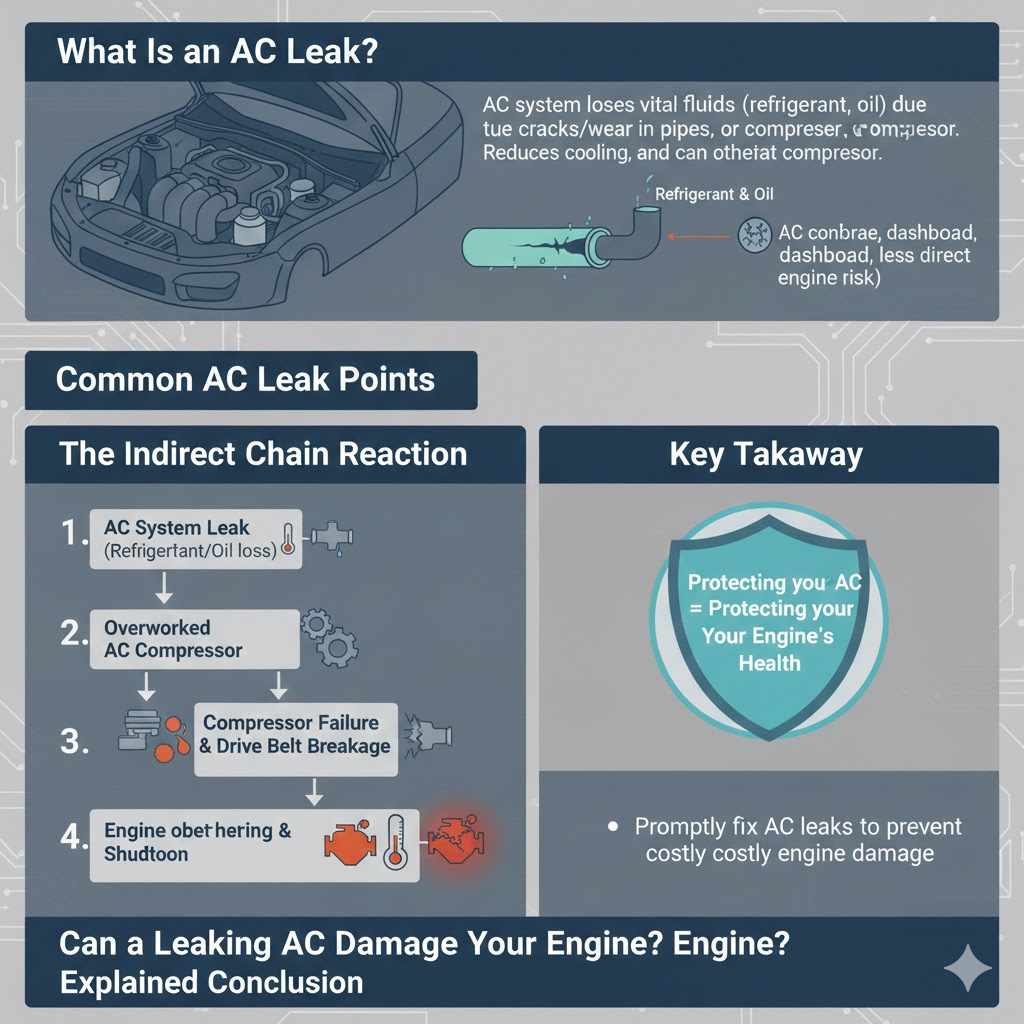
An AC leak happens when the refrigerant or oil that keeps your car’s air conditioning cool escapes from the system. Think of your AC system like a closed loop. It has pipes, seals, and a compressor.
If any of these parts get worn out or damaged, they can develop tiny holes or cracks. Through these openings, the precious cooling gas and lubricating oil can slowly leak away into the air. This makes your AC stop blowing cold air.
It also means the system is not as efficient as it should be.
Refrigerant is the special chemical that absorbs heat from your car’s cabin and releases it outside. Oil is mixed with the refrigerant to keep the AC compressor, a vital part, well-lubricated and working smoothly. When either of these leaks out, the system can’t do its job correctly.
This can lead to overheating of the compressor, which is a significant concern.
Common AC Leak Points
Leaks can happen in many places within the AC system. The most common spots include the O-rings, which are small rubber seals that connect different parts of the AC lines. Over time, these O-rings can dry out, crack, or become compressed, creating gaps for leaks.
Hoses and pipes, which carry the refrigerant, can also develop cracks, especially if they rub against other engine components. The AC condenser, located at the front of your car, can get damaged by road debris, leading to leaks. Even the AC compressor itself can develop leaks around its seals.
Another common source is the evaporator, which is inside your car’s dashboard. While less common for engine damage, a leak here can still indicate a broader system issue. These leak points are like tiny wounds in the AC’s circulatory system.
They allow the lifeblood of the cooling process to escape, causing the system to falter.
Types of Refrigerant and Their Properties
Modern cars typically use one of two main types of refrigerants: R-134a and R-1234yf. R-134a has been around for a long time and is a widely used refrigerant. It’s a hydrofluorocarbon (HFC) and is considered relatively stable.
However, it does have some global warming potential. R-1234yf is a newer refrigerant, often called HFO-1234yf. It’s designed to have a much lower global warming potential, making it more environmentally friendly.
But it is also flammable, which is a key difference to consider.
Both types of refrigerants, when leaked, escape as gases. These gases are not designed to be exposed to the atmosphere or other car components outside the sealed AC system. While not directly corrosive to engine metal, their absence causes the AC system to work harder.
This can indirectly lead to issues. The oil that circulates with the refrigerant is also important. If it leaks out, the AC compressor can suffer from a lack of lubrication.
How AC Leaks Can Indirectly Affect Your Engine
This section explains the ways an AC leak might cause harm to your engine, even if the refrigerant itself isn’t directly touching engine parts. We’ll discuss how the AC system’s workload and the condition of its components can put stress on the engine. It’s all about understanding the ripple effect of a problem in one area of your car.
By the end of this, you’ll see why it’s important to fix AC leaks promptly for the health of your entire vehicle.
Overworking the AC Compressor
When your car’s AC system loses refrigerant, it can’t cool the air effectively. To try and compensate, the AC compressor might run more often and for longer periods. The compressor is a belt-driven component connected to your engine.
It uses engine power to operate. If it’s constantly working overtime, it puts a continuous and increased load on the engine. This is similar to asking a runner to sprint for a long distance; they get tired faster and are more prone to injury.
This extra strain means the engine is burning more fuel and generating more heat. The increased load can also cause the engine’s idle speed to drop, potentially leading to stalling if the issue is severe. The compressor itself can overheat due to insufficient refrigerant and oil, causing premature wear or even complete failure.
A failed AC compressor can seize up, which can break the serpentine belt that drives it. This belt also powers other critical engine components like the alternator and water pump, leading to much bigger problems.
Serpentine Belt Issues
The serpentine belt is a crucial part of your engine. It’s a long, ribbed belt that wraps around several pulleys to power accessories like the alternator, power steering pump, water pump, and the AC compressor. If the AC compressor seizes or becomes extremely difficult to turn due to a lack of lubrication or internal damage from a leak, it can put immense stress on the serpentine belt.
In severe cases, the belt can snap or slip off its pulleys.
If the serpentine belt breaks, all the accessories it powers will stop working immediately. This means your engine will lose its ability to be cooled by the water pump, which will quickly lead to overheating. The alternator will stop charging the battery, and the power steering will fail, making steering difficult.
The loss of all these essential functions can quickly cause severe engine damage or leave you stranded. The failure of the AC compressor can be the initial domino that topples the entire system.
Lubrication Problems
Refrigerant in your car’s AC system doesn’t just cool; it also carries a special lubricating oil. This oil circulates with the refrigerant to keep the AC compressor’s internal parts from grinding against each other. When there’s an AC leak, both refrigerant and this crucial oil escape.
If the oil level drops too low, the compressor will start to run dry.
A dry compressor experiences increased friction. This friction generates excessive heat and wear on its moving parts. Without enough lubrication, the compressor’s internal components can seize up.
As mentioned before, a seized compressor can break the serpentine belt, causing a cascade of failures. This lack of lubrication is a direct pathway to AC component failure and indirectly puts stress on the engine by straining the belt system.
Potential for Contaminants
While modern AC systems are designed to be sealed, persistent leaks can sometimes allow outside contaminants to enter the system. Air, moisture, and dirt can get drawn into the low-pressure side of the AC system if the pressure drops significantly due to a leak. Moisture is particularly problematic because it can combine with the refrigerant and oil to form acids.
These acids can corrode internal AC components over time.
Even though these contaminants are primarily inside the AC system, their presence can lead to system inefficiency and further damage. If the AC system becomes severely contaminated, it can put extra strain on the compressor. In rare cases, severe internal corrosion or blockages caused by contaminants could lead to an AC component failing in a way that causes excessive drag on the engine’s belt system, similar to a seized compressor.
The AC system is technically separate from the engine’s internal combustion but relies on the engine for power, so problems within it can have knock-on effects.
Can Refrigerant Itself Damage The Engine?
This part addresses the direct question about whether the cooling gas can harm your engine. We’ll clarify that refrigerant is not meant to interact with engine components and explain why it’s generally not corrosive to metal parts. This will help clear up any confusion about direct chemical damage from leaked refrigerant itself.
Understanding this distinction is key to realizing that the damage is usually a consequence of system failure, not direct chemical attack on the engine block.
Refrigerant Composition and Behavior
Refrigerants like R-134a and R-1234yf are specifically engineered chemicals. They are designed to change state from a liquid to a gas and back again efficiently to absorb and release heat. They are generally non-corrosive to the metals typically found in automotive AC systems, such as aluminum and steel.
They are also designed to be inert when inside a sealed system, meaning they don’t react with the materials of the AC components or the lubricating oil used in the system.
When refrigerant leaks out, it turns into a gas and dissipates into the atmosphere. It’s not like a strong acid or solvent that would eat away at engine parts if it came into contact with them. The primary issue with leaking refrigerant is that the AC system loses its ability to cool and its lubrication capacity.
The environmental impact of certain refrigerants is also a concern, but this is separate from direct engine damage.
Lack of Direct Chemical Interaction
Engine components are typically made of cast iron, aluminum alloys, steel, and various rubber or plastic seals. Refrigerants are not chemically reactive with these materials in a way that would cause degradation or corrosion. The concern with AC leaks is not that the refrigerant will dissolve your engine, but rather that the loss of refrigerant and oil will cause the AC system’s components to fail.
This failure, as we’ve discussed, can then lead to problems like a broken serpentine belt that does affect the engine.
Think of it this way: if you accidentally spilled a small amount of the refrigerant from a can on your engine block, it would likely evaporate quickly and leave no lasting damage. The engine is designed to withstand a wide range of temperatures and pressures. The refrigerant itself, in its gaseous form and small quantities, poses no chemical threat to the robust construction of an engine.
The danger is systemic, not chemical.
The Role of Lubricating Oil
As mentioned, AC systems use special lubricating oil that circulates with the refrigerant. This oil is also designed to be compatible with the AC system’s components. It is not typically formulated to provide any lubrication or benefit to engine parts.
If there’s a significant AC leak, both refrigerant and oil are lost. This oil is not an engine oil substitute.
If AC oil were to somehow leak out and mix with engine oil, it’s unlikely to cause immediate catastrophic engine damage. However, it could potentially alter the viscosity and lubricating properties of the engine oil. This is more of a concern if a major AC component failure leads to a large amount of oil being expelled where it shouldn’t be.
But the primary problem remains the loss of lubrication within the AC system itself, leading to its failure.
Diagnosing and Fixing AC Leaks
Now, let’s talk about what to do if you suspect an AC leak. This section covers how to identify the problem and what steps mechanics take to fix it. Knowing the common signs and the repair process can help you address the issue before it leads to more significant problems for your engine.
We will also touch upon why getting it fixed by a professional is often the best course of action.
Signs of a Leaking AC System
The most obvious sign of a leaking AC system is warm air blowing from your vents when the AC is turned on. You might also notice that the cooling performance is significantly reduced, and it takes much longer to cool down the car’s interior. Sometimes, you might hear unusual noises coming from under the hood when the AC is running, such as hissing or gurgling sounds.
A faint, sweet smell can sometimes indicate a leak, as some refrigerants have a slight odor additive.
Visually inspecting the AC components, especially the hoses and connections, might reveal oily residue. This residue is often the AC lubricant that has leaked out along with the refrigerant. If you see greasy spots around AC lines or fittings, it’s a strong indicator of a leak.
A drop in AC performance is usually the first cue that something is wrong, prompting you to investigate further before it impacts other systems.
Common Diagnostic Procedures
Automotive technicians have several ways to diagnose AC leaks. One common method is using a UV dye. A special dye is added to the AC system along with the refrigerant.
The system is then run for a while. If there’s a leak, the dye will escape with the refrigerant and oil, leaving a visible trace. A UV light can then be used to easily spot the glowing dye at the leak point.
This is a very effective way to pinpoint small leaks.
Another method involves using an electronic leak detector. This device can sniff out the presence of refrigerant gases in the air. The technician will move the probe of the detector around the AC components, listening for an audible alarm that indicates the presence of a leak.
Pressure testing is also common. The system is filled with an inert gas (like nitrogen) and checked for any drop in pressure, which would signal a leak. Sometimes, a simple visual inspection is enough if the leak is substantial.
Repairing AC Leaks
Repairing an AC leak typically involves finding the source of the leak and replacing or repairing the faulty component. For example, if an O-ring is leaking, it will be
It’s important to have AC repairs done by a qualified technician. They have the specialized equipment and knowledge to safely handle refrigerants, which can be harmful if released improperly. They also ensure the system is recharged with the precise amount of refrigerant and oil needed for optimal performance.
Simply adding more refrigerant without fixing the leak is a temporary fix that won’t solve the underlying problem and can even lead to over-pressurization.
The Importance of Professional Repair
While some minor AC maintenance might seem like a DIY job, fixing leaks is best left to the professionals. Refrigerants are under pressure and can cause frostbite or eye injury if handled incorrectly. Furthermore, improper handling can release refrigerants into the atmosphere, which is harmful to the environment.
Professionals use specialized recovery machines to safely remove old refrigerant before repairs and accurately recharge the system afterward.
A professional also has the diagnostic tools to ensure the leak is fully sealed and that the system is functioning correctly. They can check for other potential issues that might have arisen due to the leak. Trying to fix it yourself might lead to more damage or an incomplete repair.
This ensures that the fix is permanent and prevents future issues that could indirectly affect your engine.
Can a Leaking Car AC Damage Your Engine? Explained Conclusion
So, can a leaking car AC damage your engine? Explained, the answer is indirectly. A leak doesn’t poison your engine.
Instead, it causes the AC system to work too hard. This extra strain can damage the AC compressor. A failed compressor can then break your engine’s drive belt.
This belt is vital for many engine parts. Losing it can cause your engine to overheat and shut down. Therefore, fixing AC leaks promptly protects your engine.
Frequently Asked Questions
Question: Will a small AC leak harm my engine?
Answer: A very small AC leak might not cause immediate engine problems. However, it will slowly reduce your AC’s cooling power. If left unfixed, the leak can worsen over time, leading to more significant issues like compressor failure and potential harm to the engine’s drive belt.
Question: Is refrigerant toxic to engines?
Answer: No, automotive refrigerants are not toxic to engines. They are not chemically reactive with engine metals. The damage comes from the AC system failing due to lack of refrigerant and oil, which then stresses engine components.
Question: How often should my car’s AC system be checked?
Answer: It’s a good idea to have your car’s AC system checked during regular maintenance, perhaps once a year or before the hot summer months. If you notice any issues, like reduced cooling, get it checked sooner.
Question: What happens if my AC compressor fails?
Answer: If your AC compressor fails, your air conditioning will stop working. More critically, a seized compressor can break the serpentine belt, which is essential for running other engine parts like the water pump and alternator, leading to engine overheating and other serious issues.
Question: Can I just add more refrigerant to fix a leak?
Answer: Adding more refrigerant without fixing the leak is only a temporary solution. The leak will continue, and the refrigerant will escape again. It can also lead to overcharging the system, which can damage the AC components and put unnecessary strain on the engine.
Summary
Addressing a leaking car AC is key to protecting your engine. Leaks lead to less cooling and can cause the AC compressor to fail. A bad compressor puts stress on the serpentine belt, which is vital for engine operation.
Fixing AC leaks prevents these chain reactions. Prompt repairs keep your car cool and your engine running smoothly.