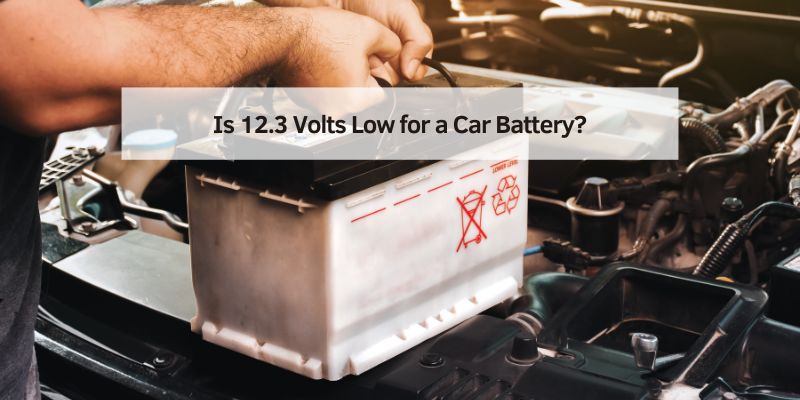
Is 12.3 Volts Low for a Car Battery?
Hey there! If you’re wondering whether 12.3 volts is low for a car battery, you’re not alone. I’ve been down this road myself, scratching my head when my car wouldn’t start or acted sluggish. It’s a question that pops up a lot, especially when you’re dealing with a vehicle that’s not quite performing like it should. As someone who’s spent time tinkering with cars and researching battery health, I’m here to break it all down for you in a way that’s easy to understand.
Whether you’re a car enthusiast or just someone trying to keep their daily driver running smoothly, this guide will help you figure out if 12.3 volts is a red flag and what to do about it. Let’s dive in and explore everything you need to know about car battery voltage, what it means, and how to keep your vehicle in top shape.
Understanding Car Battery Voltage
Let’s start with the basics. A car battery is like the heart of your vehicle’s electrical system. It powers everything from the starter to the lights, radio, and even the fancy tech in newer cars. Voltage is a way to measure how much “juice” your battery has. Most car batteries are 12-volt lead-acid batteries, but that doesn’t mean they always sit at exactly 12 volts.
When I first started learning about car batteries, I thought 12 volts was the magic number. But here’s the thing: a fully charged car battery should actually read around 12.6 to 12.8 volts when it’s at rest (meaning the car is off and no accessories are running). This is called the “resting voltage.” If your battery is showing 12.3 volts, it’s not fully charged, and that’s where things get interesting.
Voltage tells you how healthy your battery is. A lower voltage could mean the battery is partially discharged, old, or struggling to hold a charge. But don’t worry just yet—12.3 volts isn’t necessarily a crisis. Let’s break it down further to see what’s going on.
What Does 12.3 Volts Mean for Your Car Battery?
So, you’ve hooked up a multimeter to your car battery, and it’s reading 12.3 volts. What does that mean? Based on my experience, 12.3 volts is a sign that your battery is partially discharged. Here’s a quick rule of thumb I use to gauge battery health:
- 12.6–12.8 volts: Your battery is fully charged and ready to go.
- 12.4–12.5 volts: It’s about 75% charged. Still okay, but you might want to keep an eye on it.
- 12.3 volts: Your battery is around 50–60% charged. It’s not dead, but it’s not in great shape either.
- 12.1 volts or lower: You’re in the danger zone. The battery is significantly discharged and may struggle to start your car.
When my old sedan’s battery hit 12.3 volts, I noticed it took a little longer to crank the engine. It wasn’t dead, but it was a warning sign. A battery at 12.3 volts can still start your car in most cases, especially if the weather is warm and your car’s electrical system isn’t too demanding. But if you’re in cold weather or your battery is old, 12.3 volts could spell trouble.
To give you a clearer picture, here’s a simple table I put together based on my research and hands-on testing:
| Voltage Reading | Charge Level | What It Means |
|---|---|---|
| 12.6–12.8V | 100% | Fully charged, healthy battery |
| 12.4–12.5V | 75% | Partially charged, monitor closely |
| 12.3V | 50–60% | Low charge, may struggle in tough conditions |
| 12.1V or below | 25% or less | Critically low, likely won’t start |
If your battery is at 12.3 volts, it’s not an emergency, but it’s a nudge to take action. Let’s talk about why your battery might be at this level.

Why Is Your Car Battery at 12.3 Volts?
I’ve seen this happen with my own cars, and there are a few common reasons why a battery might drop to 12.3 volts. Here’s what I’ve learned:
- Parasitic Drain: Sometimes, something in your car is quietly draining the battery even when the engine is off. This could be a faulty stereo, a stuck relay, or even a phone charger left plugged in. I once left my dash cam plugged in overnight, and my battery dropped to 12.2 volts by morning.
- Infrequent Driving: If you don’t drive your car often, the battery doesn’t get a chance to recharge fully. I noticed this with my weekend car, which sits in the garage most of the week. Short trips don’t give the alternator enough time to top off the battery.
- Aging Battery: Car batteries typically last 3–5 years. As they age, they lose their ability to hold a full charge. My old truck’s battery was pushing 4 years old when it started hovering around 12.3 volts, and I knew it was time to start shopping for a replacement.
- Cold Weather: Cold temperatures can reduce a battery’s capacity. I live in a place where winters get chilly, and I’ve seen my battery’s voltage drop a bit when the temperature dips below freezing.
- Alternator Issues: Your car’s alternator is supposed to charge the battery while you drive. If it’s not working properly, your battery won’t recharge fully. I had a friend who ignored a dim dashboard light, only to find out his alternator was failing, leaving his battery at 12.3 volts.
Figuring out the cause is key to deciding what to do next. Let’s look at how you can test your battery to confirm its health.
How to Test Your Car Battery’s Health
When I first saw 12.3 volts on my multimeter, I wanted to be sure whether the battery was the problem or if something else was going on. Testing your battery is easier than it sounds, and you don’t need to be a mechanic to do it. Here’s how I check mine:
- Use a Multimeter: A multimeter is a cheap tool you can get at any hardware store. Set it to DC voltage, connect the red probe to the positive (+) terminal and the black probe to the negative (-) terminal. Make sure the car is off and hasn’t been running for a few hours to get an accurate resting voltage. If it’s 12.3 volts, you know it’s partially discharged.
- Load Test: A multimeter only tells part of the story. I take my battery to an auto parts store for a load test, which checks how the battery performs under stress. Most stores, like AutoZone or Advance Auto Parts, do this for free. When I tested my battery at 12.3 volts, the load test showed it was still functional but nearing the end of its life.
- Check for Parasitic Drain: If the battery seems fine but keeps losing charge, you might have a parasitic drain. I once used my multimeter to check for this by disconnecting the negative cable, setting the multimeter to measure current, and connecting it between the negative terminal and the cable. Anything over 50 milliamps could indicate a drain.
- Inspect the Alternator: If your battery isn’t charging while you drive, the alternator might be the culprit. With the engine running, a healthy alternator should show 13.5–14.5 volts across the battery terminals. I learned this the hard way when my alternator wasn’t pushing enough voltage, leaving my battery stuck at 12.3 volts.
If your tests confirm the battery is weak or there’s another issue, it’s time to take action. Let’s talk about what you can do if your battery is at 12.3 volts.
What to Do If Your Battery Is at 12.3 Volts
When I found my battery at 12.3 volts, I didn’t panic, but I knew I needed to act. Here’s what I recommend based on my experience:
- Charge the Battery: If the battery is still in good condition, a full charge might bring it back to life. I use a smart battery charger, which you can find for $30–$50. Connect it to your battery and let it charge overnight. After charging, check the voltage again. If it’s back to 12.6–12.8 volts and holds steady, you’re probably okay for now.
- Drive More: If you don’t drive often, try taking your car for a 20–30 minute drive at highway speeds. This gives the alternator time to recharge the battery. I started doing this with my weekend car, and it helped keep the voltage closer to 12.6 volts.
- Check for Drains: Unplug any accessories (like phone chargers or dash cams) and see if the voltage stabilizes over a few days. If you suspect a parasitic drain, a mechanic can help pinpoint the issue.
- Replace the Battery: If your battery is old or fails a load test, it’s time for a new one. I replaced my truck’s battery when it wouldn’t hold a charge above 12.4 volts even after a full charge. A good battery costs $100–$200, depending on your car, and most auto parts stores will install it for free.
- Inspect the Alternator and Electrical System: If charging doesn’t help or the voltage drops again quickly, have a mechanic check your alternator and wiring. I had to replace my alternator once, and it made a world of difference.
Taking these steps can save you from being stranded with a dead battery. But how do you know when it’s time to replace it for good?
When Should You Replace Your Car Battery?
Deciding whether to replace a battery at 12.3 volts can be tricky. I’ve been there, trying to squeeze a little more life out of an aging battery. Here’s how I decide:
- Age: If your battery is over 3–4 years old, it’s probably nearing the end of its lifespan. My sedan’s battery was 5 years old when it hit 12.3 volts, and replacing it was the smart move.
- Performance: If your car is slow to start, the headlights are dim, or electronics act wonky, a 12.3-volt reading is a sign the battery is struggling. I noticed my radio cutting out when my battery was low, which was a clue it was time for a new one.
- Load Test Results: A load test will tell you if the battery can still handle the demands of starting your car. When my truck’s battery failed the load test, I didn’t hesitate to replace it.
- Frequent Recharging: If you’re constantly charging your battery to keep it above 12.3 volts, it’s not worth the hassle. A new battery will save you time and stress.
Replacing a battery isn’t cheap, but it’s better than being stuck on the side of the road. Now, let’s talk about how to keep your battery healthy in the long run.
Tips to Keep Your Car Battery Healthy
I’ve learned a few tricks over the years to keep my car batteries in top shape. Here’s what works for me:
- Drive Regularly: Regular driving keeps your battery charged. I make a point to take my cars for a spin at least once a week, even if it’s just a quick trip.
- Keep It Clean: Dirty battery terminals can cause voltage drops. I check my battery every few months and clean the terminals with a wire brush and some baking soda mixed with water.
- Avoid Short Trips: Short drives don’t give the alternator enough time to charge the battery. I try to combine errands into longer trips to give my battery a good recharge.
- Use a Maintainer: If your car sits for weeks at a time, a battery maintainer (a low-power charger) can keep it at full charge. I use one for my classic car, and it’s been a game-changer.
- Check the Alternator: A healthy alternator is key to a healthy battery. I have my mechanic check mine during routine maintenance to catch issues early.
By following these tips, you can avoid seeing 12.3 volts on your multimeter too often. But what about preventing low voltage in the first place?
How to Prevent Low Battery Voltage
Prevention is always better than a cure, right? After dealing with a couple of low batteries, I’ve gotten better at staying ahead of the problem. Here’s what I do:
- Turn Off Accessories: I always double-check that lights, the radio, and other electronics are off when I park. It’s a simple habit that saves battery life.
- Regular Maintenance: During oil changes or tune-ups, I ask my mechanic to check the battery and charging system. Catching problems early has saved me from surprises.
- Monitor Weather: Cold weather can zap your battery’s strength. In winter, I park my car in the garage when possible to keep it warm.
- Upgrade if Needed: If you’ve added power-hungry accessories like a big stereo or extra lights, your stock battery might not cut it. I upgraded to a higher-capacity battery for my truck when I added a winch.
These steps have kept my batteries healthy and my cars reliable. But let’s wrap this up with some final thoughts.

Conclusion
So, is 12.3 volts low for a car battery? Yes, it’s lower than ideal, but it’s not the end of the world. From my own experience, a battery at 12.3 volts is about half-charged and could still work, but it’s a sign to pay attention. Whether it’s an aging battery, a parasitic drain, or an alternator issue, figuring out the cause is the first step. Testing your battery with a multimeter or at an auto parts store can give you clarity, and simple steps like charging, driving more, or replacing an old battery can get you back on the road.
I’ve been through the frustration of a sluggish car, and I know how stressful it can be to wonder if you’ll make it to work or the grocery store. But with a little knowledge and some basic tools, you can take control of your car’s battery health. Keep an eye on that voltage, follow the tips I’ve shared, and you’ll be ready to tackle any battery issues that come your way. Here’s to keeping your car running smoothly and avoiding those dreaded dead battery moments!
FAQs
What Should a Healthy Car Battery Voltage Be?
A healthy car battery should read 12.6 to 12.8 volts when fully charged and at rest. This means the car is off, and no accessories are running. I always aim for this range to know my battery is in good shape.
Can I Drive with a Battery at 12.3 Volts?
Yes, you can usually drive with a battery at 12.3 volts, but it’s not ideal. It might struggle to start your car, especially in cold weather or with a heavy electrical load. I’d charge it or get it checked to avoid problems.
How Do I Know If My Battery Needs Replacing?
If your battery is over 3–4 years old, reads 12.3 volts or lower, and fails a load test, it’s probably time to replace it. I also look for signs like slow cranking or dim lights to confirm.
Can a Car Battery Recover from 12.3 Volts?
Sometimes, yes. If the battery is still in good condition, charging it fully with a smart charger can bring it back to 12.6–12.8 volts. I’ve done this successfully, but if it drops again quickly, there might be another issue.
What Causes a Car Battery to Drop to 12.3 Volts?
Common causes include parasitic drains (like a stuck relay or plugged-in charger), infrequent driving, an old battery, cold weather, or a faulty alternator. I always check for these when my battery’s voltage is low.
Products related to this article
Sponsored / affiliate links. As an Amazon Associate I earn from qualifying purchases. I may earn additional commission from eligible campaigns.