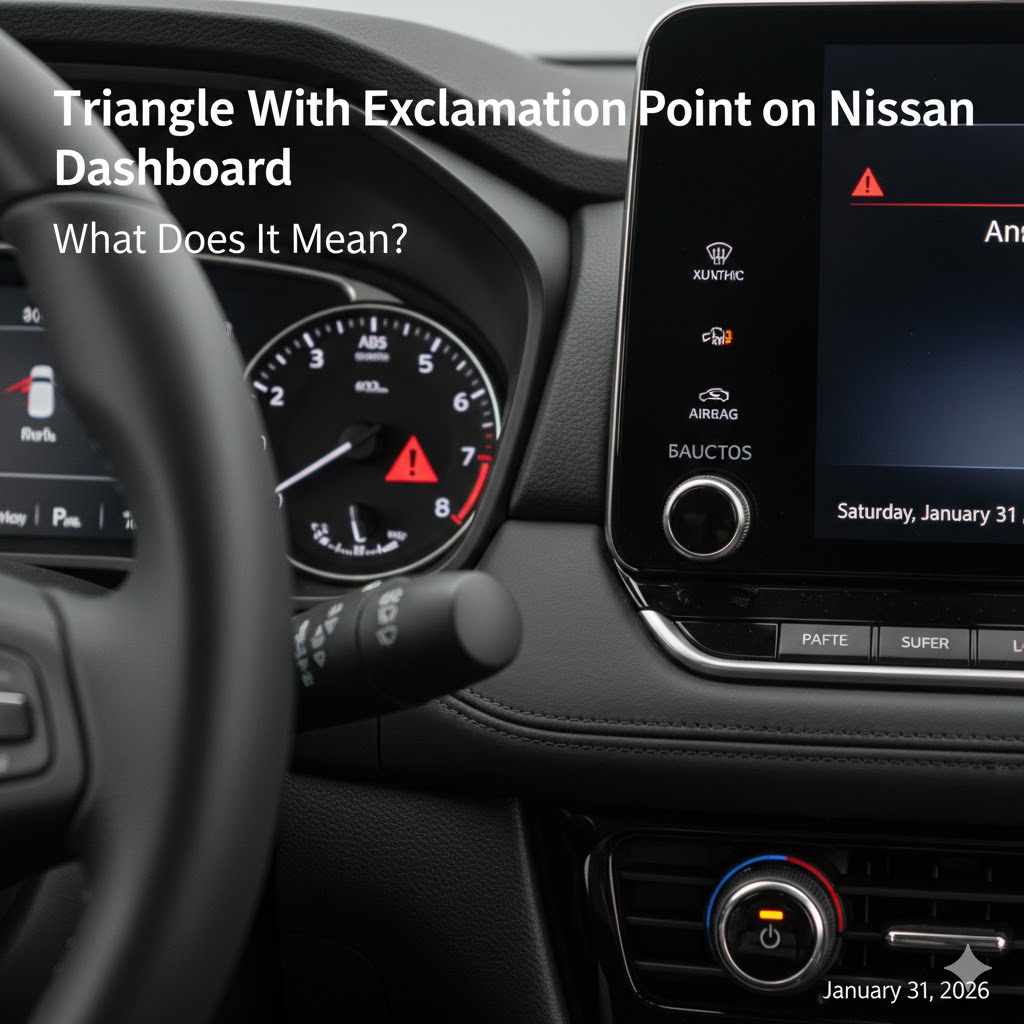
Triangle With Exclamation Point on Nissan Dashboard: What It Means
The triangle with an exclamation point on your Nissan’s dashboard is the Master Warning Light. It doesn’t point to one single problem — instead, it’s a catch-all alert that lights up alongside another, more specific warning (like low tire pressure, a stability control fault, or an open door) whose details appear on your vehicle information display. It can glow yellow for routine issues or red for something urgent, so the color matters as much as the icon itself. This guide walks through what triggers it, how to read the paired message, and when it’s safe to keep driving.
Quick Answer
The triangle with an exclamation point is Nissan’s Master Warning Light. It means at least one other system needs attention — check your information display for the paired message (often low tire pressure, a stability control fault, low fluid, an open door, or a loose fuel cap). A yellow light usually means “check soon,” while a red light means stop and address it right away.
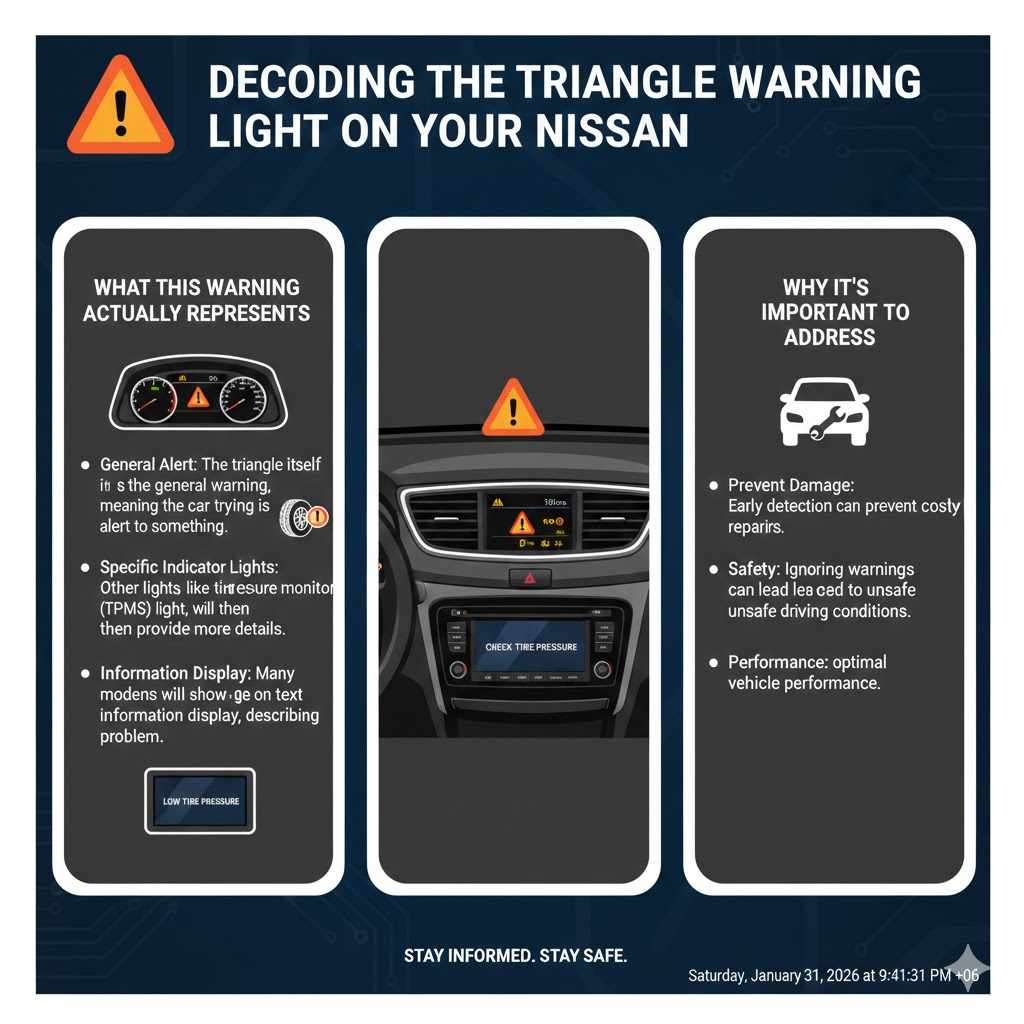
Decoding the Triangle Warning Light on Your Nissan
That little triangle with an exclamation point inside it on your Nissan’s dashboard is a general warning light. Think of it as your car’s way of saying, “Hey, pay attention!”. It’s there to alert you to an issue that requires your attention, but it doesn’t always indicate a serious problem. It could be something minor, like a low tire pressure, or something that needs immediate checking. It’s vital to address this light promptly because ignoring it can lead to bigger issues down the road.
What This Warning Actually Represents
The warning light means your car’s system has detected a condition that requires your review. Usually, a separate indicator light will also appear to point to the exact source of the problem. This is like a detective leading you to the crime scene. You will get a good idea of what the issue is by referring to your car’s information display, which often shows detailed messages about why the light is on. This helps you to take the best action.
- General Alert: The triangle itself is the general warning, meaning the car is trying to alert you to something.
- Specific Indicator Lights: Other lights, like the tire pressure monitor (TPMS) light, will then provide more details.
- Information Display: Many modern Nissans will show a text message on the information display, describing the problem.
The system is meant to help you quickly identify and address potential issues before they become major problems. Ignoring this warning light could lead to diminished performance, damage to your vehicle, or even safety risks. The car is trying to keep you safe and your car running smoothly. Paying close attention to the light and following the steps below will let you deal with the situation appropriately.
Red, Yellow, or White: What the Warning Light’s Color Means
Nissan’s master warning light isn’t always the same color, and the color is actually part of the message. It can appear white for a minor, informational note, yellow (or amber) when something needs attention soon, or red when the issue is urgent and you should address it immediately.
- White: A benign, informational message — often something like a reminder rather than a fault.
- Yellow/Amber: The most common color. It means a system, like TPMS or stability control, needs your attention, but the car is usually still safe to drive to a service center.
- Red: A serious issue, such as a critical brake problem or the engine overheating. Pull over safely and stop the engine before continuing.
Some Nissan models, like the March, show the master warning light specifically in red for certain faults — if that’s what you’re seeing, our Nissan March red warning light guide covers that model’s specific alerts in more detail. Either way, the color alone isn’t the full story; the paired message on your information display is what actually tells you what’s wrong.
Common Causes for the Dashboard Light’s Appearance
This master warning light can be triggered by a wide range of issues. Knowing the most common causes can make it easier to diagnose the problem. A lot of the time, the problem isn’t a big one. It’s often something you can fix yourself. Some of these are connected to the car’s sensors, and some are more mechanical in nature. Let’s explore some of the more usual triggers for this warning light.
Our Top Pick
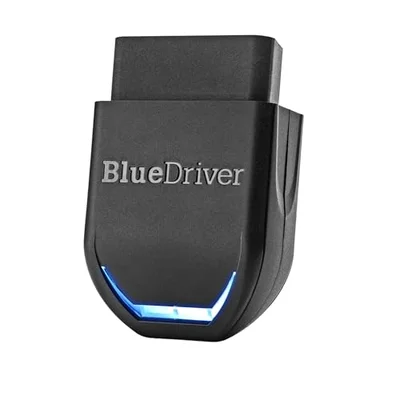
BlueDriver Pro Next Gen OBD2 Scanner
Best for: Reading the specific code paired with your master warning light, across engine, ABS, SRS, and TPMS systems.
Why we picked it: No subscription fees, works with most 1996-and-newer vehicles including Nissan, and its Repair Reports feature matches codes to real fixes.
Main drawback: Requires a smartphone to view the app results.
View Our Pick on Amazon
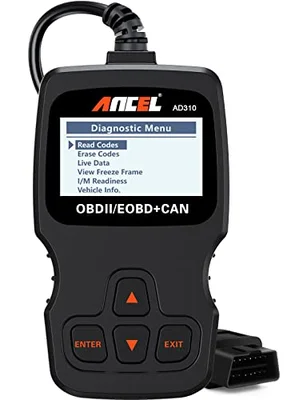 ANCEL AD310 Code Reader Best for: A no-frills budget option for basic code reading. Why we picked it: Simple, standalone screen, no app needed, works on 1996+ vehicles. Main drawback: Fewer enhanced systems (no SRS/ABS) than the BlueDriver. Check on Amazon |
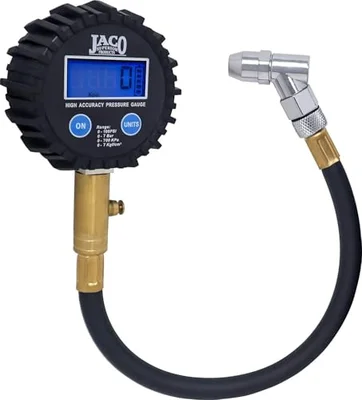 JACO ElitePro Tire Pressure Gauge Best for: Confirming or ruling out low tire pressure, the single most common cause of this warning. Why we picked it: ANSI-calibrated accuracy within 0.5%, backlit digital display. Main drawback: Needs a AAA battery to power the display. Check on Amazon |
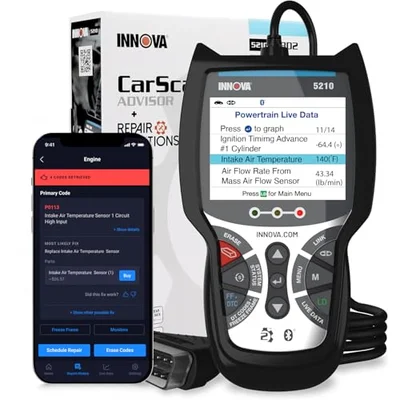 Innova 5210 OBD2 Scanner Best for: Drivers who also want a built-in battery tester and live data graphing. Why we picked it: Standalone screen plus optional app pairing, oil-reset function included. Main drawback: Bulkier than pocket-sized Bluetooth dongles. Check on Amazon |
Low Tire Pressure
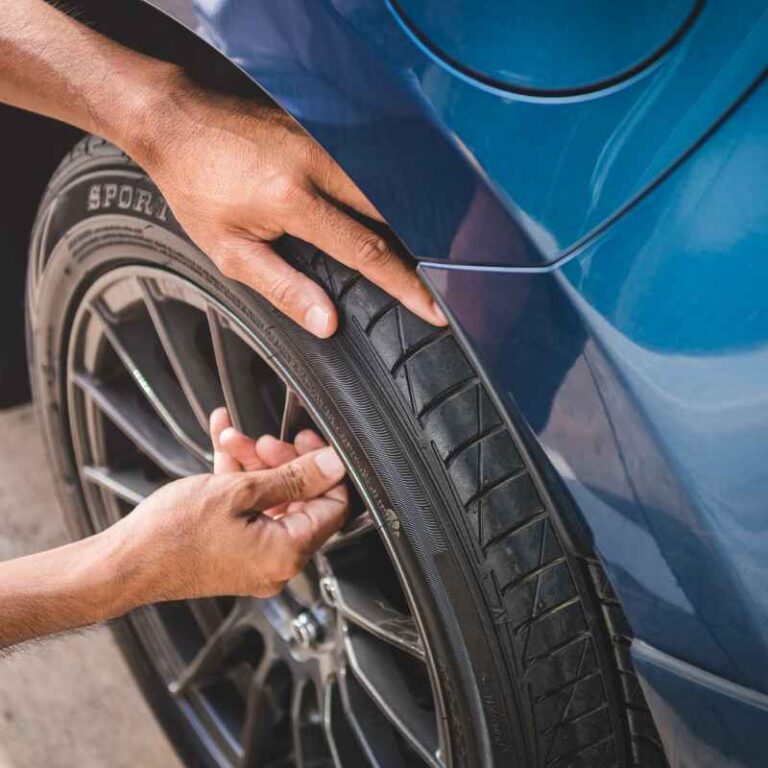
Low tire pressure is one of the most frequent reasons. Many Nissan vehicles have a Tire Pressure Monitoring System (TPMS). This system monitors your tire pressure. If a tire’s pressure drops below the recommended level, the TPMS will activate the warning light. This helps prevent flat tires and improves fuel efficiency and handling. The TPMS light may also appear if the tire pressure is too high, although it is less common. You should regularly check your tire pressure.
- Check Tire Pressure: The first thing to do is to visually inspect your tires. Then, use a tire pressure gauge to check the pressure in each tire, including the spare.
- Inflate Tires: Inflate the tires to the pressure recommended in your owner’s manual. This number is usually found on a sticker inside your driver’s side door or in your glove compartment.
- TPMS Reset: After inflating the tires, the TPMS light should turn off. If it doesn’t, you may need to reset the TPMS. Follow the instructions in your owner’s manual.
Remember that tire pressure changes with the temperature. So, the TPMS warning light may illuminate during colder months. Also, check for any visible damage like cuts or bulges on the tire’s sidewall. Keeping your tires correctly inflated ensures your car’s best performance. The ideal tire pressure helps with fuel economy and overall safety while driving.
Malfunctioning Electronic Stability Control System
The Electronic Stability Control (ESC) system helps maintain vehicle stability. It does this by using the brakes and engine control to help you stay in control of your car, especially during slippery conditions. If there’s an issue with the ESC, the warning light might come on. This could be due to a faulty sensor or other component within the system. Any problems with the ESC can affect the car’s ability to maintain its position on the road.
- Sensor Issues: The ESC system relies on many sensors to collect information about the vehicle’s movement. If one of these sensors fails, the warning light may come on.
- System Calibration: After repairs or maintenance, the ESC system might need to be recalibrated. This can also cause the warning light to appear.
- Safety Concerns: While the car is driveable, a non-functioning ESC system may increase the risk of losing control of the vehicle.
The ESC system is a critical safety feature. If the warning light appears, it is a smart idea to have your car examined by a qualified mechanic. They can run diagnostic tests to determine the exact cause and resolve it. Regular maintenance is essential to avoid potential problems. You need to keep the ESC system in good working order for optimum safety while driving.
Brake System Problems
Problems within the brake system can also cause the warning light to activate. This could indicate several issues, from low brake fluid to a problem with the brake pads or rotors. Because your brakes are critical for safety, paying immediate attention to this warning is very important. Always ensure that the brakes function properly. Ignoring brake system warnings can be very dangerous.
- Brake Fluid Levels: Low brake fluid is often a common cause. Check your brake fluid reservoir and top it off if needed. Also, look for any leaks that may be causing the fluid loss.
- Brake Pad Wear: Worn brake pads can reduce braking effectiveness and trigger the warning light. You should have your brake pads inspected regularly.
- ABS Issues: If your vehicle has an Anti-lock Braking System (ABS), a fault in the ABS may also cause the warning light to turn on.
Always inspect the brakes immediately if the warning light appears. Get your vehicle to a mechanic. Have them thoroughly check and fix any brake problems. If you notice a change in the braking feel, such as softer or spongier braking, or if you hear unusual noises during braking, do not delay. Ignoring brake issues can compromise your safety and lead to accidents.
Other Real-World Triggers: Fuel Cap, Fluids, and Open Doors
Tire pressure, stability control, and brakes are the “big three,” but owners regularly report the master warning light coming on for much simpler reasons. A few worth checking before you assume the worst:
- Loose Fuel Cap: A gas cap that isn’t screwed down tight enough is one of the most common triggers, and it can also cause the check engine light to appear by disrupting the fuel system’s vacuum seal. Tighten it until you hear it click, then give it a few drive cycles to clear.
- Low Washer Fluid: If the message says the washer fluid is low but the reservoir is actually full, the level sensor itself may be stuck or corroded rather than the fluid being genuinely low.
- Low Fuel or Coolant: Simple fluid-level warnings can trigger the master light alongside a low-fuel or low-coolant message on the display.
- Open Door Indicator: Some Nissan Rogue and Altima owners have reported a false “door open” warning even with every door fully closed, usually traced to a sticky or corroded door courtesy switch rather than an actual open door.
- Airbag/Restraint Faults: On some older Rogue and Altima model years, a worn spiral cable (clock spring) behind the steering wheel or a fatigued seatback wire can trip the warning light along with an airbag indicator. This is a safety system, so it’s worth a proper diagnosis rather than a DIY fix.
If you’re also seeing a slip indicator or automatic emergency braking (AEB) warning alongside the master light, that combination usually points to a dirty or damaged wheel speed or radar sensor rather than a fluid or fuel cap issue.
Troubleshooting the Dashboard Warning Light
When the triangle warning light appears, you should approach the situation methodically. By taking a few steps, you can often identify the cause of the problem quickly. Begin by checking the most common sources, like tire pressure, before moving to more advanced diagnostics. This step-by-step approach will help you determine the next proper actions.
Visual Inspection and Basic Checks
Start with a simple visual check. Before starting the engine, look around your car and assess the situation. Doing this could help you find easy fixes. This also includes checking tire pressure and fluids — and if a separate traction control (TC) light is also on, that’s another clue worth noting. These basic checks are often a good starting point for identifying the issue. It gives you some quick ways to determine what might be wrong without needing special tools or skills.
- Tire Check: Take a quick look at your tires for any visible damage or signs of wear and tear. Check the tire pressure using a gauge.
- Fluid Levels: Inspect your engine oil, coolant, brake fluid, and power steering fluid levels. These fluids play a critical role in keeping your car operating efficiently and safely.
- Warning Lights: Take note of any other warning lights that might be illuminated. This will offer clues to the nature of the issue.
After you start the car, pay attention to the sound and how the car feels. Listen for any strange noises, and watch for any unusual behavior, like a pull to one side while driving. By doing these checks, you may often find a simple solution to the problem, like low tire pressure or a low fluid level. This will save time and money. Do not ignore any issues you see.
Using the Vehicle Information Display
Modern Nissans are fitted with a vehicle information display that offers important information, including details about system alerts. The display often provides descriptive text or messages that help you find the problem. This can be more helpful than just a general warning light. Knowing how to use this display can save you time and money and provide peace of mind. It allows you to address the warning light more effectively.
- Accessing the Display: Most Nissan vehicles have an easy-to-use menu system that you can get to with buttons on the steering wheel or the dashboard.
- Finding the Warnings Screen: If the master warning light comes on but no message is immediately visible, use the scroll buttons on your steering wheel to cycle through the information display’s screens until you reach the one labeled “Warnings.” That screen lists exactly what triggered the light.
- Reading the Messages: The system will often show a text message related to the warning light. Pay attention to the specific message. It is designed to offer a guide to the problem.
- Clearing the Message: Many vehicles let you clear the warning message by pressing a button. However, the warning light will stay on until the underlying problem is fixed.
By using the information display, you can usually identify the specific system causing the warning light. If the message says “Low Tire Pressure,” you can go right to checking the tires. If you see a code or other information, you can share this information with a mechanic. This ensures they can better diagnose the issue quickly. Learning how to access and interpret these messages will help make the problem-solving much easier.
When to Seek Professional Assistance
Not all car issues can be fixed by yourself. If you can’t figure out the problem, it’s best to seek the help of a professional. If the warning light stays on after your simple fixes, or if you notice other issues, don’t wait. Getting a professional to fix the problem protects you and your car. Getting professional help helps prevent bigger and more expensive issues in the future.
- Persistent Light: If the warning light persists even after checking the basic things, it’s time to seek professional advice.
- Unusual Symptoms: If you experience odd sounds, smells, or handling problems, do not delay.
- Complex Systems: Problems with systems like the engine, transmission, or brakes usually need expert attention.
Don’t hesitate to take your Nissan to a trusted mechanic or dealership. A certified mechanic has the experience and equipment to diagnose the issue accurately and repair it correctly. This will protect your vehicle’s safety and extend its life. In the long run, professional help can save you from costly damage. Schedule the service as soon as you can.
Advanced Diagnostics and Solutions
If you’ve checked the basics and the warning light stays on, more advanced steps are required. This typically involves using diagnostic tools and accessing more complex systems. These tools offer information about various parts of your car. These measures are often required to pinpoint specific problems and make sure your vehicle is running at its best.
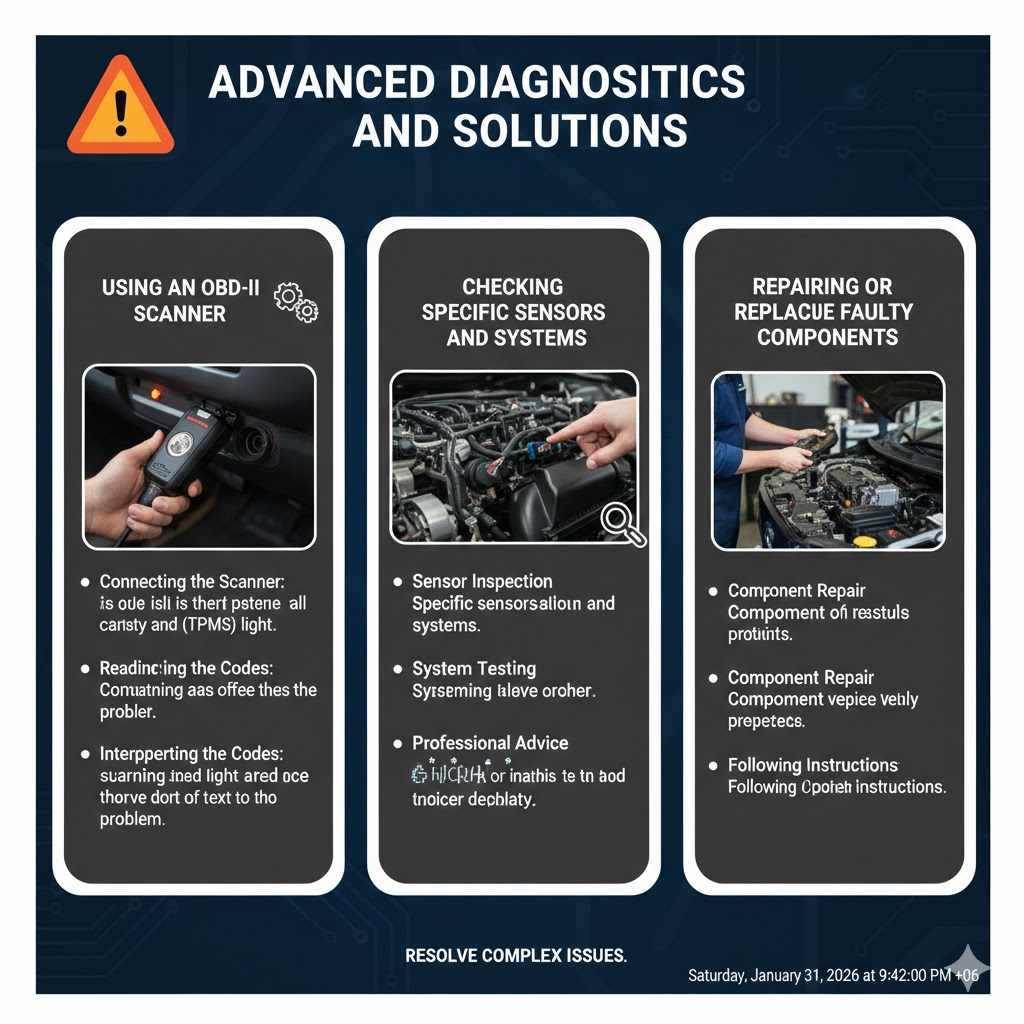
Using an OBD-II Scanner
An OBD-II scanner, or On-Board Diagnostics II scanner, is a very important tool for any car owner. It lets you get information about your car’s engine and systems. This device links to your vehicle’s computer and reads diagnostic trouble codes (DTCs). These codes tell you what the warning light is trying to convey. This can speed up the diagnosis process.
- Connecting the Scanner: You plug the scanner into your car’s OBD-II port. This port is often located below the dashboard near the steering wheel.
- Reading the Codes: The scanner will read the DTCs. These codes are related to different issues within your car.
- Interpreting the Codes: Each code means a specific problem. You can look up the code online or in your scanner’s manual to understand what it means.
An OBD-II scanner gives you a deeper look into the problems of your vehicle. It is especially useful for understanding more complex problems. It can offer valuable details for troubleshooting. This can help you figure out what to do next. You can resolve the issue yourself or share these codes with a mechanic.
Checking Specific Sensors and Systems
Some warning lights, such as those related to the engine or transmission, may require you to inspect specific sensors and systems. For example, if the warning light indicates a problem with the engine, you may need to check the oxygen sensor, mass airflow sensor, or crankshaft position sensor. This is more in-depth than basic diagnostics. It demands an understanding of your car’s mechanical components. Taking these steps is essential for dealing with more difficult issues.
- Sensor Inspection: Look at the wiring and connectors of the relevant sensors. Look for damage or corrosion.
- System Testing: Using a multimeter or other tools, you can test the sensors’ functionality.
- Professional Advice: If you are not familiar with your car’s systems, consult a certified mechanic.
Detailed sensor and system checks often include complex troubleshooting steps. These steps usually involve the use of specialist tools and testing equipment. Knowing how these systems work can offer more insight into the problem. If you feel comfortable, you might attempt to test these parts. If not, it is best to leave it to the professionals.
Repairing or Replacing Faulty Components
After finding the cause of the problem, the next step is usually to repair or replace the faulty components. This might involve replacing a sensor, fixing a wiring issue, or perhaps replacing a more major part like a brake component. The action you take depends on the nature of the issue and your skills as a mechanic. Knowing what you have to do is the first step in restoring your car’s functionality.
- Component Repair: Some components can be repaired, such as wiring problems.
- Component Replacement: Most of the time, components that are damaged or worn out will need replacement.
- Following Instructions: Always follow the manufacturer’s instructions when replacing or repairing parts.
Fixing or swapping parts requires tools and knowledge. It’s important to use the correct parts and follow all safety protocols. If you’re not comfortable working on your car, take it to a qualified mechanic. This will ensure the issue is fixed appropriately and safely. If you do it yourself, you can save money and develop a better awareness of your car’s systems. If you can’t, use a mechanic.
Here’s a table showing some common dashboard warning lights and what they mean:
| Warning Light Symbol | Common Meaning |
|---|---|
| Engine Oil Pressure | Low oil pressure; stop the engine and check oil levels |
| Battery | Battery isn’t charging; check the charging system |
| Airbag | Airbag system issue; have it inspected |
| Anti-lock Braking System (ABS) | ABS issue; braking function still works |
| Check Engine Light | Various engine or emissions system issues; use an OBD-II scanner |
| Tire Pressure Monitoring System (TPMS) | Low tire pressure or TPMS malfunction |
Frequently Asked Questions
What should I do if the warning light appears on my dashboard?
Check your tires, fluid levels, and any other obvious issues, then check your information display for the paired message. Consult your owner’s manual for guidance, and if the light remains on or there are any unusual sounds or behaviors, seek professional help.
Is it safe to drive with the master warning light on?
It depends on the root of the problem and the light’s color. If it’s yellow and tied to something like low tire pressure, driving slowly to a service station is usually okay. If the light is red, or it’s tied to a brake or engine issue, it’s safer to stop and have it checked before driving further.
How can I tell if the warning light is serious?
Check the information display on your Nissan for specific messages, and look for other warning lights. A red master warning light, or any light tied to safety systems like brakes or steering, warrants immediate attention.
What does it mean if the light is yellow versus red?
Yellow (or amber) means a system needs attention soon, but the car is usually still safe to drive to a service center. Red means the issue is urgent — pull over safely, stop the engine, and address it before continuing.
Can I reset the warning light myself?
You can often reset the light by fixing the problem. For example, if the tire pressure is low, inflating the tires should turn off the TPMS light. If the issue is something more complex, you may need a mechanic or an OBD-II scanner to clear the stored code.
Why does the light stay on even though every door is closed?
This is usually a false “door open” trigger caused by a sticky or corroded door courtesy switch, not an actual open door. Firmly closing each door (including the trunk or liftgate) and cycling the ignition sometimes clears it; if it persists, the switch itself may need cleaning or replacement.
Where can I find more information about my Nissan’s warning lights?
Your owner’s manual is your best resource. It contains a full guide to the dashboard lights, their meanings, and basic troubleshooting steps. Also, you can find information online.
Final Thoughts
Dealing with the triangle warning light on your Nissan’s dashboard doesn’t need to be a guessing game. It’s there to help you maintain your car and ensure your safety. By knowing the main causes, like tire pressure or a problem with the brakes, you can quickly address the issue. Start by checking the simple things, like tire pressure and fluid levels.
Use your car’s information display to get more details. If things are confusing or you can’t resolve the issue yourself, get help from a trusted mechanic. By being proactive and paying attention to your car’s signals, you’ll be on the road safely and securely.
Products related to this article
Sponsored / affiliate links. As an Amazon Associate I earn from qualifying purchases. I may earn additional commission from eligible campaigns.