Can A Minor Own A Car In Florida: Essential Details
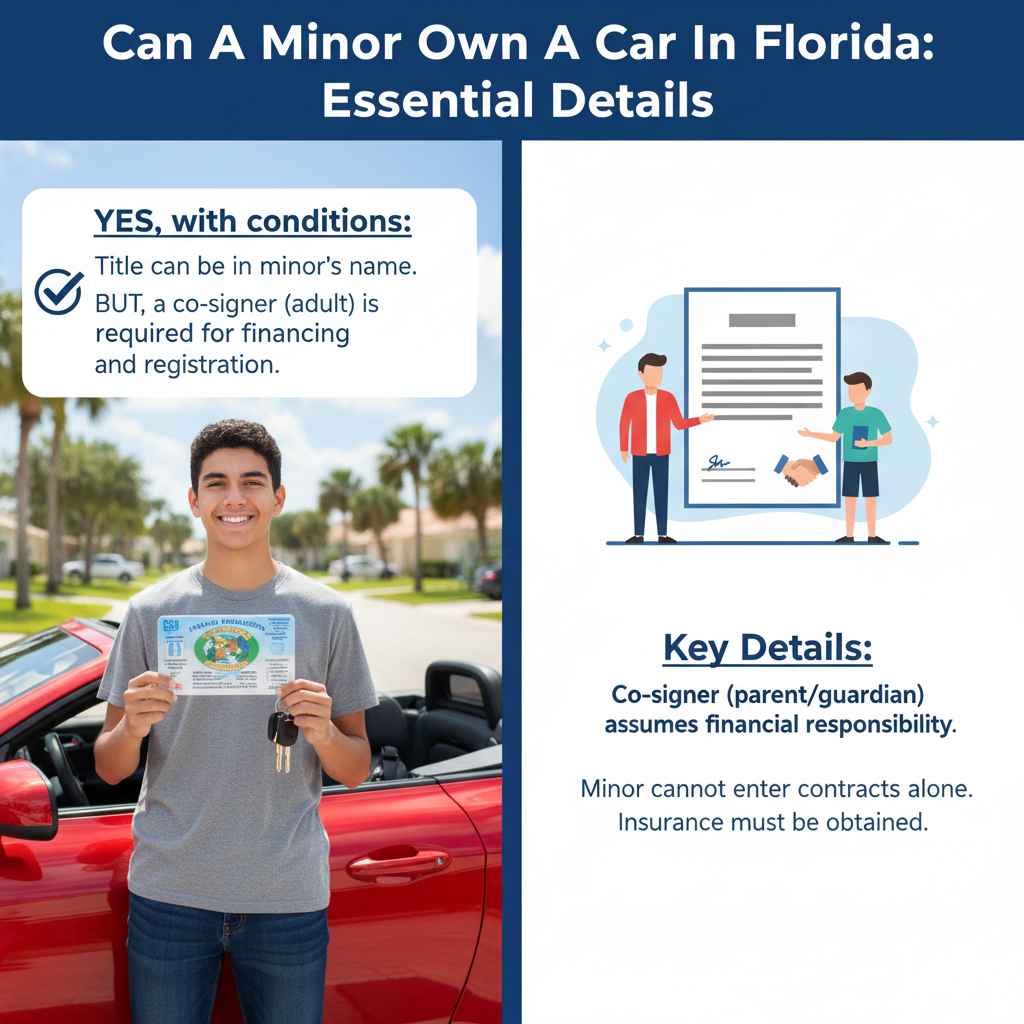
Yes, a minor can own a car in Florida, but they cannot legally register or insure it in their own name. A parent or legal guardian must handle these tasks for them.
Thinking about getting wheels for a young driver in the Sunshine State? It’s a common question for parents and guardians who want to help their teens gain independence on the road. Navigating the rules can feel a little tricky, especially when minors are involved. But don’t worry! We’re here to break down exactly what you need to know. This guide will walk you through how a minor can indeed own a car in Florida, covering all the essential details you need to make it happen smoothly and legally. Get ready to understand the process, so you can help that young driver hit the road with confidence!
Understanding Car Ownership for Minors in Florida
In Florida, the law defines a minor as anyone under the age of 18. While a minor can legally own a car through gifts, inheritance, or even purchase using their own funds, there are significant limitations due to their age. The primary hurdles involve the practicalities of registration, titling, and insurance, which are legally tied to individuals who can enter into contracts and are considered adults.
This means a licensed adult, usually a parent or legal guardian, will be the one to handle the paperwork and legal responsibilities. It’s not about limiting their ownership, but ensuring all the necessary legal frameworks are properly in place for driving legality and safety.
The Legal Picture for Minors and Vehicles
Here’s a quick look at the legal landscape:
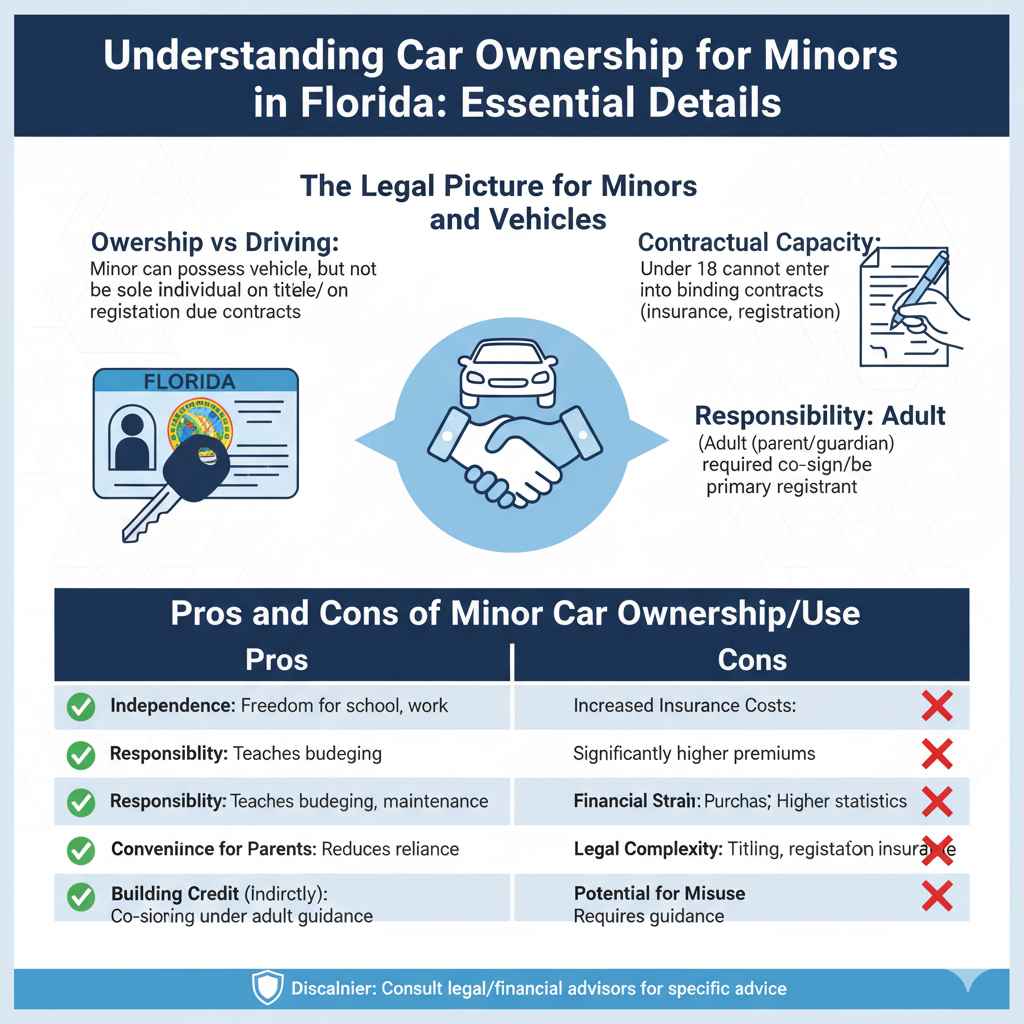
Ownership vs. Driving: A minor can possess a vehicle. However, they cannot be the sole individual on the title and registration for practical purposes due to contractual limitations.
Contractual Capacity: Individuals under 18 generally cannot enter into binding contracts, which includes car insurance policies and registration agreements.
Responsibility: Because of this, an adult is required to co-sign or be the primary registrant and insurer.
How a Minor Can Legally “Own” a Car in Florida
Let’s dive into the specifics of how a minor can have a car in their name, with the necessary adult involvement.
1. Purchase by a Minor (with Adult Assistance)
If a minor wants to buy a car, they can use their own money to do so. However, when it comes to the official paperwork, they’ll need an adult to help.
The Purchase Agreement: The sales contract might list the minor as a buyer, but an adult will likely need to co-sign on any financing or be the primary buyer if paying cash, depending on the dealership’s policies.
Titling and Registration: This is where adult involvement is essential. The car’s title and registration must be in the name of an adult, or an adult and the minor jointly (though the adult will bear the primary legal responsibility). This is because a minor cannot legally sign the necessary documents for the Florida Department of Highway Safety and Motor Vehicles (FLHSMV).
Insurance: A minor cannot independently purchase an auto insurance policy. An adult must add the minor as a driver to their policy or secure a policy in their own name that covers the vehicle the minor will be driving.
2. Receiving a Car as a Gift or Inheritance
This is a straightforward way for a minor to “own” a car.
Gift: If a car is gifted to a minor, the process for titling and registration still requires adult involvement. The adult who gifts the car might handle some initial registration if they are gifting the car outright, but typically, a guardian will then need to ensure it’s properly titled and insured under their name or a joint name for the minor to drive it legally.
Inheritance: If a minor inherits a vehicle, their legal guardian will manage the transfer of title and registration. The guardian will sign all necessary documents on behalf of the minor.
3. Joint Ownership with an Adult
This is a common and practical approach.
Titling: The vehicle title can be issued in the names of both the adult (parent/guardian) and the minor. This signifies shared ownership.
Registration and Insurance: The adult will be listed as the primary party responsible for registration and insurance. They will sign all official documents with the FLHSMV and the insurance provider.
Benefits: This setup clearly establishes who is legally responsible for the vehicle and its operation, while still acknowledging the minor’s ownership.
Essential Steps for Registering and Insuring a Car for a Minor in Florida
Now that we understand how a minor can own a car, let’s walk through the practical steps involved in getting that car on the road legally. Remember, an adult is the key player here!
Step 1: Obtain the Vehicle Title and Bill of Sale
For Purchases: You’ll need a completed Application for Certificate of Title With/Without Registration (HSMV 82040) and a bill of sale. The seller (dealership or private party) will provide the title. If there’s a loan, the lienholder information will be on the title.
For Gifts/Inheritance: You’ll still need the previous owner’s properly assigned title. If it’s an inheritance, you’ll need probate documents. A bill of sale isn’t strictly necessary for gifted vehicles but can be helpful.
Adult Signature: The adult owner/co-owner will sign these documents.
Step 2: Secure Florida Auto Insurance
Florida law requires all drivers to have a minimum level of car insurance. Since a minor can’t legally buy their own policy, an adult must handle this.
Minimum Requirements: Florida’s minimum coverage includes $10,000 of Personal Injury Protection (PIP) and $10,000 of Property Damage Liability (PDL). However, most experts strongly recommend higher coverage limits for greater protection. You can learn more about Florida’s insurance requirements from the Florida Department of Highway Safety and Motor Vehicles (FLHSMV).
Adding a Minor Driver: The most common approach is to add the minor to an existing family auto insurance policy. The policyholder (parent/guardian) will file the necessary paperwork with the insurance company.
Policy in Adult’s Name: If the minor’s car isn’t being added to a family policy, the adult will need to secure a new policy for the vehicle. The adult will be the named insured, and the minor will be listed as a driver.
Proof of Insurance: You will need this proof to register the vehicle.
Step 3: Register the Vehicle with the FLHSMV
Once you have the title, completed application, and proof of insurance, you can proceed to register the vehicle.
Visit a Tax Collector’s Office: Vehicle registration services in Florida are handled by county Tax Collector offices. You can typically make an appointment or walk in. Find your local office via the Florida TaxWatch directory.
Required Documents:
Completed Application for Certificate of Title With/Without Registration (HSMV 82040)
Proof of Florida Insurance
Proof of Ownership (Title)
Proof of Identity for the adult registrant (e.g., driver’s license)
Payment for fees and taxes.
Special Considerations for Minors: When titling in a minor’s name as a co-owner, the adult will sign as the responsible party. The adult’s driver’s license information will also be required.
Step 4: Obtain Florida License Plates and Decals
After successful registration, you will be issued license plates and registration decals.
Standard Plates: Most drivers opt for standard Florida plates. You can also choose specialty plates for an additional fee, which often support various Florida causes or interests.
Temporary Tag: If you purchased from a dealership, they will usually provide a temporary tag to use while your permanent registration is processed.
Placement: Ensure the license plate is securely attached to the rear of the vehicle, and apply the registration decal to the designated area on your license plate as instructed.
Key Differences: Minor Ownership vs. Adult Responsibility
It’s crucial to distinguish between owning a car and having the legal responsibility for it.
| Aspect | Minor’s Role | Adult’s Role (Parent/Guardian) |
|---|---|---|
| Title Ownership | Can be listed as a co-owner (often jointly with a parent/guardian). | Must be the primary owner or co-owner to legally handle registration, insurance, and financing. Can be the sole owner. |
| Registration | Cannot legally complete registration alone. | Responsible for signing and submitting all registration paperwork to the FLHSMV or county tax office. |
| Insurance Policy | Cannot legally obtain or be the primary named insured. | Must procure and maintain the insurance policy, naming the minor as a covered driver. |
| Financial Liability | Indirect responsibility while driving. | Legally responsible for registration, insurance, maintenance, and may be liable for accidents involving the minor. |
| Contracts | Cannot enter into binding contracts (e.g., loans, financing). | Must co-sign or act as the primary party for loans, leases, or financing agreements. |
| DMV Transactions | Cannot conduct transactions independently. | Handles all DMV or FLHSMV transactions on behalf of the minor. |
Important Considerations for Minor Drivers
Beyond the paperwork, there are several other critical aspects to consider when a minor is driving a car.
The Importance of a Driver’s License
A minor must possess a valid Florida driver’s license to operate a motor vehicle legally.
Florida has specific requirements for teen drivers, including learner’s permits and graduated driver licensing (GDL) programs, which impose restrictions on driving times and passengers until the driver reaches a certain age or has held their license for a specified period. You can find detailed information on Florida’s Graduated Driver Licensing Program on the FLHSMV website.
Insurance Premiums and Young Drivers
Adding a young, inexperienced driver to an insurance policy will likely increase premiums. This is because statistics show that drivers under 25 are at a higher risk of being involved in accidents.
Encouraging safe driving habits, maintaining good grades (many insurers offer discounts for good students), and completing defensive driving courses can help mitigate these costs.
Vehicle Maintenance and Safety
Even if a minor owns the car, the adult remains responsible for ensuring the vehicle is in safe working order.
Regular maintenance checks (oil changes, tire pressure, brakes) are crucial for preventing breakdowns and accidents. Educating the minor on basic maintenance can also foster responsibility.
Financial Responsibility and Gifting
When purchasing a car for a minor, consider the ongoing costs: insurance, gas, maintenance, and potential repairs.
Gifting a car can be a wonderful gesture, but ensure the financial implications are understood by all parties before the transfer.
Pros and Cons of Minor Car Ownership/Use
Here’s a balanced look at the advantages and disadvantages:
Pros:
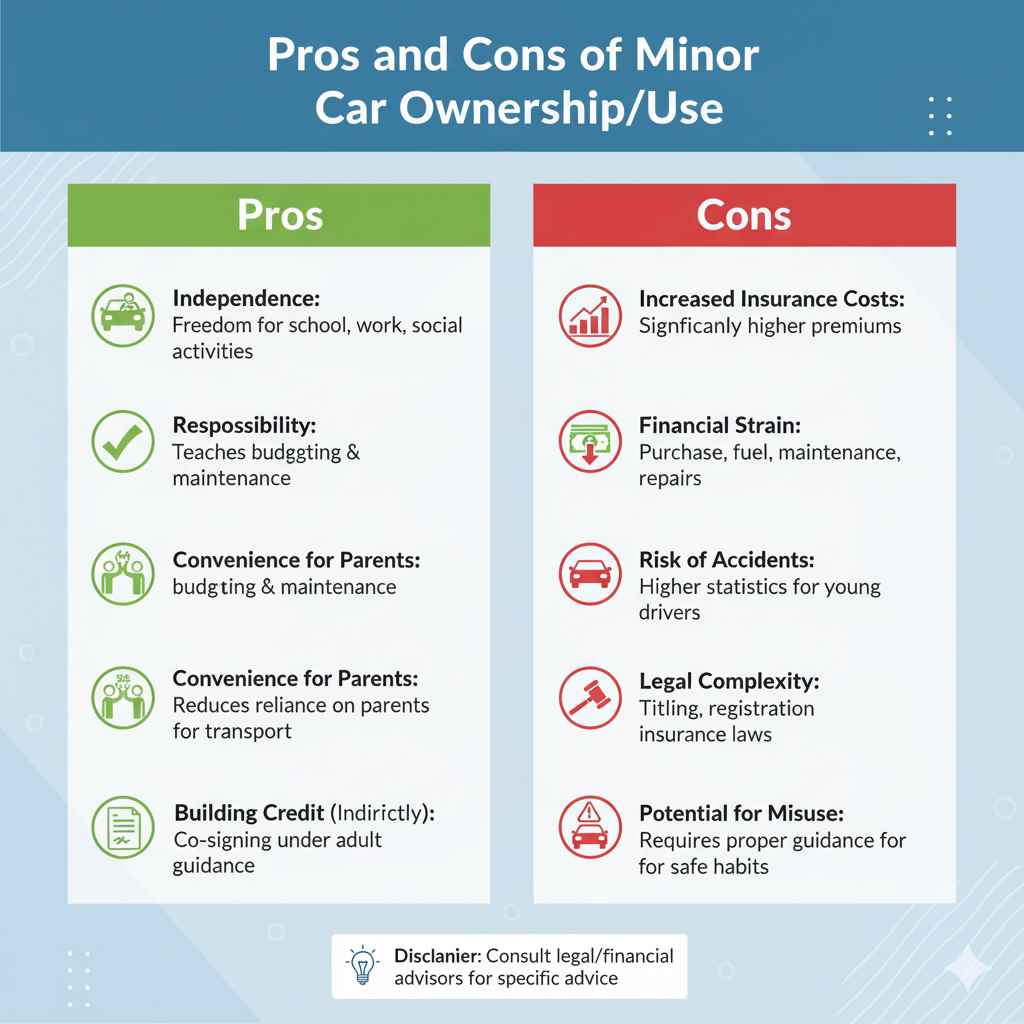
Independence: Provides teenagers with greater freedom and mobility for school, work, and social activities.
Responsibility: Owning or being primarily responsible for a car can teach young people valuable lessons about responsibility, budgeting, and maintenance.
Convenience for Parents: Reduces reliance on parents for transportation.
Building Credit (Indirectly): If the adult finances the car and the minor co-signs (requiring adult co-signer), it can indirectly help the minor build credit history under adult guidance.
Cons:
Increased Insurance Costs: Premiums can be significantly higher for young drivers.
Financial Strain: The costs associated with car ownership (purchase, insurance, fuel, maintenance, repairs) can be substantial.
Risk of Accidents: Young drivers are statistically more likely to be involved in collisions.
Legal Complexity: Navigating the titling, registration, and insurance laws requires careful attention from adults.
Potential for Misuse: Without proper guidance, teens may not prioritize safe driving habits.
Frequently Asked Questions (FAQs)
Q1: Can a 16-year-old buy a car in Florida?
A1: Yes, a 16-year-old can purchase a car in Florida using their own funds. However, because they are a minor, an adult (parent or legal guardian) must co-sign for any financing and will need to be listed on the title and registration as the primary responsible party. The adult must also secure auto insurance for the vehicle.
Q2: Do minors need a driver’s license to own a car in Florida?
A2: While a minor can own a car, they cannot legally drive it on public roads without a valid driver’s license or learner’s permit from Florida. The license is separate from the ownership process.
Q3: Who puts the car in their name if a minor is given a car?
A3: If a minor is gifted a car, the title and registration must be handled by an adult. The title can be issued in the adult’s name, or jointly in the adult’s and minor’s names. The adult will be the one signing the documentation with the Florida Department of Highway Safety and Motor Vehicles (FLHSMV).
Q4: Can a minor be the sole owner of a car on the title in Florida?
A4: No, in Florida, a minor (under 18) cannot be the sole owner listed on a vehicle’s title and registration. An adult parent or legal guardian must be named on the title as a co-owner or sole owner to legally register and insure the vehicle.
Q5: What happens if a minor gets into an accident in a car registered in their parent’s name?
A5: If a car is registered and insured in the parent’s or guardian’s name, and the minor driver causes an accident, the parent/guardian’s insurance policy will typically cover the damages, up to the policy’s limits. The parent/guardian may also face some legal liability, especially for egregious negligence.
Q6: Are there any special fees or taxes for registering a car for a minor?
A6: When registering a vehicle in Florida, there are title fees, registration fees, and potentially sales tax (or a credit if sales tax was paid at purchase). These fees are based on the vehicle’s age, weight, and value, not specifically on whether a minor is involved as an owner. The adult registrant is responsible for paying these.
Q7: Can a minor purchase a car with their own savings in Florida?
A7: Absolutely. A minor can use their own money, such as savings from a job, to purchase a car. However, the purchase process, including signing paperwork and handling the title transfer, will require an adult’s involvement because minors lack the legal capacity to enter into binding contracts for vehicle ownership and registration.
Conclusion
Navigating the process of a minor owning a car in Florida might seem like a puzzle, but it’s quite manageable with the right know-how. The key takeaway is that while a minor can certainly be recognized as an owner, the legal responsibilities for titling, registration, and insurance always fall to an adult, typically a parent or legal guardian. By understanding the requirements for joint ownership, ensuring proper insurance coverage, and working through the FLHSMV registration process with an adult partner, you can successfully help a young person gain the independence a car provides. Remember to prioritize safety, adhere to all Florida driving laws, and encourage responsible vehicle ownership. With a little planning and an adult’s guiding hand, that special car can be a fantastic step towards maturity and freedom for your young driver!