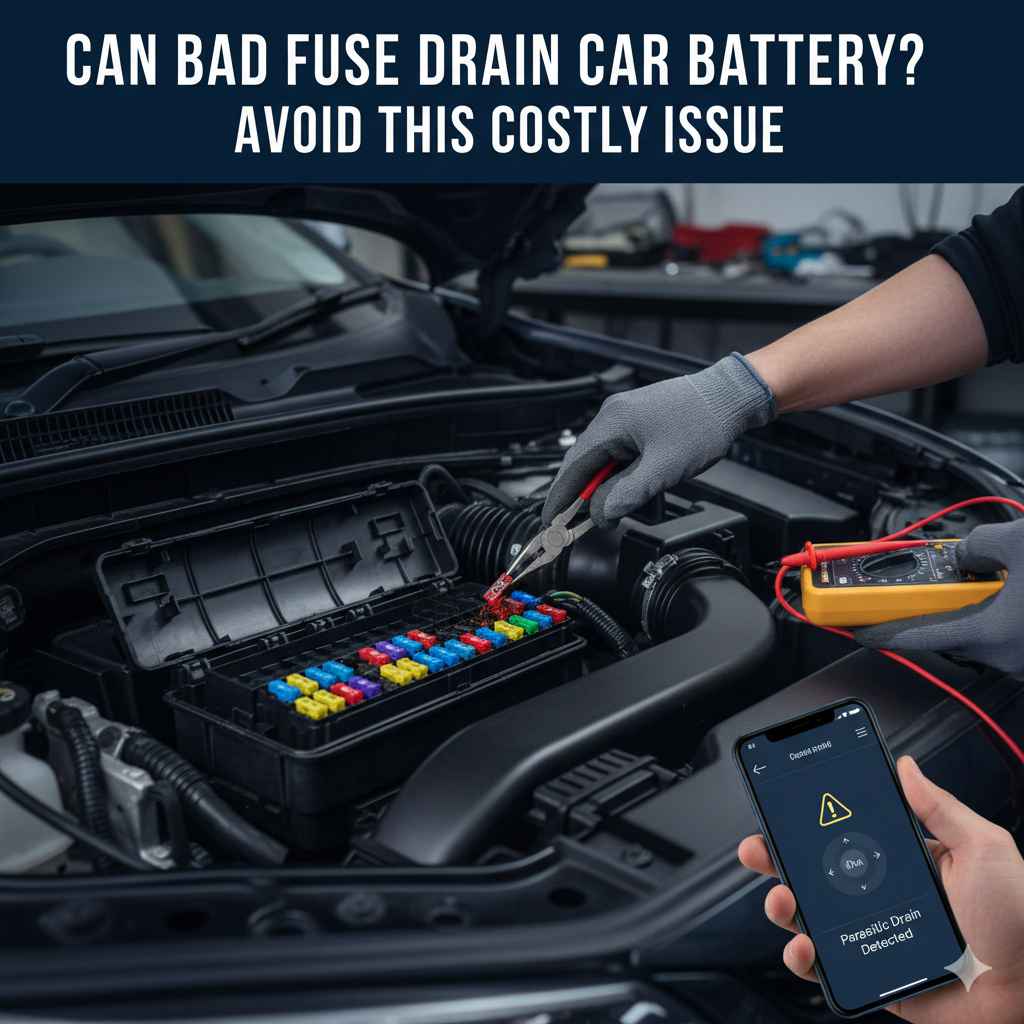
Can Bad Fuse Drain Car Battery? Avoid This Costly Issue
Yes, a bad fuse can absolutely drain your car battery. A fuse that’s stuck in the “on” position, even though it’s blown, can keep a circuit active, preventing your battery from fully charging and leading to a dead battery. This guide will show you how to identify and fix this common, costly problem.
Hey there, car owner! Ever felt that sinking feeling when you turn the key and… nothing? Your car battery is dead, and you’re stranded. It’s a frustrating experience we all want to avoid. Sometimes, the culprit isn’t a worn-out battery or a faulty alternator, but a much smaller, often overlooked component: a fuse. You might be surprised to learn that a “bad” fuse, in a specific way, can indeed drain your car battery. Don’t worry, though. Understanding how this happens is the first step to fixing it, and it’s simpler than you might think. Let’s dive into how a seemingly small fuse issue can lead to big battery drain and how you can prevent this costly problem from happening to you.
Understanding How Fuses Work (and How They Can Go Bad)
Think of fuses as tiny, hardworking guardians for your car’s electrical system. Their main job is to protect your car’s delicate electronics from too much electrical current. If a surge of electricity happens, the thin wire inside the fuse melts and breaks, cutting off the power to that specific circuit. This prevents damage to the more expensive parts, like your radio or power windows. It’s a sacrificial act – the fuse blows, but the rest of the system stays safe.
Now, when a fuse is “bad” in the way that can drain your battery, it’s not typically because it’s blown and doing its job. Instead, it’s usually a situation where the fuse should be off, but it’s somehow stuck in an “on” or “active” state. This can happen due to a few reasons:
- Internal Short Circuit: While rare, internal damage within the fuse itself could cause it to remain conductive even when it’s supposed to be open.
- Corrosion or Damage to the Fuse Box: If the fuse box terminals or the fuse holder itself is corroded or damaged, it might prevent the fuse from making proper contact or from fully disengaging from a circuit.
- Wiring Issues: Sometimes, the problem isn’t the fuse itself but the wiring connected to it. A short in the wiring could keep a circuit powered unnecessarily.
The key takeaway is that a blown fuse is generally a sign of a problem it prevented. A fuse that causes a drain is usually one where the circuit it protects is still getting power when it shouldn’t be, and the fuse isn’t doing its protective job by breaking the circuit.
The “Stuck On” Fuse: The Real Battery Drainer
This is where the confusion often starts. A fuse that protects a circuit is designed to melt and break the connection when there’s too much current. This is a good thing! But a fuse that drains your battery is one that, due to some fault, keeps the circuit it’s supposed to be protecting active when the car is turned off. This parasitic draw is like a leaky faucet, constantly dripping away your battery’s stored power.
Imagine your car’s battery is like a rechargeable phone battery. If you leave an app running in the background all night, your phone will be dead in the morning. Similarly, if a circuit in your car – controlled by a fuse – remains active when the car is off, that circuit is continuously drawing power from your battery. Over time, this constant draw can deplete the battery’s charge completely.
This “parasitic draw” is the enemy of a healthy car battery. And a faulty fuse or its associated circuit is a common culprit.
Common Culprits That Can Cause Parasitic Draw (Beyond Just Fuses)
While we’re focusing on fuses, it’s important to know that other electrical components can also cause parasitic draws if they malfunction. Understanding these helps in troubleshooting:
- Interior Lights: A dome light, glove box light, or trunk light that stays on can drain a battery surprisingly fast.
- Aftermarket Accessories: If you’ve installed a new stereo, alarm system, or dashcam recently, an improper installation or a faulty component can be the cause.
- Power Outlets/Cigarette Lighter: Sometimes these stay live even with the car off, and if a device is plugged in and drawing power, it can drain the battery.
- Control Modules: Modern cars have many computer modules that need to go to “sleep” when the car is off. If one fails to sleep, it can draw power.
- Faulty Relays: Similar to fuses, relays are switches. If a relay gets stuck in the “on” position, it can keep a circuit powered.
- Door Lock Actuators: While less common, a malfunctioning door lock actuator could cause a draw.
How to Identify a Fuse Causing Battery Drain: A Step-by-Step Guide
Don’t be intimidated! With a few basic tools and some patience, you can pinpoint the fuse that’s quietly draining your battery. This process is often called checking for “parasitic draw.”
What You’ll Need:
- Owner’s Manual: Essential for locating the fuse box and identifying fuse functions.
- Automotive Multimeter: This is key. You can get a basic one for a reasonable price. Look for one that can measure amperage (usually in ‘mA’ or ‘A’).
- Fuse Puller: Most fuse boxes come with one, or they are very inexpensive.
- Gloves (Optional but recommended): For keeping hands clean.
- A friend (Optional but helpful): To assist with some steps.
The Process:
-
Prepare Your Car:
- Park your car on a level surface.
- Turn off the engine.
- Remove the key from the ignition.
- Ensure all doors, windows, and the trunk are closed. (This is important because some interior lights might not turn off otherwise, giving a false reading.)
- Let the car sit for at least 15-30 minutes. This allows the car’s computer modules to go into “sleep mode.” If you check too soon, you might get a false high reading.
-
Locate the Fuse Box(es):
Your car likely has at least one fuse box. Common locations include under the dashboard (driver’s side), under the hood, or sometimes in the glove compartment. Consult your owner’s manual for the exact locations and a diagram of the fuses.
-
Set Up Your Multimeter:
This is the most technical part, but we’ll keep it simple. You need to set your multimeter to measure DC amperage. Usually, there’s a setting with a ‘V’ for volts, an ‘A’ for amps (or ‘mA’ for milliamps), and often a wavy line (DC) or a straight line (AC). You want the DC amps setting. You’ll likely need to move the red probe into a different port on the multimeter for amperage measurement.
Safety Note: Always ensure your multimeter is set to the correct function before connecting it to the car. Connecting it to measure amps when it’s set to volts (or vice versa) can damage the multimeter or blow its internal fuse.
-
Disconnect a Fuse and Insert the Multimeter:
This is crucial. You’re going to use the multimeter to measure the current flowing through the circuit that the fuse was protecting.
- Choose a fuse, ideally from your owner’s manual diagram, that controls a non-essential system first (like a radio or power outlet), as these are common culprits and easier to isolate.
- Carefully pull out the fuse using your fuse puller.
- Connect the probes of your multimeter so that the current has to flow through the multimeter to complete the circuit. Most commonly, you’ll do this by:
- Disconnecting one side of the fuse (or placing one probe into the fuse slot where the fuse prong would normally go), and connecting the other probe to the other side of the circuit (or the other fuse slot).
- Alternatively, you can pull the fuse out and insert the multimeter probes directly into the fuse slot, one into each terminal. Make sure the multimeter is in series with the circuit.
Example: If you pull a fuse, and there are two metal contacts in the fuse slot where the fuse prongs go, place one multimeter probe into one contact and the other multimeter probe into the other contact. The multimeter is now acting as a temporary piece of wire in that circuit, allowing you to measure the flow.
-
Read the Amperage Draw:
With the multimeter connected in place of the fuse, look at the reading.
- A healthy car battery in sleep mode should have a very low parasitic draw. For most modern cars, this is typically between 20 to 50 milliamps (mA). Some sources suggest up to 75mA is acceptable. Anything significantly higher indicates a problem.
- If you see a reading in the hundreds of milliamps or even amps (A), you’ve found a circuit that is drawing too much power.
Check out this excellent resource from the U.S. Department of Energy on understanding automotive parasitic battery drain for more technical details.
-
Isolate the Culprit Fuse:
If your initial reading is high, start pulling fuses one by one. After pulling each fuse, observe the multimeter reading. When the reading drops significantly (close to 0 mA or within the 20-50 mA range), you’ve identified the fuse that was causing the parasitic draw.
Pro Tip: It’s often helpful to have a spreadsheet or notebook handy to record which fuse caused the reading to drop. This way, you can mark it as the suspect.
-
Reinstall Fuses and Confirm:
Once you’ve found the fuse that, when removed, stops the excessive draw, reinstall it. Then, reinsert any other fuses you removed. Check the multimeter reading again. If the high draw returns, you’ve confirmed that the circuit associated with the suspect fuse is the problem.
Interpreting Your Readings: What’s Normal and What’s Not?
Understanding the numbers on your multimeter is crucial. Here’s a quick guide:
| Reading Type | Typical Acceptable Range (After Sleep Mode) | Potential Issue |
|---|---|---|
| 20-50 mA (0.02 – 0.05 A) | Yes – Normal | Your car is likely sleeping properly. |
| 50-100 mA (0.05 – 0.1 A) | Maybe – Borderline | Could be something acceptable, or minor issue. Worth investigating if you experience drain. |
| Above 100 mA (0.1 A) | No – Problematic | Significant parasitic draw. A fuse or circuit is likely staying active. |
| Multiple Amps (A) | No – Serious Problem | A major fault is present, draining the battery very quickly. |
Remember, these are general guidelines. Consult your vehicle’s service manual for specific acceptable parasitic draw specifications for your make and model. You can often find excellent diagnostic procedures and specifications for your specific car by searching online forums or purchasing a vehicle-specific repair manual. Websites like ALLDATA.com offer professional-grade repair information, though often for a fee.
Next Steps: What to Do with a Bad Fuse
So, you’ve identified the culprit fuse and the circuit it controls. Now what? The solution depends on why the fuse was causing a persistent draw.
Scenario 1: The Fuse Itself is Faulty but the Circuit is Fine
This is the simplest case. If you pull a fuse and the draw disappears, but when you put a new fuse in that same slot, the draw returns immediately (even with the car off and everything supposedly sleeping), the fuse itself might be internally shorted or damaged, acting like a permanent connection.
Solution: Replace the blown or suspected fuse with a new one of the exact same amperage rating. If the problem returns, the issue might be deeper than just the fuse.
Scenario 2: The Circuit is Drawing Power When It Shouldn’t
This is more common. The fuse is fine (or was protecting against a surge), but the component or wiring connected to that fuse is keeping the circuit active unnecessarily.
Solution: This requires further diagnosis. You need to figure out why that circuit is on.
- Check the Component: If the fuse controls a specific component like a radio, power window motor, or interior light, that component might be faulty and drawing unintended current.
- Inspect the Wiring: Look for any signs of damaged, frayed, or shorted wires anywhere along the circuit path related to that fuse.
- Consult a Professional: For complex circuits or if you’re uncomfortable with further electrical diagnostics, it’s best to take your car to a qualified mechanic. They have specialized tools and knowledge to trace electrical faults accurately.
When to Seek Professional Help
While DIY is great for simple fixes, don’t hesitate to call in the pros if:
- You’re not comfortable using a multimeter or performing electrical diagnostics.
- You can’t identify the source of the draw even after pinpointing the fuse.
- The issue involves complex computer modules or integrated wiring harnesses.
- You’ve replaced the fuse, and the problem immediately returns.
A qualified mechanic has the experience and equipment to resolve these issues safely and efficiently, saving you time and potential further damage.
Preventing Battery Drain: Proactive Tips
The best way to avoid this costly issue is through prevention and regular maintenance.
- Regular Battery Checks: Have your battery and charging system tested annually, especially before extreme weather seasons.
- Listen to Your Car: Pay attention to any unusual electrical behavior – dimming lights, strange smells, or accessories that seem to behave erratically.
- Be Mindful of Aftermarket Installations: Ensure any aftermarket accessories are installed correctly by reputable professionals. Poor installations are a common source of electrical problems.
- Check Your Fuses Periodically: While you don’t need to pull every fuse regularly, if you’re doing other under-hood maintenance, a quick visual inspection of the main fuses can sometimes reveal early signs of corrosion or damage.
- Don’t Leave Accessories On: Always ensure lights (interior and exterior), radio, and other accessories are off when you leave your car.
- Use a Battery Tender for Storage: If you store your vehicle for extended periods (more than a few weeks), a battery tender can keep it charged and prevent deep discharge.
FAQs About Bad Fuses and Battery Drain
Q1: Can a fuse that is completely blown drain my battery?
A1: No, generally a blown fuse is designed to stop a circuit. If it’s genuinely blown, it means a problem likely occurred and the fuse did its job by breaking the circuit. It’s a fused circuit that isn’t draining the battery when it shouldn’t be. The problem arises when a fuse should be allowing a circuit to be off but isn’t.
Q2: How long does it take for a faulty fuse to drain a car battery?
A2: This depends on the severity of the draw. A small, continuous draw might take several days or even a week to completely drain a healthy battery. A larger draw, such as a stuck interior light, could drain a battery significantly overnight.
Q3: What does a parasitic draw of 100mA mean?
A3: A parasitic draw of 100 milliamps (0.1 Amps) is considered high for a vehicle that has been shut off and allowed to enter sleep mode. This draw is equivalent to leaving a 12-watt appliance (like a small LED light) on continuously.