Can I Bring A Car From Mexico To US: Essential Guide
Yes, you can bring a car from Mexico to the US, but it involves a specific process. It’s crucial to understand the legal requirements and paperwork to avoid delays and ensure your vehicle is compliant with US standards. This guide will walk you through everything you need to know.
Thinking about bringing your car from Mexico across the border? It’s a question many drivers ponder, whether they’ve lived in Mexico, are purchasing a vehicle there, or have a special connection to a car south of the border. The good news is, it’s definitely possible! However, just like navigating a new road, the process has its own set of turns and rules. Don’t worry, though! As your friendly automotive guide, I’m here to map out the journey for you. We’ll break down all the necessary steps, so you can feel confident and prepared every mile of the way. Let’s get you rolling!
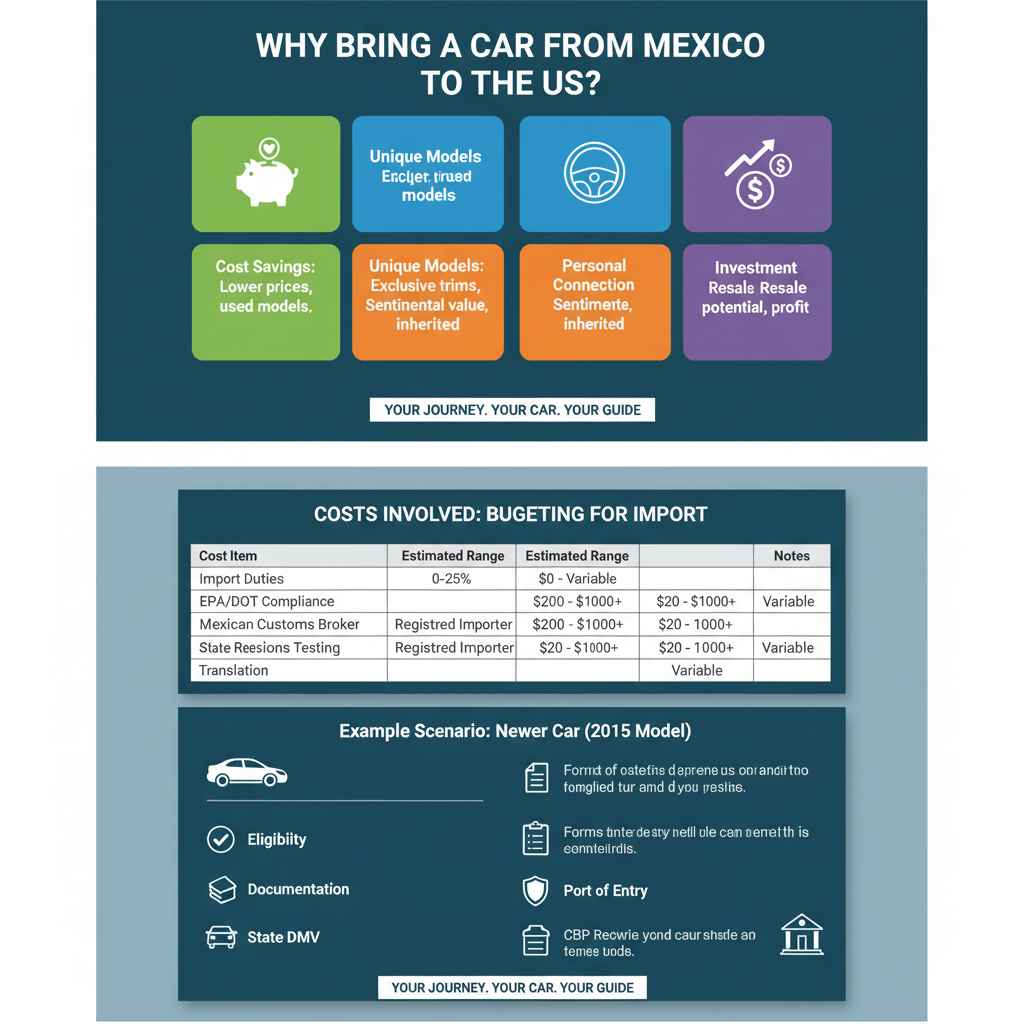
Why Bring a Car From Mexico to the US?
There are several reasons why someone might consider bringing a vehicle from Mexico into the United States. Understanding these motivations can help you clarify your own purposes and the importance of following the correct procedures.
- Cost Savings: Sometimes, specific models or used cars can be found at a lower price point in Mexico.
- Unique Models: Certain car models or trims might be available in Mexico that aren’t offered in the US market, appealing to collectors or enthusiasts.
- Personal Connection: You might have owned the car for a long time, perhaps inherited it or purchased it while living in Mexico, and want to continue driving it in the US.
- Investment: Some individuals see potential for profit by importing and reselling vehicles.
Key Steps: Bringing Your Car From Mexico to the US
The process of bringing a car from Mexico to the US can seem a bit complex, but it’s essentially about meeting legal requirements and proving your vehicle is safe and compliant. We’ll break it down into manageable steps.
1. Determine Vehicle Eligibility
Not all cars can easily make the transition. The US has strict regulations, especially regarding emissions and safety standards. Newer cars are generally easier to import, while older ones might face more scrutiny.
Vehicle Standards:
- US Emission Standards: Vehicles must meet the Environmental Protection Agency’s (EPA) emission standards. Most cars manufactured for the US market and later models (typically 1997 or newer) will meet these standards. If your car was manufactured to meet Mexican standards, it might require modification or a specific certification to comply with US EPA standards. You can check the EPA’s compatibility with vehicle identification number (VIN) database or consult a Registered Importer. Visit the EPA’s official page on importing vehicles for detailed information.
- US Safety Standards: Similarly, vehicles must meet the Department of Transportation’s (DOT) Federal Motor Vehicle Safety Standards (FMVSS). Most cars manufactured for export to the US market will already comply. If your vehicle was not originally intended for the US market, it may need modifications to pass DOT inspection. The National Highway Traffic Safety Administration (NHTSA) provides guidance on vehicle safety standards.
2. Gather Essential Documentation
Having the correct paperwork is crucial. Missing even one document can cause significant delays at the border.
Required Documents:
- Proof of Ownership: This is usually your Mexican title (título de propiedad) or bill of sale (factura de compraventa). Ensure it’s in your name and properly signed over to you.
- Bill of Sale: If you purchased the car, a detailed bill of sale is necessary.
- Identification: A valid government-issued ID (like a passport or driver’s license) is required.
- Mexican Registration and Insurance: You’ll need proof that the vehicle is legally registered in Mexico and carries valid Mexican insurance.
- Customs Declaration Forms: These forms will be provided by US Customs and Border Protection (CBP) at the port of entry.
- EPA and DOT Forms: You’ll likely need to complete EPA Form 3520-21 (Importation of Motor Vehicles and Motor Vehicle Engines Subject to Clean Air Act Requirements) and DOT Form HS-7 (Declaration for Imported Vehicle). You can often find these forms on the respective agency websites, but they will also be available at the port of entry.
- Spanish Translation: If any of your documents are not in English, you may need certified translations.
3. Understand Your Vehicle’s VIN and EPA/DOT Compliance
The Vehicle Identification Number (VIN) is a unique 17-character code that tells a lot about your car. For import purposes, it’s key to checking compliance.
VIN Check:
- Most vehicles manufactured for the US market from 1981 onwards have a 17-digit VIN that meets US standards.
- Vehicles manufactured for other markets might have different VIN formats or may not meet US EPA or DOT standards.
- If your vehicle doesn’t have a US-compliant VIN or if it’s unclear whether it meets standards, it may be considered a “non-conforming vehicle.”
Nonconforming Vehicles:
If your vehicle is deemed nonconforming, you have a few options:
- Modification by a Registered Importer (RI): You can hire an RI who is authorized by NHTSA to modify your vehicle to meet US safety standards. This can be a costly process. You can find a list of RIs on the NHTSA website.
- Permanent Export/Re-importation: If the vehicle was originally manufactured for the US, exported, and is now being brought back, it might be eligible for an exemption, but proper documentation is required.
- Show or Display Exemption: For vehicles that are at least 25 years old and are of historical or cultural significance, there might be an exemption from some regulations.
4. Pre-Approval and Specific Ports of Entry
Not all border crossings are equipped to handle vehicle imports. It’s best to plan your entry.
Choosing a Port:
- Designated Ports: US Customs and Border Protection (CBP) has specific ports of entry designated for vehicle imports. You cannot simply drive your car across at any random crossing.
- Research: Before you travel, check the CBP website or contact them directly to identify which ports are authorized for vehicle importation and what their specific procedures are. Some popular ports known for vehicle processing include Otay Mesa (California), El Paso (Texas), and Nogales (Arizona). The CBP page on importing vehicles is an excellent resource.
- Pre-Approval: In some cases, especially for complex imports, it might be advisable to contact CBP or an experienced customs broker beforehand to ensure smooth processing.
5. The Crossing: Dealing with Customs
This is where you present your vehicle and all your documentation to CBP officials.
At the Border:
- Declare Your Intentions: Upon arrival at the designated port of entry, inform the CBP officer that you are importing a vehicle.
- Present Documents: Hand over all your gathered documentation (title, bill of sale, IDs, EPA/DOT forms, etc.). Be prepared to answer questions about the vehicle’s origin, ownership, and any modifications.
- Inspection: CBP officers will inspect the vehicle to verify its identity (matching VINs), condition, and compliance with US standards.
- Pay Duties and Taxes: You will likely need to pay import duties and taxes on the vehicle. The rate depends on the vehicle’s value and type. You can use online tools or consult a customs broker to estimate these costs.
- Bond Requirement: For certain types of imports, or if you cannot immediately prove compliance, CBP might require you to post a bond. This is a financial guarantee that ensures you will meet all import requirements.
6. Obtaining US Registration and Titling
Once your vehicle is cleared by CBP, you’re not quite done. You still need to make it legal on US roads.
State-Specific Process:
- State DMV: After CBP releases the vehicle, you’ll need to take it to your local Department of Motor Vehicles (DMV) or equivalent state agency in the US.
- Proof of Import: You’ll present your CBP-stamped import forms (like the EPA 7501 form) and the original Mexican title to the DMV.
- VIN Inspection: Many states require a VIN inspection by law enforcement or an authorized inspector to ensure the VIN matches the paperwork and that the vehicle hasn’t been stolen or altered.
- Emissions Testing: Depending on the state and the vehicle’s age and origin, you may need to pass an emissions test. Some states have strict requirements, while others (especially newer models already meeting EPA standards) might be simpler.
- Pay State Fees: You will also pay state registration fees, sales tax (if applicable), and obtain US license plates and a title.
Important Considerations and Potential Challenges
While the steps above outline the general process, there are a few nuances to be aware of.
Vehicle Age and Compliance
The older the vehicle, the more complex the import can become. Vehicles manufactured before 1997 might have more difficulty meeting current EPA emission standards without significant modification. Similarly, older safety features might not align with current FMVSS requirements. If you are considering an older or classic car, research its specific compliance needs thoroughly.
Modification Costs
If your vehicle doesn’t meet US standards, the cost to modify it can be substantial. This might include upgrades to the emissions control system, lighting, safety features, or even structural modifications. Always factor these potential costs into your decision before purchasing a vehicle in Mexico to import.
Customs Brokers and Importers
For a smoother process, especially if you are unfamiliar with import regulations or if your vehicle is particularly unique or doesn’t meet standard compliance, consider using a customs broker or a Registered Importer (RI).
- Customs Brokers: These professionals are licensed to handle customs clearance on your behalf. They can assist with paperwork, duty calculations, and navigating the CBP process.
- Registered Importers (RIs): For nonconforming vehicles, RIs are crucial. They can assess your vehicle, perform necessary modifications, and certify that it meets all US safety and emissions standards.
Using these services can add to the overall cost but can save you time, headaches, and potential pitfalls.
Temporary Importation
If you are a US resident visiting Mexico for an extended period or a non-resident temporarily staying in the US, there are different rules for bringing your vehicle. These typically involve temporary permits and require the vehicle to be exported out of the US within a specified timeframe. This guide focuses on permanent importation.
Costs Involved
It’s important to budget for the entire process. Here’s a breakdown of potential costs:
| Cost Item | Estimated Range | Notes |
|---|---|---|
| Import Duties | 0-25% of vehicle value | Varies by vehicle type and origin. Mexico-US trade agreements might offer preferential rates. |
| EPA/DOT Compliance Fees | Variable; could be $0 for compliant vehicles | Can be significant if modifications are needed. |
| Mexican Customs Broker Fees | $200 – $1000+ | Depends on complexity and broker rates. |
| Registered Importer Fees | $2,000 – $10,000+ | For modifications to meet US standards. Highly variable. |
| US State Registration & Titling Fees | $50 – $500+ | Varies widely by state. Includes plates, title, registration card. |
| Emissions Testing Fees | $20 – $100+ | If required by the state. |
| VIN Inspection Fees | $20 – $100+ | If required by the state. |
| Translation Costs | Variable | If documents need certified translation. |
Example Scenario: Bringing a Newer Car (2015 Model)
Let’s imagine you’re bringing a 2015 car that was originally manufactured for the US market, bought in Mexico.
- Eligibility: Being a 2015 model likely means it meets US EPA and DOT standards, especially if it has a US-compliant VIN.
- Documentation: You’ll need the Mexican title, bill of sale, ID, and proof of ownership.
- Forms: You’ll fill out EPA Form 3520-21 and DOT Form HS-7, declaring the vehicle is compliant.
- Port of Entry: Drive to a designated port like Otay Mesa. Declare your vehicle for import.
- CBP: Present all documents. CBP verifies the VIN and paperwork. If compliant, they will allow entry. You’ll pay import duties based on the car’s value.
- State DMV: Take CBP release papers and Mexican title to your local DMV. Pass a VIN inspection and emissions test (if applicable in your state for a vehicle of this age). Pay registration and sales tax.
This scenario is generally straightforward, with main costs being import duties and state registration fees.
Frequently Asked Questions (FAQ)
Q1: How long does it take to import a car from Mexico?
Answer: The actual border crossing process can take anywhere from a few hours to a full day, depending on the port’s busyness and the complexity of your paperwork. After CBP release, getting US title and registration varies by state but typically takes a few days to a couple of weeks.
Q2: Can I drive my car from Mexico to the US immediately after crossing?
Answer: No. You must complete the importation process with CBP first. You’ll receive temporary import permits or clearance documents. You cannot legally drive the vehicle with Mexican plates indefinitely in the US as an importer. You’ll need to obtain US registration and plates promptly.
Q3: What if my car is older than 25 years (a classic car)?
Answer: Classic cars (generally 25 years or older) are often exempt from some EPA and DOT requirements. You will still need to prove its age and original manufacturing standards. It’s best to consult with CBP and NHTSA regarding specific exemptions for vehicles of this age.
Q4: Do I need to speak Spanish to import a car?
Answer: While not strictly required, it can be helpful. However, having all your documentation in order and potentially using a customs broker who speaks both languages will ensure clear communication. CBP officers are trained to work with international travelers.
Q5: Can I buy a car in Mexico and have it shipped to the US?
Answer: Yes, you can arrange for shipping. However, the importation paperwork and processes still apply. You or your designated agent (like a customs broker) will need to be present or represent you at the port of entry for the CBP inspection and clearance.
Q6: What if the car I want to import is a different model than what’s sold in the US?
Answer: This is where strict EPA and DOT compliance checks come into play. If the car wasn’t originally manufactured to US standards, it’s considered a nonconforming vehicle and will likely require modification by a Registered Importer (RI) to meet safety and emissions rules.
Conclusion
Bringing a car from Mexico to the US is a rewarding experience that can be managed smoothly with careful planning and adherence to regulations. By understanding the eligibility requirements for your vehicle, gathering all necessary documentation beforehand, identifying the correct port of entry, and being prepared for the customs process, you can navigate the journey successfully. Remember to check with EPA, NHTSA, and CBP for the most current guidelines, as regulations can change. Don’t hesitate to enlist the help of customs brokers or Registered Importers if you encounter complex situations. With this guide, you’re well on your way to driving your Mexican-imported car legally and confidently on US roads. Happy travels!