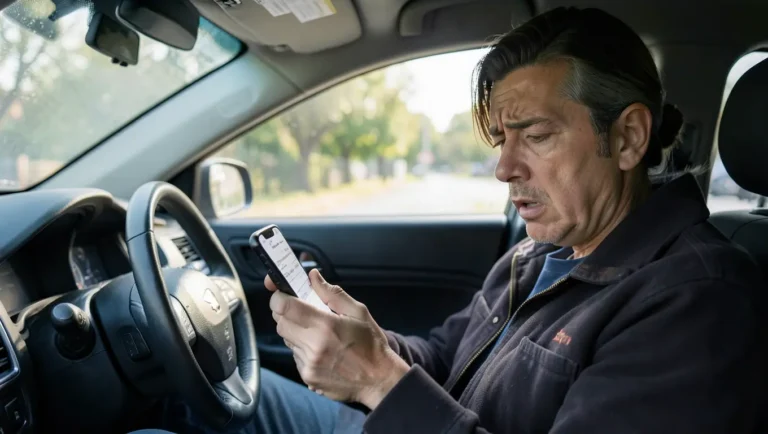
What Happens to My Husbands Car If He Dies (No Will Included)
If he had a will and named a beneficiary for the car, that person inherits it once the estate is settled. If he did not have a will, the car goes to you or your children under your state’s intestacy law, and if the car is worth little, most states let you skip full probate entirely with a small estate affidavit.
A surprising number of readers who land on this page are dealing with the second scenario: no will, and a car that is not worth enough to justify months of probate court. In states like New York, a surviving spouse can transfer a vehicle worth up to $25,000 outside of probate entirely. California allows an estate worth up to $208,850 (as of April 2025) to skip probate for a vehicle using a single DMV form. The exact numbers and paperwork depend on your state, but the shortcut exists almost everywhere.
This guide walks through what actually happens to the car right after he dies, how ownership passes with and without a will, how to use a small estate affidavit if the car qualifies, what happens to any remaining loan, and how insurance, license plates, and selling the car all fit together.
What Happens to the Car Right After He Dies
The moment your husband dies, the car legally becomes part of his estate, even if you drive it every day and think of it as “yours.” That does not mean you lose access to it. It means the car cannot be formally retitled, sold, or gifted until someone has the legal authority to act for the estate, whether that authority comes from a will, a court-appointed executor, or a state small estate procedure.
Get Several Certified Copies of the Death Certificate
Order at least eight to ten certified copies from the funeral home or your county vital records office. You will need an original (not a photocopy) for the DMV, the insurance company, the lender if there is a loan, the bank, and potentially the probate court. Copies typically run $15 to $25 each, so plan for the cost up front rather than reordering one at a time.
Call the Insurance Company Before You Stop Driving It
Do not let the policy lapse. If your name is already on the policy as a listed driver, coverage generally continues. If the policy was in his name only, call the insurer directly, explain the situation, and ask them to update the policy to keep coverage active while the estate is settled. Driving an uninsured car, even briefly, creates real liability if there is an accident.
Do Not Retitle the Car Yet
It is tempting to head straight to the DMV, but most states will reject a title transfer until you have either the will and proof the executor has been appointed, or the correct small estate affidavit (covered below). Locating the will and figuring out which path applies comes first.
For Keeping Estate Paperwork Together
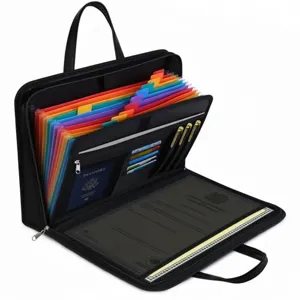 |
Estate Planning Fireproof Document Organizer – $27.99 You will be collecting death certificates, the title, the affidavit or probate papers, loan statements, and insurance forms all at once – this keeps them fireproof and in one place instead of a loose folder.
|
If Your Husband Left a Will
If your husband had a valid will, look for language naming a specific beneficiary for the car, or a general clause leaving “the residue of my estate” to one or more people. Either way, the will alone does not transfer the title. The will has to go through probate first, where the court validates it and formally appoints the executor named in the document.
Once appointed, the executor is the only person with legal authority to sign over the title, whether that means transferring it to the named beneficiary, selling it and distributing the proceeds, or handing it directly to you if you are named. The executor works from Letters Testamentary, a document the probate court issues that proves their authority to act, and most DMVs will ask to see it alongside the death certificate and the will.
If Your Husband Died Without a Will (No Will)
Dying without a will is called dying “intestate,” and it is the single most common situation behind searches for this exact topic. Without a will, state intestacy law decides who inherits the car, not you and not the family. The formula is not the same everywhere, but most states follow a version of this pattern:
- If you had no children together and he had no children from a prior relationship, you typically inherit everything, including the car, outright.
- If you have children together only, most states still give the surviving spouse the entire estate, though a handful split it between the spouse and children.
- If he had children from a previous relationship, many states split the estate between you and those children, which can mean you inherit only a partial interest in the car rather than the whole thing.
Nine states also apply community property rules, which change how debts and marital assets are treated: Arizona, California, Idaho, Louisiana, Nevada, New Mexico, Texas, Washington, and Wisconsin. In these states, a car bought during the marriage is often already treated as jointly owned, which can simplify the transfer even without a will.
Because the exact split depends on your state and family situation, it is worth reading a full breakdown of exactly who legally inherits the car and in what proportion. Our guide on who gets the car if your husband passed away walks through the state-by-state inheritance math in more depth.
Transferring a Low-Value Car Without Full Probate
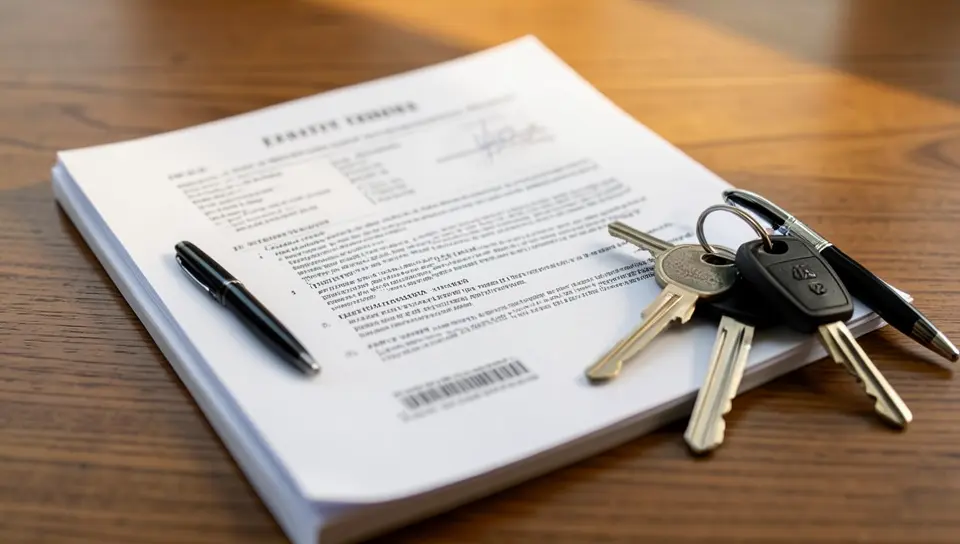
If the car is not worth much, and often even if the rest of the estate is not large, you may not need to open a full probate case at all. Almost every state has a small estate affidavit or a similar shortcut specifically for this situation, letting a surviving spouse or heir sign a sworn statement and walk into the DMV instead of waiting on a judge. Thresholds and rules vary widely, so treat the examples below as a starting point, not a nationwide rule:
| State | Shortcut | General Threshold |
|---|---|---|
| California | DMV Form REG 5 (Affidavit for Transfer Without Probate) | Estate up to $208,850 (effective April 2025); a 40-day wait after death applies |
| New York | Family exemption under EPTL 5-3.1 | One vehicle worth $25,000 or less, spouse only |
| Virginia | Small Estate Act Affidavit | Estate under $75,000 |
| Most other states | Small estate affidavit or simplified probate | Typically $25,000 to $100,000, check your state’s DMV or probate court |
To use a small estate affidavit, you generally need a certified death certificate, the original title, proof of your relationship to him (your marriage certificate), and sometimes a waiting period after the date of death before the DMV will process it. Call your state’s DMV or the probate court’s self-help desk before you go; some offices process these same-day at the counter, others require the affidavit to be notarized first.
Documents You Will Need to Transfer the Title
Whichever path applies, most DMVs ask for the same core set of paperwork:
- An original certified death certificate
- The current vehicle title, signed by the executor or as required by your state’s affidavit process
- Your government-issued photo ID
- Either the will and Letters Testamentary, or the completed small estate affidavit
- The current registration and, in most states, proof of active insurance
- Payment for the title transfer fee, which is usually far less than a full retitling fee (often $15 to $50)
Bring originals, not copies, of the death certificate and title. Some DMVs will also ask for an odometer disclosure statement if the car is under a certain age. Processing usually takes anywhere from same-day at the counter to a few weeks if the paperwork is mailed in.

What Happens to the Car Loan
A car loan does not disappear when the borrower dies, and it does not automatically transfer to you either. The debt becomes a claim against his estate, and the executor (or you, if you are handling a small estate affidavit) is generally responsible for paying it out of estate assets before anything is distributed. If the estate does not have enough money to cover the loan, and you did not cosign it, you are typically not personally on the hook for the shortfall – the lender’s remedy is to repossess and sell the car, not to come after your personal income.
There are two situations where you can end up responsible even without cosigning: if you live in one of the nine community property states listed above and the loan was taken out during the marriage, or if payments simply stop and nobody tells the lender what is happening, which speeds up repossession. If you did cosign or jointly finance the loan, you are fully responsible for the remaining balance regardless of the estate’s size. Our guide on whether a cosigner has rights to the car covers that situation in detail.
If you want to keep the car, contact the lender directly and explain the situation. Many lenders will work with a surviving spouse to either continue the existing loan in your name (if you qualify) or set up a temporary payment arrangement while the estate is settled, rather than immediately repossessing a vehicle that is still being paid on time.
Updating Car Insurance and Filing a Claim
Call the insurance company as soon as possible, even before the title is formally transferred. Ask them to remove your husband as the primary policyholder and add you (or whoever will be driving the car) in his place. Do not let this slide – an insurer that later discovers the primary policyholder died months earlier can deny a claim on a technicality, and driving on a lapsed or improperly listed policy puts you at financial risk in an accident.
If he was involved in an accident shortly before he died, or if the death itself was accident-related, you may also need to file a claim. Provide the death certificate along with the standard accident documentation, and keep copies of everything you send the insurer. For a full breakdown of what a policy does and does not cover when the owner has died, see our guide on whether car insurance covers the death of the owner.
License Plates and Registration After His Death
Whether you need to return the license plates depends entirely on your state, so check with your local DMV rather than assuming. Some states, like Virginia, let the existing registration and plates stay valid until the current registration period ends or until you formally transfer the vehicle. Others require plates to be surrendered within a set window after the owner’s death, particularly for specialty or disability plates.
In practice, most states handle this automatically once you retitle the car in your own name: the old plates are canceled and you either keep new plates or transfer existing ones you already have on another vehicle, depending on state rules. If you are not planning to keep driving the car right away, call the DMV directly and ask whether they want the plates returned in the meantime or whether they can stay on the parked vehicle until the transfer is complete.
Can You Drive the Car Before the Title Is Officially Transferred?
In most cases, yes, as long as the car is currently and properly insured and you are not using it for anything beyond normal use while the estate is settled. If you are acting as executor, though, your driving should generally be limited to tasks connected to managing the estate, such as getting the car appraised or driven to a buyer, rather than long personal trips, since using estate property for purely personal benefit before it is formally yours can create legal complications. Our guide on whether an executor can drive a deceased person’s car covers the do’s and don’ts in more detail.
Selling or Gifting the Car After Probate
Once the title is legally in your name, either through probate, an executor’s transfer, or a small estate affidavit, you can sell or gift the car exactly like any other vehicle you own. Clean it up, gather the title, registration, and maintenance records, get a fair market value estimate through an online pricing tool, and list it. If you are gifting it to a family member instead, most states have a separate gift-transfer form at the DMV that avoids sales tax, which a straight sale does not.
Keep a paper trail either way: a signed bill of sale or gift affidavit, a copy of the death certificate, and proof of the title transfer. If a question ever comes up later about how the car left the estate, that paperwork is what protects you.
Frequently Asked Questions
What Happens if My Husband Dies With No Will and Left a Car of Not Much Value?
You likely will not need full probate. Most states have a small estate affidavit that lets a surviving spouse transfer a low-value vehicle at the DMV with a sworn statement, the death certificate, and the title, instead of opening a probate case. The value threshold varies by state, ranging from around $25,000 in states like New York up to over $200,000 in California, so check your state DMV’s rules before assuming you need a lawyer.
Does a Car Loan Get Paid Off Automatically if the Owner Dies?
No. The loan balance does not vanish and it is not automatically forgiven. It becomes a debt of the estate, which the executor pays from estate assets before anything is distributed to heirs. If the estate cannot cover it and there is no cosigner, the lender’s remedy is repossession, not pursuing your personal finances.
Am I Responsible for My Husbands Car Loan if He Dies?
Generally no, unless you cosigned the loan or you live in a community property state and the debt was taken on during the marriage. In that case, the debt can be treated as jointly owed. Otherwise, the loan is paid from the estate, and any unpaid shortfall is the estate’s problem, not yours personally.
Can I Sell the Car if It Is Still in His Name?
Not yet. You need the title legally transferred to you first, whether through the probate process, an executor’s authority, or a small estate affidavit. Selling a car that is still titled to a deceased person, or signing his name on a title, is not legally valid and can create serious problems for the buyer later.
Do I Have to Return the License Plates When My Husband Dies?
It depends on your state. Some states let existing plates and registration stay valid until the registration period ends or the car is formally transferred. Others require plates to be surrendered within a set window, especially disability or specialty plates. Call your local DMV directly, since this rule varies more than almost any other part of the process.
When Someone Dies, Where Does the Car Go?
If there is a will, it goes to whoever is named as the beneficiary, once the executor has legal authority to transfer it. If there is no will, it passes according to your state’s intestacy law, usually to the surviving spouse in full or in part, with any children from a prior relationship sometimes entitled to a share.
What Documents Do I Need to Transfer My Husbands Car Title?
At minimum: an original certified death certificate, the current vehicle title, your photo ID, and either Letters Testamentary from probate or a completed small estate affidavit, depending on which process applies to your situation. Bring the current registration and proof of insurance as well, since most DMVs ask for both.
Conclusion
Losing a husband is hard enough without also trying to decode DMV paperwork. The short version: if he had a will, the named beneficiary inherits the car once the executor has legal authority. If he did not, your state’s intestacy law decides your share, and if the car is not worth much, a small estate affidavit will likely let you skip full probate entirely. Either way, keep the insurance active, do not assume you are on the hook for the loan unless you cosigned it, and hold onto every piece of paperwork along the way.
Every state handles the details a little differently, so when in doubt, a five-minute call to your local DMV or the probate court’s self-help desk will tell you exactly which path applies to your situation.
Products related to this article
Sponsored / affiliate links. As an Amazon Associate I earn from qualifying purchases. I may earn additional commission from eligible campaigns.

![iPhone Car Charger,USB C Fast Car Charger[Apple MFi Certified] Apple Car Charging 38W Dual Port CarCharger Cigarette Lighter Adapter 2x3ft PD&QC 3.0 Lightning Cable for iPhone 14/13/12 Pro/11/Airpods](https://m.media-amazon.com/images/I/41XizrssoiL._SL500_.jpg)