Can I Return a Used Car Within 30 Days? Proven Guide
So, you bought a used car and now you’re wondering, can I return a used car within 30 days? The short answer is: it depends heavily on the seller, the state you’re in, and the terms of your sale contract. While there’s no universal “30-day return policy” for used cars like there is for a TV, there are specific situations and legal avenues that might allow you to return a vehicle. This guide will walk you through what you need to know to understand your options and how to proceed.
Buying a used car can feel like a big step. You want to make sure you made the right choice, and sometimes after you drive it home, things don’t feel quite right. Maybe a problem pops up that you didn’t notice, or it just isn’t the perfect fit for your needs after all. It’s a common worry to think, “What if I need to return this car?” You might be hoping for a magic 30-day window to change your mind. The reality is a bit more complicated than that, but understanding the rules can empower you. This guide will break down exactly when and how you might be able to return a used car, so you can drive away with confidence, or if necessary, with a plan to make things right.
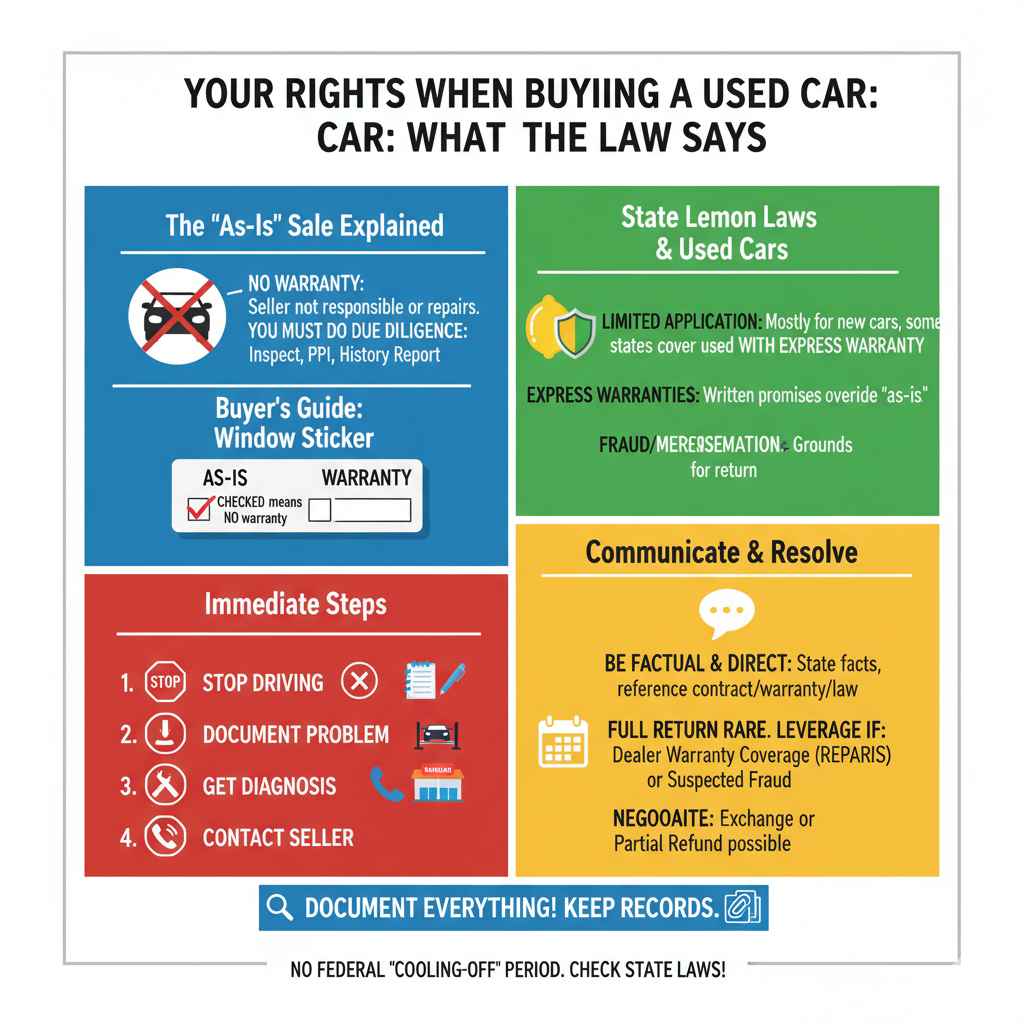
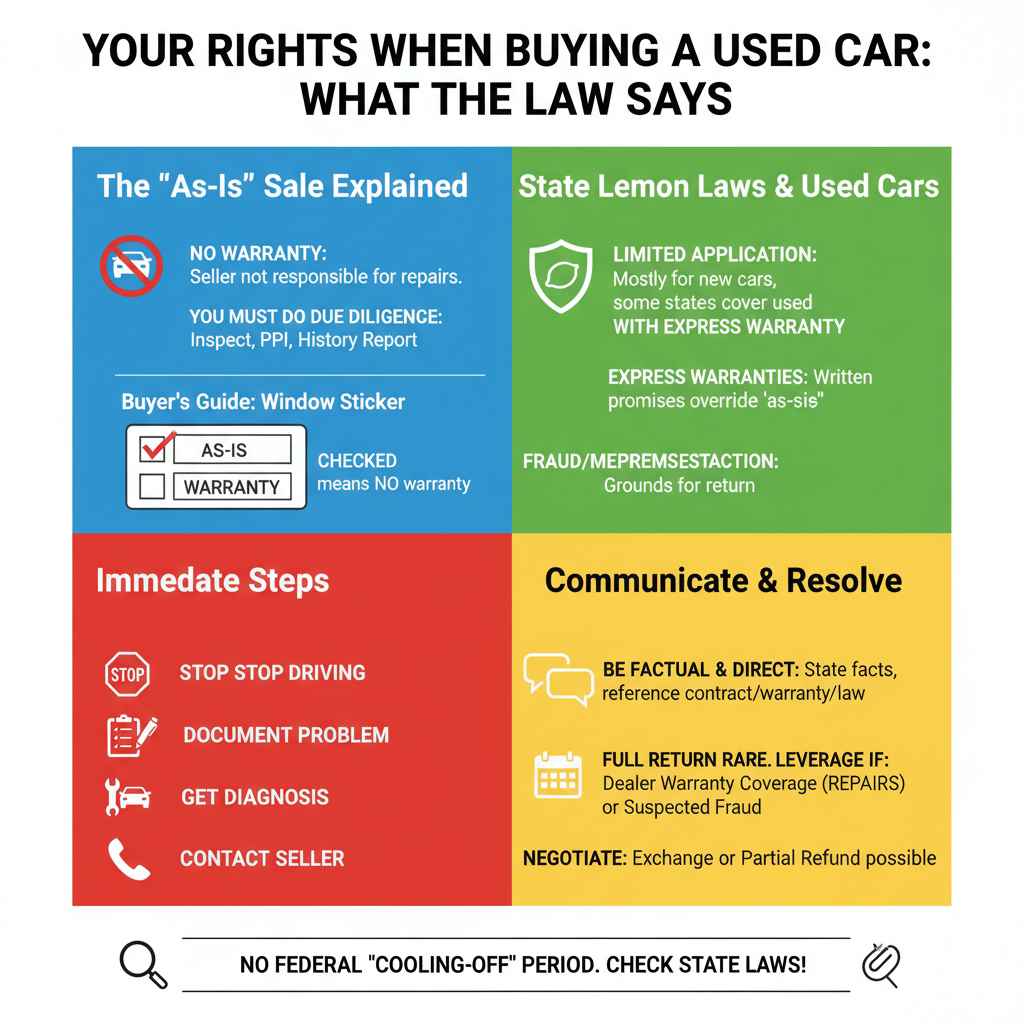
Your Rights When Buying a Used Car: What the Law Says
When you buy a car, especially a used one, you enter into a contract. This contract is your main guide for what happens next. Unlike many new products that come with a straightforward return policy, used cars are a different story. Generally, once you sign the paperwork and drive off the lot, the sale is considered final unless specific conditions are met.
However, this doesn’t mean you’re left with a lemon with no recourse. Consumer protection laws vary by state, and some offer more protections than others. Understanding these laws and the terms of your purchase agreement is crucial.
The “As-Is” Sale Explained
Most used cars are sold “as-is.” This is a very important phrase to understand. When a car is sold “as-is,” it means the seller isn’t offering any warranties. Whatever condition the car is in at the time of sale is the condition you’re buying it for. This includes any hidden problems that might not have been apparent when you test-drove it or had it inspected.
No Implied Warranties: An “as-is” sale usually negates any implied warranties that might otherwise exist, such as a warranty of merchantability (meaning the car should be fit for its general purpose).
Seller’s Responsibility is Limited: The seller is generally not responsible for repairs after the sale, even if major issues arise soon after.
Buyer’s Responsibility is Key: This puts the onus on you, the buyer, to do your due diligence. This includes thoroughly inspecting the car, getting a pre-purchase inspection (PPI) by an independent mechanic, and reviewing the vehicle history report.
State Lemon Laws and Used Cars
You’ve probably heard of “lemon laws” for new cars. These laws protect consumers from buying vehicles with persistent defects that can’t be repaired. But do they apply to used cars?
Limited Application: In many states, lemon laws are specifically for new vehicles. However, some states have laws that offer limited protection for used cars, especially those sold with an express warranty.
Express Warranties: If the dealer provides any written promise about the car’s condition or offers a limited warranty (even a short one), some state laws might kick in. These warranties can override an “as-is” sale for the terms they cover.
“Bait and Switch” or Fraud: If a dealer misrepresented the car’s condition, lied about its history, or used deceptive practices, you might have legal grounds to return the car, even if it was sold “as-is.” This falls under consumer fraud laws.
You can check your state’s specific consumer protection laws through your state’s Attorney General’s office or the Federal Trade Commission (FTC). The FTC’s Used Car Rule mandates that dealers provide a Buyer’s Guide when selling used cars, which is a crucial document.
What’s on a Used Car Buyer’s Guide?
The Buyer’s Guide is a window sticker that dealers must display on used cars. It’s a vital document that tells you about your warranty coverage (or lack thereof).
“As-Is”: If checked, it means there’s no warranty. You buy the car with all its faults.
“Warranty”: If checked, it means the dealer offers some form of warranty, stating what is covered and for how long. This is a huge advantage if you’re concerned about the car’s condition.
The “Cooling-Off Period” Myth
A common misconception is that there’s a “cooling-off period” for car purchases, similar to what some states offer for door-to-door sales or gym memberships. Generally, there is no federal cooling-off period for car sales, and most states do not have one either.
Exceptions are Rare: Some states might have very specific, limited exceptions, but for a typical used car purchase, assume the sale is final unless a contract clause states otherwise or you can prove fraud or misrepresentation.
Dealer Discretion: Only if the dealer voluntarily offers a return policy or satisfaction guarantee (which is rare for used cars) would a return be possible under such terms.
Can You Return a Used Car Under Specific Circumstances?
While a straightforward 30-day return is unlikely without specific conditions, there are several scenarios where you might be able to return a used car.
1. Breach of Contract or Warranty
If the car you purchased doesn’t meet the terms of the contract or any warranties provided, you may have grounds for return.
Express Warranties: If the seller provided a written warranty (e.g., a 30-day/1,000-mile powertrain warranty) and a covered part fails within that period due to a pre-existing defect, the seller is obligated to repair it. If they cannot or will not, you might be able to negotiate a return or a different resolution.
Implied Warranties (in some states): Even without an express warranty, some states imply certain warranties. If the car has a major defect that makes it unfit for driving (e.g., transmission failure on day two), you might have recourse, though this can be a complex legal battle.
Failure to Disclose Significant Issues: If the dealer knew about a major defect (like a damaged frame, flood damage, or major engine trouble) and deliberately failed to disclose it, this could be considered fraud, giving you grounds to seek remedies. This is hard to prove.
2. Fraudulent Misrepresentation or Deception
This is perhaps the strongest reason to return a used car, but it requires proof.
What Constitutes Fraud: This involves the seller making false statements or concealing crucial information about the car’s condition, history, or mileage that you relied upon when making your purchase.
Examples:
Rolling back the odometer.
Falsifying the vehicle history report (e.g., claiming no accidents when there was one).
Hiding major mechanical or structural damage.
Stating the car has certain features or has been inspected when it hasn’t.
Proving It: You’ll need evidence. This could include expert testimony from mechanics, documentation showing the true history of the vehicle, or proof of the dealer’s knowledge of the defect.
3. Dealership Return Policies (Rare for Used Cars)
A small number of dealerships might offer a limited return policy for used cars as a customer service or marketing tool.
Read the Fine Print: If a dealer offers this, it will be in writing and will have strict conditions. These policies are often for a shorter period than 30 days, might have mileage limitations, and could be for a specific type of vehicle or price point.
“Buyback” Guarantees: Some certified pre-owned programs or special dealership initiatives might offer a limited buyback option, but these are not standard for all used cars.
4. Financing Contract Errors or Issues
Sometimes, issues with the financing agreement can lead to a return, though this is often more about “unwinding” the deal than a simple return.
“Spot Delivery” or “Yo-Yo” Financing: This happens when a dealer lets you take the car home before the financing is fully approved. If the financing then falls through, the dealer might ask for the car back. In this situation, all down payments and trade-ins must generally be returned to you.
Contract Errors: If there were significant errors in the financing contract that weren’t properly explained or corrected, it could potentially be grounds for invalidating the sale, but this is complex and often requires legal advice.
Steps to Take if You Want to Return a Used Car
If you’ve identified a potential reason to return a used car, acting quickly and systematically is key.
Step 1: Review Your Paperwork
The first and most critical step is to carefully examine all the documents you signed when you bought the car.
Bill of Sale: Does it state “as-is”? Is there any warranty mentioned?
Buyer’s Guide: Check the Buyer’s Guide sticker that was on the car. Was it provided to you? What did it say about warranty?
Financing Agreement: Review the terms of your loan or lease.
Any Supplementary Agreements: Did you sign anything else related to the sale?
Step 2: Document Everything
If you believe there’s a problem, gather as much evidence as possible.
Mechanical Issues: Get a written report from an independent mechanic detailing the problems, including their estimate of repair costs and their opinion on whether these issues existed at the time of sale.
Disclosure Issues: If you suspect the seller knew about a problem and didn’t disclose it, try to find any evidence pointing to that.
Photographs/Videos: Document any visible damage or issues.
Communication Records: Keep copies of emails, texts, or notes from phone calls with the dealership.
Step 3: Contact the Dealership
Approach the dealership professionally and calmly.
Start with the Sales Manager: Explain your situation and present your evidence.
Be Clear About Your Goal: Do you want a refund? An exchange? Repairs?
Be Prepared for Negotiation: The dealership might offer partial solutions, repairs, dealer credit, or refuse outright.
Step 4: Understand Your Rights Based on State Law
Research your specific state’s consumer protection laws regarding used car sales. Your state’s Attorney General’s office or a consumer protection agency website is a good place to start.
| Key Document | What to Look For | Why It’s Important |
|---|---|---|
| Bill of Sale | “As-Is” clause, any stated warranties (duration, coverage), sale price, vehicle details. | Defines the core terms of your purchase. Crucial for understanding if the sale was final or if any promises were made. |
| Used Car Buyer’s Guide (FTC Sticker) | Is “As-Is” checked or is there a “Warranty” section filled out? If warranty, what does it cover and for how long? | Legally required by the FTC; tells you your warranty rights at the time of sale. |
| Vehicle History Report (e.g., Carfax, AutoCheck) | Accident history, title issues (salvage, flood), odometer readings, service history. | Provides background information on the vehicle. Verify this against what the seller told you. |
| Financing Contract | Interest rate, loan term, down payment, monthly payment, lender details, any “spot delivery” clauses. | Outlines your financial obligation and the terms of the loan. Errors or specific clauses can impact the sale. |
Step 5: Consider Mediation or Legal Action
If you can’t reach an agreement with the dealership and you have strong grounds (like fraud or a breach of a written warranty), you might consider further steps.
Mediation: A neutral third party helps facilitate a resolution between you and the dealership.
Small Claims Court: For disputes involving amounts within a certain limit (which varies by state), you can sue the dealership without needing a lawyer.
Consult an Attorney: For more complex cases, especially those involving significant financial loss or potential fraud, consulting with an attorney specializing in consumer law is advisable.
What If the Car Stops Working Soon After Purchase?
This is the most common scenario where people think about returning a car. Purchased on a Friday, and by Monday, it’s making a terrible noise or won’t start.
Immediate Steps if a Major Problem Occurs
1. Stop Driving: If the car is unsafe to drive, don’t risk an accident or further damage.
2. Document the Problem: Note exactly when and how the issue started.
3. Get a Diagnosis: Have a trusted, independent mechanic assess the problem immediately. Get a written report.
4. Contact the Seller: If the problem is severe and potentially pre-existing, contact the dealership as soon as possible.
What to Say to the Dealer
Be factual and direct: “I purchased a [Year, Make, Model] from your dealership on [Date]. This past [Day], the vehicle began to [Describe problem]. I had it inspected by [Mechanic’s Name/Shop], who provided a report stating [Briefly mention mechanic’s findings and potential relation to pre-sale condition]. As per the [mention your contract, warranty, or state law if applicable], I would like to discuss resolving this issue.”
Is a 30-Day Window Realistic for Repairs?
While a full return within 30 days is rare, a vehicle developing issues within that timeframe, especially if covered by a dealer warranty or if fraud is suspected, can provide leverage.
Warranty Coverage: If the issue is covered by the dealer’s warranty, their obligation is to repair it. If they fail to repair it after multiple attempts, some states have “repair-and-refund” provisions that might apply, but this is usually more complex.
Negotiation: Even if not legally obligated to take the car back, a dealership concerned about their reputation or facing a potentially unhappy customer might offer an exchange for another vehicle or a partial refund to avoid further conflict.
Tips for Buying a Used Car to Avoid Return Headaches
The best way to avoid the stress of wanting to return a car is to make the right purchase decisions from the start.
1. Do Thorough Research
Know the Model: Research the specific make and model you’re interested in. Look up common problems, reliability ratings, and owner reviews. Resources like Consumer Reports can be invaluable.
Research the Seller: If buying from a private party, look them up if possible. If buying from a dealer, check their online reviews and BBB (Better Business Bureau) rating.
2. Get a Pre-Purchase Inspection (PPI)
This is non-negotiable. Before you buy, take the car to an independent mechanic you trust.
What is a PPI? A comprehensive inspection by a qualified mechanic to identify any hidden mechanical issues, potential problems, or maintenance needs.
Cost: It typically costs between $100-$200, but it can save you thousands in unexpected repairs.
Negotiating Power: If the PPI reveals issues, you can use the mechanic’s report to negotiate a lower price or ask the seller to fix them before you buy.
3. Test Drive Extensively
Don’t just drive around the block.
Vary Conditions: Drive on city streets, highways, and bumpy roads.
Test All Features: Turn on the AC, heat, radio, power windows, seats, etc. Listen for unusual noises.
Brake and Accelerate: Feel how the car brakes, shifts gears, and accelerates.
4. Review Vehicle History Reports
Use services like Carfax or AutoCheck. While not foolproof, they can reveal red flags like accident history, odometer discrepancies, or title issues.
5. Understand the Contract
Read Everything: Don’t let the dealer rush you.
Ask Questions: If you don’t understand a clause, ask for clarification.
* No “As-Is” Surprises: Make sure you clearly understand if the car is sold “as-is” or with a warranty.
Frequently Asked Questions (FAQ)
Q1: Can I return a used car simply because I changed my mind?
A1: Generally, no. Most used car sales are considered final once you sign the contract and take possession of the vehicle, especially if it’s sold “as-is.” There’s usually no automatic “cooling-off period” for car purchases.
Q2: What does “as-is” mean when buying a used car?
A2: “As-is” means you are buying the car in its current condition, with all its faults, whether they are obvious or hidden. The seller is not providing any warranty, obligating them to make repairs after the sale. You take on all responsibility for any issues that arise.
Q3: Are there any state laws that allow me to return a used car?
A3: Some states have limited consumer protection laws that might apply to used cars, often if the car has a significant hidden defect not disclosed by the seller, or if the seller provided a written warranty that was breached. However, these vary greatly by state and are not a universal “return right.