Economy vs. Compact Car: Which Is Actually Bigger?
Yes, a compact car is bigger than an economy car. By the EPA’s official size classes, “economy” is really just a marketing name for the Subcompact class (85 to under 100 cubic feet of combined interior volume), and Compact is the next class up (100 to under 110 cubic feet) – more legroom, more trunk space, and usually a slightly longer, wider body.
That said, the two terms get used loosely, especially at rental car counters, so it is worth knowing exactly where the size difference comes from and where it does not matter as much as people assume. This guide covers the real EPA distinction, how much bigger a compact actually feels in daily use, whether “economy” really means better gas mileage, and how the two classes differ once you are standing at a rental desk instead of a dealership – if you want to see where these two fit among all the other car size classes, that is covered separately.
Is a Compact Car Bigger Than an Economy Car?
Yes, consistently. “Economy car” is not an official size class at all – it is a marketing and rental-industry term for what the EPA actually classifies as a Subcompact vehicle: 85 to just under 100 cubic feet of combined passenger-and-cargo interior volume. A Compact car is the next EPA size class up, at 100 to just under 110 cubic feet. That gap of at least 10 cubic feet shows up as more rear legroom, more headroom, and more trunk space, not a dramatically different exterior footprint.
This holds up in the real world too. Independent rental-industry comparisons consistently describe compact cars as offering a bit more interior space, rear legroom, and shoulder room than economy cars, with compacts generally preferred for longer trips or extra luggage. For the exact EPA cubic-foot breakdown by class and a table of current model examples in each one, see our full economy car vs. compact car size guide.
Why the Confusion? “Economy” Is a Label, Not a Size Class
Part of why people go back and forth on this is that “economy” never had a fixed engineering definition to begin with. Automakers, dealers, and rental companies use it to mean roughly the same thing: the cheapest, smallest, most fuel-focused car on the lot. But two cars both marketed as “economy” by different companies can actually sit in different official size classes, depending on their real interior volume. “Compact” is more consistent, because it maps directly onto the EPA’s measured class, which is why comparing the two side by side can feel like comparing a fuzzy label to a hard number.
How Much Bigger Is a Compact Car, in Practical Terms?
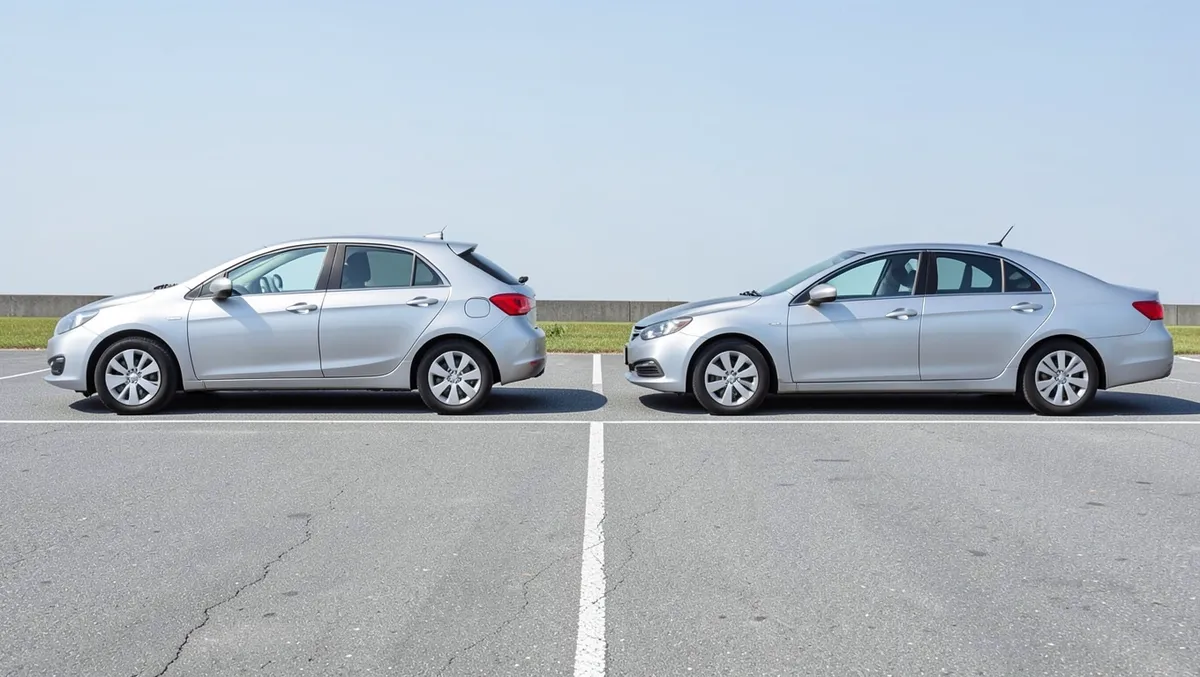
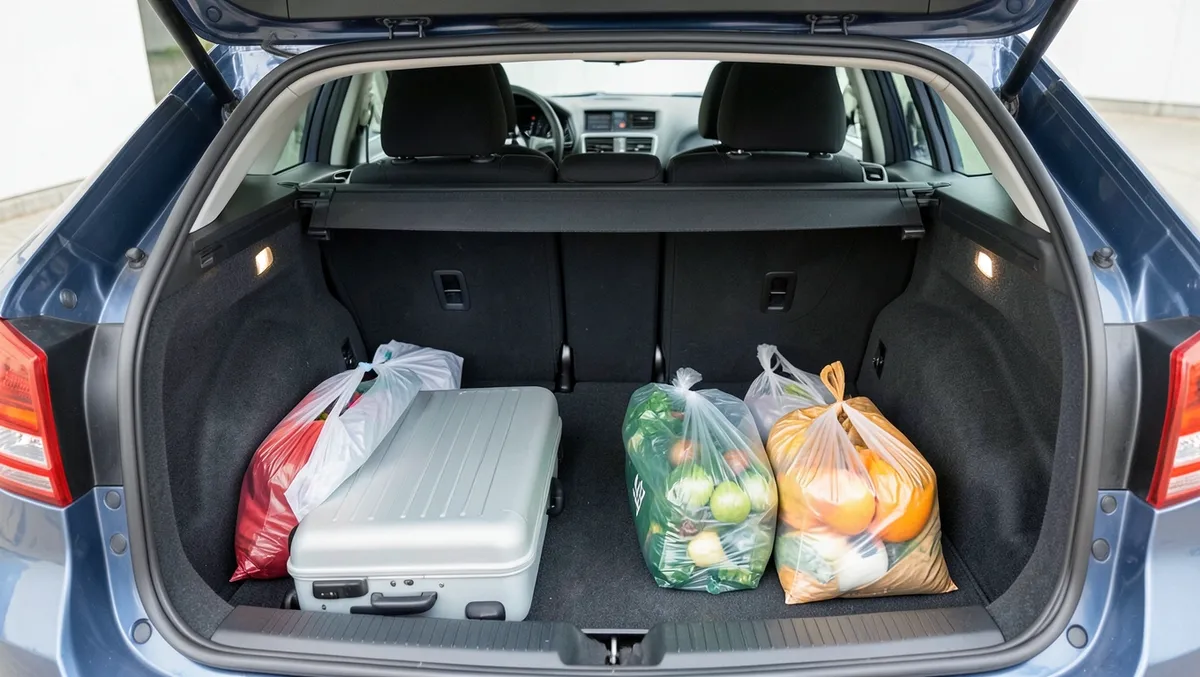
On paper, a 10-cubic-foot difference does not sound like much, but it lands almost entirely where passengers and cargo actually sit. In an economy/subcompact car, rear-seat legroom is often tight enough that a taller adult in the back seat has their knees close to the front seatback, and the trunk is sized for one or two carry-on-style bags. Step up to a compact and that same rear seat usually has a few extra inches of knee room, plus enough trunk space to fit a full-size suitcase alongside smaller bags without stacking everything on the back seat instead.
The trade-off is exactly what you would expect: that extra room adds some length and width, which makes an economy car the easier of the two to squeeze into a tight street parking spot or a cramped parking garage. If your driving is mostly solo commuting and city parking, the smaller footprint of an economy car can matter more than the extra cubic feet you would rarely use.
Does “Smaller” Always Mean Better Gas Mileage?
Usually, but not automatically. A smaller, lighter economy car often does get better EPA-rated mileage than a compact with a comparable gas engine, simply because there is less mass to move. But size class and fuel economy are not locked together the way people assume, because engine choice, transmission, and hybrid availability matter just as much as overall size.
A real example: the current Toyota Corolla, an EPA compact, is rated around 35 mpg combined, while the Nissan Versa, an EPA subcompact/economy car, is rated closer to 30 mpg combined. The “bigger” compact actually wins on fuel economy here, because the Corolla’s engineering and available hybrid trim outweigh its slightly larger size. When fuel economy genuinely matters to your decision, check the EPA rating for the specific model and trim you are considering rather than assuming the smaller size class automatically wins.
Economy vs. Compact at the Rental Car Counter
This is where most people actually run into the economy-vs-compact question, and the pattern matches the EPA logic even though rental companies do not use EPA labels directly. Across major U.S. rental brands, “Economy” is consistently the smallest, cheapest class on the lot, typically seating four with room for one large bag and one small bag. “Compact” sits one step above it: still a small car, but with four doors as standard and noticeably more cabin and trunk space than the economy tier.
The price gap between the two tiers is usually small, often just a few dollars a day, which is why many rental agents will point budget-conscious travelers toward compact anyway: a small daily upcharge for meaningfully more legroom and trunk space is an easy trade for most renters, especially on a trip longer than a couple of days.
Which Should You Actually Choose?
If your priority is the lowest possible price and the tightest possible parking footprint, an economy car does that job well, and it is a perfectly comfortable choice for one or two people on short trips. If you regularly carry a passenger in the back seat, travel with more than one bag, or just want a bit more breathing room without stepping up to a midsize car, the compact class is the better fit for very little extra cost. Either way, the size difference between the two is real and measurable, not just marketing.
Frequently Asked Questions
Is a compact car bigger than an economy car?
Yes. By EPA interior volume, economy cars fall into the Subcompact class (85 to under 100 cubic feet) and compact cars are the next class up (100 to under 110 cubic feet), so a compact car is consistently bigger, mainly in rear legroom and trunk space.
What is an “economy car” actually classified as?
“Economy car” is not an official EPA size class. It is a marketing and rental-industry term that generally lines up with what the EPA calls a Subcompact car: 85 to just under 100 cubic feet of combined passenger and cargo volume.
Is an economy car cheaper to rent than a compact car?
Usually, yes, but the gap is often small, sometimes just a few dollars a day. Because compact cars offer meaningfully more legroom and trunk space for a modest price increase, many renters find the compact tier worth the small upcharge.
Does an economy car always get better gas mileage than a compact car?
Not always. Size class and fuel economy are not directly tied together; engine choice, transmission, and hybrid availability matter more. For example, the compact Toyota Corolla is EPA-rated around 35 mpg combined, better than the subcompact Nissan Versa’s roughly 30 mpg combined.
Is a sedan bigger than a compact car?
Not necessarily – “sedan” describes a car’s body style (a fixed roof with a separate trunk), not its size class. A compact car can be a sedan, and plenty of subcompact economy cars are sedans too, so the size still comes down to the EPA class, not the body style.
Which is better for a road trip, an economy car or a compact car?
A compact car is usually the better fit for a road trip, since the extra rear legroom and trunk space make a real difference over several hours and multiple bags. An economy car is fine for a solo or two-person trip with light luggage.
The Bottom Line
A compact car is bigger than an economy car, by a consistent, measurable margin in the EPA’s own interior volume numbers, and the same pattern shows up at rental counters even though the labels are used loosely. The extra room shows up mainly as legroom and trunk space rather than a dramatically bigger car to park, so the right pick comes down to whether you value the smaller footprint and lower price of an economy car, or the extra comfort of a compact for not much more money.
Products related to this article
Sponsored / affiliate links. As an Amazon Associate I earn from qualifying purchases. I may earn additional commission from eligible campaigns.