Can Someone Buy A Car On My Behalf: Essential Guide
Yes, someone can absolutely buy a car on your behalf, but it requires careful planning and legal steps to ensure it’s done correctly and safely. This guide will walk you through the process, highlighting the necessary documentation and considerations to protect yourself.
Buying a car is a big deal, and sometimes life throws curveballs. Maybe you’re stuck out of town, have mobility issues, or simply want a trusted friend or family member to handle the heavy lifting at the dealership. The good news is, you can have someone buy a car for you. It’s not as complicated as it might sound, but it does need to be done the right way to avoid headaches down the road. We’ll break down exactly how to make this happen, step-by-step, so you can drive away (or have your car delivered!) with peace of mind.
Understanding the Basics: What Does “Buying on Your Behalf” Mean?
When we talk about someone buying a car on your behalf, it essentially means you’re giving a trusted person the legal authority to act as your agent in the transaction. They will be the one signing contracts, handing over payment (or securing financing in your name), and dealing with the dealership. You remain the owner of the vehicle, and they are simply acting as your representative. It’s crucial to choose someone you trust implicitly, as they’ll be making significant decisions and financial commitments in your place.
This process is formally known as appointing a Power of Attorney (POA). A POA is a legal document that gives one person the authority to act for another person in specific or all legal or financial matters. For buying a car, you’d typically need a specific POA that grants the authority to purchase a vehicle.
Why Would You Need Someone to Buy a Car For You?
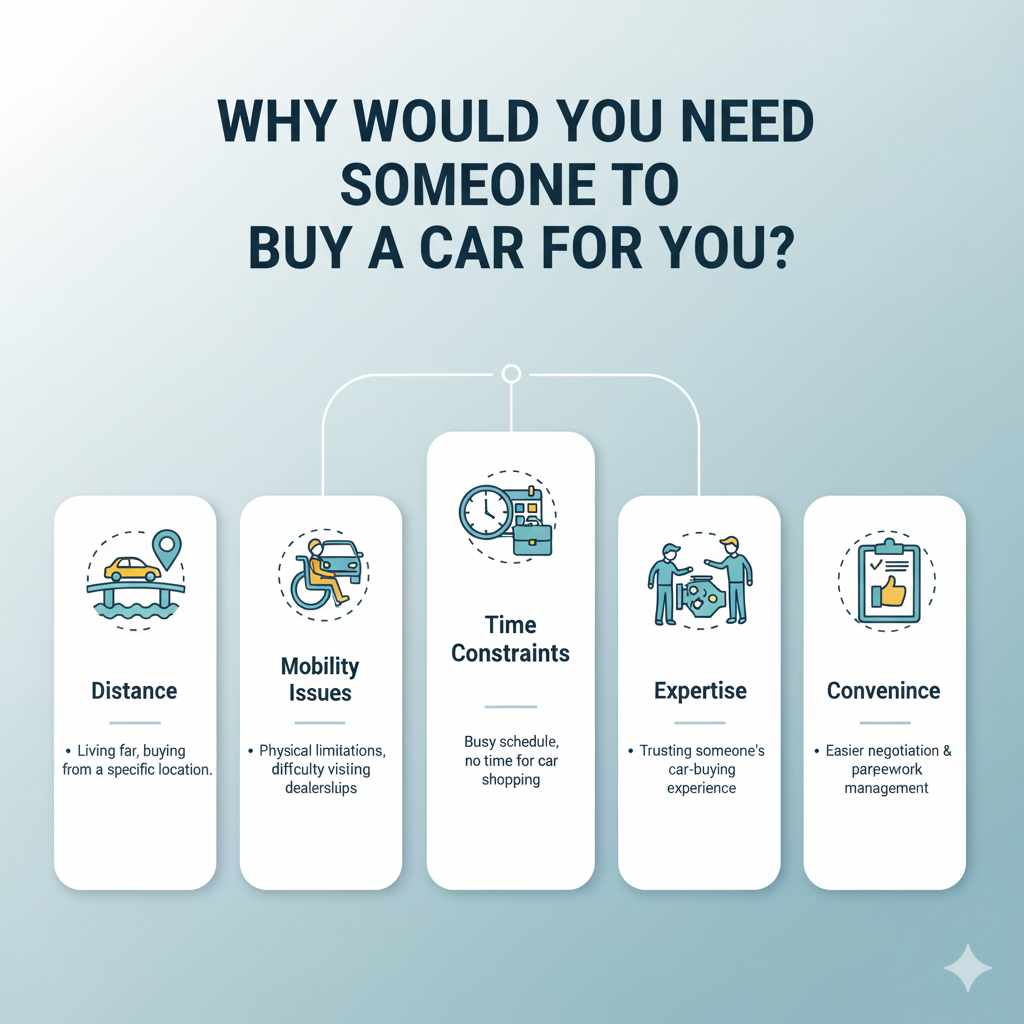
Several situations might lead you to consider having someone else handle your car purchase:
- Distance: You might be living in a different city, state, or even country but want a car from a specific location.
- Mobility Issues: If you have physical limitations, it can be challenging to visit dealerships, test drive, or handle paperwork.
- Time Constraints: A busy work schedule or other commitments might make it impossible for you to dedicate the necessary time to car shopping.
- Expertise: You might trust a friend or family member’s car-buying experience more than your own.
- Convenience: Sometimes, having someone else manage the negotiation and paperwork simply makes life easier.
The Essential Document: Power of Attorney (POA)
The cornerstone of having someone buy a car on your behalf is a Power of Attorney document. This is a legal agreement that empowers your chosen agent to act for you. For car purchases, you’ll likely need a Limited Power of Attorney, which specifically outlines the authority granted and is often time-bound or related to a particular transaction.
A General Power of Attorney would give broad authority over all your financial affairs, which is usually more than what’s needed and carries greater risk. Sticking to a Limited POA tailored for the car purchase is the safest route.
What a Limited POA for Car Purchase Should Include:
- Your Information: Full legal name and address.
- Agent’s Information: Full legal name and address of the person you are appointing.
- Vehicle Description: While not always strictly required in the POA itself, you can specify the type of vehicle (e.g., “one (1) new Toyota Camry” or “a used SUV”) to guide your agent. Some POAs are very specific, requiring the VIN if the car is already identified.
- Specific Authority Granted: Clearly state that the agent has the authority to locate, negotiate the purchase price, sign all necessary documents (including title, bill of sale, registration, and loan/financing documents if applicable), and take delivery of a vehicle on your behalf.
- Duration: Specify when the POA becomes effective and when it terminates. This can be upon completion of the purchase, a specific date, or upon your revocation.
- Date and Signatures: The document must be dated and signed by you (the principal).
- Notarization: In most states, a POA must be notarized by a Notary Public to be legally valid. The agent does not sign the POA.
Where to Get a Power of Attorney Form:
You have a few options for obtaining a POA form:
- Online Legal Form Providers: Websites like Rocket Lawyer or LegalZoom offer customizable POA templates. These are often affordable and can be a good starting point.
- Attorney: The most secure option is to have an attorney draft a specific POA for you. This ensures it meets all state-specific requirements and accurately reflects your intentions. This is especially recommended if the car purchase is high-value or involves complex financing.
- State Bar Association: Your local or state bar association might have resources or forms available for legal documents.
- Dealership’s Legal Department (Rare): Some larger dealerships might have a standard form they use if they frequently facilitate these types of transactions, but it’s always best to have your own independent legal document.
Always ensure the POA complies with the laws of your state. Requirements can vary significantly.
Steps to Have Someone Buy a Car on Your Behalf
Here’s a step-by-step breakdown to make the process smooth and secure:
1. Choose Your Agent Wisely
This is the most critical step. Select someone who is:
- Trustworthy: Absolutely essential. This person will handle significant financial and legal documents in your name.
- Responsible: They need to be organized and diligent in following your instructions and legal requirements.
- Available: They must have the time and willingness to dedicate to the car search, negotiation, and purchase process.
- Knowledgeable (Optional but helpful): Someone who knows cars or has experience with car buying can be a great asset.
Discuss your expectations, budget, and the type of vehicle you’re looking for in detail. Make sure they understand your priorities.
2. Define the Vehicle and Budget
Before drafting the POA, be clear about what you want:
- Make and Model: Specific car (e.g., Honda CR-V, Ford F-150).
- New or Used: Specify if you’re open to either.
- Key Features: Any must-have options or trim levels.
- Color Preferences: If important to you.
- Maximum Price: A firm budget, including taxes, fees, and any potential repairs for a used car.
- Financing: Will you be paying cash, or will your agent need to secure financing in your name?
The more detailed you are, the better your agent can represent your interests.
3. Prepare the Limited Power of Attorney
Draft the Limited Power of Attorney document. As mentioned, you can use online services, consult an attorney, or find state-specific templates.
Key details to confirm for the POA:
- Your full legal name and address.
- Your agent’s full legal name and address.
- Specific details about the authority granted: to purchase a motor vehicle, sign all related documents, accept delivery, and potentially arrange for registration and insurance.
- Any limitations you wish to impose (e.g., maximum purchase price).
- Effective date and termination conditions.
For example, the language might state: “To represent me in the purchase of one (1) new or used motor vehicle, not to exceed Twenty-Five Thousand Dollars ($25,000.00) in total cost, and to sign all necessary documentation related thereto, including title, bill of sale, and financing agreements.”
According to the USAGov, a Power of Attorney is a powerful legal document that grants rights to another person. It’s vital to understand what rights you’re giving and to ensure you use a legally sound document.
4. Sign and Notarize the POA
You (the principal) must sign the POA in the presence of a Notary Public. The Notary will verify your identity and witness your signature. They will then officially stamp and sign the document, making it legally recognized in most jurisdictions. Your agent does not need to be present for this step.
Some states may also require a witness to sign the document along with the notary. Check your state’s specific requirements.
5. Provide Necessary Information and Funds to Your Agent
Give your agent:
- The original or a certified copy of the notarized POA document.
- Your driver’s license or a clear copy.
- Your Social Security Number (most dealerships will need this for financing and registration).
- Payment method: If paying cash, provide a cashier’s check in your name, or arrange for wire transfer instructions. If financing, ensure they have your pre-approval details or are empowered to secure financing in your name.
- Your insurance information: They will need this to drive the car off the lot. Make sure your insurance policy is updated or ready to be updated.
6. Agent Shops for the Car
Your agent will then go to dealerships, test drive vehicles, and negotiate the purchase price based on the parameters you’ve set. They will present the POA to the dealership to prove their authority.
Many dealerships are familiar with the process of handling a car sale via POA. However, some may be hesitant or require specific procedures. It’s wise for the agent to inform the dealership they will be acting under a POA before arriving, if possible.
7. Finalize the Purchase
Once a vehicle is chosen and the price is agreed upon, your agent will sign the purchase agreement, bill of sale, and any financing or loan documents in your name using the authority granted by the POA.
They will then arrange for payment and take delivery of the vehicle.
8. Registration and Titling
The POA should ideally grant your agent the authority to sign the title and handle the registration process with the Department of Motor Vehicles (DMV) or equivalent agency in your state. This often involves applying for a new title in your name and obtaining license plates.
If the POA doesn’t cover this, or if the dealership or DMV requires it, you may need to sign additional paperwork separately, or your agent might need to get a temporary permit to drive the car to you for final processing.
9. Take Possession of the Vehicle
Your agent can then drive the car to you, or you can arrange for transportation (like a car carrier) if you are particularly far apart. Ensure all paperwork is transferred to you promptly.
Important Considerations and Potential Pitfalls
While having someone buy a car for you can be convenient, there are several things to keep in mind to ensure everything goes smoothly:
Dealership Cooperation
Some dealerships may be unfamiliar with or reluctant to process sales using a POA. They might worry about fraud or the validity of the document. It’s best for your agent to communicate with the sales manager or finance department beforehand to confirm their willingness and any specific requirements they might have.
Financing Challenges
Securing financing with a POA can sometimes be tricky. Lenders may have strict policies regarding POAs, especially for loan agreements. Your lender might require additional verification or prefer that you apply for the loan yourself. If your agent is securing financing in your name, ensure this is explicitly covered in the POA and that the lender is aware.
Insurance
The car must be insured before it can be driven off the lot. Your agent will need your insurance company’s contact information and details about your existing policy. Make sure you have coverage ready for the new vehicle.
Vehicle Inspection and Test Drive
If you’re not present, you’re relying entirely on your agent’s judgment for the test drive and vehicle inspection. Choose an agent who is thorough and will advocate for you if they find issues.
For used cars, it’s still highly recommended to have an independent pre-purchase inspection (PPI) done by a trusted mechanic, even if your agent is driving. Your agent could arrange this.
Scams and Fraud
Unfortunately, there’s always a risk of fraud. Ensure you trust your agent implicitly. Also, be wary of online sellers or private individuals who suggest unusual payment methods or try to rush the process. Always verify the identity of the seller and any documents presented.
Cost Breakdown
It’s helpful to have a clear understanding of all associated costs. Your agent should present you with a detailed breakdown of the purchase price, taxes, registration fees, dealership fees, and any other charges before signing anything.
Alternatives to a Full POA
If a full POA seems too much or you want to limit the agent’s authority further, consider these alternatives:
- Designated Signatory Agent: You can grant a very specific, one-time POA just for signing the title and bill of sale after you’ve negotiated the price and terms yourself (perhaps remotely).
- Proxy Buyer Services: Some companies offer services where they can act as a proxy buyer, but these often come with significant fees.
- Remote Purchase and Delivery: Many dealerships now offer robust online car buying experiences. You might be able to complete most of the negotiation and paperwork online, then arrange for the car to be shipped directly to you. This minimizes the need for a POA but might involve shipping costs.
How to Protect Yourself
Here are some tips to safeguard yourself when using a POA to buy a car:
- Use a Specific and Limited POA: Avoid broad general POAs. Tailor the document precisely to the car purchase.
- Clearly Define the Agent’s Authority and Limits: Specify the maximum price, type of vehicle, and any other constraints.
- Opt for Professional Drafting: Hiring an attorney to draft the POA is the most secure way to ensure it’s legally sound and protects your interests.
- Keep Detailed Records: Have your agent provide you with copies of all documents signed, receipts, and communications.
- Consider a Witness: In addition to notarization, having a neutral witness present when you sign the POA can add another layer of protection.
- Revoke the POA if Necessary: You have the right to revoke a POA at any time. If you’re uncomfortable with the agent’s actions or the situation changes, you can legally terminate their authority. Document this revocation in writing, notarize it, and provide a copy to all parties involved, including the dealership if the sale hasn’t been finalized.
POA vs. Adding Someone to the Title
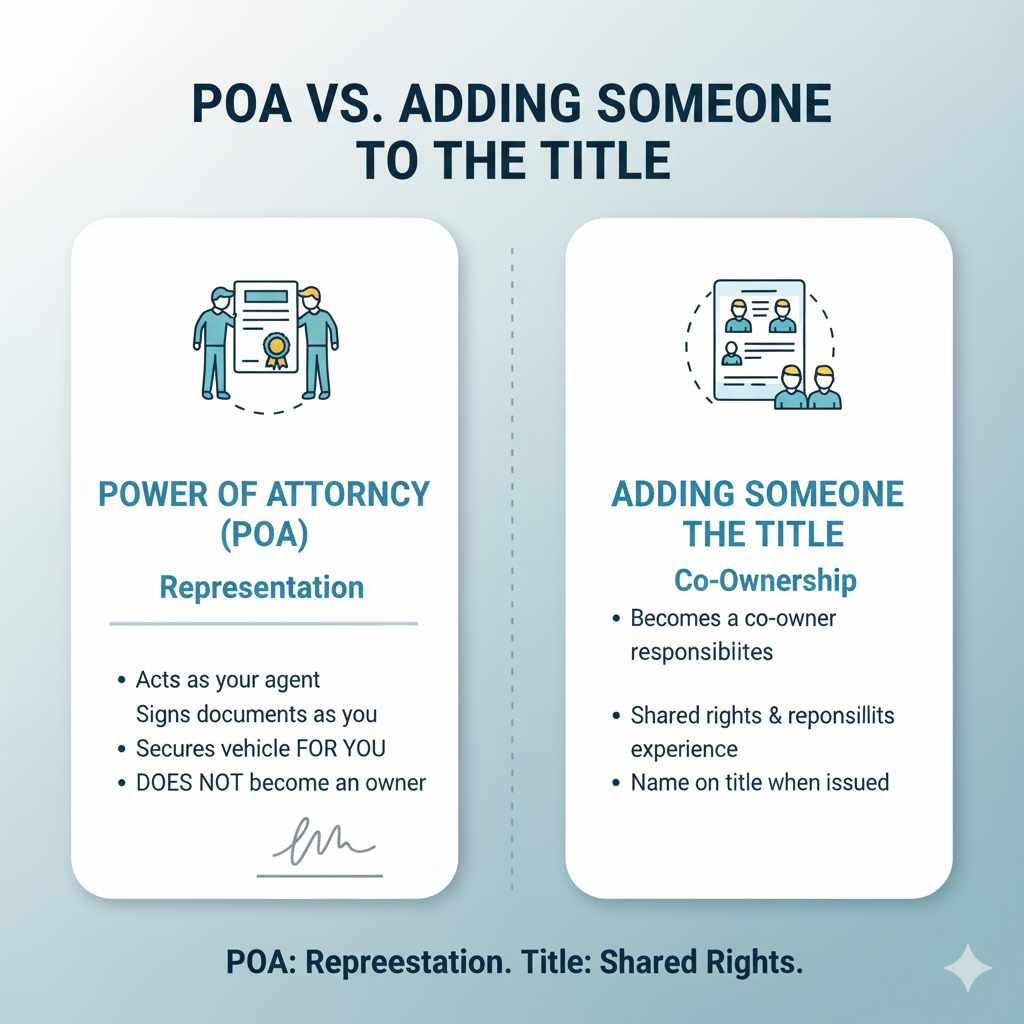
It’s important to distinguish between having someone act as your agent (POA) and having them as a co-owner on the title. When someone buys a car on your behalf via POA, they are signing documents as you to secure the vehicle for you. They are not becoming an owner. If you intend for them to be a co-owner, this is a different process, usually involving putting their name directly on the title when it’s issued.
A POA is about representation, while co-ownership implies shared rights and responsibilities for the vehicle.
FAQ: Can Someone Buy a Car On My Behalf?
Q1: Can my spouse buy a car for me with a POA?
A: Yes, absolutely. A spouse is often a trusted individual to act as an agent. However, you will still need a properly prepared and notarized Limited Power of Attorney document for the car purchase, even between spouses, to clearly define the authority granted.
Q2: What if the dealership doesn’t accept the Power of Attorney?
A: This can happen. If a dealership is hesitant, your agent should try to speak with a sales manager or the dealership’s legal representative. You might need to consult with your attorney for advice or consider purchasing from a different dealership that is more familiar with POA transactions. Having a well-drafted POA from a reputable source increases its acceptance.
Q3: Do I need to be present for any part of the car buying process if someone else is buying it for me?
A: Ideally, no. The purpose of the POA is to allow your agent to handle everything. However, if financing is involved, your lender might require you to speak with them directly to verify details or authorize the loan. For registration, some states might require your physical presence or a separate notarized signature on specific forms if not covered in the POA.
Q4: Can my agent buy a car with their own money and I reimburse them?
A: While possible, this is generally not recommended for a car purchase handled via POA. The POA grants authority to sign financial documents in your name. If they use their own funds and you reimburse them, ensure all contracts are still signed in your name, and you have clear records of reimbursement. It’s cleaner if