Why Are Interest Rates Higher for Used Cars? 2026 APR Data
Used car loans cost more because lenders treat a used vehicle as a riskier piece of collateral than a new one — and the gap is bigger than most buyers expect. As of Q1 2026, the average used car loan carried an APR of 11.43%, compared to just 6.39% for new car loans, according to Experian’s State of the Automotive Finance Market report.
That roughly 5-point gap is not just a number on paper. On a $20,000 used car loan over 60 months, the difference between an 11.43% rate and a 6.39% rate adds up to well over $2,800 in extra interest paid over the life of the loan. If your credit is closer to the subprime end of the scale, the gap can be far larger.
This guide breaks down exactly why lenders charge more for used car financing, what a realistic rate looks like for your credit tier in 2026, and the specific steps that actually move the needle on the rate you’re offered.
New vs. Used Car Interest Rates in 2026: The Real Numbers
Interest rate is simply the cost of borrowing, expressed as a percentage of the loan balance. A higher rate means more of every payment goes toward interest instead of paying down the car itself. Lenders set that percentage based on how likely they think they are to get their money back, and used cars consistently score worse on that measure than new ones.
| Loan Type | Average APR (Q1 2026) | Notes |
|---|---|---|
| New car loan | 6.39% | Experian, all credit tiers combined |
| Used car loan | 11.43% | Experian, all credit tiers combined |
| Gap between new and used | ~5.0 percentage points | Roughly consistent since 2023 |
That average used-car figure covers everyone, from buyers with excellent credit to buyers with none. Your own quote will land well above or below 11.43% depending mostly on your credit profile, which we cover in the credit-tier breakdown below.
CHECK THE CAR BEFORE YOU FINANCE IT
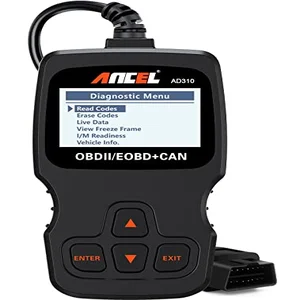 |
ANCEL AD310 OBD II Scanner – $29.99 Lenders charge more for used cars partly because of mechanical risk — this scanner lets you pull engine fault codes yourself before you sign a loan, so you know what you’re financing.
|
Why Lenders Charge More for Used Car Loans
No single factor explains the whole gap. Lenders price used car loans higher because several risks stack on top of each other.
Depreciation Leaves Less Collateral Behind the Loan
A car loan is a secured loan — the vehicle itself is the collateral. New cars lose value fastest in their first year or two, but a used car has already gone through most of that steep drop and keeps losing value on a flatter, less predictable curve. If a borrower stops paying, the lender repossesses and resells the car. For a used vehicle, that resale value is often lower relative to the remaining loan balance than it would be for a new one, so the lender has a thinner cushion if things go wrong.
Higher Default and Repossession Risk
Used car buyers, as a group, skew toward lower credit scores and tighter budgets than new car buyers. That is not a judgment about used cars — it is simply where the market sits, since a used car is often the more affordable option for someone rebuilding credit or working with a smaller budget. Lenders price loans against the average risk of the pool of borrowers taking them, and a pool with more subprime and near-prime borrowers carries a higher blended default rate, which pushes average rates up across the board.
More Mechanical and Reliability Risk
An older or higher-mileage vehicle is statistically more likely to need a major repair than a new one still under factory warranty. A borrower facing an unexpected $1,500 repair bill is more likely to fall behind on a car payment than one whose vehicle is still covered. Lenders factor that added mechanical uncertainty into the rate, especially on vehicles well past their original warranty period.
Many Used Car Loans Run Through Higher-Rate Channels
A meaningful share of used car financing, particularly on older or lower-priced vehicles, is originated through independent “buy here, pay here” dealers or specialty subprime lenders rather than a bank or credit union. Those lenders serve borrowers that traditional lenders often decline, and they price for that risk with structurally higher rates. If you finance through a bank or credit union instead, you typically avoid this channel entirely — which is one reason getting preapproved before you shop matters so much (see the tips section below).

Used Car Loan Rates by Credit Score in 2026
The 11.43% average hides a wide spread. Experian’s Q1 2026 data shows used car APRs ranging from 6.30% for borrowers with superprime credit (roughly 781 and up) to 21.77% for deep subprime borrowers (roughly 300–500). A borrower’s credit tier is the single biggest lever on the rate they’re actually offered.
| Credit Tier | Approximate Score Range | Avg. Used Car APR |
|---|---|---|
| Superprime | 781+ | 6.30% |
| Prime | 661–780 | ~9–10% |
| Near-prime | 601–660 | ~13–14% |
| Subprime | 501–600 | ~18–19% |
| Deep subprime | 300–500 | 21.77% |
The gap between the top and bottom tiers is more than three times the rate, even though a deep subprime borrower often takes out a smaller loan amount. That is why lenders keep pointing back to the same advice: check your credit report before you shop, and know roughly which tier you fall into before you walk into a dealership.
How to Get a Lower Interest Rate on a Used Car Loan
None of the reasons above are things you can change about the car. But several of them are things you can influence about your own loan application.
- Get preapproved before you shop. A preapproval from a bank or credit union gives you a real rate to compare against, and stops the dealer’s finance office from being your only quote.
- Compare at least three offers. Rates for the same borrower and same car can differ by several points between lenders. Credit unions in particular often beat both banks and dealer financing on used car rates.
- Check your credit report first. Errors on a credit report are common, and even a small score bump can move you into a lower rate tier before you apply.
- Put more money down. A larger down payment lowers the loan-to-value ratio, which reduces the lender’s exposure and can qualify you for a better rate.
- Choose a shorter loan term if you can afford the payment. Shorter terms usually carry lower rates and mean less time for the car to depreciate faster than you’re paying down the loan.
- Negotiate the car’s price separately from the loan. Focusing only on the monthly payment can hide a high rate or a stretched-out term. Agree on the price first, then shop the financing on its own.
- Ask about a cosigner if your credit is limited. A cosigner with stronger credit can sometimes unlock a meaningfully lower rate — our guide on how to find a cosigner for a car loan walks through how that process works.
Once you have a quote in hand, it is worth checking the math yourself rather than trusting the dealer’s payment sheet at face value. Our guide on how to calculate interest on a car loan manually walks through the exact formula lenders use, so you can confirm the total interest matches what you were quoted.
The 20/4/10 Rule: A Quick Sanity Check Before You Sign
A simple budgeting guideline used by many financial planners is the 20/4/10 rule: put down at least 20% of the purchase price, keep the loan term at four years or less, and keep your total monthly vehicle costs — payment, insurance, and fuel combined — under 10% of your gross monthly income. It is not a hard law, but it is a useful gut check against getting talked into a longer term or a smaller down payment just to hit a lower advertised monthly payment.
If a preapproved loan comes with terms outside that range, it is worth pausing before signing. Our guide on buying a car with a preapproved loan covers how to use that leverage at the dealership without getting steered into a worse deal than the one you already secured.
Frequently Asked Questions
Why Are Interest Rates Higher for Used Cars Than New Cars?
Used cars carry more risk for lenders than new cars. They depreciate less predictably, leave a thinner collateral cushion if the loan defaults, are more likely to need a costly repair, and are financed by a borrower pool that skews toward lower credit scores. As of Q1 2026, that combined risk pushed the average used car APR to 11.43%, compared to 6.39% for new cars, according to Experian.
What Is a Good Interest Rate for a Used Car in 2026?
A good rate depends heavily on your credit tier. Borrowers with superprime credit (roughly 781+) are averaging around 6.30% on used cars, while the overall market average sits at 11.43%. If your quote is close to or below the average for your credit tier, it is competitive; if it is several points above, it is worth shopping other lenders before you sign.
What Is the 20/4/10 Rule for Buying a Car?
The 20/4/10 rule suggests putting down at least 20% of the purchase price, financing for no more than four years, and keeping total monthly vehicle costs under 10% of your gross monthly income. It is a budgeting guideline, not a lending requirement, but it helps prevent overextending on a longer loan term just to lower the advertised payment.
Why Do Used Car Loans Have Higher APR Than the Rate the Dealer Advertises?
APR includes more than just the base interest rate — it can also fold in certain fees and finance charges tied to the loan, so the APR you see on your final paperwork is sometimes higher than the interest rate mentioned in an ad or a phone quote. Always compare the full APR across lenders, not just the headline rate.
Can You Get 0% APR Financing on a Used Car?
Almost never. 0% APR promotions are manufacturer-subsidized incentives offered on new cars to move specific models, and they typically require excellent credit even then. Independent used car dealers and private sellers generally have no way to offer a true 0% rate, so treat any used car ad promising it with caution.
Does Shopping Around for a Used Car Loan Hurt My Credit Score?
Not significantly, as long as you do it in a short window. Credit scoring models typically treat multiple auto loan inquiries made within a 14- to 45-day period as a single inquiry for scoring purposes, since they recognize that is normal rate-shopping behavior. Spreading applications out over several months, on the other hand, can generate multiple separate inquiries and cause a bigger score dip.
Conclusion
Used car interest rates run higher than new car rates for reasons rooted in real risk: unpredictable depreciation, a borrower pool with more credit variability, more mechanical uncertainty, and a financing market that includes higher-rate subprime channels. As of Q1 2026, that adds up to an average gap of roughly 5 percentage points — 11.43% for used cars versus 6.39% for new ones.
You cannot change how lenders view used cars as a category, but you can change how a lender views your own application. Check your credit first, get preapproved before you set foot on a lot, compare more than one offer, and run the numbers yourself before you sign. Those steps matter far more to your actual rate than anything about the car itself.
Products related to this article
Sponsored / affiliate links. As an Amazon Associate I earn from qualifying purchases. I may earn additional commission from eligible campaigns.